Safety / Tips and Tricks / Energy and networks
Activity 03 · Energy
Selecting a Helmet and Face Shield for Arc Flash Work
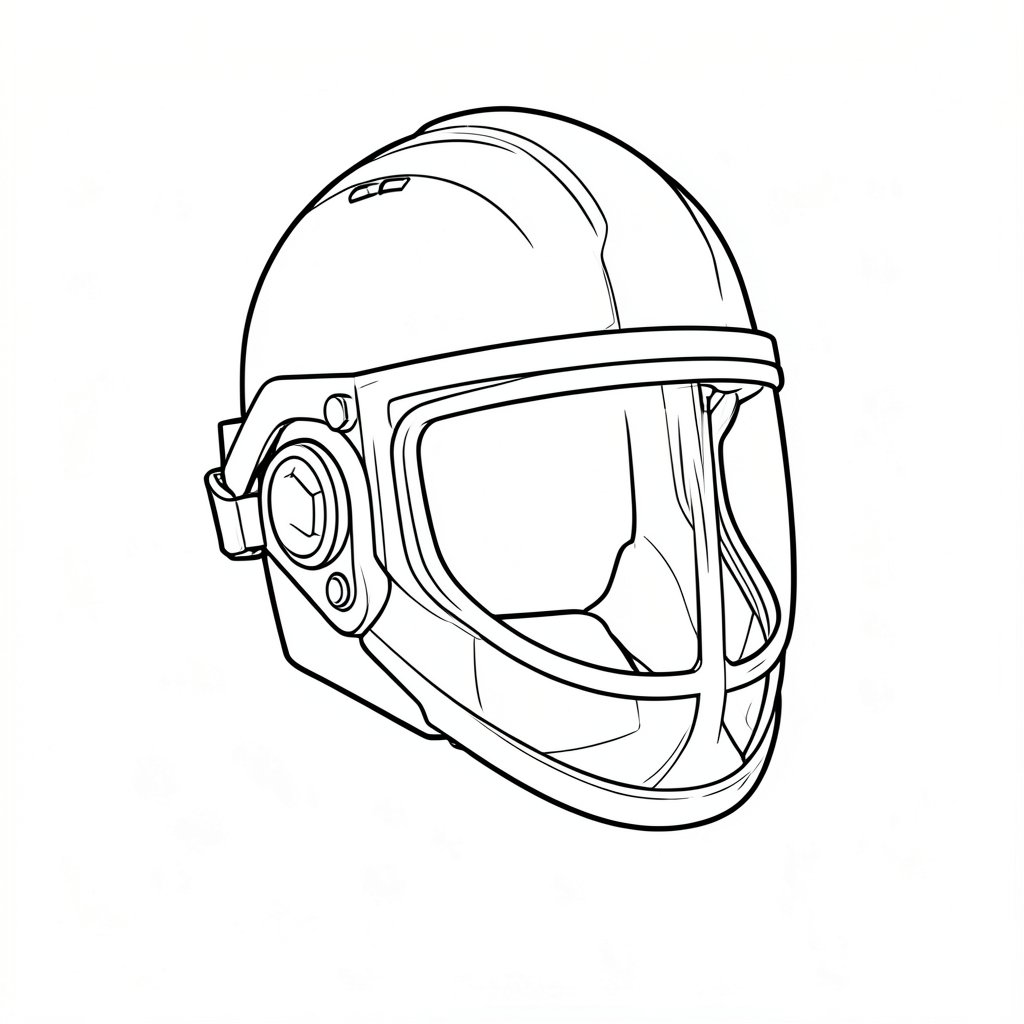
Head and face protection for arc flash work has to do two separate jobs at once: withstand impact like any industrial helmet, and prevent thermal injury from arc radiation and molten material, which a standard helmet is not designed for on its own.
The base helmet
An industrial safety helmet meeting EN 397 provides the impact protection baseline, and for arc flash work specifically, the optional 440V AC electrical insulation marking and molten metal (MM) marking under EN 397 are directly relevant, since arc flash work carries both an electrical contact possibility and a molten-metal splash risk from the arc itself. A helmet without these optional markings may still be a valid EN 397 helmet, but it was not tested against the specific hazards arc flash work presents.
Arc-rated face shields and hoods
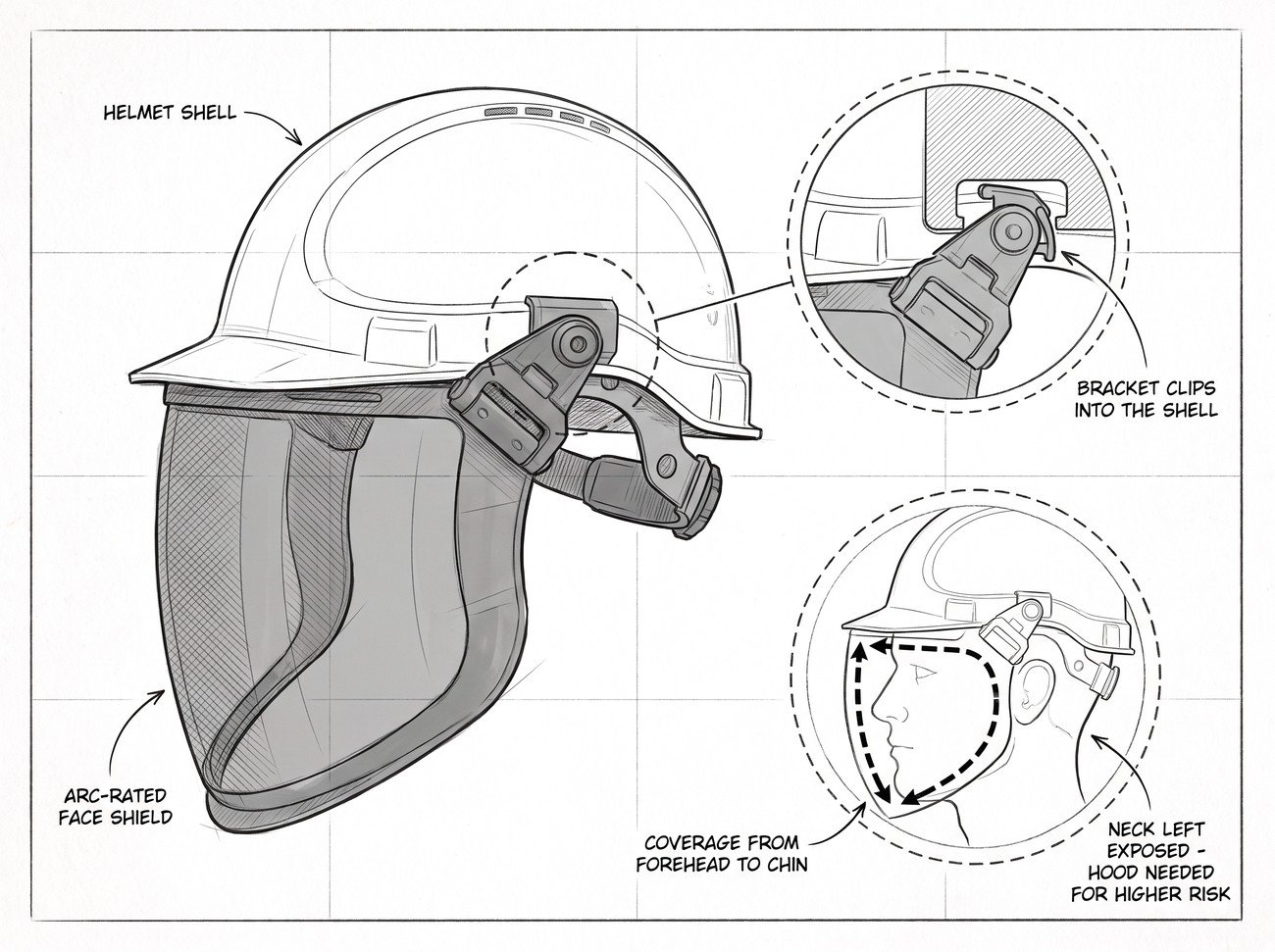
The face shield or hood used for arc flash work needs its own arc rating, tested and documented separately from the helmet it attaches to, since a standard impact-rated face shield offers no meaningful protection against arc thermal energy. Arc-rated face shields are tested as part of the same category system used for arc-rated clothing, and the face shield’s rating needs to meet or exceed the incident energy calculated for the specific task, exactly as the clothing does.
Coverage and hoods for higher incident energy
A face shield alone leaves the sides and back of the head and neck exposed, which may be acceptable at lower incident energy levels but not at higher ones. For higher-risk tasks, a full arc-rated hood or balaclava-style protection extending coverage around the head and neck is typically required, since the incident energy calculation that set the PPE category accounts for the whole exposed area, not just the face.
Compatibility with other PPE
The helmet, face shield and any hearing protection or respiratory equipment worn together need to be confirmed compatible — a face shield that does not seat correctly with a specific helmet model can leave gaps, and hearing protection that interferes with the face shield’s seal can do the same. Compatibility should be checked against the manufacturer’s specifications for that specific combination, not assumed because the individual pieces are each rated correctly on their own.
For the clothing this head protection is worn alongside, see selecting arc-rated clothing.
Common errors
1Using a standard impact-rated face shield for arc flash work without a separate arc rating.
2Selecting an EN 397 helmet without the 440V AC or MM markings for tasks where those specific hazards are present.
3Relying on a face shield alone at an incident energy level that actually requires a full hood.
4Combining helmet, face shield and other PPE without confirming the specific models are compatible together.
Frequently asked questions
Does a standard EN 397 helmet provide arc flash protection on its own?
It provides the impact protection baseline, but the optional 440V AC electrical insulation and MM molten metal markings under EN 397 are what specifically relate to arc flash hazards – a helmet without those markings was not tested against them.
Does an arc-rated face shield need its own separate rating from the helmet?
Yes, the face shield or hood needs its own tested and documented arc rating, since a standard impact-rated face shield offers no meaningful protection against arc thermal energy.
When is a face shield alone not enough for arc flash work?
At higher incident energy levels, since a face shield leaves the sides and back of the head and neck exposed – higher-risk tasks typically require a full arc-rated hood or balaclava-style coverage instead.
Why does compatibility between the helmet and face shield matter?
A face shield that does not seat correctly with a specific helmet model can leave gaps, and this should be checked against the manufacturer's specifications for that exact combination rather than assumed.
Can the same arc-rated face shield be used regardless of the task's incident energy?
No, the face shield's rating needs to meet or exceed the incident energy calculated for the specific task, following the same category system used for arc-rated clothing.
Need this as a document you can issue? The template library gives you the risk assessments, permits and inspection logs in editable form — and employer plans cover a whole team with completion records.