Safety / Tips and Tricks / Energy and networks
Activity 03 · Energy
Switchgear Operation: PPE and Procedure for Racking and Switching
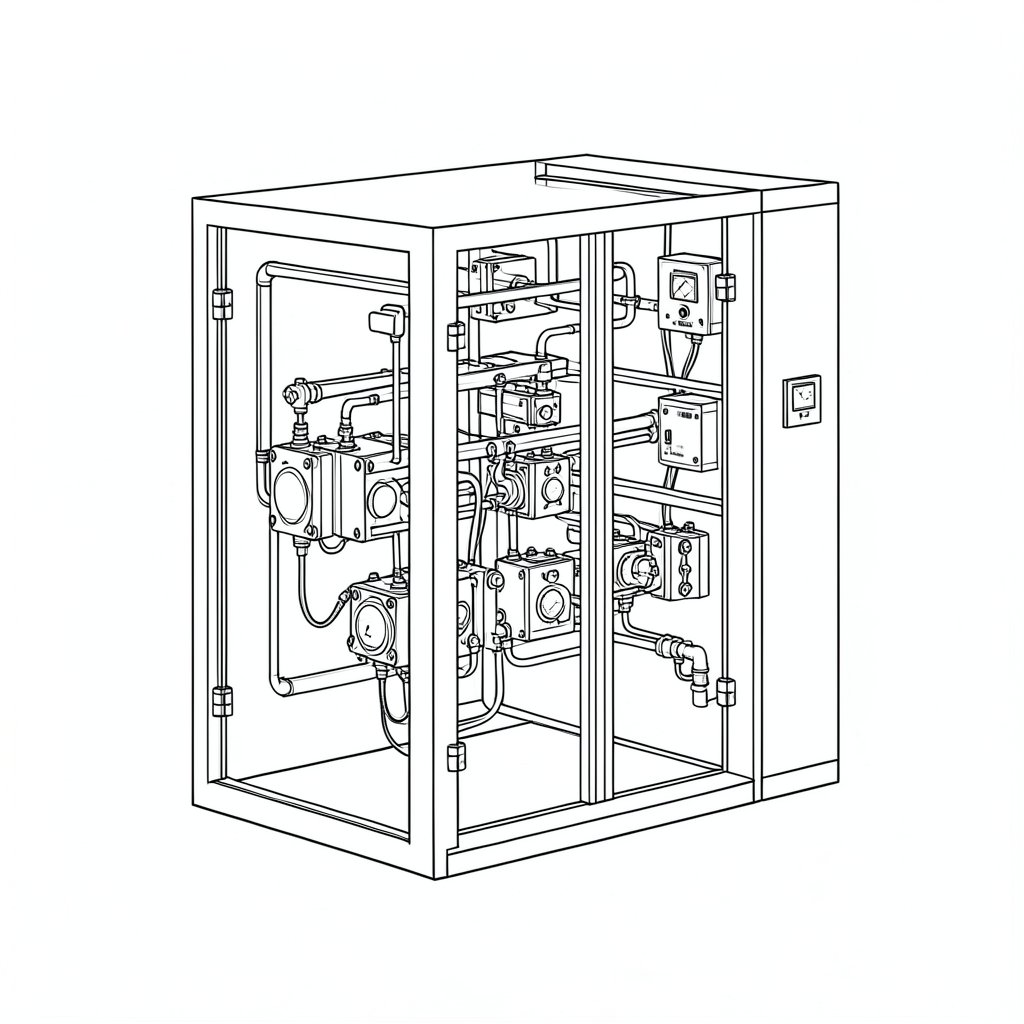
Racking and switching operations on medium and high-voltage switchgear carry some of the highest arc flash incident energy figures of any routine electrical task, precisely because the equipment being operated is designed to interrupt substantial fault currents — and a failure during that interruption happens right where the operator is standing.
Why racking and switching carry elevated risk
Racking a circuit breaker in or out of its cubicle, and operating a switch under load, both involve mechanically moving contacts within or near energised equipment at exactly the moment mechanical or electrical faults are most likely to manifest. Historical incident data across the industry consistently shows these operations as a disproportionate source of arc flash events relative to how routine they are, which is why they typically carry their own elevated PPE category separate from simple visual inspection or testing tasks on the same equipment.
PPE for racking and switching specifically
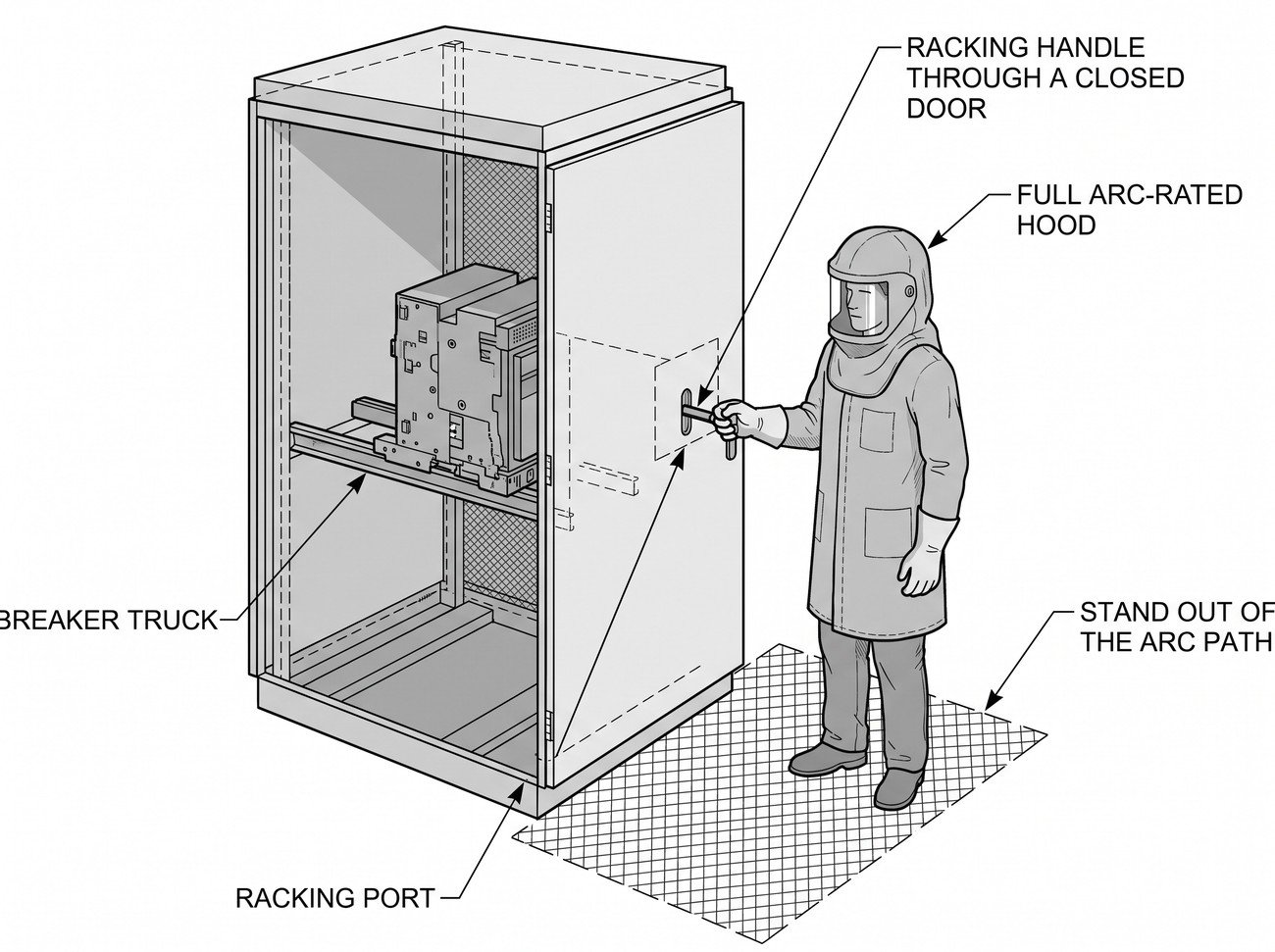
The incident energy for racking and switching operations should be calculated for that specific operation, not assumed from a lower-risk task on the same cubicle, and PPE selected accordingly — this often means the highest category of clothing rated to EN 61482 used on a site, an arc-rated hood rather than a face shield alone, and insulating gloves to EN 60903 matched to the equipment’s operating voltage. Where the equipment design permits remote racking or switching, operating from outside the calculated arc flash boundary removes the exposure entirely and is preferable to relying on PPE alone.
Positioning and door orientation
Standing to the side of a switchgear cubicle door rather than directly in front of it, where the equipment design allows, reduces direct exposure to the arc plasma jet in the event of a failure during the operation. Cubicle doors and covers should be closed and secured where the operation permits it, since an open door removes a layer of containment the equipment was designed to provide.
Procedure and sequence discipline
Racking and switching sequences are typically manufacturer-specified and, for protection-critical equipment, interlocked to prevent operations in the wrong order or state. Bypassing an interlock to save time removes a control specifically designed to prevent operating equipment in a state where a fault is more likely, and should never be treated as a routine workaround regardless of how familiar the equipment is.
For how the PPE category for this task is determined, see arc flash risk assessment, and for the boundary distances involved, see arc flash boundaries.
Common errors
1Assuming the PPE category for a lower-risk inspection task on a cubicle also covers racking or switching on the same equipment.
2Standing directly in front of a switchgear door during an operation where standing to the side was possible.
3Bypassing an interlock to complete an operation faster.
4Operating manually when the equipment design permits safer remote operation from outside the arc flash boundary.
Frequently asked questions
Why do racking and switching operations carry higher arc flash risk than routine inspection?
Both involve mechanically moving contacts within or near energised equipment at exactly the moment mechanical or electrical faults are most likely to manifest, and industry incident data consistently shows these operations as a disproportionate source of arc flash events.
Should the PPE for racking or switching be assumed the same as for inspecting the same cubicle?
No, the incident energy for racking and switching should be calculated for that specific operation, since it is typically higher than for simple visual inspection or testing on the same equipment.
Why is remote racking or switching preferable to PPE alone?
Where the equipment design permits it, operating from outside the calculated arc flash boundary removes the exposure entirely, rather than relying on PPE to manage exposure that remote operation could avoid altogether.
Why does standing position at the cubicle door matter during an operation?
Standing to the side rather than directly in front, where the equipment design allows, reduces direct exposure to the arc plasma jet in the event of a failure during the operation.
Why shouldn't an interlock be bypassed to speed up an operation?
An interlock is specifically designed to prevent operating equipment in a state where a fault is more likely, so bypassing it removes a control built for exactly the failure mode racking and switching are most prone to.
Need this as a document you can issue? The template library gives you the risk assessments, permits and inspection logs in editable form — and employer plans cover a whole team with completion records.