Safety / Tips and Tricks / Energy and networks
Activity 03 · Energy
Electrical Permits to Work: What They Need to Specify
A permit to work for electrical tasks exists to make the state of the equipment, the scope of the isolation, and the boundaries of what is authorised explicit and shared, rather than held only in the memory of whoever set the job up.
What the permit actually needs to identify
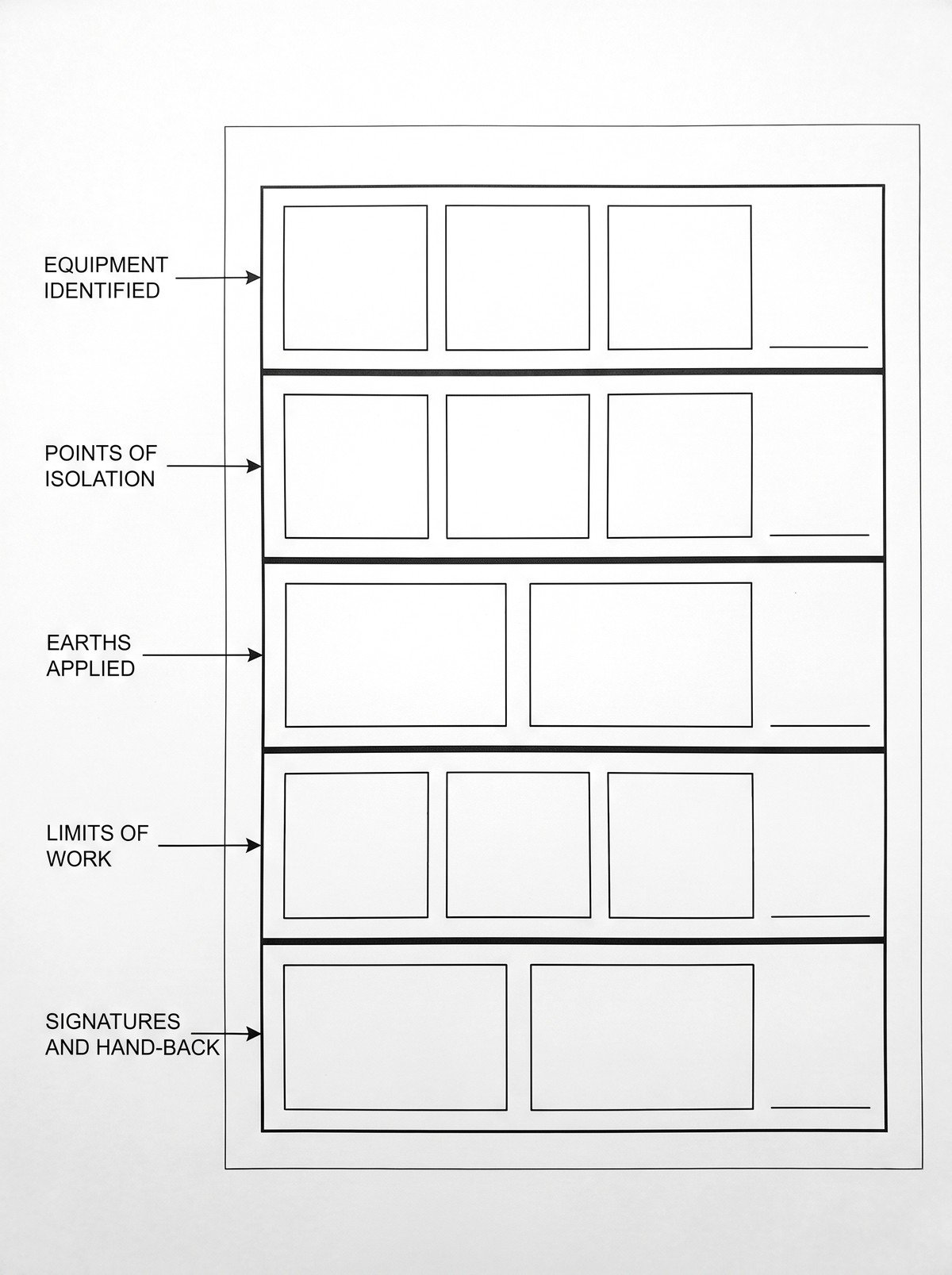
A workable electrical permit specifies the exact equipment and circuit the work applies to, unambiguously enough that there is no room to isolate or work on the wrong item — equipment identification by unique reference, not just a general description, matters especially on sites with similar or duplicated equipment. It also needs to record what isolation has actually been carried out, by whom, and confirmation that absence of voltage has been proven, not just planned.
Defining the scope of the work
The permit should state specifically what work is authorised, and by extension what is not. A permit issued for testing is not authorisation to also carry out repairs discovered during that testing; scope creep during a live permit is a common source of work proceeding without the specific precautions the actual task required. Where the scope needs to change, the permit should be formally amended or a new one issued, not stretched informally on site.
Named roles and authority
The permit needs named individuals for who authorises it, who is responsible for the isolation, and who is receiving the permit to actually carry out the work, with each role requiring the competence to make the specific decisions their role involves. A permit signed off by someone without the authority or competence to confirm the isolation is genuinely safe undermines the entire document’s purpose.
Hand-back and cancellation
Closing the permit formally — confirming the work is complete, the area is clear, and isolation can be safely removed — is as important as opening it. A permit left open after work has actually finished creates ambiguity about whether the equipment is still considered isolated, which can lead to someone reasonably but incorrectly assuming it remains safe to approach, or conversely delay restoring supply that is genuinely needed elsewhere.
Multiple permits on the same system
Where more than one permit is active on the same or interconnected electrical system, the permits need cross-referencing so that closing one does not inadvertently affect the isolation another depends on. This is particularly relevant on larger sites where different teams may be working on different parts of the same circuit or on adjacent circuits sharing a common isolation point.
For the isolation process a permit typically records, see lockout-tagout for electrical isolation.
Common errors
1Identifying equipment by general description rather than a unique reference, risking work on the wrong item.
2Allowing the scope of work to expand informally beyond what the permit actually authorised.
3Leaving a permit open after work has genuinely finished, creating ambiguity about isolation status.
4Not cross-referencing multiple active permits on the same or interconnected system.
Frequently asked questions
Why does an electrical permit need to identify equipment by unique reference, not general description?
On sites with similar or duplicated equipment, a general description leaves room to isolate or work on the wrong item, so a unique reference removes that ambiguity.
Can work discovered during a permitted task be carried out under the same permit?
Not automatically – a permit issued for testing is not authorisation to also carry out repairs discovered during that testing, and scope creep on a live permit is a common way work proceeds without the precautions it actually needs.
Why do permit roles need named individuals with specific competence?
A permit signed off by someone without the authority or competence to confirm the isolation is genuinely safe undermines the entire document's purpose, so each role needs a named person able to make that specific decision.
Why does formally closing a permit matter as much as opening it?
A permit left open after work has finished creates ambiguity about whether the equipment is still considered isolated, which can lead to an incorrect assumption either that it remains safe to approach or that supply cannot yet be restored.
What happens when multiple permits apply to the same or interconnected electrical system?
They need cross-referencing so that closing one permit does not inadvertently affect the isolation another permit depends on, which matters particularly where different teams share a common isolation point.
Need this as a document you can issue? The template library gives you the risk assessments, permits and inspection logs in editable form — and employer plans cover a whole team with completion records.