Safety / Tips and Tricks / Lifting operations and rigging
Activity 10 · Lifting operations
Slinger and Signaller Communication for Lifting Operations
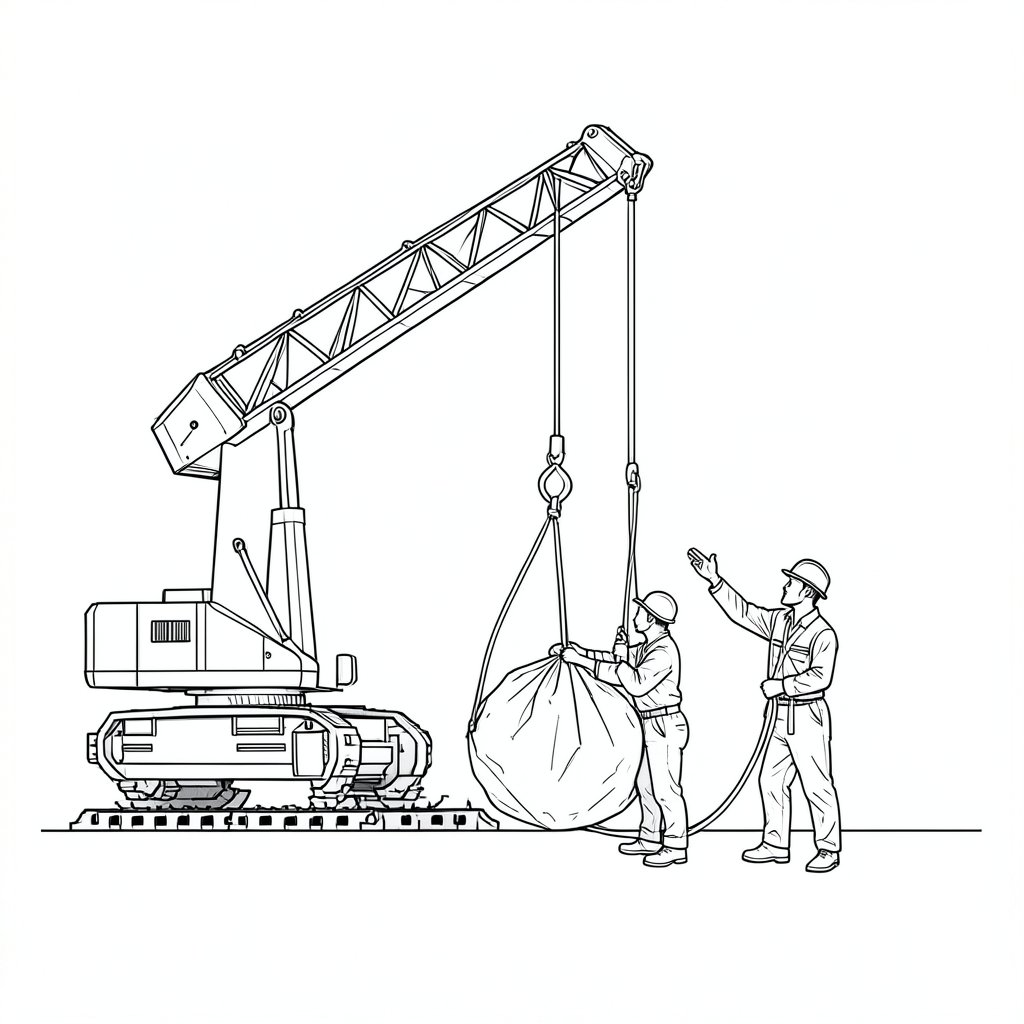
A crane operator who cannot see the load is flying it on someone else's eyes, and the quality of that arrangement decides the lift far more than the quality of the machine.
One voice, agreed before anything moves
Only one person directs the crane at any moment. Two people signalling is not redundancy; it is two sets of instructions arriving at an operator who has to decide which to obey, at the worst possible time. Who is signalling, how control passes if it needs to, and what the signals mean are all settled before the hook moves, not negotiated over a load that has started to swing.
The stop signal belongs to everyone
The one exception to single-point control is stop. Anyone who sees something wrong can stop the lift, and the operator obeys a stop from any source without needing to know who gave it or why. This costs nothing when it turns out to be unnecessary and it is the only mechanism that lets a person outside the conversation intervene before an incident rather than after it.
Losing sight of the signaller stops the lift
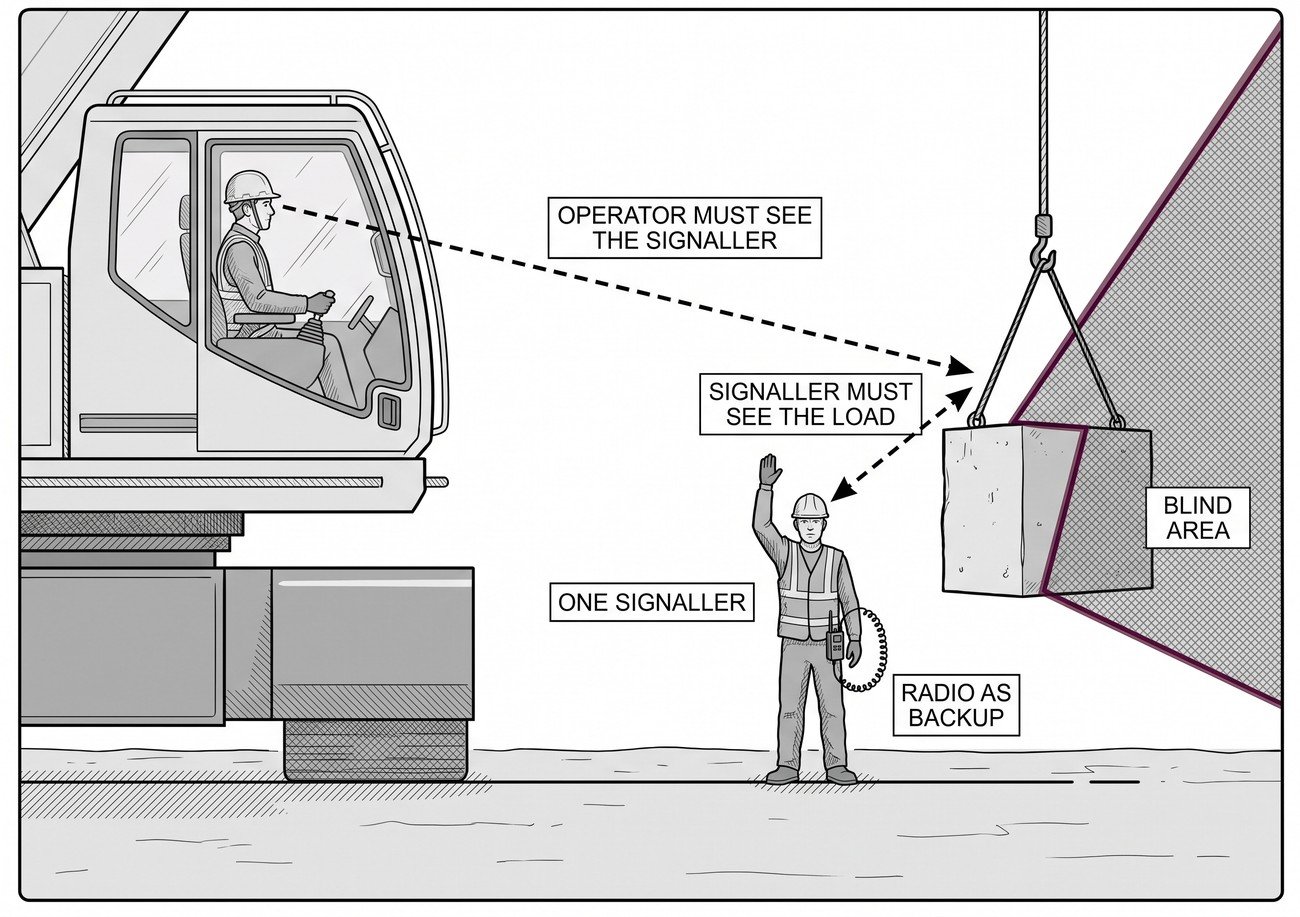
If the operator cannot see the signaller, the operator stops. That rule has to be absolute, because the alternative is an operator continuing a movement on the assumption that the last instruction is still valid, when the reason the signaller disappeared may be precisely that something has changed. The same applies in reverse: a signaller who cannot see the load has nothing useful to say about it and should stop the lift rather than guess.
Radio and hand signals do different jobs
Hand signals are unambiguous, need no equipment and fail visibly — you can see that you cannot see. Radio works around corners and over distance but fails silently, and a dead battery, a blocked channel or someone else talking over the frequency all sound exactly like nothing happening. Where radio is the primary method, the discipline is continuous confirmation rather than silence, so that loss of contact is detected rather than assumed to be quiet.
The slinger’s job does not end at the hook
The person who rigged the load knows things nobody else does: where the centre of gravity sat, which sling was tight first, whether a leg had to be adjusted. That knowledge is worth passing on rather than keeping, particularly when a different person will be receiving the load at the other end. Landing an unfamiliar load is where a poorly briefed receiving crew steps in early, guesses at the sequence, or slackens the wrong leg.
For the person on the rope during the manoeuvre, see tag lines and load control. For the equivalent problem with ground plant, see working near mobile plant.
Related standards
The standards below set the safety requirements, marking and discard criteria behind the equipment used for this work.
Common errors
1More than one person signalling to the same operator.
2Agreeing the signals after the load has started moving rather than before.
3Continuing a movement after the operator has lost sight of the signaller.
4Treating radio silence as everything being fine rather than as a possible loss of contact.
5Handing a load to a receiving crew without telling them how it was rigged.
Frequently asked questions
Why can only one person signal the crane?
Because two people signalling delivers two sets of instructions to an operator who then has to choose between them, at the moment when hesitation is most costly. Redundancy in signalling is not a safety feature.
Who can stop a lift?
Anyone. The stop signal is the single exception to one-voice control, and the operator obeys it from any source without needing to know who gave it or why.
What happens if the operator loses sight of the signaller?
The lift stops. The reason the signaller disappeared may be exactly the reason the movement should not continue, so continuing on the last instruction is not safe.
How do radio and hand signals differ in failure?
Hand signals fail visibly, because you can see that you cannot see. Radio fails silently, and a dead battery or a blocked channel sounds the same as nothing happening, which is why continuous confirmation is used.
What should the slinger tell the receiving crew?
Where the centre of gravity sat, which leg took up first, and whether anything had to be adjusted. A receiving crew without that information guesses at the landing sequence.
Need this as a document you can issue? The template library gives you the risk assessments, permits and inspection logs in editable form — and employer plans cover a whole team with completion records.