Safety / Tips and Tricks / Lifting operations and rigging
Activity 10 · Lifting operations
Pre-Use Inspection of Textile Slings
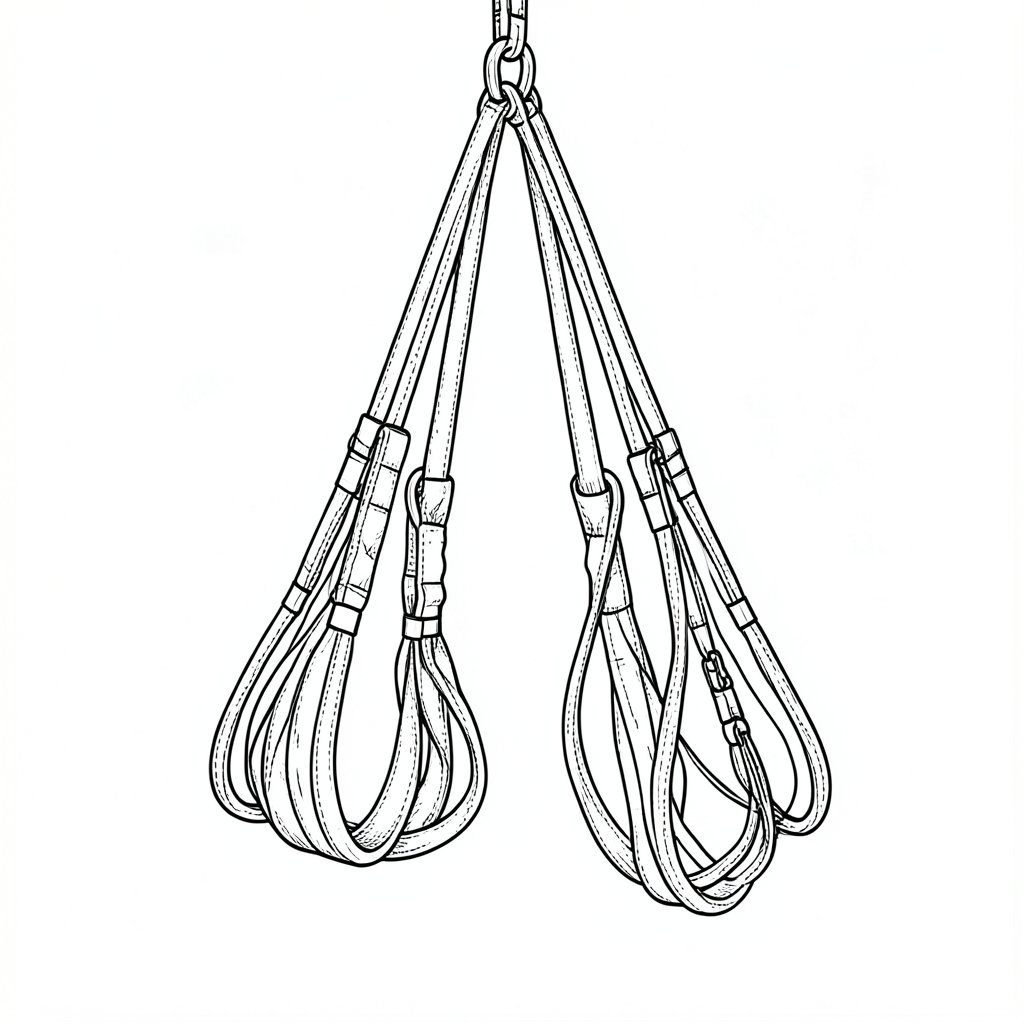
Textile is the material that gives the least warning before it fails, which makes the pre-use look at it the single most valuable thirty seconds in the whole lift.
The label first
Start with the label, because if it is missing or unreadable the inspection stops there. The label carries the working load limit, the material, the length and the traceable identification that links the sling to its examination record. Without it, the sling cannot be shown to be rated for anything, and no amount of good condition substitutes for that. A label that is present but illegible is the same outcome as no label at all.
Both faces, full length
Run the whole sling through your hands, looking at both faces and both edges. Damage is not distributed evenly: it concentrates where the sling passed over the load last time, which is rarely where it will pass this time. Feel as well as look, because glazing from heat and hardening from chemical attack are more obvious to the hand than to the eye, and a stiff patch in otherwise supple webbing is a finding.
Edges, stitching and eyes
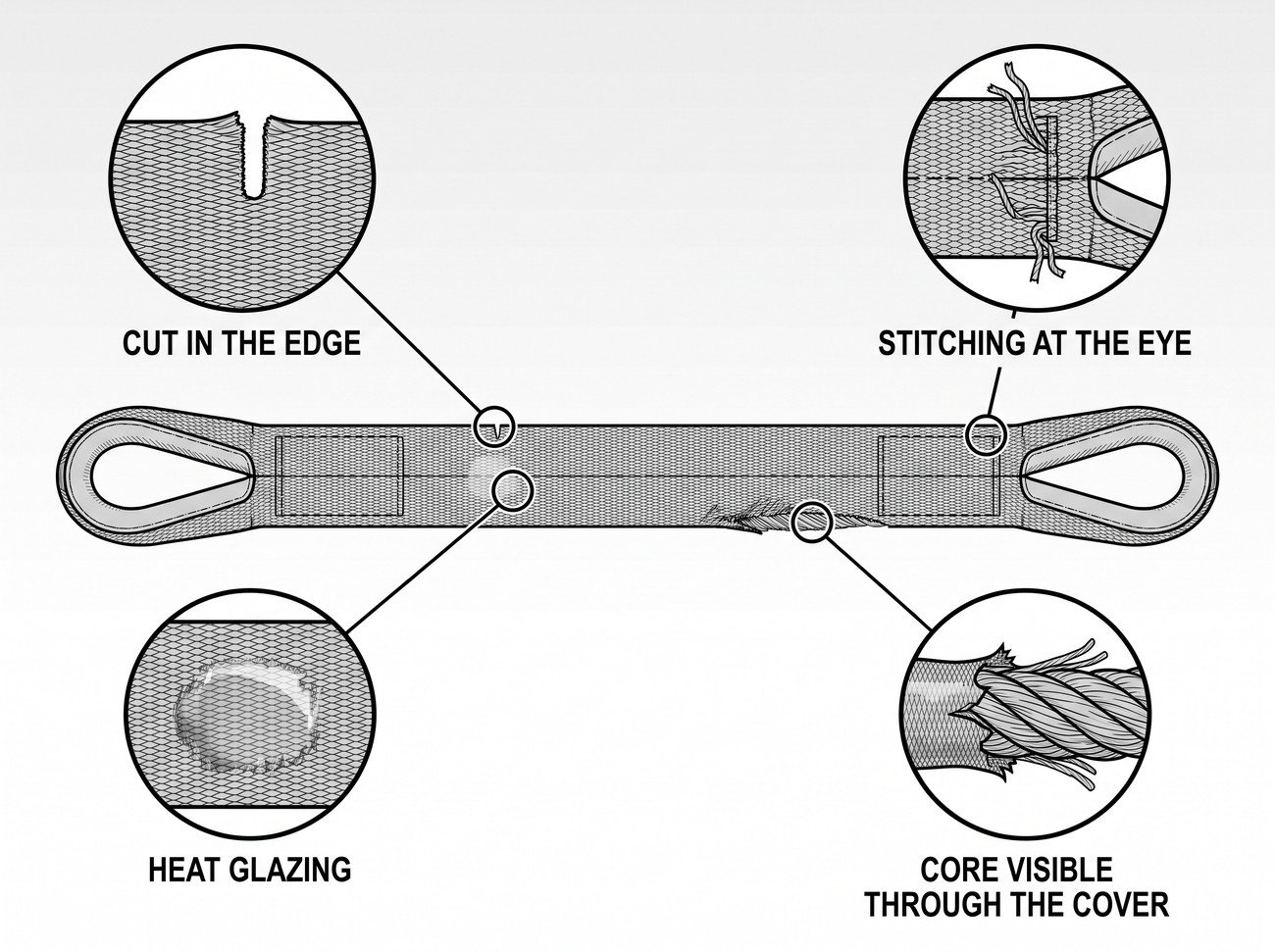
A cut or nick in a load-bearing edge is a withdrawal criterion however small it looks, because the edges carry a disproportionate share and a cut there is where progressive failure starts. Stitching is the other structural element: pulled, cut, worn or missing stitches at an eye mean the termination is no longer sound, and a termination that lets go releases the entire load. Look at the stitching pattern rather than at the webbing around it.
Roundslings hide the part that matters
A roundsling carries its load in a fibre core inside a protective cover, and that cover is the only thing you can inspect. The rule that follows is blunt: if the cover is damaged anywhere along its length such that the core is visible, the sling goes out of service, because the condition of the load-bearing fibre can no longer be established. Cover damage is not cosmetic on a roundsling in the way a scuff on a webbing sling might be.
Chemical and heat damage without a mark
Man-made fibre can lose substantial strength with no visible cut at all. Acid or alkali attack shows as local hardening, discolouration, or fibres that powder when rubbed. Heat shows as glazing, a shiny hardened patch, or fused fibres. Ultraviolet exposure shows as fading and a chalky surface. None of these look like damage in the way a cut does, and all of them are reasons to withdraw the sling.
For what causes most of this damage, see protecting slings from edges and corners. For the requirements behind the label and colour code, see EN 1492.
Related standards
The standards below set the safety requirements, marking and discard criteria behind the equipment used for this work.
Common errors
1Inspecting only the part of the sling nearest to hand rather than the full length and both faces.
2Passing a sling with a small cut in a load-bearing edge because the cut looks trivial.
3Treating cover damage on a roundsling as cosmetic when the core is visible.
4Looking for cuts and missing glazing, hardening and discolouration, which leave no cut.
5Continuing to use a sling whose label has become unreadable but which appears sound.
Frequently asked questions
What is the first thing to check on a textile sling?
The label. If it is missing or unreadable the inspection stops there, because the working load limit and the traceable identification linking the sling to its examination record can no longer be established.
Why is a small cut in the edge a withdrawal criterion?
The edges carry a disproportionate share of the load, so a cut there is the starting point for progressive failure. The strength lost is far greater than the size of the cut suggests.
How is a roundsling inspected when the core is hidden?
Through the cover, which is the only inspectable surface. If the cover is damaged anywhere such that the core is visible, the sling is withdrawn, because the condition of the load-bearing fibre cannot be established.
What damage leaves no cut?
Chemical attack showing as hardening, discolouration or fibres that powder when rubbed; heat showing as glazing or fused fibres; and ultraviolet exposure showing as fading and a chalky surface.
Why feel the sling as well as look at it?
Glazing from heat and hardening from chemical attack are more obvious to the hand than to the eye. A stiff patch in otherwise supple webbing is a finding even when nothing looks wrong.
Need this as a document you can issue? The template library gives you the risk assessments, permits and inspection logs in editable form — and employer plans cover a whole team with completion records.