Safety / Tips and Tricks / Lifting operations and rigging
Activity 10 · Lifting operations
Protecting Slings From Edges and Corners
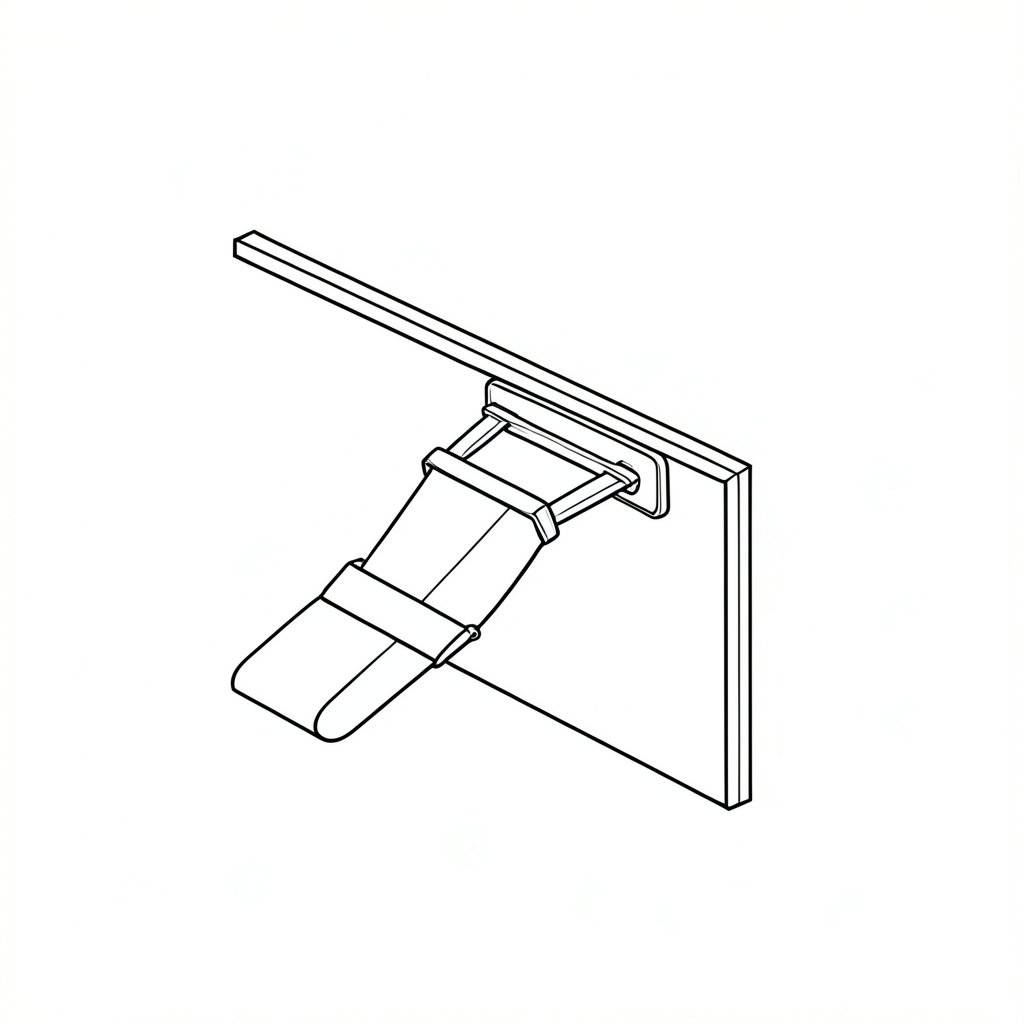
An edge does two things to a sling at once: it cuts it, and it concentrates the whole load onto a narrow strip of it. Protection deals with the first; geometry deals with the second, and both matter.
Why an edge is worse than it looks
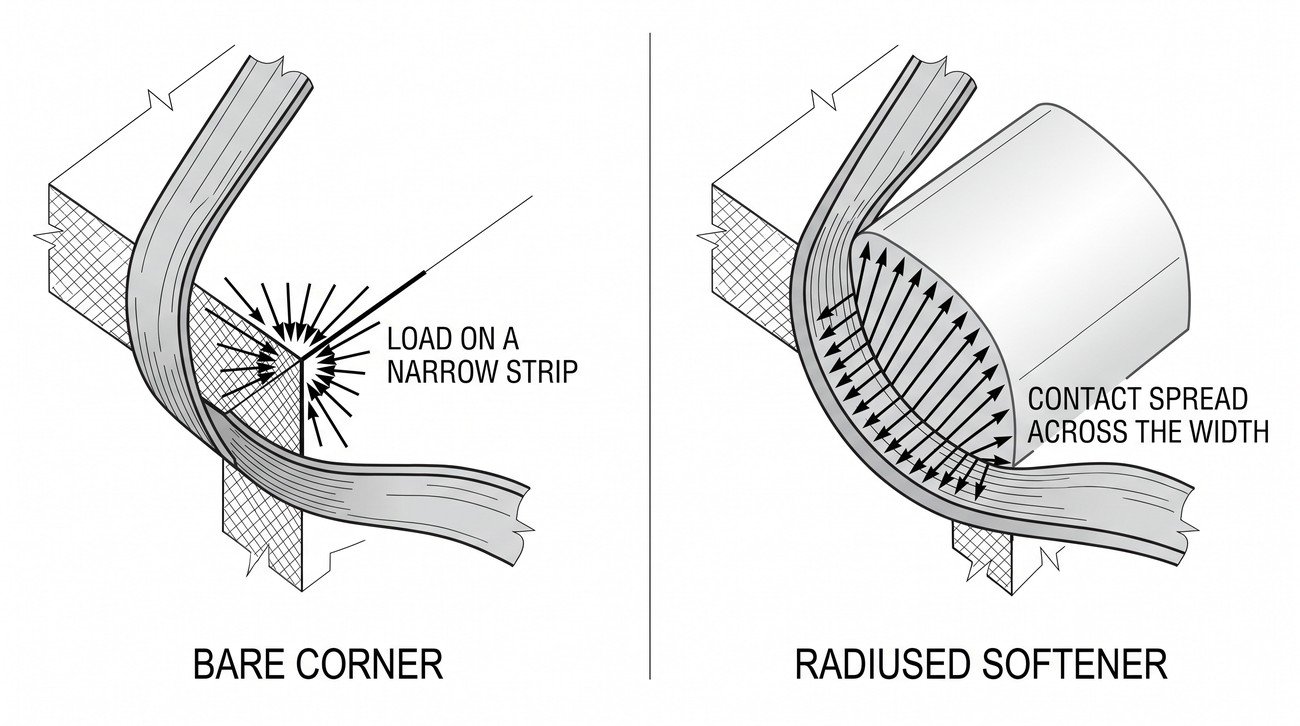
Where a sling passes over a corner, the tension in it is carried by the material touching that corner rather than shared across the full width or the full cross-section. A textile sling bent over a sharp edge is loaded across a fraction of its webbing, and a wire rope bent tightly puts most of the tension into its outer wires. That is why the damage from a single lift over an unprotected edge can be far greater than the appearance of the edge suggests, and why the strength lost is not proportional to the visible mark.
The two separate problems
Cutting is the obvious one, and it is what sleeves, wear pads and corner protectors address by putting a sacrificial layer between the sling and the edge. Bending is the quieter one, and no amount of sleeving fixes it: a sling bent tightly around a small radius loses capacity because of the geometry, whatever is wrapped around it. Increasing the radius — with a proper softener, a shaped corner piece or a piece of section — is what addresses the second problem, and it is why a soft cloth wrapped around a corner is a partial solution at best.
Choosing the protection to the hazard
A smooth but hard corner needs a radius more than it needs armour. A flame-cut, sheared or corroded edge needs armour more than it needs a radius, because it will saw through anything soft. Rotating loads need protection that stays put, since a sleeve that slides along the sling as the load turns leaves the sling bare at exactly the moment it is loaded. Magnetic and clamp-on corner protectors exist for this reason and are worth more than an improvised wrap on any lift that will be repeated.
Protection that moves is protection that is absent
The most common failure of edge protection is not that it was the wrong type, but that it did not stay where it was put. Sleeves ride up as the sling takes tension, corner pieces get knocked out of position as the load lifts clear, and wraps unwind when the load turns. Fixing protection to the sling or to the load, and checking it after the initial strain is taken rather than only before, is what turns it into a control rather than a gesture.
Where the edges hide
The corner of a steel plate is obvious. Less obvious are the edge of a machined keyway, the lip of a flange, a weld spatter ridge, a burr on a cut tube, the rim of an access hole the sling passes through, and the corner of a pallet under a strapped load. Each has cut a sling at some point, and none of them look like the hazard people are watching for. Running a gloved hand along the contact path before rigging finds most of them.
For how the bend interacts with the hitch, see choosing a hitch. For what edge damage means on inspection, see pre-use inspection of textile slings.
Related standards
The standards below set the safety requirements, marking and discard criteria behind the equipment used for this work.
- EN 1492 — Textile Slings (Webbing and Roundslings)
- EN 13414 — Steel Wire Rope Slings
- EN 388 — Protective Gloves Against Mechanical Risks
Common errors
1Treating a soft wrap as equivalent to a radiused softener, which addresses cutting but not bending.
2Fitting protection that then slides out of position as the sling tensions or the load turns.
3Protecting the obvious corner and missing burrs, flange lips and weld ridges on the contact path.
4Checking protection only before the lift and not again once the strain is taken.
5Reusing a sleeve that has already been cut through, which no longer separates anything.
Frequently asked questions
Why is a corner so damaging to a sling?
The tension is carried by the narrow strip of material touching the corner rather than shared across the full width or cross-section, so the load is concentrated far more than the appearance of the edge suggests.
What is the difference between a sleeve and a softener?
A sleeve puts a sacrificial layer between the sling and the edge and addresses cutting. A softener increases the radius of the bend and addresses the loss of capacity from bending, which sleeving alone does not fix.
Is a folded cloth adequate edge protection?
It is a partial answer. It may stop the sling being cut but it does very little about the tight bend, and it rarely stays in position once the sling tensions or the load turns.
Why does protection need re-checking after the strain is taken?
Because sleeves ride up as the sling tensions, corner pieces get knocked out of position as the load lifts clear, and wraps unwind when the load turns, leaving the sling bare exactly when it is loaded.
Which edges are most often missed?
Machined keyways, flange lips, weld spatter ridges, burrs on cut tube, the rim of an access hole the sling passes through, and pallet corners under a strapped load. Running a gloved hand along the contact path finds most of them.
Need this as a document you can issue? The template library gives you the risk assessments, permits and inspection logs in editable form — and employer plans cover a whole team with completion records.