Safety / Tips and Tricks / Lifting operations and rigging
Activity 10 · Lifting operations
Estimating the Load and Finding the Centre of Gravity
Two numbers decide whether a lift works: how heavy the load is, and where its weight acts. Getting the first wrong overloads equipment. Getting the second wrong makes the load swing, tip or slide the moment it leaves the ground.
Where the weight figure should come from
In order of reliability: a marked weight on the item, the manufacturer documentation, a weighed figure from a load cell or a crane readout, and only then a calculation from dimensions and material. Estimating by eye comes last and should be treated as a way of sanity-checking a number rather than producing one. The common failure is not wild overestimation but quiet omission — the contents of the vessel, the water in the base, the packing, the pallet, the frame, the spreader beam, and the slings themselves all weigh something.
The rigging is part of the load
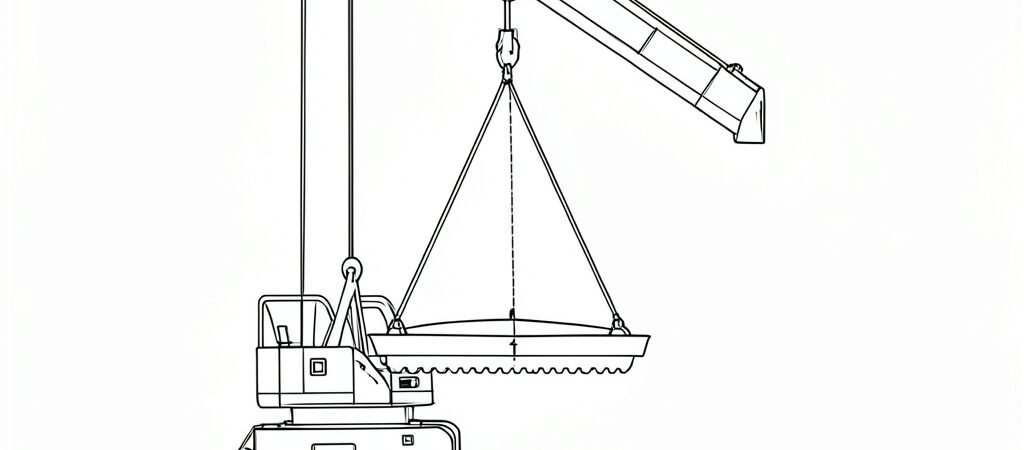
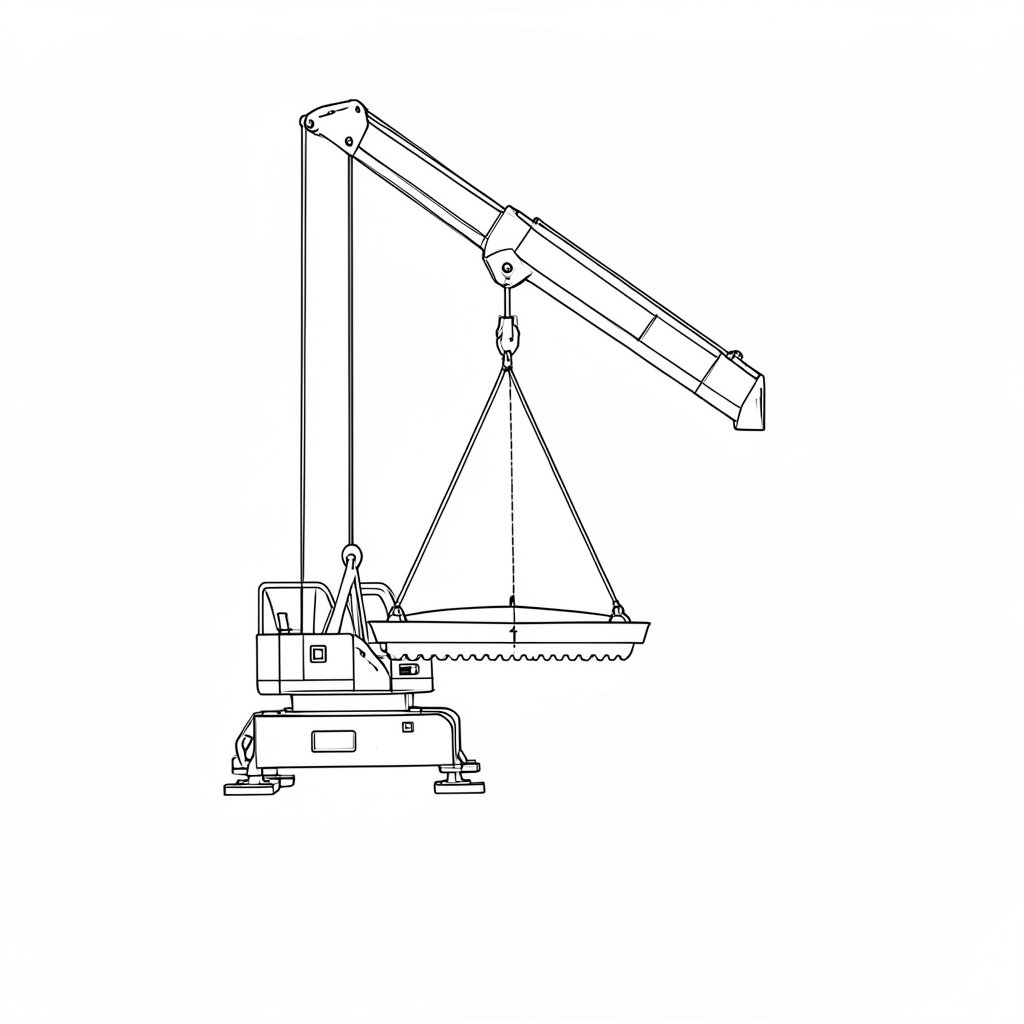
Crane capacity is consumed by everything below the hook, not by the item alone. A heavy spreader beam, a set of chain slings and a couple of shackles can account for a meaningful fraction of the machine’s rated duty at radius, and leaving them out is one of the more common ways a lift is overloaded on paper as well as in fact. The attachment is marked with its own weight for exactly this reason.
What the centre of gravity does
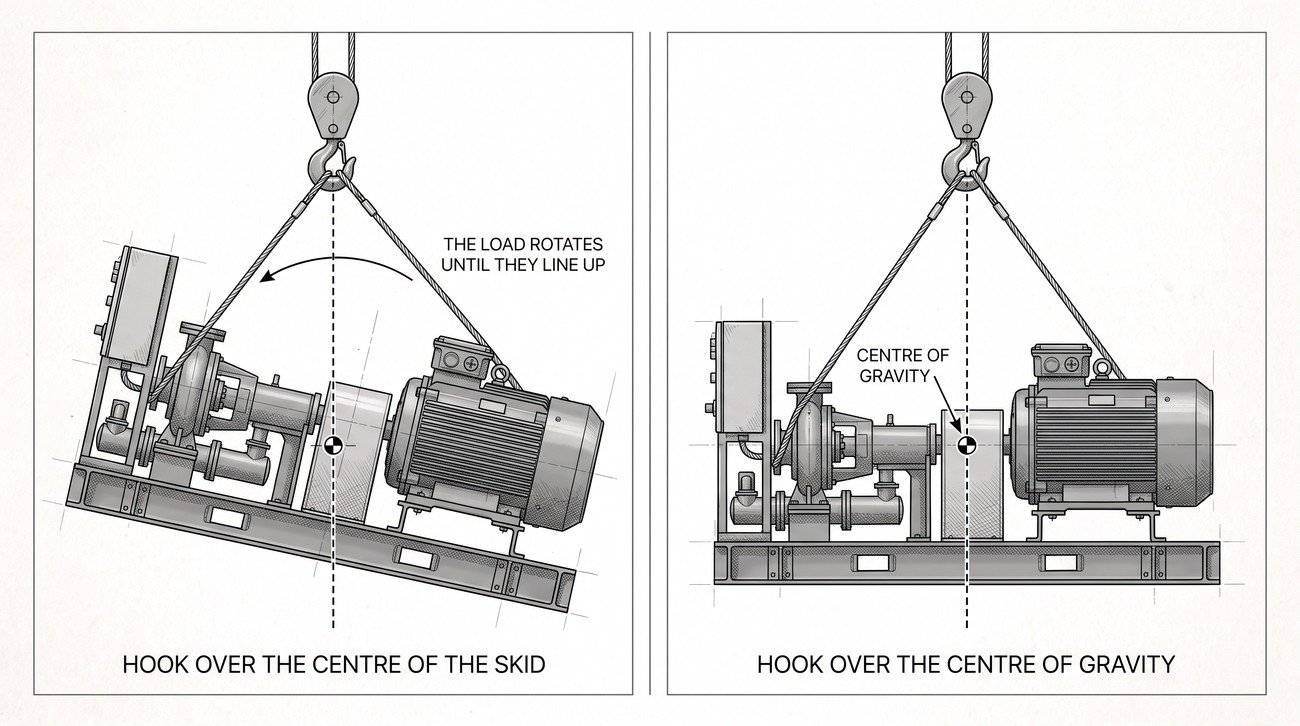
A suspended load will always rotate until its centre of gravity hangs directly beneath the hook. If the hook is not above it when the strain comes on, the load will swing to put it there, and that swing happens at the exact moment the load breaks free of the ground, when people are usually closest. On an item that is longer than it is tall, this shows as a lurch. On a tall item it shows as a topple. Neither is a surprise; both are the load doing what it must.
Finding it without a drawing
For a symmetrical item of uniform material, the centre of gravity is at the geometric centre. For anything else, it moves toward the heavy end — the motor on a skid, the gearbox on a frame, the full end of a part-drained tank. Taking the strain gently and watching the load for the first sign of tilt, then setting down and adjusting, is the practical method, and it is why the initial lift is made a few centimetres rather than to working height.
Correcting an off-centre load
The aim is to move the hook over the centre of gravity, not to fight the tilt with tension. Shortening one leg of a chain sling with its shortening device, moving the attachment points, or using a spreader with adjustable attachment positions all do this properly. Adding tension to the low side to hold the load level does not: it loads that leg far beyond its share and the load is still trying to rotate.
For levelling a load properly, see chain sling shortening. For where this is recorded, see what a lift plan has to answer.
Related standards
The standards below set the safety requirements, marking and discard criteria behind the equipment used for this work.
- EN 13155 — Non-Fixed Load Lifting Attachments
- EN 13414 — Steel Wire Rope Slings
- EN 818 — Short Link Chain for Lifting
Common errors
1Omitting contents, packing, the pallet, the frame or residual liquid from the weight.
2Leaving the spreader beam, slings and shackles out of the crane duty calculation.
3Assuming the centre of gravity is at the geometric centre of an asymmetric assembly.
4Lifting straight to working height instead of taking the strain and checking for tilt first.
5Holding an off-centre load level with extra tension rather than repositioning the hook.
Frequently asked questions
Where should the weight of a load come from?
In order of reliability: a marked weight, the manufacturer documentation, a weighed figure from a load cell or crane readout, then a calculation from dimensions and material. Estimating by eye is a sanity check, not a source.
What is most often left out of the weight?
The contents of a vessel, residual liquid, packing, the pallet, the carrying frame, and the rigging itself including the spreader beam, slings and shackles.
Why does a load swing when it leaves the ground?
Because a suspended load rotates until its centre of gravity hangs directly under the hook. If they are not aligned when the strain comes on, the load moves to align them, at the moment people are usually closest.
How is the centre of gravity found without a drawing?
It sits at the geometric centre only for a symmetrical item of uniform material. Otherwise it moves toward the heavy end. Taking the strain gently and watching for the first sign of tilt, then setting down and adjusting, is the practical method.
Can an off-centre load be held level with extra tension?
No. That loads one leg far beyond its share and the load is still trying to rotate. The hook has to be moved over the centre of gravity, by shortening a leg, moving the attachment points, or using an adjustable spreader.
Need this as a document you can issue? The template library gives you the risk assessments, permits and inspection logs in editable form — and employer plans cover a whole team with completion records.