Safety / Tips and Tricks / Machinery and manufacturing
Activity 12 · Machinery
Entanglement: Clothing, Gloves, Hair and Jewellery
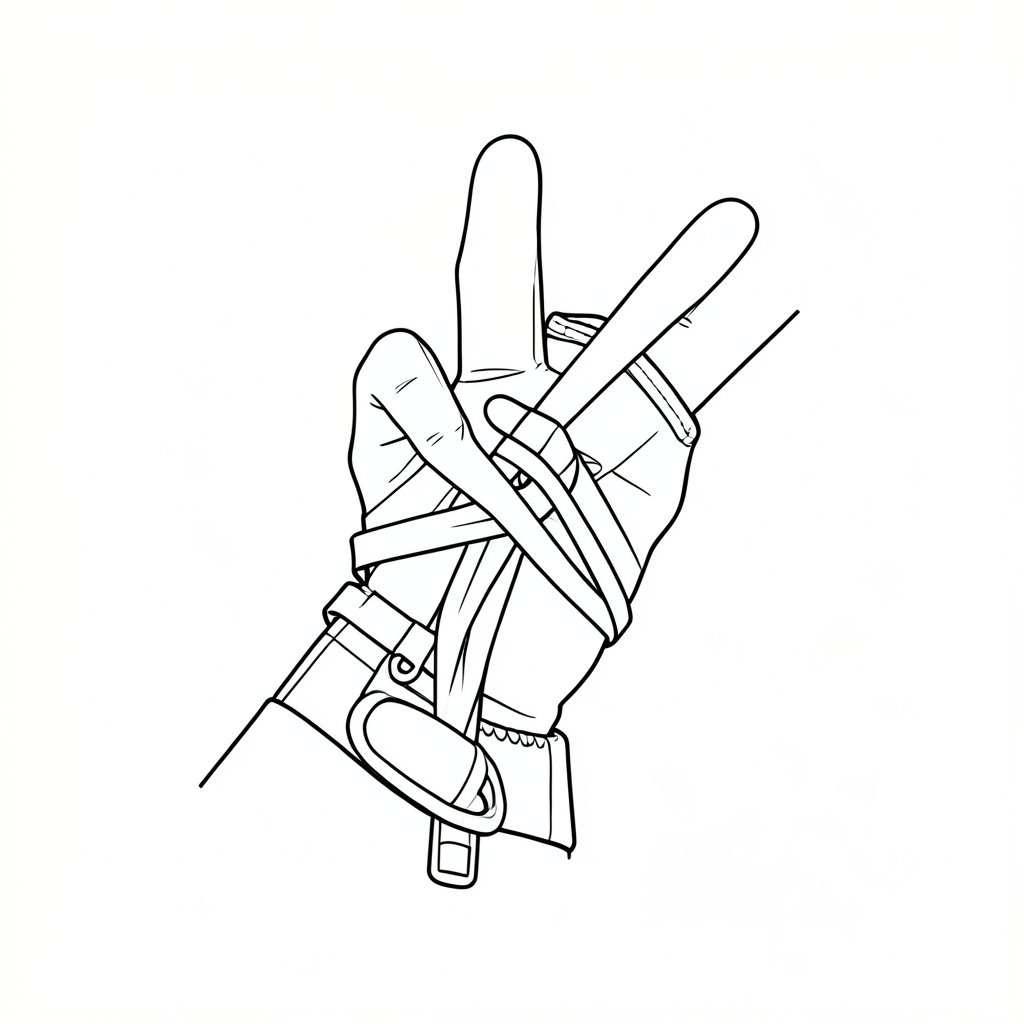
Entanglement injuries rarely start with a hand. They start with something attached to a hand — a glove cuff, a sleeve, a ring, a lanyard — and the hand follows whatever was caught.
Anything loose is a handle for the machine
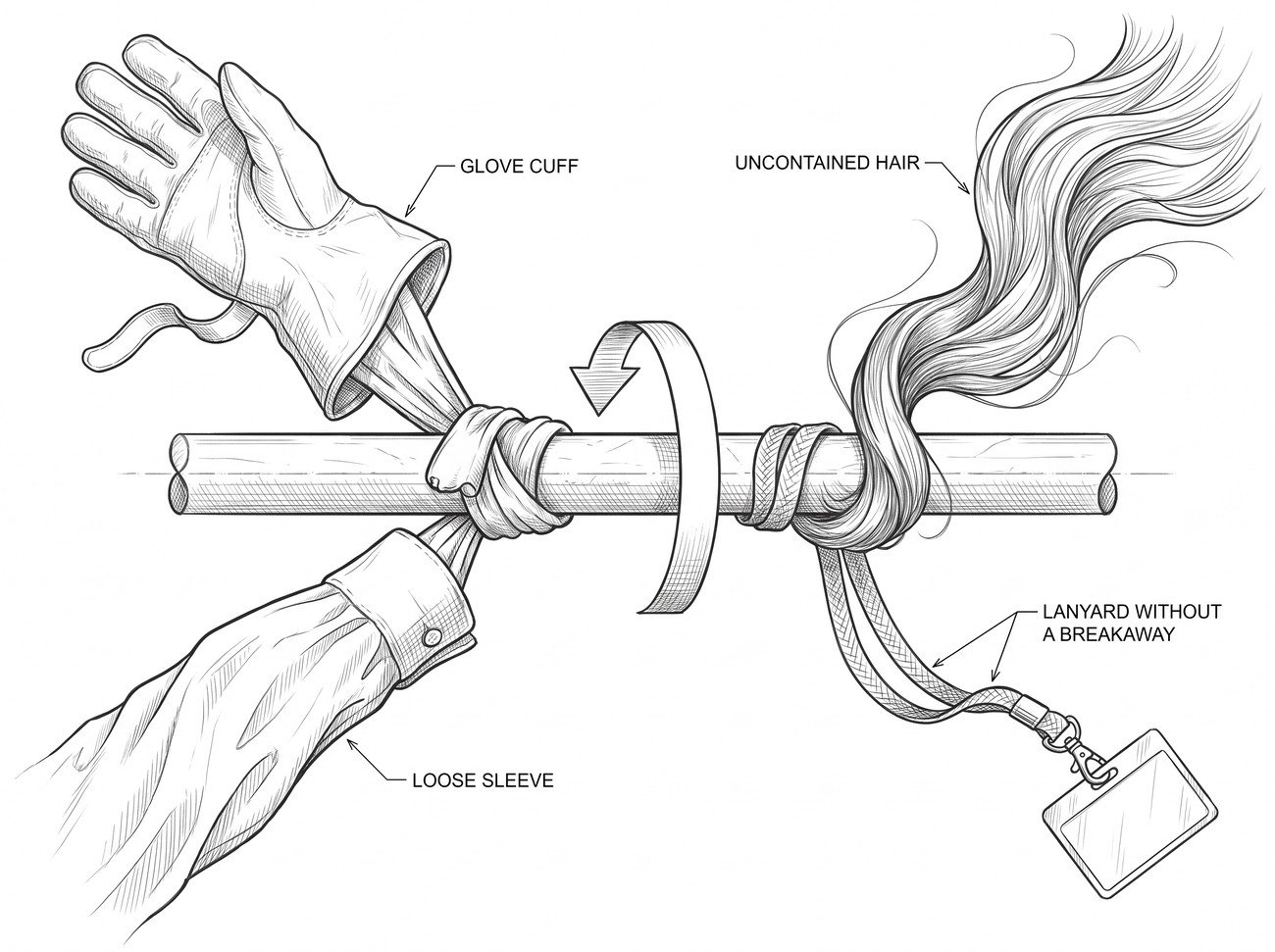
A rotating shaft does not need to grip skin to injure someone. It needs to catch a cuff, a hem, a strap, a tie, an unfastened overall front, a hoodie cord, or a length of hair. Once caught, the rotation winds the material in with enormous force and no way to release, and the person is drawn to the machine at a speed nobody can react to. The severity comes from the winding action rather than from the initial contact.
Gloves near rotation are a specific hazard
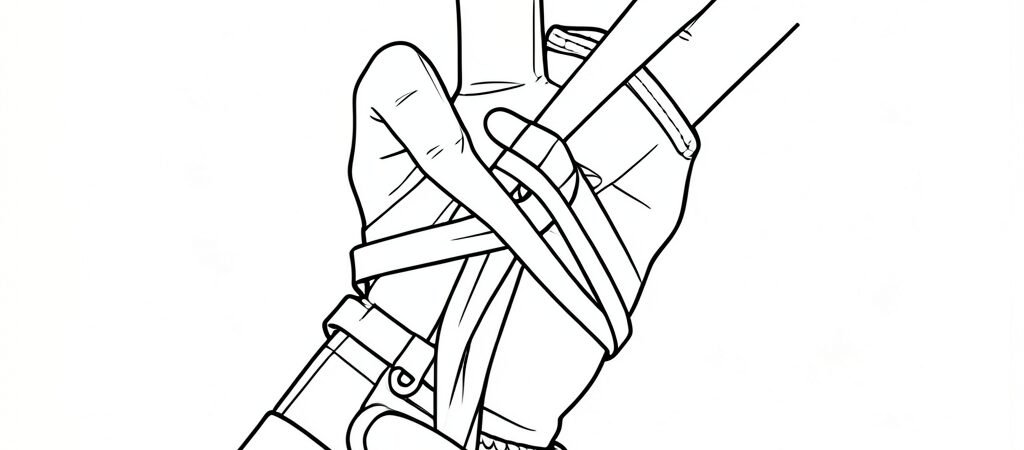
This is the case that gets argued about, because gloves protect hands from sharp swarf and hot components, and both of those are real. But a glove near a rotating spindle, chuck, drill or shaft is an object with a loose cuff attached to a hand, and the standard position for that reason is that gloves are not worn at rotating machinery. Where a hazard genuinely needs hand protection at the same machine, the answer is to separate the tasks in time rather than to compromise on both.
Hair, lanyards and identity badges
Long hair tied back is not the same as long hair contained, because a ponytail still hangs. Containment means under a cap or in a net. Lanyards worn round the neck are the same hazard as a tie and are worn far more widely, and a breakaway fitting is what makes one acceptable near machinery. Identity badges, phone cords and earphone leads all fall into the same category, and all of them are usually invisible in a risk assessment written about the machine rather than about the person.
Rings and watches
A ring caught on a projection or in a mechanism transfers the whole force to one finger, and the injuries are severe out of all proportion to the size of the object. The same applies to a watch strap and a bracelet. This is one of the few controls that is genuinely simple to apply and is resisted for personal reasons, which is worth handling as such rather than as a compliance point.
Fix the machine, not just the person
All of the above sits at the bottom of the hierarchy: it depends on every person getting it right every time. The measure that works regardless is enclosing the rotating part, so there is nothing exposed for anything to catch on. A workplace relying heavily on clothing rules around exposed rotating parts has a guarding problem it is managing with instructions.
For the mechanism that draws material in, see nip, shear and crush points. For a real case, see unguarded conveyor glove entanglement.
Related standards
The standards below set the design requirements, classification and test methods behind the safeguards and equipment referenced in this note.
- EN ISO 14120 — Guards: Design and Construction
- EN 388 — Protective Gloves Against Mechanical Risks
- ISO 12100 — Safety of Machinery: General Principles
Common errors
1Wearing gloves at a rotating spindle, chuck or drill.
2Tying hair back rather than containing it under a cap or net.
3Wearing a lanyard without a breakaway fitting near machinery.
4Treating rings and watches as a personal matter rather than a machine hazard.
5Managing exposed rotating parts with clothing rules instead of enclosure.
Frequently asked questions
Why is entanglement so severe?
Because the rotation winds the caught material in with enormous force and no way to release, drawing the person to the machine faster than anyone can react. The severity comes from the winding, not the initial contact.
Should gloves be worn at rotating machinery?
No. A glove near a rotating spindle, chuck, drill or shaft is an object with a loose cuff attached to a hand. Where hand protection is genuinely needed at the same machine, the tasks are separated in time.
Is tying hair back sufficient?
No. A ponytail still hangs. Containment means under a cap or in a net, so nothing can be caught by a rotating part.
What about lanyards and badges?
A lanyard round the neck is the same hazard as a tie and is worn far more widely. A breakaway fitting is what makes one acceptable near machinery, and the same applies to phone and earphone cords.
What is the control that does not depend on compliance?
Enclosing the rotating part so there is nothing exposed to catch on. A workplace relying heavily on clothing rules around exposed rotating parts has a guarding problem it is managing with instructions.
Need this as a document you can issue? The template library gives you the risk assessments, permits and inspection logs in editable form — and employer plans cover a whole team with completion records.