Safety / Tips and Tricks / Machinery and manufacturing
Activity 12 · Machinery
Swarf, Chips and Hot Workpieces
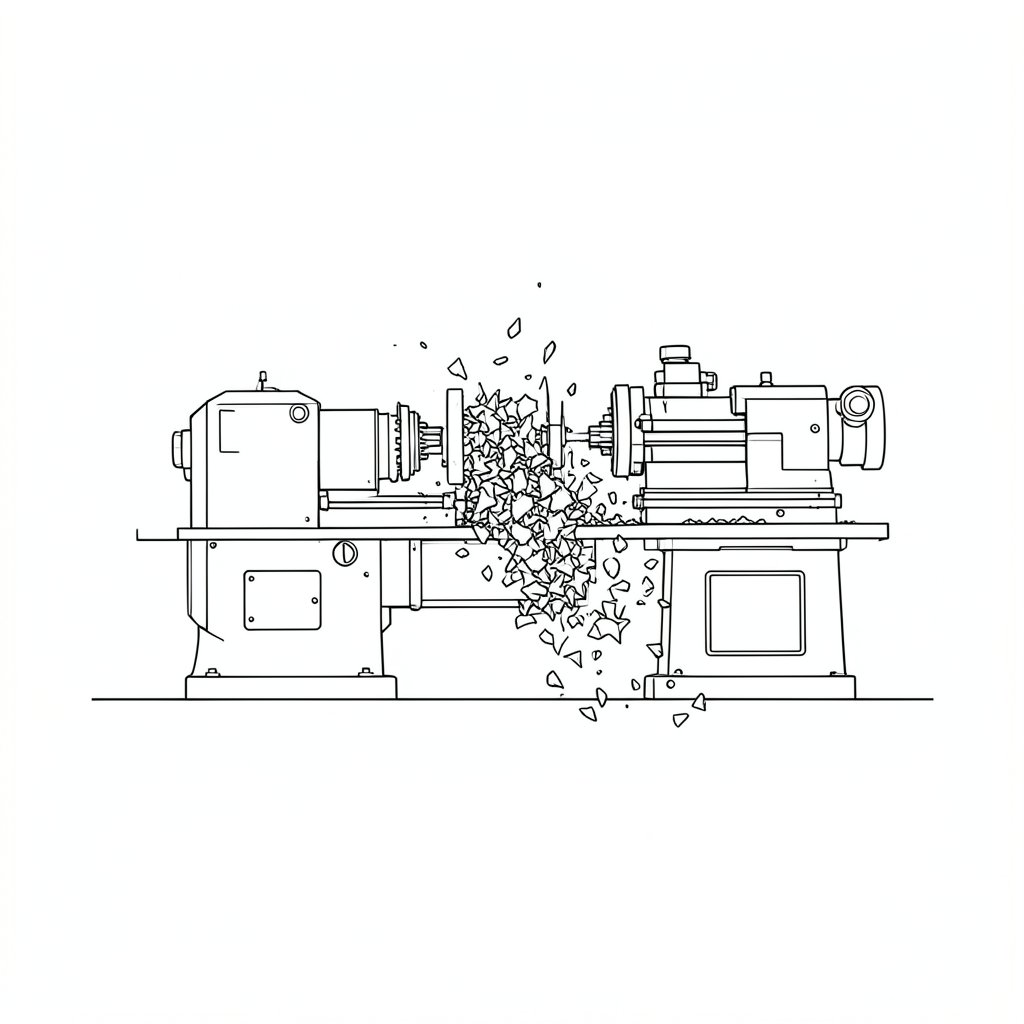
The waste a machine produces is sharper, hotter and more mobile than the material it started from, and it injures people who are nowhere near a moving part.
Swarf is not scrap, it is a blade
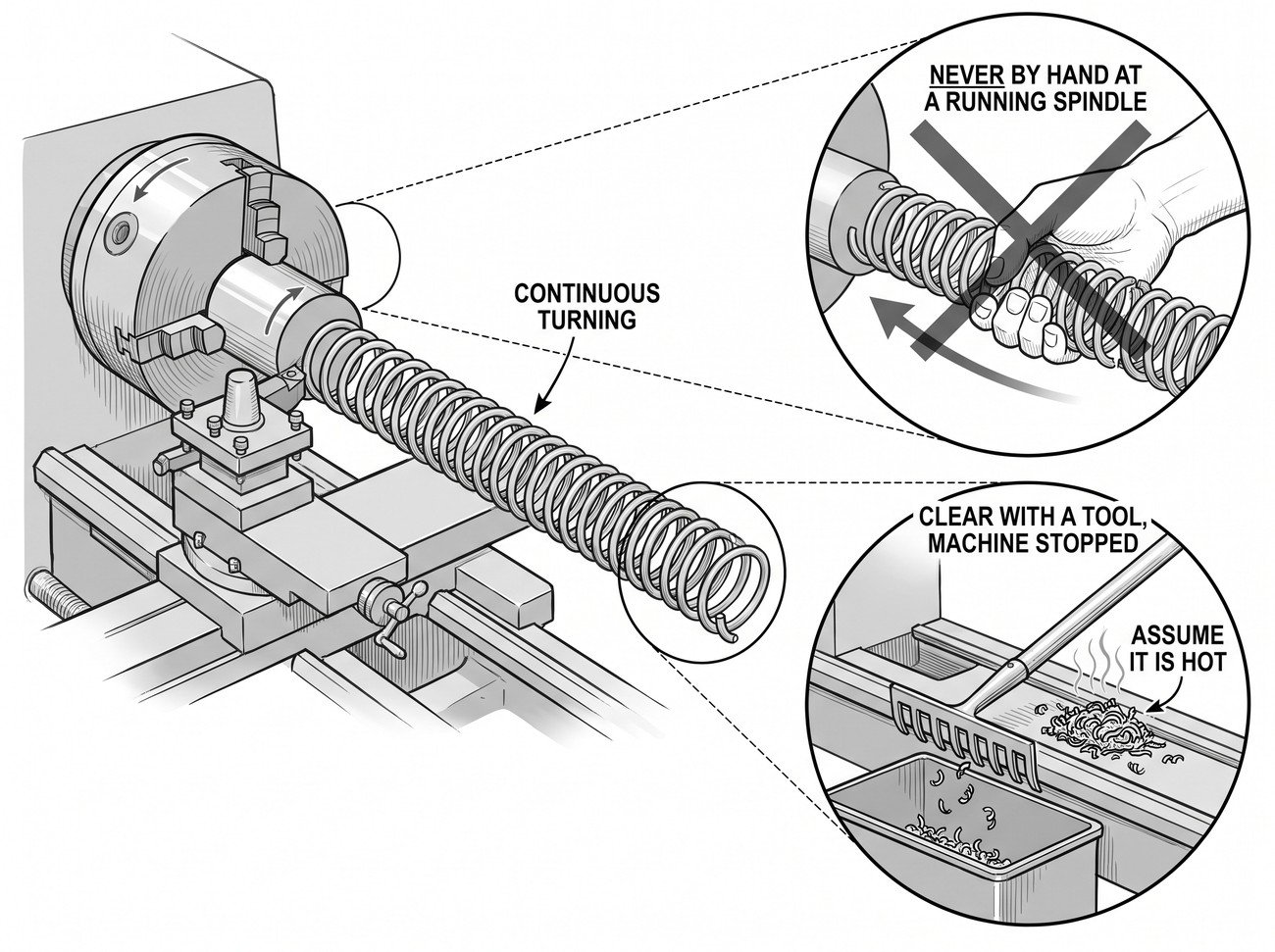
Continuous turnings come off as long, springy, razor-edged coils that catch on clothing and unwind, and short chips come off hot and sharp enough to embed in skin. Both are handled with a rake, hook or shovel rather than with hands, and both are heavy enough in bulk to cause manual handling injuries when a bin is moved. A swarf bin filled to the top is both a laceration risk and a lift nobody should be doing.
Never pull a turning while the machine is running
Grasping a continuous turning at a running lathe connects the person to the machine, and the coil pulls at whatever speed the spindle is turning. This is the single most direct route from waste handling to a serious injury in a machine shop. Chip breakers, correct feed and speed, and stopping the machine before clearing are the answers; a hook used at a running spindle is safer than a hand and still not safe.
Ejected chips travel
Chips leave a cutting zone at speed and in unpredictable directions, which is why eye protection is worn across a machine shop rather than only at the machine being operated. A passer-by has no warning and no reason to expect it. Enclosures and chip guards keep the material in the machine, and they are also the reason an enclosed machine should not be run with its door open to watch the cut.
Hot components look exactly like cold ones
A workpiece straight off a cut, a drill bit, a saw blade, and a swarf pile all retain a great deal of heat with no visible sign. Burns from picking up a component that had been machined minutes earlier are routine, and the person doing it usually had no reason to think of it. Tongs, a designated cooling area, and a habit of assuming anything recently machined is hot deal with this better than any warning.
Housekeeping is a safety control here
Swarf and fluid together produce a floor that is both slippery and sharp, and a slip in a machine shop can end with a hand going out to catch a fall onto a machine or into a bin. Regular clearing, contained bins that are emptied before they overflow, and absorbent measures for fluid on the floor are what stop the two hazards combining. This is the housekeeping that is genuinely a control rather than tidiness.
For eye protection specification, see impact grades under EN 166. For the fluid on the floor, see metalworking fluids.
Related standards
The standards below set the design requirements, classification and test methods behind the safeguards and equipment referenced in this note.
- EN 166 — Eye Protection
- EN 388 — Protective Gloves Against Mechanical Risks
- EN ISO 14120 — Guards: Design and Construction
Common errors
1Clearing swarf by hand instead of with a rake, hook or shovel.
2Pulling a continuous turning while the spindle is running.
3Running an enclosed machine with the door open so chips leave the enclosure.
4Handling a recently machined component without assuming it is hot.
5Letting swarf and fluid accumulate on the floor, combining a slip with a laceration.
Frequently asked questions
Why is swarf handled with tools rather than hands?
Continuous turnings are long, springy and razor-edged, and short chips come off hot and sharp enough to embed in skin. A rake, hook or shovel keeps hands away from both.
What happens if you pull a turning at a running lathe?
The coil connects the person to the spindle and pulls at whatever speed it is turning. It is the most direct route from waste handling to a serious injury in a machine shop.
Why is eye protection worn across a whole machine shop?
Because chips leave a cutting zone at speed in unpredictable directions, and a passer-by has no warning and no reason to expect it.
How do you know if a machined component is hot?
You do not. A workpiece, drill bit, saw blade or swarf pile retains heat with no visible sign, so the working assumption is that anything recently machined is hot.
Why is housekeeping a control rather than tidiness here?
Because swarf and fluid together make a floor that is both slippery and sharp, and a slip can end with a hand going out onto a machine or into a swarf bin.
Need this as a document you can issue? The template library gives you the risk assessments, permits and inspection logs in editable form — and employer plans cover a whole team with completion records.