Safety / Tips and Tricks / Machinery and manufacturing
Activity 12 · Machinery
Metalworking Fluids: Mist, Dermatitis and Tank Hygiene
Metalworking fluid causes more occupational ill health in a machine shop than any moving part does, and almost all of it arrives slowly enough that nobody connects it to the machine.
Two routes, two diseases
Skin contact causes dermatitis, which begins as dryness and redness on the hands and forearms and can progress to cracking and infection. Inhaling the mist and vapour thrown off by a cutting operation affects the airway, and depending on the fluid and its condition can cause asthma or an inflammatory lung reaction. The two routes are independent, so controlling splashes does nothing about mist and extraction does nothing about immersion.
The fluid gets worse in service
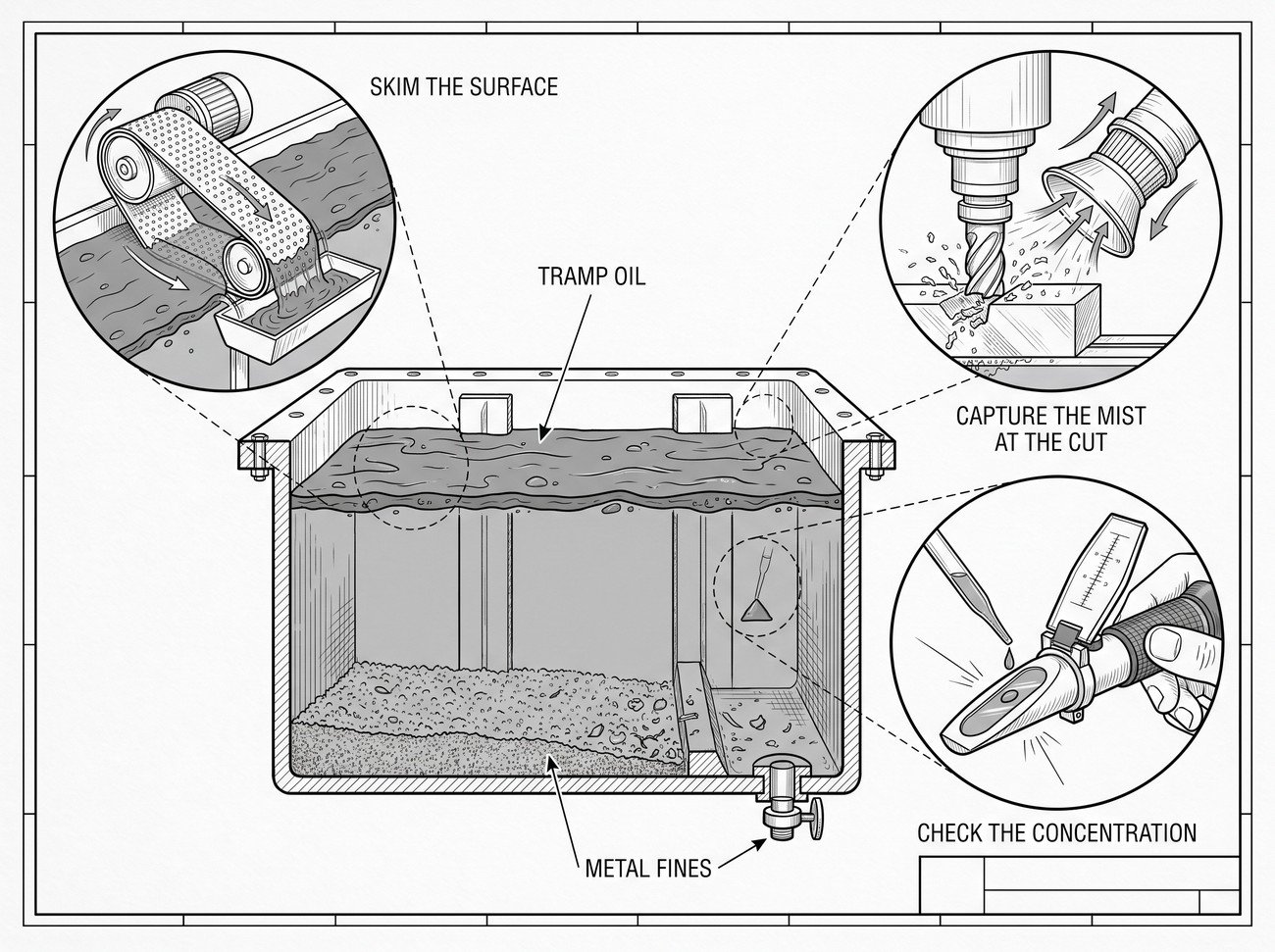
Fresh fluid is comparatively benign. In use it accumulates tramp oil from machine slideways, metal fines, and bacterial and fungal growth, and it is the used, contaminated fluid that carries most of the health risk. That is why the tank rather than the operator is the main control point: skimming tramp oil, filtering fines, keeping concentration and pH within range, and changing the charge when it is due are what stop the fluid becoming the problem.
Concentration is a health control, not just a process one
Too weak and the fluid loses its ability to resist bacterial growth, so the tank spoils. Too strong and it is more aggressive to skin. Checking concentration with a refractometer on a routine, recorded basis is a health control that also happens to protect the tooling, and it is one of the few checks in a machine shop that takes under a minute and changes an actual exposure.
Enclose and extract at the cut
Mist is generated at the cutting zone, so that is where it is captured. An enclosure round the working area, with extraction drawing from it, removes the mist before it reaches the operator and before it settles on every surface in the shop. Running an enclosed machine with the door open, which is common when watching a first-off, defeats both. General ventilation dilutes what escapes but never substitutes for capture at source.
Skin protection that actually works
The order is: avoid immersion by using tools rather than hands to retrieve parts, remove fluid from the skin promptly rather than at the end of the shift, and inspect hands regularly for the earliest signs. Gloves are useful for handling wet components away from rotating parts and are unacceptable at a running spindle, which is the tension that has to be resolved by task rather than by a blanket rule. Skin checks matter because dermatitis caught early reverses and caught late may not.
For the respiratory principles behind mist control, see respiratory protection. For glove selection away from rotation, see selecting chemical-resistant gloves.
Related standards
The standards below set the design requirements, classification and test methods behind the safeguards and equipment referenced in this note.
Common errors
1Controlling splashes and doing nothing about mist, or the reverse.
2Leaving tramp oil and fines in the sump, so the fluid degrades in service.
3Treating concentration as a machining setting rather than a health control.
4Running an enclosed machine with the door open while watching the cut.
5Leaving fluid on the skin until the end of the shift, and not checking hands.
Frequently asked questions
What are the two health routes from metalworking fluid?
Skin contact causing dermatitis, and inhalation of mist and vapour affecting the airway. They are independent, so controlling splashes does nothing about mist and extraction does nothing about immersion.
Why does used fluid carry more risk than fresh?
Because in service it accumulates tramp oil from slideways, metal fines, and bacterial and fungal growth. The contaminated fluid is what carries most of the health risk.
Why does concentration matter for health?
Too weak and the fluid cannot resist bacterial growth so the tank spoils; too strong and it is more aggressive to skin. A refractometer check takes under a minute and changes an actual exposure.
Where should mist be captured?
At the cutting zone where it is generated, using an enclosure with extraction drawing from it. General ventilation dilutes what escapes but never substitutes for capture at source.
What is the right order for skin protection?
Avoid immersion by using tools to retrieve parts, remove fluid from skin promptly rather than at shift end, and inspect hands regularly. Dermatitis caught early reverses; caught late it may not.
Need this as a document you can issue? The template library gives you the risk assessments, permits and inspection logs in editable form — and employer plans cover a whole team with completion records.