Safety / Tips and Tricks / Roofing and work at height
Activity 02 · Roofing
Working Near Fragile Roof Surfaces and Roof Lights
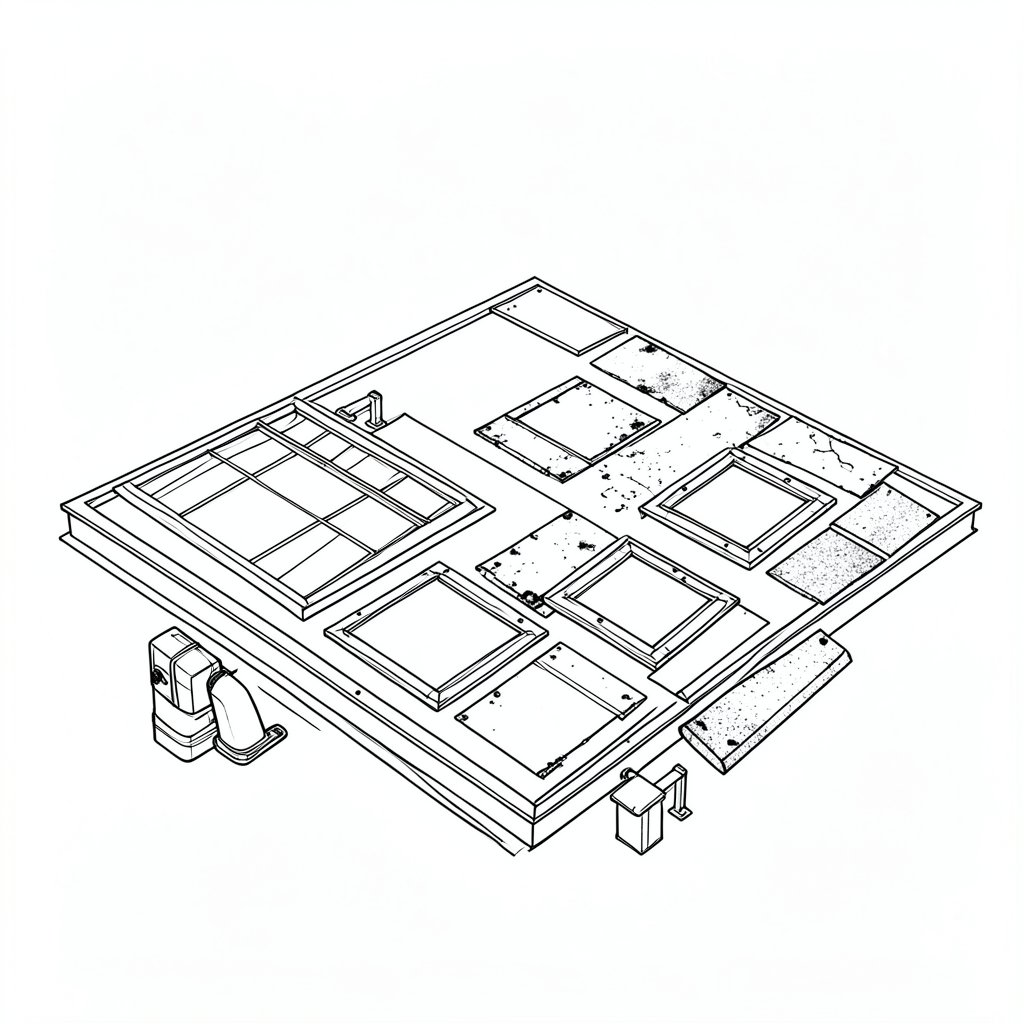
Fragile roof surfaces cause a disproportionate number of serious falls precisely because they are not obviously different from the solid roof around them. A roof light, a corroded metal sheet, or an asbestos cement panel can look and feel identical to a load-bearing surface right up until someone puts weight on it.
What makes a surface fragile
Fragility is not always about age or visible damage. Roof lights are fragile by design in most cases — they are built for light transmission, not load-bearing, and are not made stronger just because they have been in place for years without incident. Corroded metal sheeting, weathered asbestos cement, and glass-reinforced plastic panels that have degraded under UV exposure can all fail without warning, often with no visible sign from above that the material has lost its strength. Moss, dirt or a recent repaint can also disguise a fragile panel by making it look identical to the surrounding solid roof.
The starting assumption on any roof with roof lights, older sheeting or unknown construction should be that fragility is present until it has been specifically ruled out, not the other way round.
Identifying and marking fragile areas
A roof survey before work begins should identify every fragile element and record it, ideally with the fragile areas physically marked on the roof itself — permanent signage, coloured marking, or a documented plan that anyone accessing the roof can check beforehand. Marking matters because a hazard that exists only on a piece of paper in the site office does not protect the person actually walking the roof.
Controlling the hazard
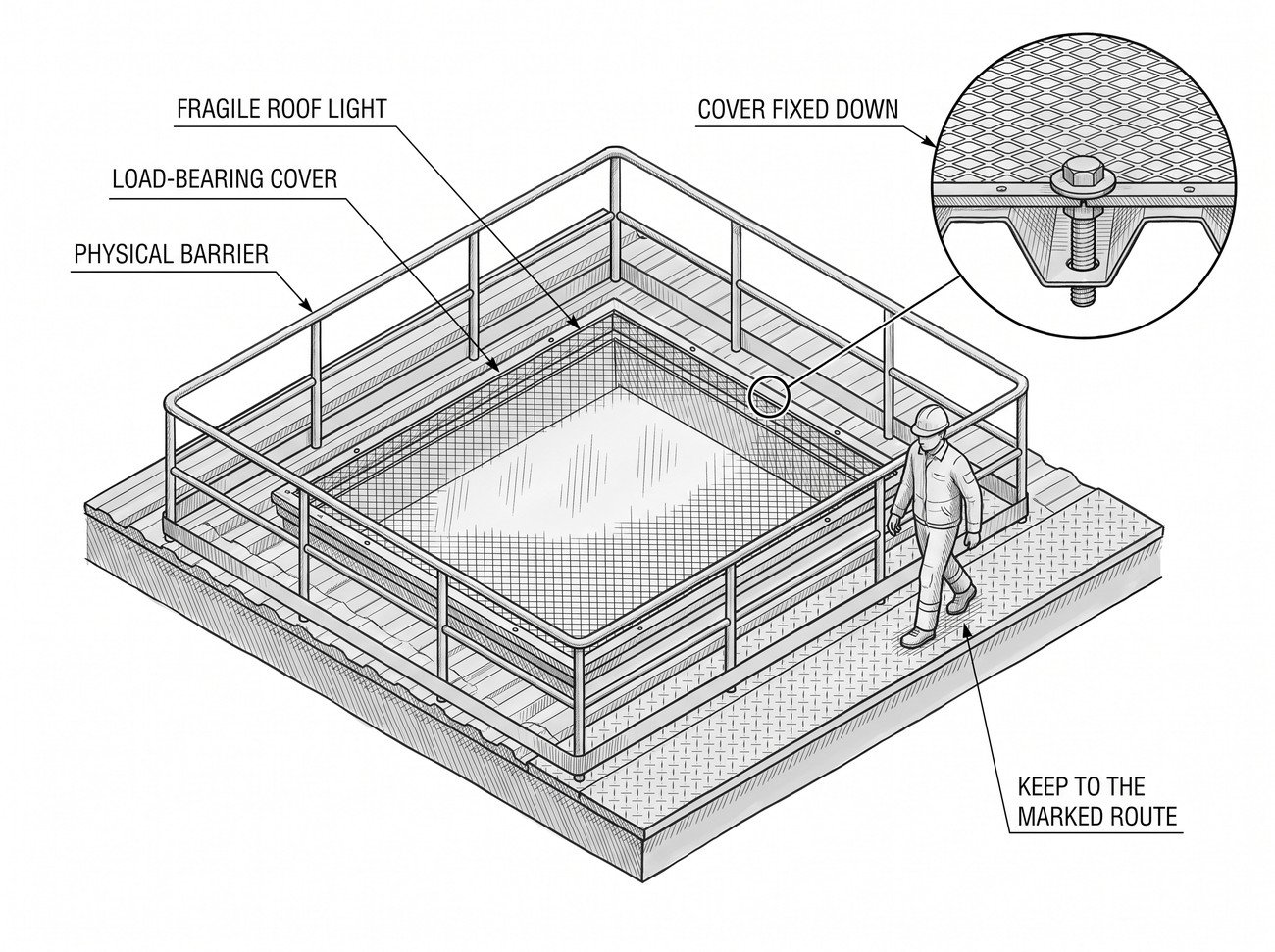
The preferred control is to eliminate the exposure entirely: cover fragile roof lights with load-rated covers or guardrails, or route access so no one needs to pass near them at all. Where a fragile area cannot be avoided, the next control is a physical barrier — guardrails or netting positioned to prevent contact with the fragile material even if someone loses their footing. Crawling boards or staging that spans between structural points, distributing weight away from the fragile panel itself, is a further layer where the other controls cannot be used alone.
Personal fall protection — a full body harness meeting EN 361, clipped to a rated anchor and running line — is the last line of defence, not the primary control, because it accepts that a fall through the fragile surface could still happen and relies on the system to arrest it rather than preventing contact with the hazard in the first place.
Routine access and the drift toward complacency
Roofs accessed repeatedly for the same routine task are where fragile-surface incidents cluster, because familiarity erodes caution over time. A route that has been walked safely fifty times can still cross a fragile panel that has quietly degraded further, or that a new team member does not know to avoid. Re-briefing the fragile-area map at the start of each access, not just the first time, keeps the hazard visible rather than assumed.
For the fall-arrest side of protecting against a fragile-surface fall, see fall restraint vs fall arrest for roof work, and for route planning around roof hazards generally, see roof access route planning.
Common errors
1Assuming a roof light is safe to stand near because it looks intact from a distance.
2Relying on a fragile-area plan that exists only in the site office and was never marked on the roof itself.
3Treating personal fall protection as sufficient on its own, without also covering or barriering the fragile panel.
4Skipping a fresh fragile-surface briefing for routine, repeated access because the route has always been fine before.
Frequently asked questions
Why can a roof light be dangerous even if it looks intact?
Roof lights are typically built for light transmission, not load-bearing, so they are fragile by design regardless of age or visible condition, and a corroded or weathered panel can fail without any visible warning sign from above.
What is the first step in managing fragile roof surfaces?
A roof survey before work begins that identifies every fragile element and records it, ideally marked physically on the roof itself so anyone accessing it can see the hazard directly rather than relying on a plan kept elsewhere.
What is the preferred control for a fragile roof light?
Eliminating the exposure entirely by covering the fragile panel with a load-rated cover or guardrail, or routing access so no one needs to pass near it at all.
Why is personal fall protection considered the last line of defence for fragile surfaces?
It accepts that a fall through the fragile material could still happen and relies on the system to arrest it, rather than preventing contact with the hazard in the first place, which physical barriers and covers do more reliably.
Why do incidents on fragile surfaces often happen on routine, repeated roof access?
Familiarity can erode caution over time, and a route walked safely many times can still cross a panel that has quietly degraded, or be unfamiliar to a new team member who was not briefed on the fragile-area map.
Need this as a document you can issue? The template library gives you the risk assessments, permits and inspection logs in editable form — and employer plans cover a whole team with completion records.