Safety / Tips and Tricks / Roofing and work at height
Activity 02 · Roofing
Ladder Safety for Roof Access: The Three-Points-of-Contact Rule
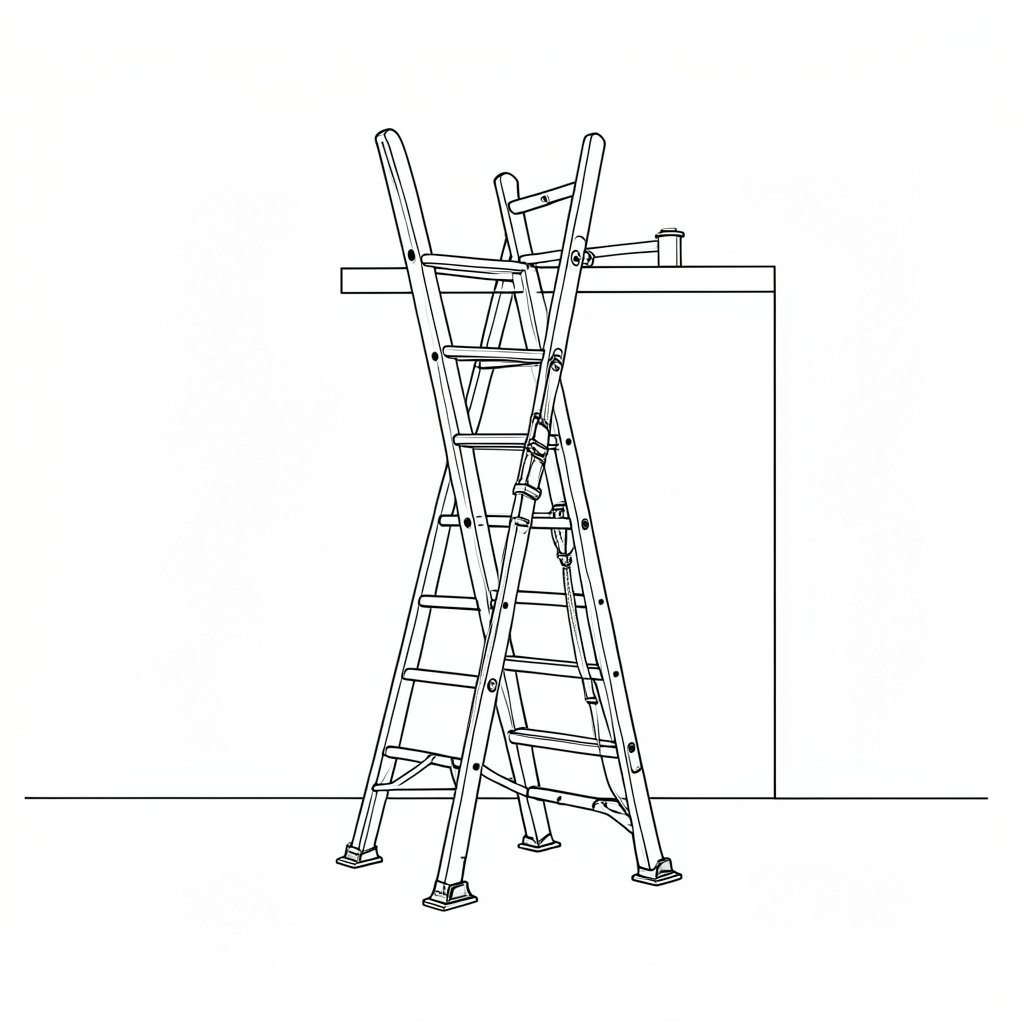
A ladder is often the first and least examined step in a roof-access plan — equipment is chosen for work at height on the roof itself, while the ladder that gets a worker there is treated as a given. Most roof-access injuries involving ladders happen in exactly that gap: not from a design fault in the ladder, but from how it was set up, footed and climbed.
The three-points-of-contact rule
Maintaining three points of contact means always having either two hands and one foot, or two feet and one hand, in contact with the ladder while climbing. This rules out carrying tools or materials in the hands while ascending or descending — anything being carried needs to go up separately, by hoist, hand line, or a tool belt that leaves both hands free. The rule exists because a ladder fall usually starts with a single slip; three points of contact means a single slip does not automatically become a fall, since the other two points are still holding.
This sounds obvious stated plainly, yet it is one of the most commonly broken rules on site, usually because carrying a tool up “just this once” feels faster than making two trips. It rarely is faster once an incident is factored in.
Setting the ladder up correctly
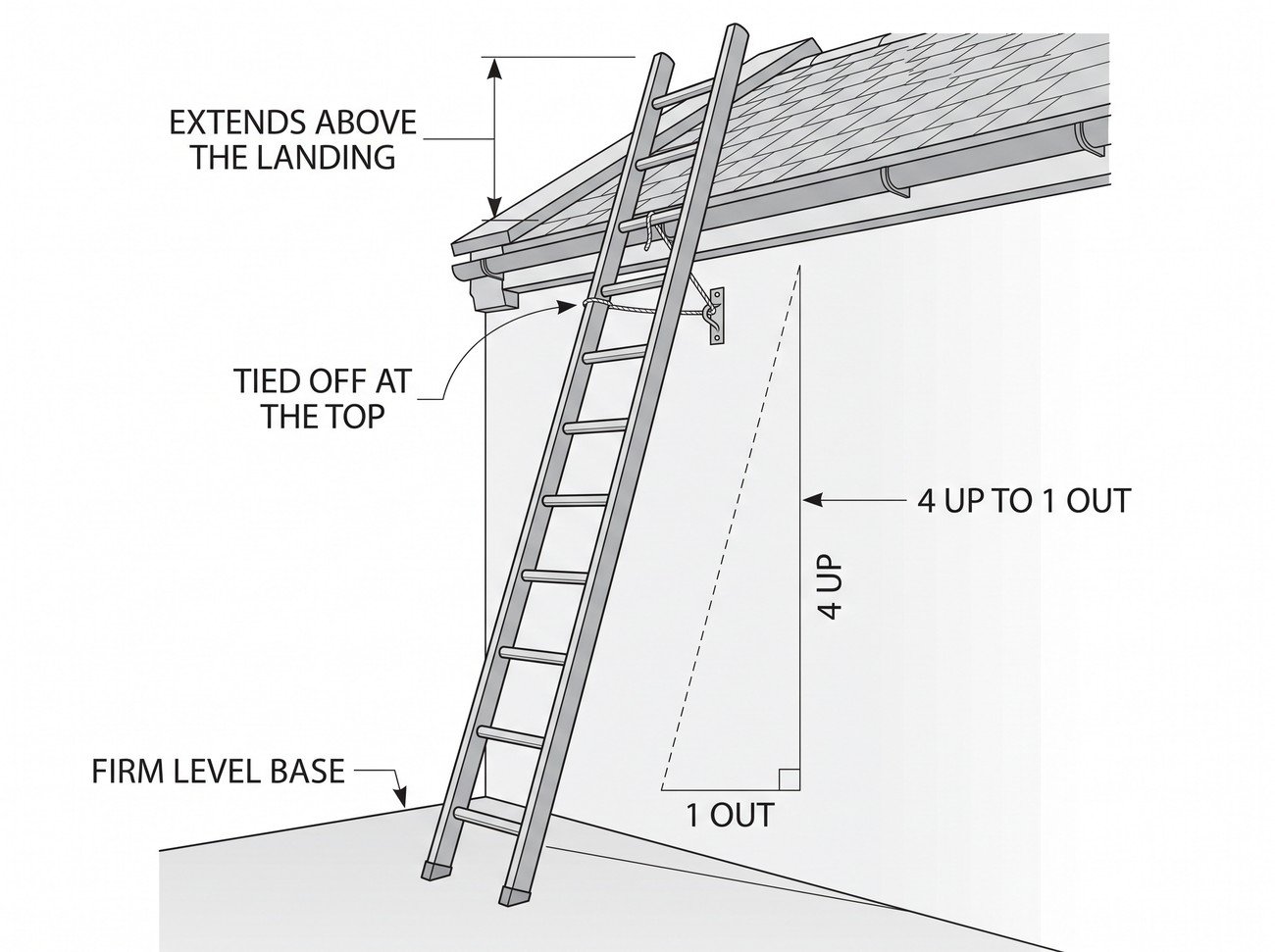
The angle matters more than most people judging it by eye realise: a ladder set too steep increases the chance of tipping backward, while one set too shallow increases the chance of the feet sliding out from the base. The commonly used field check is the 4:1 rule — for every four units of height, the base sits one unit out from the wall. Footing on firm, level ground is non-negotiable; a ladder base on soft or uneven ground needs a proper base plate or levelling device, not packing improvised from whatever is nearby.
Securing the top and the transition onto the roof
The ladder should extend at least a metre above the landing point and be tied off at the top, not just leaned against the edge and left to friction alone. As with any roof access method, a safety helmet meeting EN 397 remains standard PPE throughout the climb and the work that follows. The transition from ladder to roof is where a worker is briefly at their least stable — hands are needed to grip the roof edge or a handhold while the feet are still on the rungs. A securely tied-off ladder with a stable extension above the landing point removes one variable from that moment; an untied ladder that shifts as weight transfers does the opposite.
When a ladder is not the right access method
Ladders suit short-duration, light-tool tasks with a single, well-defined access point. They are the wrong choice for prolonged work, for tasks requiring both hands free at height for anything other than the climb itself, or for carrying anything beyond what fits in a tool belt. Where the task genuinely needs sustained two-handed work at the roof edge, a mobile elevated work platform or a properly designed access scaffold removes the exposure a ladder cannot.
For selecting the right ladder for the job, see choosing a ladder class for roof access, and for when a platform is the better choice, see safe use of MEWPs for roof-level work.
Common errors
1Carrying tools or materials by hand while climbing, breaking three points of contact.
2Judging the ladder angle by eye without checking it against the 4:1 rule.
3Leaving the ladder untied at the top and relying on friction to hold it against the roof edge.
4Using a ladder for a task that actually requires sustained two-handed work at height.
Frequently asked questions
What does the three-points-of-contact rule actually require?
Always keeping either two hands and one foot, or two feet and one hand, in contact with the ladder while climbing, which rules out carrying tools or materials by hand during the ascent or descent.
What is the 4:1 rule for ladder angle?
A field check where, for every four units of height the ladder reaches, its base should sit one unit out from the wall – too steep risks tipping backward, too shallow risks the base sliding out.
Why does the ladder need to extend above the roof landing point?
It should extend at least a metre above the landing point and be tied off, giving a stable handhold during the transition onto the roof, which is the moment a worker is typically least stable.
When is a ladder the wrong choice for roof access?
For prolonged work, tasks needing both hands free at height beyond the climb itself, or carrying anything that will not fit in a tool belt – a mobile elevated work platform or access scaffold suits those tasks better.
Why is footing the ladder base so important?
A base on soft or uneven ground can shift or sink under load; firm, level ground with a proper base plate or levelling device where needed keeps the whole system stable throughout the climb.
Need this as a document you can issue? The template library gives you the risk assessments, permits and inspection logs in editable form — and employer plans cover a whole team with completion records.