Safety / Tips and Tricks / Roofing and work at height
Activity 02 · Roofing
Roof Access Route Planning: Hatches and Skylight Hazards
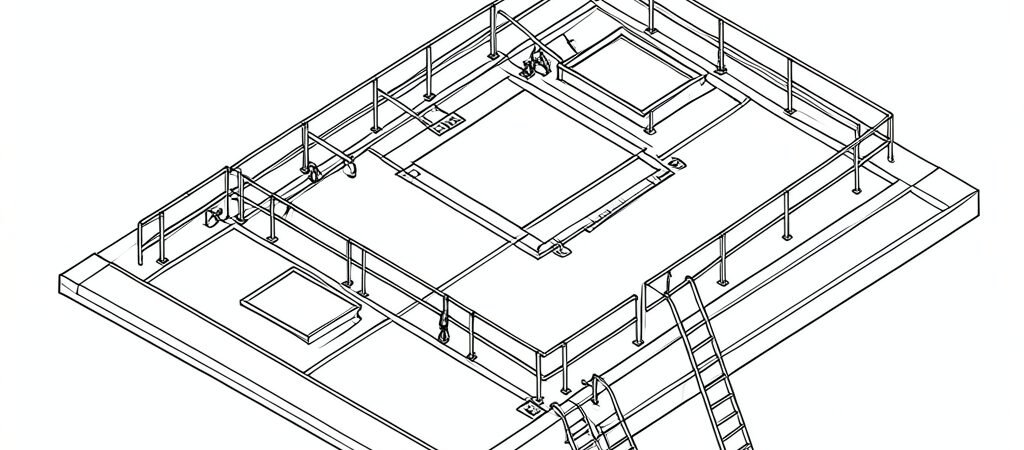
The route to and across a roof is part of the fall-protection plan, not a detail that sorts itself out once the destination is reached. Roof hatches, skylights and the transition points between access and working area are where a disproportionate number of incidents happen, precisely because they are treated as passageways rather than hazard zones in their own right.
Roof hatches
A roof hatch is an opening by design, and the moment it is open it becomes a fall hazard for anyone moving nearby, not just the person passing through it. Hatches should be fitted with a self-closing mechanism or a physical guard, and left open only for the minimum time actually needed for people or materials to pass through — propping a hatch open for the duration of a job creates a standing hazard for the entire task rather than a brief moment of exposure during transit.
The area immediately around a hatch needs clear routing so that foot traffic does not need to pass close to the opening unnecessarily, and anyone working near an open hatch for an extended period needs the same edge-protection thinking applied to it as any other roof opening.
Skylights and roof lights on the access route
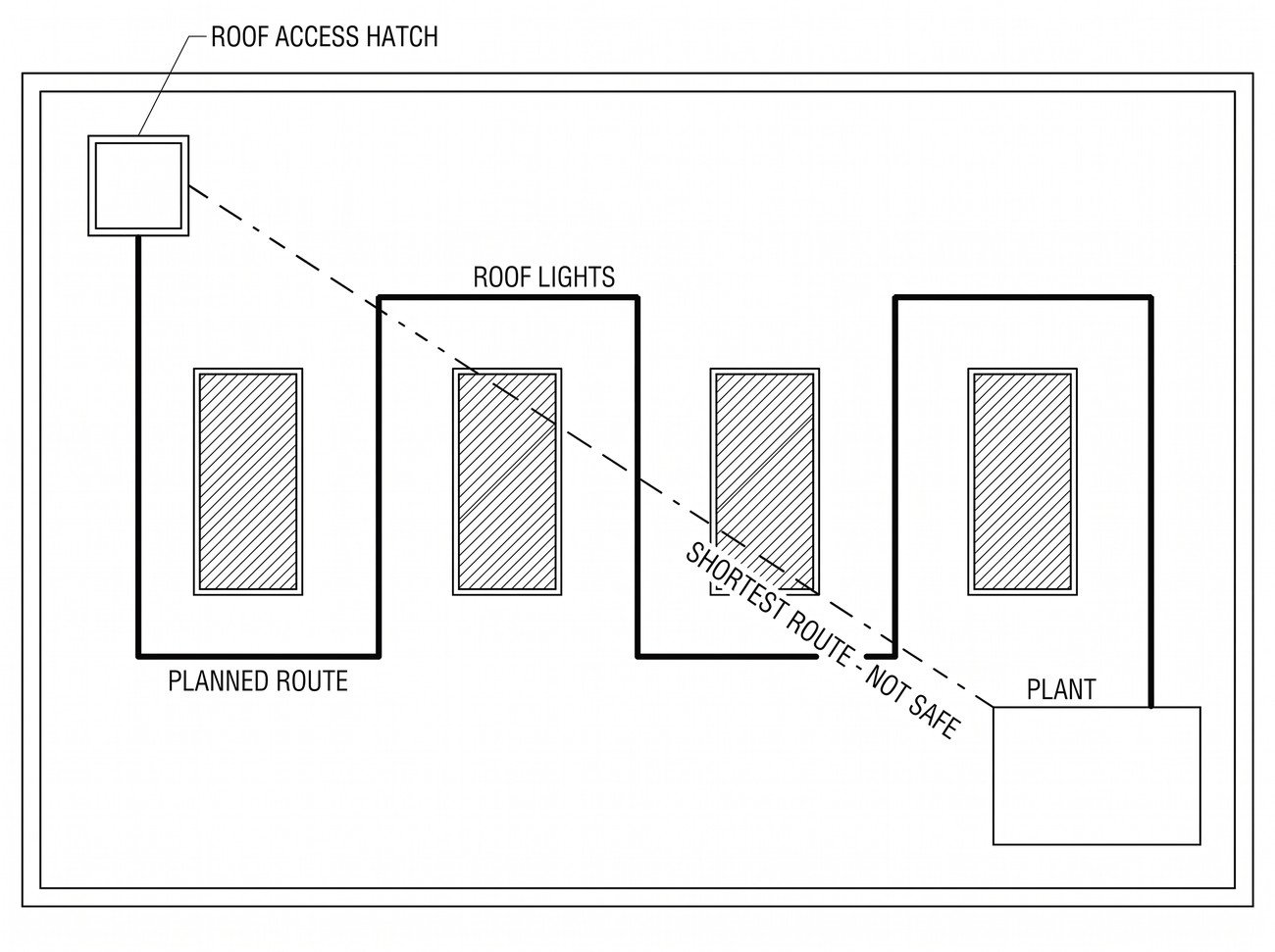
Where the planned route crosses near a skylight or roof light, the fragility of that element needs to be factored into the route itself, not treated as a separate hazard to be avoided by individual awareness alone. A route planned to pass no closer than a defined safe distance from any fragile element removes the reliance on every person remembering to avoid it individually.
The transition from access equipment to the roof
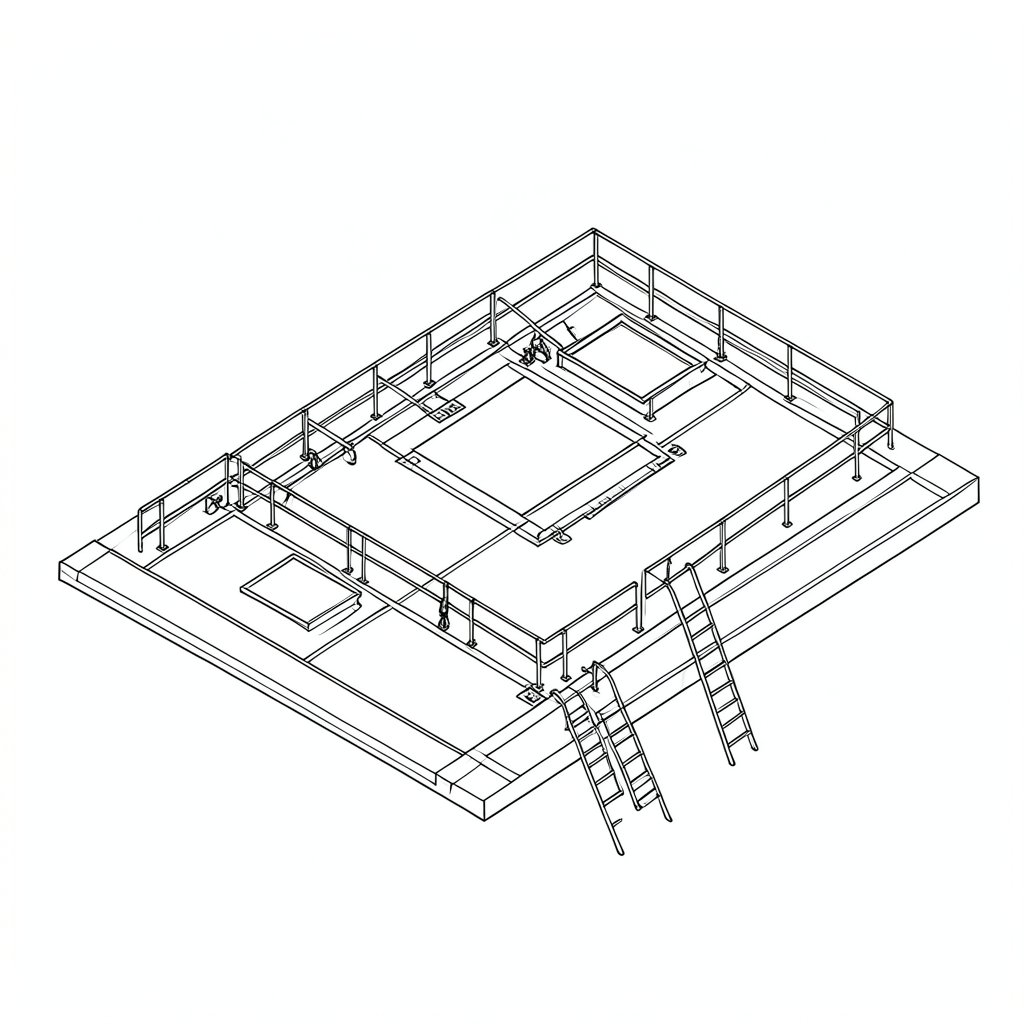
The point where a worker moves from a ladder, MEWP basket or scaffold onto the roof surface itself is a moment of reduced stability, and it is also often close to the roof edge by necessity. Planning this transition point specifically — where the hands go, what is available to hold, and whether the transition happens within a restraint or arrest system’s coverage — closes a gap that a route plan focused only on the working area can miss.
Documenting and briefing the route
A route plan is only useful if the people using it actually know it exists. Marking the route on the roof itself where practical, and briefing it explicitly before each access rather than assuming previous visitors will remember or new visitors will infer it, keeps the plan functioning as a real control rather than a document that exists separately from what actually happens on the roof.
For the fragile-surface hazards a route plan needs to account for, see working near fragile roof surfaces and roof lights.
Common errors
1Propping a roof hatch open for the duration of a task rather than only the moments people or materials are actually passing through.
2Planning the shortest route across a roof without checking it against known fragile-area locations.
3Treating the transition from ladder or MEWP onto the roof as part of the access equipment's safety plan rather than the roof route plan.
4Failing to brief the planned route to everyone accessing the roof, relying on individual judgement instead.
Frequently asked questions
Why is an open roof hatch a hazard for more than just the person using it?
The moment it is open it becomes a fall hazard for anyone moving nearby, not only the person passing through, which is why it should be left open only for the minimum time actually needed.
How should a route plan handle skylights and roof lights?
By routing the path no closer than a defined safe distance from any fragile element, so the plan itself removes the hazard rather than relying on every individual remembering to avoid it.
Why does the transition from a ladder or MEWP onto the roof deserve specific planning?
It is a moment of reduced stability that is often close to the roof edge, so planning where hands go, what is available to hold, and whether fall protection covers that exact moment closes a gap a general working-area plan can miss.
What makes a hatch guarding measure effective?
A self-closing mechanism or physical guard that limits how long the opening is actually exposed, rather than propping the hatch open for the full duration of a task.
Why does a route plan need to be actively briefed rather than just documented?
A plan is only a real control if the people using the roof actually know it exists – marking the route on the roof and briefing it before each access keeps it functioning rather than existing only on paper.
Need this as a document you can issue? The template library gives you the risk assessments, permits and inspection logs in editable form — and employer plans cover a whole team with completion records.