Safety / Tips and Tricks / Agriculture and livestock
Activity 13 · Agriculture
Vehicles, Yards and Reversing on the Farm
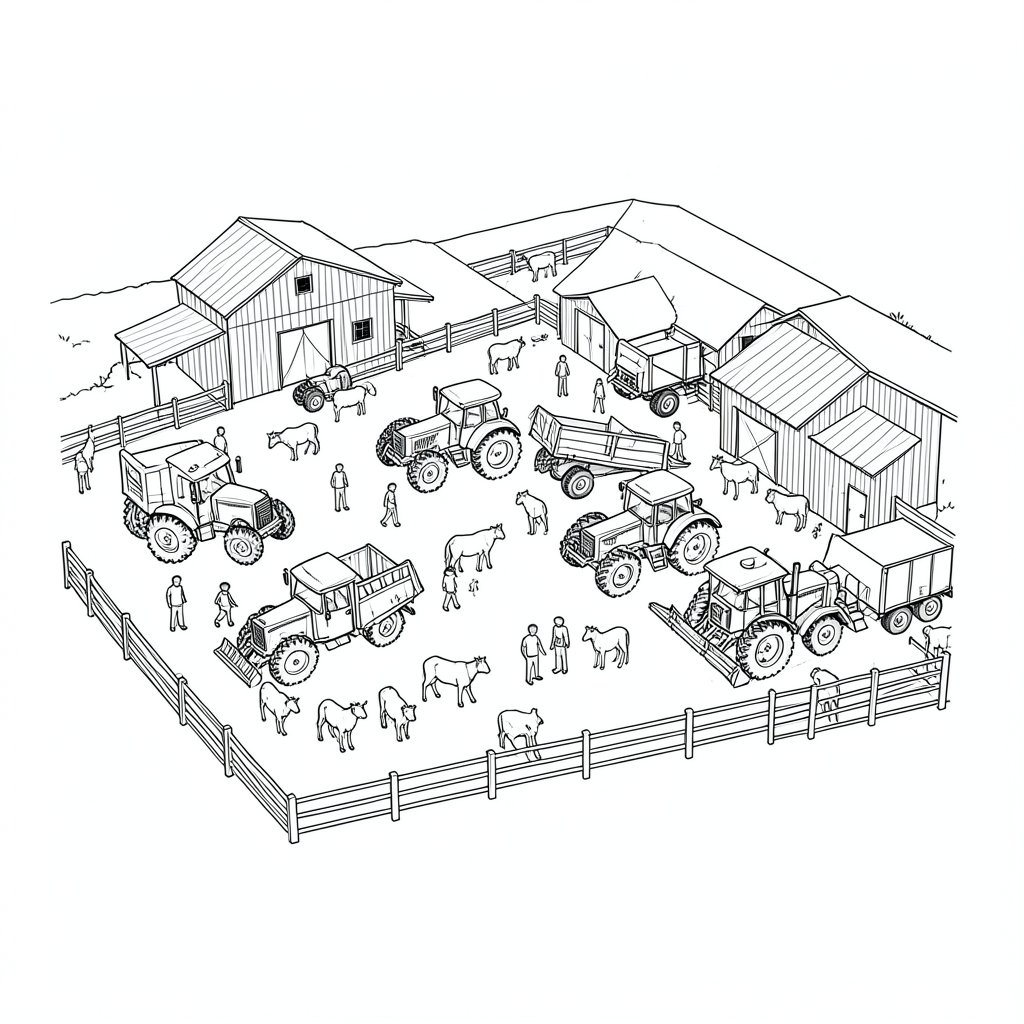
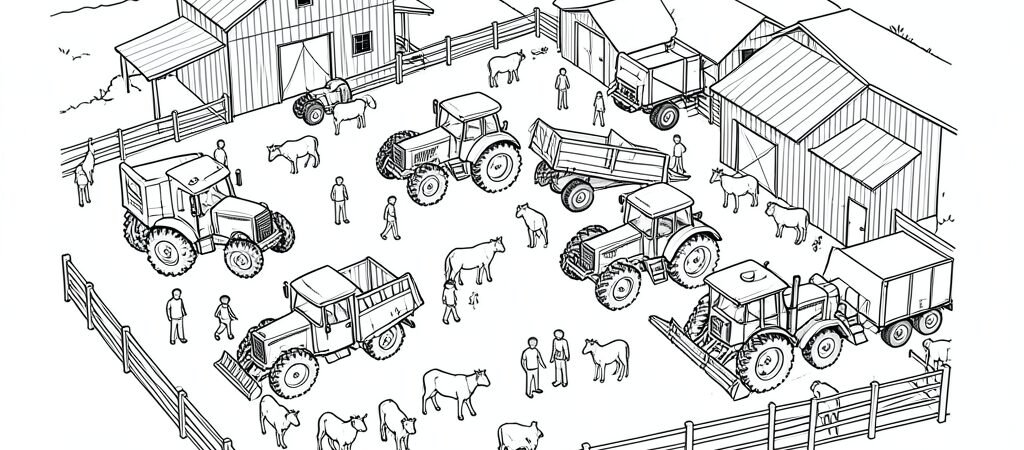
A farmyard puts large vehicles, people on foot, animals and often children in the same confined space, with no marked routes and drivers who cannot see much of it.
The yard is a traffic system nobody designed
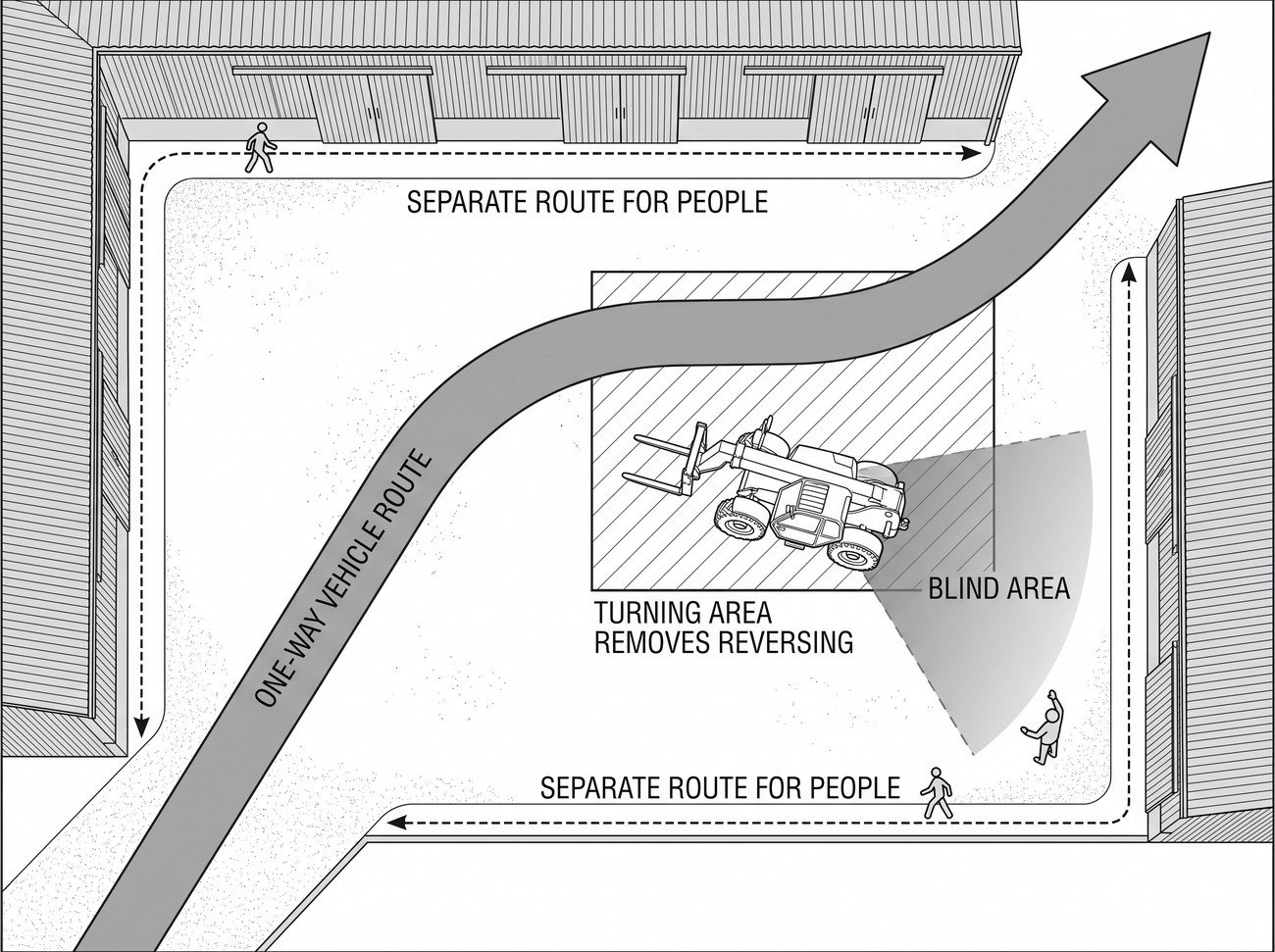
Most yards grew rather than being laid out, so vehicle routes, walking routes and animal routes all overlap and change with the season. That is workable when everyone knows the pattern, and it fails when a delivery lorry, a contractor or a relief milker arrives with no idea of it. Deciding on a route for vehicles, a separate route for people, and a place for deliveries to stop is the single change that makes the biggest difference, and it costs nothing but the decision.
Reversing is where people are struck
The blind area behind a tractor, a telehandler or a lorry is large enough to hide an adult, let alone a child, and mirrors and cameras are usually coated in dust or muck. Designing the manoeuvre out — a drive-through layout, a turning area, a delivery point a lorry can enter and leave forwards — removes the hazard rather than managing it. Where reversing is unavoidable, it happens in a defined place with someone signalling from where the driver can see them.
Telehandlers and the load you cannot see past
A raised load blocks forward vision entirely, which is why loads are carried low, and why a raised bale or bucket travelling across a yard is both a visibility problem and a suspended load over anyone below. Machines that were designed for lifting are also used for towing, pushing and as a work platform, and those uses take them outside what they were designed and rated for.
Slopes, surfaces and the unbraked trailer
Yard surfaces are frequently wet, greasy with slurry, uneven, or on a slope, and stopping distances lengthen accordingly. An overloaded or badly loaded trailer pushes the drawing vehicle downhill, a trailer with poor brakes does the same, and a trailer left unchocked on a slope rolls. Loads that shift — grain, stock, bales — change the handling mid-manoeuvre, and stock in particular moves at the worst moment.
Everyone else in the yard
The people at greatest risk are not the drivers. They are the person walking to the parlour, the child crossing to the house, the delivery driver who got out of the cab to find someone, and the vet who parked where the telehandler needs to turn. Meeting visitors, keeping them out of the working area, and having somewhere obvious for them to park addresses the group least able to predict what is about to move.
For the people least able to predict the yard, see children and visitors. For the same problem on a construction site, see working near mobile plant.
Related standards
The standards below set the safety requirements, classification and test methods behind the machinery and equipment referenced in this note.
- EN ISO 20471 — High-Visibility Clothing
- EN 397 — Industrial Safety Helmets
- EN ISO 20345 — Safety Footwear
Common errors
1Letting vehicle, pedestrian and animal routes overlap because everyone knows the pattern.
2Reversing where a drive-through or turning area could have been provided.
3Relying on mirrors and cameras that are coated in dust and muck.
4Travelling with a raised load that blocks forward vision.
5Leaving trailers unchocked on a slope, or towing with inadequate brakes.
Frequently asked questions
Why are farmyards particularly hazardous?
They put large vehicles, people on foot, animals and often children in the same confined space, with no marked routes, and most yards grew rather than being laid out.
What is the single most valuable change?
Deciding on a vehicle route, a separate pedestrian route, and a place for deliveries to stop. It costs nothing but the decision and it works for people who do not know the yard.
How should reversing be handled?
Designed out where possible with a drive-through layout or turning area. Where unavoidable it happens in a defined place with a signaller positioned where the driver can see them.
What is the problem with a raised load?
It blocks forward vision entirely and is a suspended load over anyone below. Loads are carried low, and lifting machines used for towing or as a work platform are outside what they were rated for.
Who is most at risk in a farmyard?
Not the drivers. The person walking to the parlour, the child crossing to the house, the delivery driver who got out to find someone, and the vet who parked where the telehandler needs to turn.
Need this as a document you can issue? The template library gives you the risk assessments, permits and inspection logs in editable form — and employer plans cover a whole team with completion records.