Safety / Tips and Tricks / Agriculture and livestock
Activity 13 · Agriculture
Children and Visitors on a Working Farm
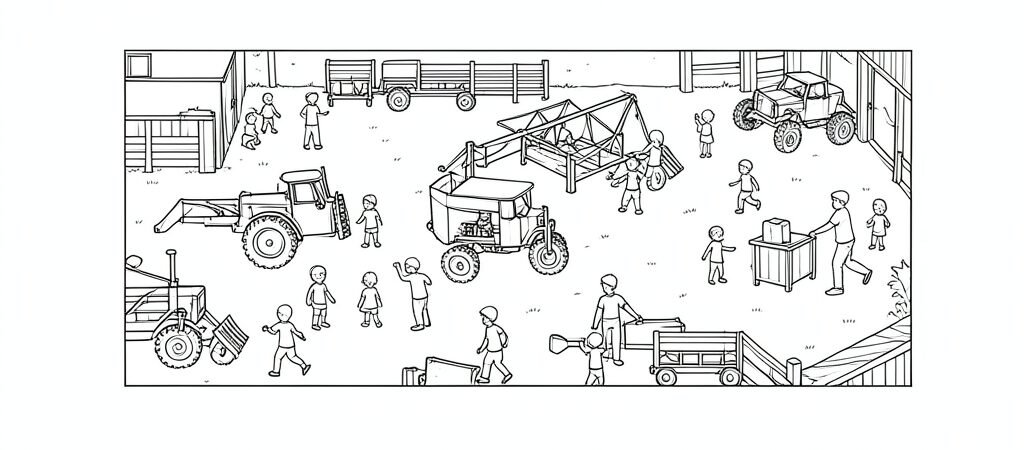
A farm is the only workplace where people live, and the children of the household are the group most consistently killed by it.
The workplace and the home are the same place
Everywhere else, work happens where the public are not. On a farm the yard is the route to the house, the machinery is parked where children play, the animals are in the field beyond the garden, and the working day has no boundary. That overlap is the hazard, and it cannot be managed by instruction alone because the people at risk are not employees and often are not old enough to follow one.
A safe play area with a physical boundary
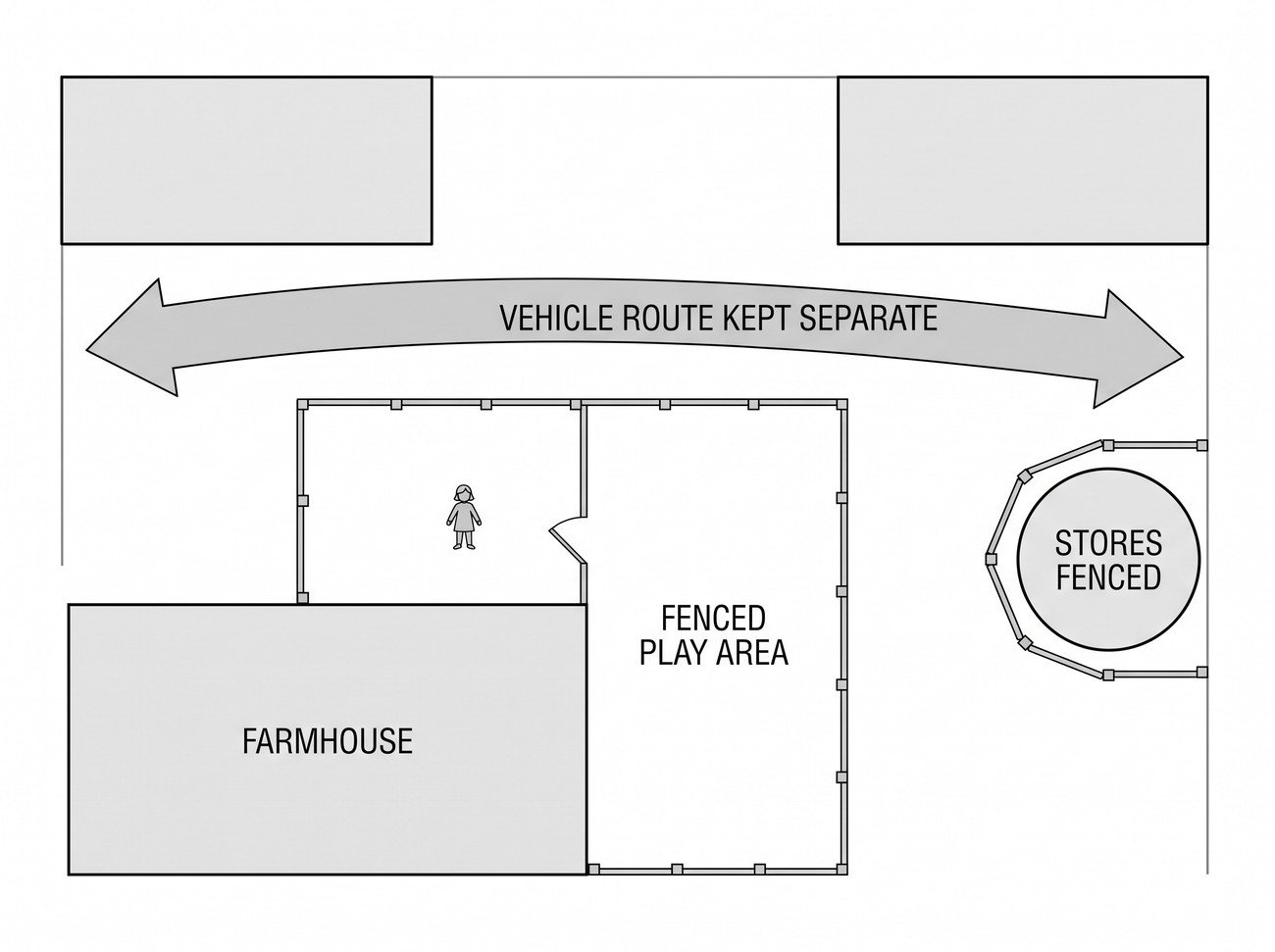
The single most effective control is a defined area that children can be in, separated from the working farm by a fence and a gate that a small child cannot open, positioned so that vehicles do not pass through it and adults can see into it. This works because it does not depend on a child remembering a rule at a moment when something interesting is happening, and it does not depend on an adult watching continuously while also working.
The recurring ways children are killed
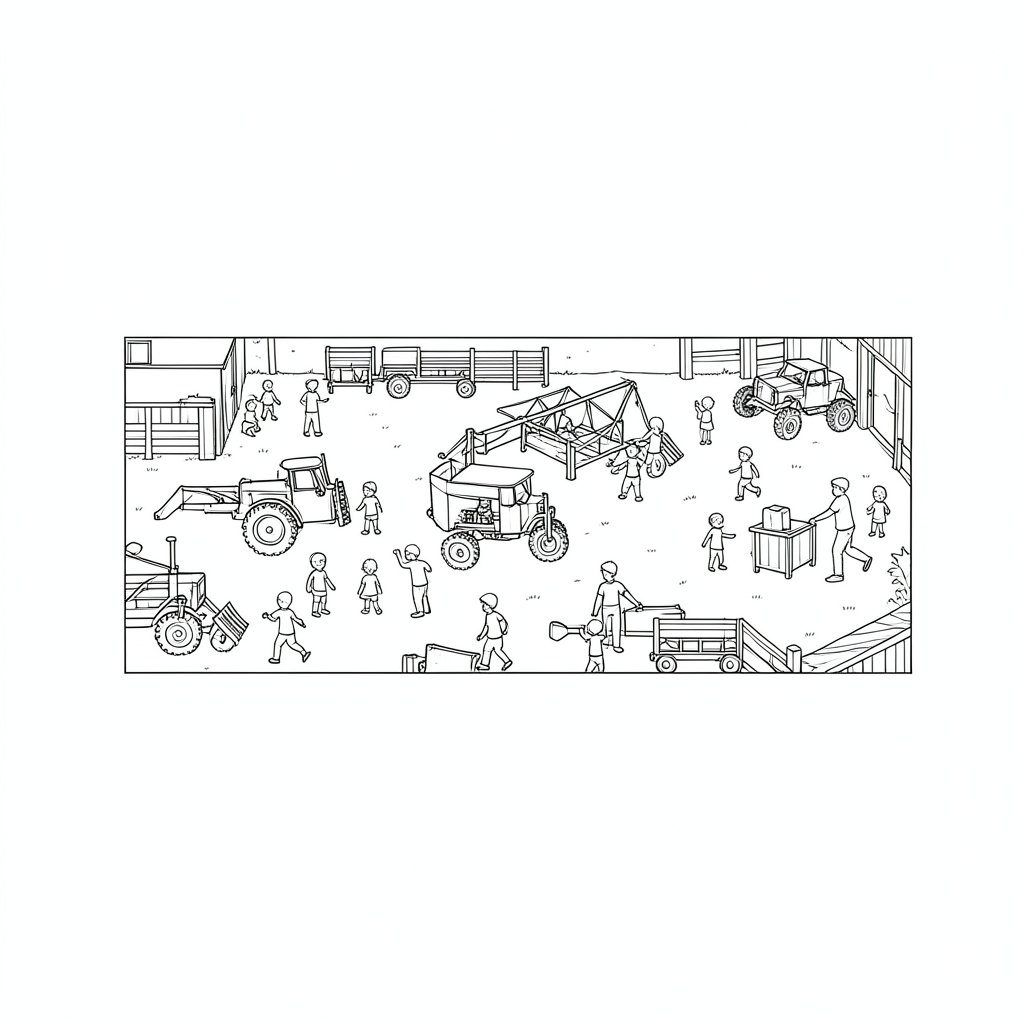
Being struck or run over by a vehicle in the yard, particularly while it reverses. Falling from a moving tractor or trailer, including from the cab as a passenger. Drowning in slurry stores, lagoons and water troughs. Being crushed by a bale, a gate, or a machine that moved. Each of these is a foreseeable pattern rather than an accident, and each has a physical control: separation from vehicle routes, no passengers, covered and fenced water, and stable stacking.
Children are not small adults on machines
Riding in a cab, in a loader bucket or on a trailer is where a great many child injuries begin, and the presence of an adult does not change the physics of a fall onto a hard yard from a moving machine. Age limits on operating machinery exist because reach, strength, reaction time and judgement of consequence all develop later than confidence does. This is one of the few areas where the rule is genuinely absolute.
Visitors, contractors and rights of way
A delivery driver, a vet, a contractor, a relative and a walker on a footpath all arrive with no knowledge of which animals are where, what is running, or what the yard layout means. Meeting people on arrival, telling them where to go and what to avoid, and marking rights of way so walkers stay clear of the working areas costs a few minutes and removes the assumption that they can work it out. Signs at field entrances about bulls and about dogs matter most for exactly the people who never see the farm’s own arrangements.
For what is in the fields they may cross, see bulls and cows with calves. For the yard itself, see farm vehicles and yards.
Related standards
The standards below set the safety requirements, classification and test methods behind the machinery and equipment referenced in this note.
Common errors
1Relying on instructions to children rather than on a physical boundary.
2Carrying a child as a passenger in a cab, bucket or trailer.
3Leaving slurry stores, lagoons and troughs unfenced or uncovered.
4Leaving keys in machines standing in the yard.
5Letting visitors and contractors find their own way around the holding.
Frequently asked questions
Why are farms different from other workplaces?
Because people live there. The yard is the route to the house, machinery is parked where children play, and the working day has no boundary, so the workplace and the home are the same place.
What is the most effective control for children?
A defined play area with a physical fence and a gate a small child cannot open, positioned away from vehicle routes and visible from where adults work. It does not depend on anyone remembering a rule.
How are children usually killed on farms?
Struck by vehicles in the yard, falling from moving tractors and trailers, drowning in slurry stores, lagoons and troughs, and being crushed by bales, gates or machines that moved.
Can a child ride in a cab if an adult is present?
No. The presence of an adult does not change the physics of a fall onto a hard yard from a moving machine, and reach, strength, reaction time and judgement all develop later than confidence.
What do visitors need on arrival?
To be met, told where to go and what to avoid. A delivery driver, vet, contractor or walker arrives with no knowledge of which animals are where or what is running.
Need this as a document you can issue? The template library gives you the risk assessments, permits and inspection logs in editable form — and employer plans cover a whole team with completion records.