Safety / Tips and Tricks / Agriculture and livestock
Activity 13 · Agriculture
Baling, Wrapping and Unblocking Machinery
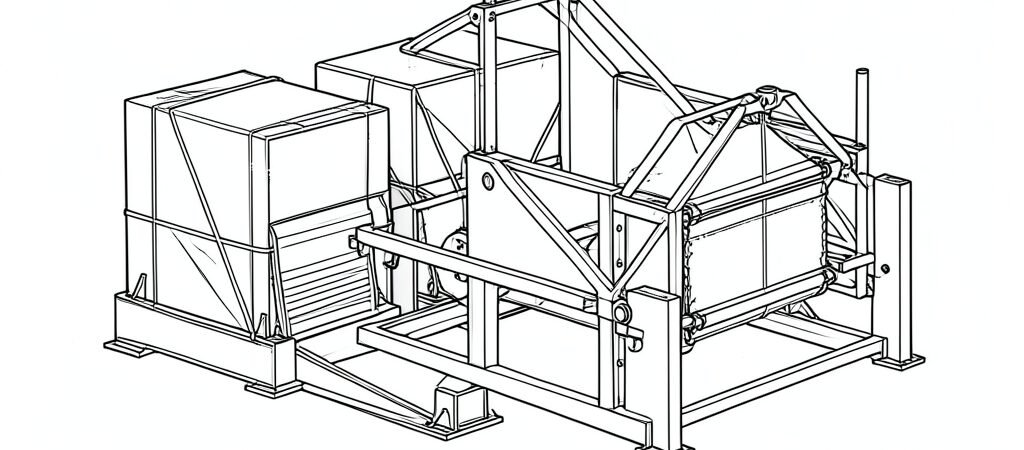
Balers and similar machines are unusual among farm equipment in that they are meant to be blocked from time to time, which means the dangerous task is a routine part of using them.
The blockage is the hazard, not the machine
A machine running normally is enclosed and nobody is near the moving parts. A blocked machine has stopped, looks stationary, and has a person reaching into it — and unlike most stoppages the mechanism is loaded with material under tension. Clearing it releases that tension, and the machine can move sharply under its own stored energy even with the drive removed. That is why the sequence matters far more than it appears to.
Safe stop is the entire control
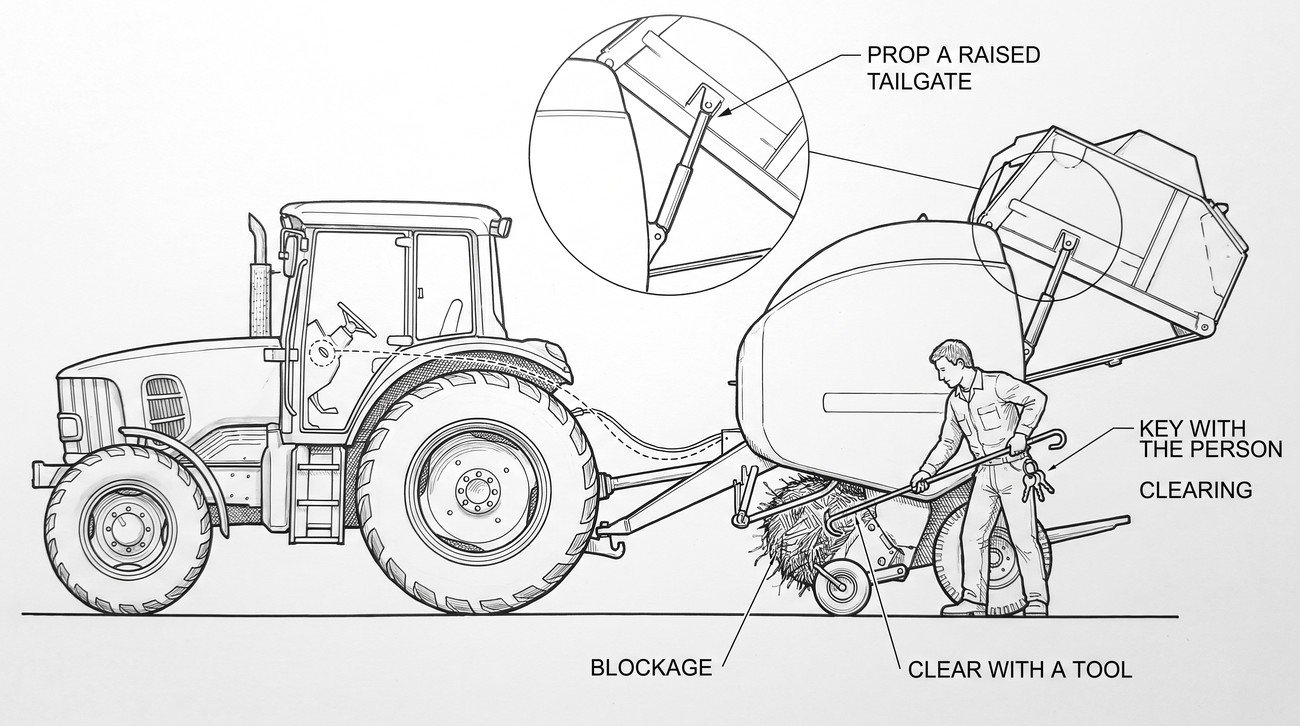
Before anyone approaches: handbrake on, drive and power take-off out, engine off, key out. Not the engine idling, not the drive disengaged with the engine running, not the operator staying in the seat while somebody else reaches in. The great majority of these injuries involve a machine that was still running or still capable of being started, and the person doing the clearing has no way of knowing which.
The key goes with the person clearing
This is the detail that makes the difference. If the key stays in the tractor, anyone can start it — and does, believing the job is finished or that the person is clear. The key in the pocket of the person with their hands in the machine is a physical guarantee that nothing will start, and it costs nothing.
Stored energy in the mechanism
Even fully isolated, a baler holds energy: tensioned belts and chains, a compressed charge of crop in the chamber, springs in the pickup and the tailgate, and a raised tailgate held on hydraulics. Releasing a blockage can allow any of these to move suddenly. Using a tool rather than hands, standing to the side of where material will move, and propping a raised tailgate mechanically rather than relying on the hydraulics are the practical answers.
Wrapping, netting and the parts that keep turning
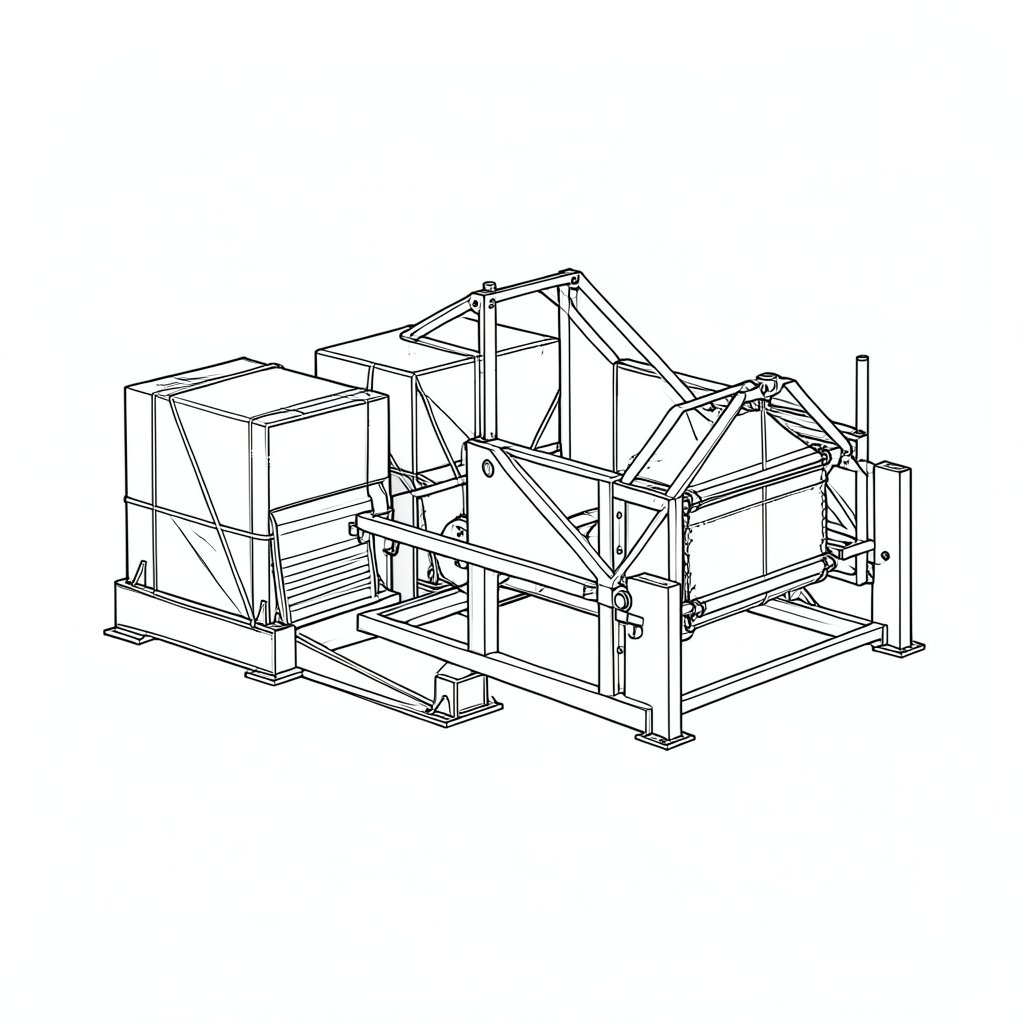
Wrappers and netting mechanisms present rotating and reciprocating parts that continue after the drive is removed, and film and net are exactly the kind of material that draws a hand in when it snags. The same rule applies: the machine is stopped and the key is out before anything is straightened, fed or pulled through, and material is never guided by hand while the mechanism is turning.
For the routine itself, see safe stop. For the energy that survives isolation, see stored energy after isolation.
Related standards
The standards below set the safety requirements, classification and test methods behind the machinery and equipment referenced in this note.
Common errors
1Clearing a blockage with the engine idling or the operator still in the seat.
2Leaving the key in the tractor while someone reaches into the machine.
3Clearing by hand rather than with a tool, into a mechanism holding tension.
4Working under a raised tailgate held only on its hydraulics.
5Guiding net or film by hand while the mechanism is still turning.
Frequently asked questions
Why is unblocking so dangerous?
The machine has stopped and looks stationary, but the mechanism is loaded with material under tension. Clearing releases that tension and the machine can move sharply even with the drive removed.
What has to happen before anyone approaches?
Full safe stop: handbrake on, drive and power take-off out, engine off, key out. Not idling, not disengaged with the engine running, and not with the operator still in the seat.
Why should the key go with the person clearing?
Because if it stays in the tractor, someone can start it believing the job is finished. The key in the pocket of the person with their hands in the machine is a physical guarantee.
What stored energy does a baler hold?
Tensioned belts and chains, a compressed charge of crop in the chamber, springs in the pickup and tailgate, and a raised tailgate held on hydraulics.
What about wrapping and netting mechanisms?
They have rotating and reciprocating parts that continue after the drive is removed, and film and net draw a hand in when they snag. Nothing is guided by hand while the mechanism turns.
Need this as a document you can issue? The template library gives you the risk assessments, permits and inspection logs in editable form — and employer plans cover a whole team with completion records.