Safety / Tips and Tricks / Agriculture and livestock
Activity 13 · Agriculture
Quad Bikes and ATVs on Farms
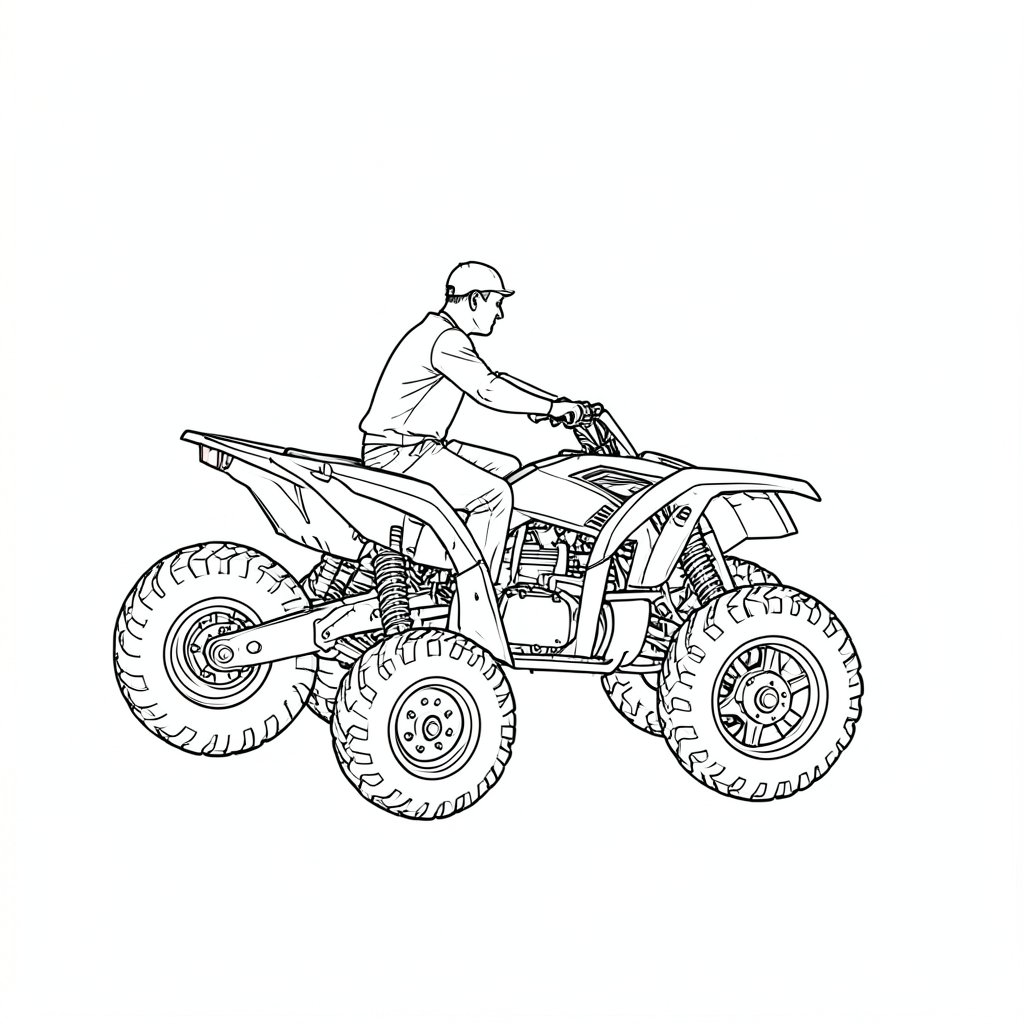
A quad bike is ridden rather than driven, and that distinction explains most of what goes wrong with them: the rider is part of the suspension, part of the steering and part of the stability.
Active riding is not optional
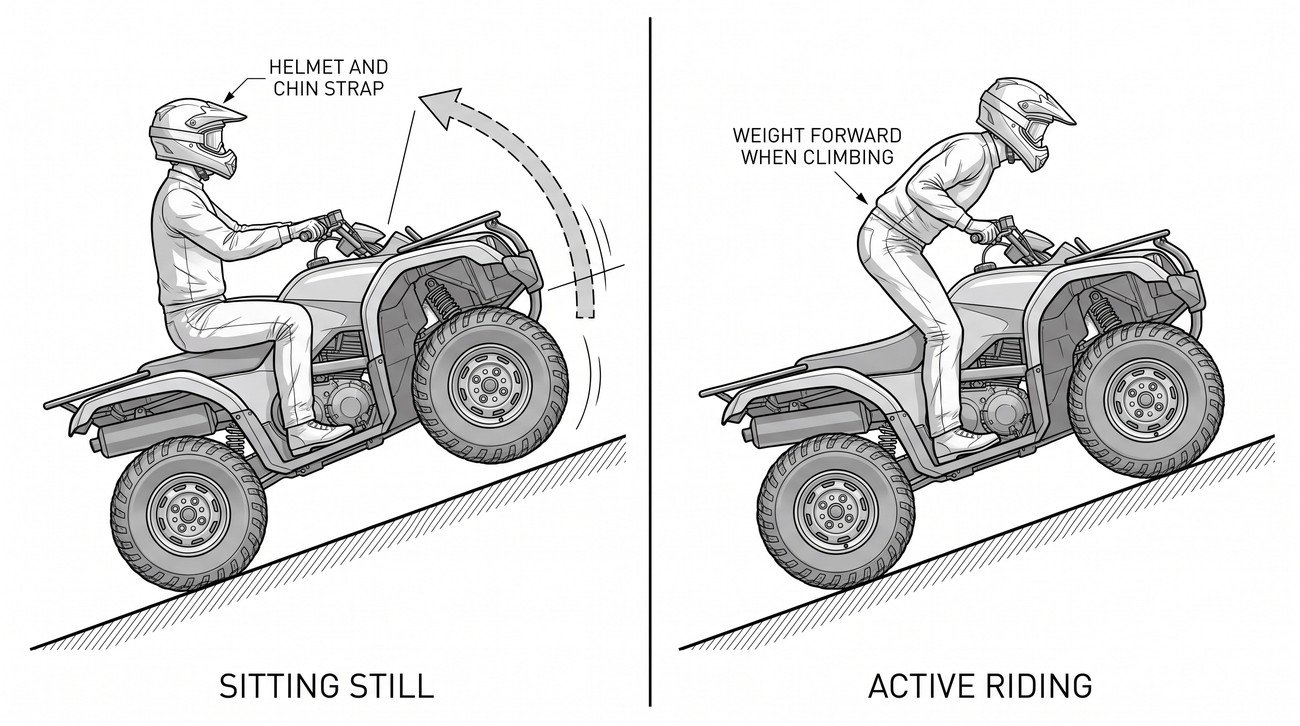
These machines are designed to be controlled by shifting body weight — standing on the pegs over rough ground, leaning uphill on a slope, moving forward when climbing and back when descending. A rider sitting still like a car driver has removed a control input the machine depends on, and the machine will roll or slide in situations where an active rider would have kept it upright. That is a skill that has to be taught rather than picked up.
Overturning is the dominant injury
Most serious quad incidents are overturns, sideways on a slope or backwards while climbing. Contributing factors repeat: too much speed for the ground, a load carried too high or on one side, a trailed implement pushing the machine on a descent, an unseen rut or hole, and riding across a slope rather than up and down it. A quad with a heavy load on the front rack handles very differently from an empty one, and the change surprises riders who have ridden the machine for years unloaded.
Helmets
Head injury is the leading cause of death in quad incidents, and it is the one control that works regardless of what caused the fall. The common objections — short journeys, familiar ground, hot weather, needing to hear stock — describe exactly the conditions in which these incidents happen. A helmet that is available at the machine rather than in a shed somewhere is the one that gets worn.
Passengers and children
A machine designed for a single active rider cannot be balanced by two people, because the passenger cannot see what is coming and moves the wrong way. Adult-sized machines are also too heavy and too fast for a child to control, and a large share of the most serious incidents involve a child on a machine sized for an adult. Both of these are simple prohibitions with no exceptions worth making.
Loads, attachments and the ground
Rack capacities are stated for front and rear separately and are lower than they look, particularly for the front. A trailed sprayer or spreader with no brakes will push the machine downhill, and a load that shifts changes the handling mid-manoeuvre. Ground conditions do more than anything else: wet grass on a slope, a hidden rut, a soft edge beside a ditch. Riding the route once at low speed before doing it loaded is worth more than any amount of experience on the machine.
For the same overturn problem on tractors, see overturn, ROPS and seat belts. For getting help when it happens away from the yard, see lone working on a farm.
Related standards
The standards below set the safety requirements, classification and test methods behind the machinery and equipment referenced in this note.
Common errors
1Riding passively, as though driving a car, and losing the stability the machine depends on.
2Riding across a slope rather than up and down it.
3Not wearing a helmet on short journeys over familiar ground.
4Carrying a passenger, or letting a child ride an adult-sized machine.
5Exceeding rack capacities, particularly on the front, or trailing an unbraked implement downhill.
Frequently asked questions
Why is active riding necessary on a quad?
The machine is designed to be controlled by shifting body weight: standing on the pegs over rough ground, leaning uphill on a slope, moving forward climbing and back descending. Sitting still removes a control input the machine depends on.
What causes most serious quad incidents?
Overturns, sideways on a slope or backwards while climbing. Speed, a high or one-sided load, an unbraked trailed implement, an unseen rut, and riding across a slope all contribute.
Why does a helmet matter so much?
Head injury is the leading cause of death in quad incidents, and a helmet works regardless of what caused the fall. The usual objections describe the exact conditions in which these incidents happen.
Can a quad carry a passenger?
No. A machine designed for a single active rider cannot be balanced by two people, because the passenger cannot see what is coming and shifts weight the wrong way.
What should be checked about loads?
Rack capacities are stated separately for front and rear and are lower than they look, especially at the front. A trailed implement without brakes will push the machine downhill.
Need this as a document you can issue? The template library gives you the risk assessments, permits and inspection logs in editable form — and employer plans cover a whole team with completion records.