Safety / Tips and Tricks / Agriculture and livestock
Activity 13 · Agriculture
Respiratory Protection for Agricultural Dust and Spray
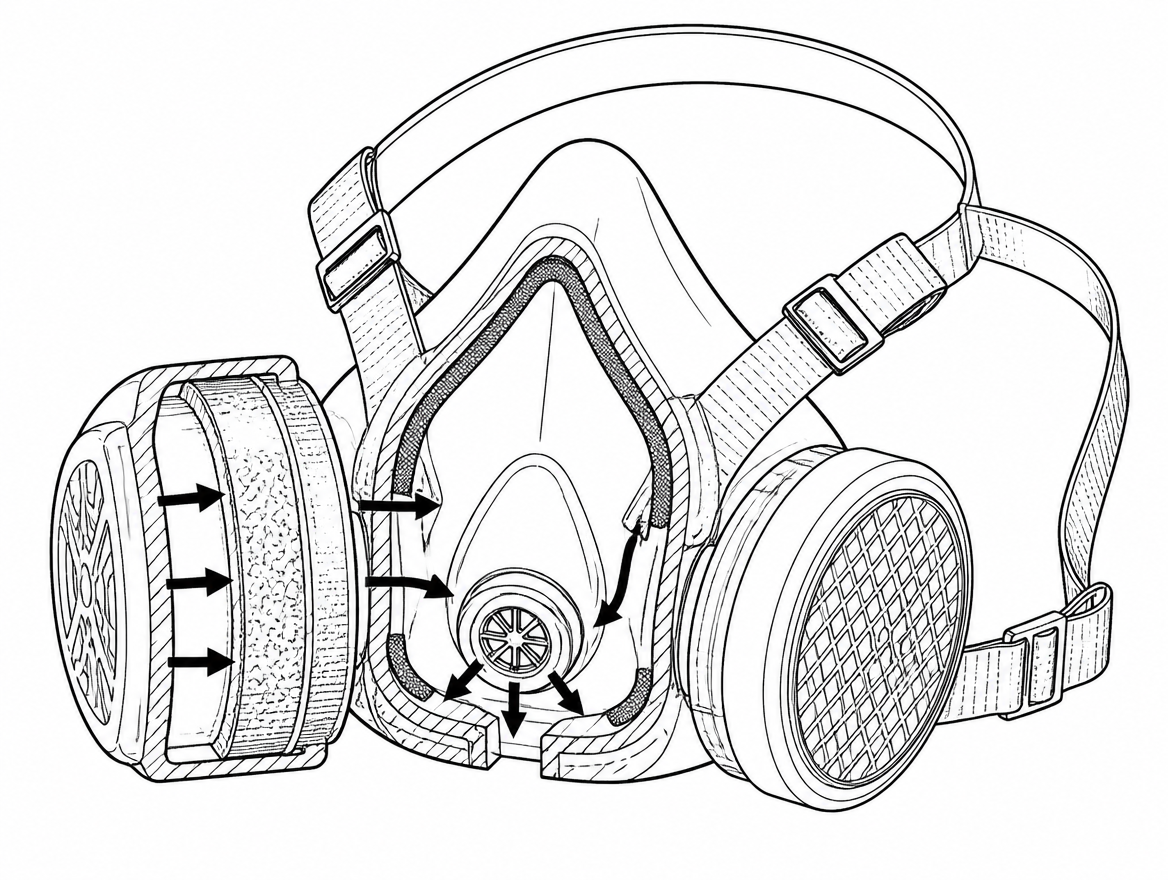
Farming exposes the airway to several different things, and they do not all respond to the same mask — which is why one box of disposables in the workshop is rarely the right answer.
Organic dust and the lung reaction it causes
Mouldy hay, straw and grain release very fine spores when disturbed, and repeated exposure can produce an inflammatory reaction in the lung that leaves permanent scarring. The pattern is characteristic: breathlessness, a dry cough and a feeling of flu some hours after handling the material, easing before the next exposure. Because the reaction is delayed it is very often not connected to the work at all, and by the time it is, the damage has accumulated.
Different exposures need different equipment
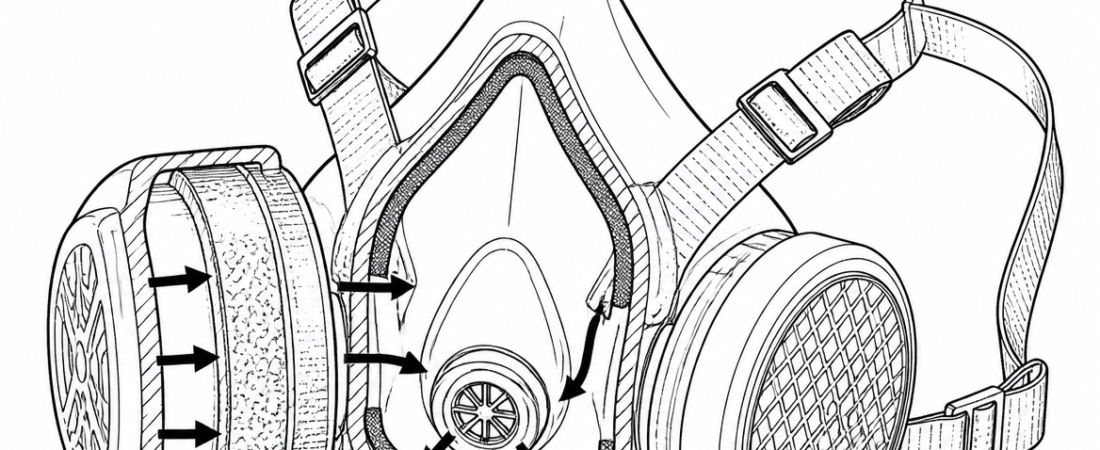
Fine organic dust needs a high-efficiency particle filter. Pesticide vapour needs a gas filter with the right absorbent, and a particle filter does nothing about it. Slurry gas needs breathing apparatus supplying its own air, because a filter cannot remove a gas at lethal concentration and cannot make oxygen where there is none. Choosing between them starts with what is actually in the air rather than with what is in the cupboard.
The seal is the whole thing
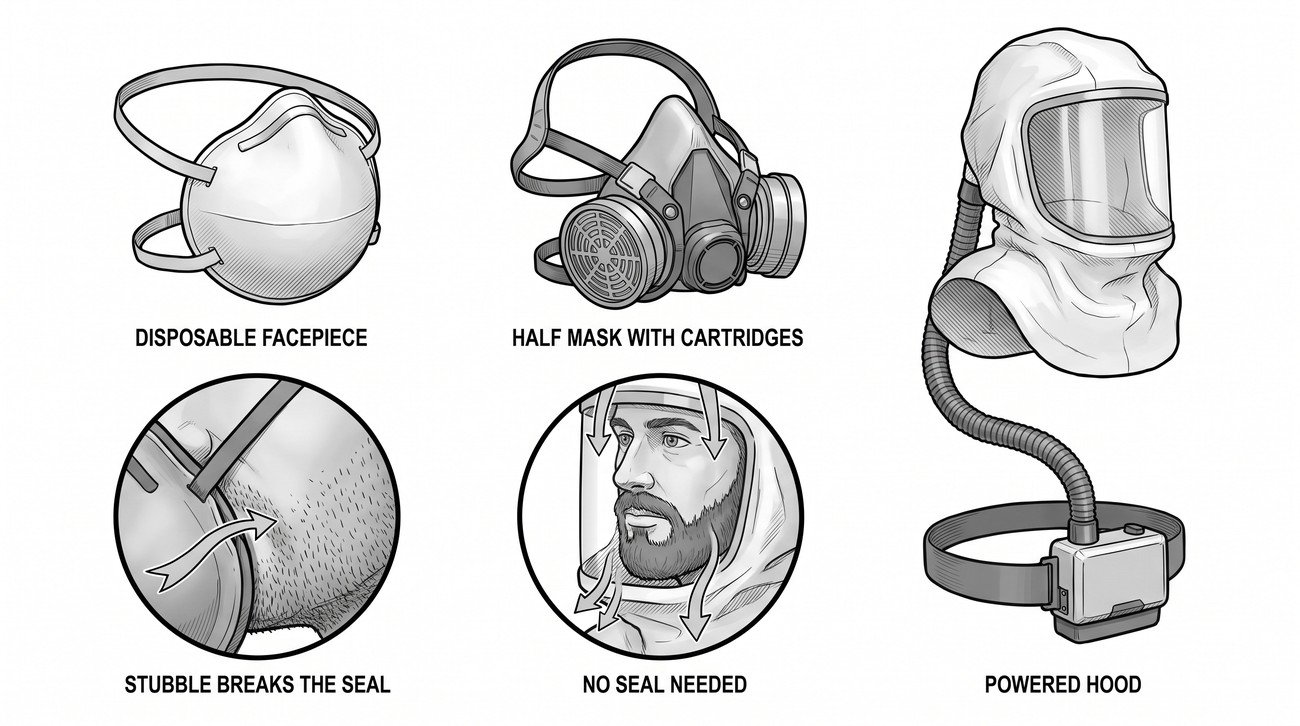
Air takes the easiest route, so a gap at the cheek, a strap over a hood, spectacle arms crossing the seal or a few days of stubble all let air bypass the filter entirely. That applies as much to a disposable mask as to a full face respirator. Tight-fitting equipment has to be fit tested on the individual, and where the wearer has a beard the honest answer is powered air-fed equipment that does not depend on a seal against skin.
Powered hoods suit farm work better than they look
A powered hood is more expensive and more cumbersome, and it also removes the seal problem, is more comfortable over long periods, works over a beard, and can be worn with hearing protection and a visor without any of them fighting each other. For dusty jobs measured in hours rather than minutes — grain handling, bedding down, cleaning out — it is often the equipment that actually gets worn all the way through.
Removing the dust beats filtering it
Handling material wet, using enclosed handling, ventilating buildings while cleaning out, storing hay and straw dry enough not to spoil in the first place, and staying out of the building while a fan runs all reduce exposure for everyone present rather than for one person wearing equipment. Spoiled material is the source, so keeping it from spoiling is the control furthest upstream.
For the gas that no filter handles, see slurry gases and confined spaces. For the same principles in construction dust, see respiratory protection for construction dust.
Related standards
The standards below set the safety requirements, classification and test methods behind the machinery and equipment referenced in this note.
- EN 149 — Filtering Half Masks (FFP1/FFP2/FFP3)
- EN 143 — Particle Filters
- EN 136 — Full Face Masks
- EN 15695 — Tractor Cab Categories
Common errors
1Using a particle filter against pesticide vapour, or any filter against slurry gas.
2Relying on a tight-fitting mask over stubble or a beard.
3Not connecting delayed breathlessness and cough to work done hours earlier.
4Keeping one type of disposable mask for every job on the holding.
5Filtering dust that could have been prevented by storing material dry.
Frequently asked questions
What causes the lung reaction from mouldy hay and grain?
Very fine spores released when spoiled material is disturbed. Repeated exposure can produce an inflammatory reaction leaving permanent scarring.
Why is the reaction often missed?
Because it is delayed. Breathlessness, dry cough and a flu-like feeling appear some hours after handling the material and ease before the next exposure, so they are not connected to the work.
Can one mask cover every farm job?
No. Fine organic dust needs a high-efficiency particle filter, pesticide vapour needs a gas filter with the right absorbent, and slurry gas needs breathing apparatus supplying its own air.
What defeats a tight-fitting mask?
Any break in the seal: a gap at the cheek, a strap over a hood, spectacle arms crossing the seal, or stubble. Air takes the easiest route and bypasses the filter entirely.
Why do powered hoods suit farm work?
They remove the seal problem, work over a beard, are more comfortable over long periods, and combine with hearing protection and a visor without the pieces fighting each other.
Need this as a document you can issue? The template library gives you the risk assessments, permits and inspection logs in editable form — and employer plans cover a whole team with completion records.