Safety / Tips and Tricks / Agriculture and livestock
Activity 13 · Agriculture
Spray Drift, Re-Entry and the Tractor Cab
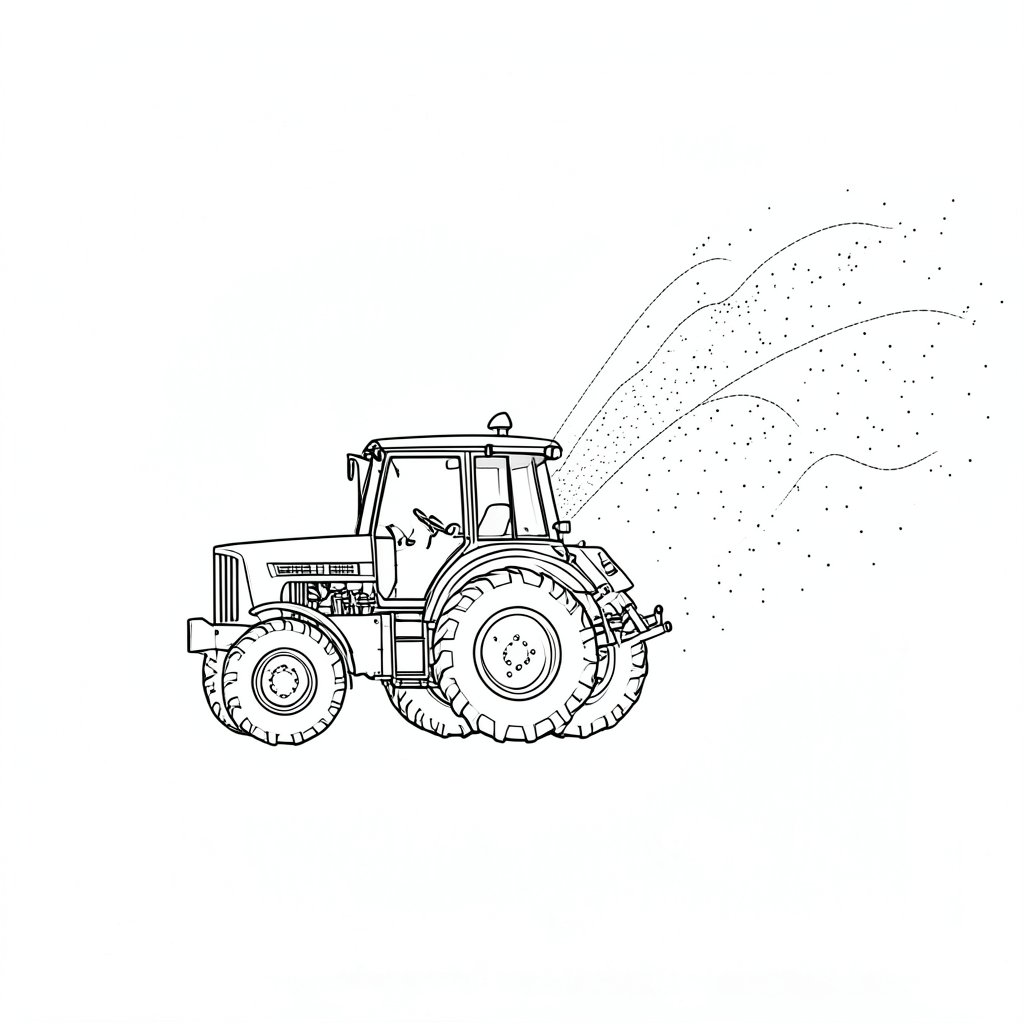
Once the spray leaves the nozzle it goes where the air takes it, and the two questions that follow are where it lands and how long the treated area stays hazardous.
Drift is decided before you start
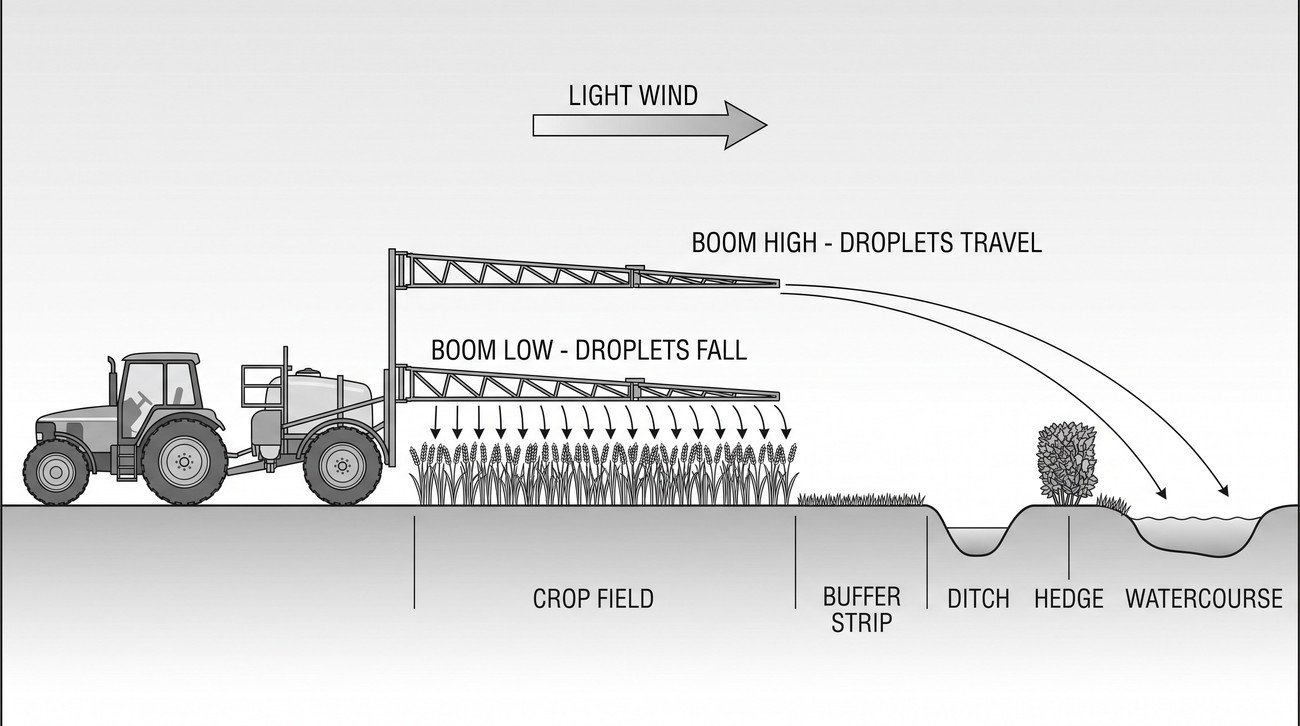
Fine droplets travel; coarse droplets fall. Nozzle choice, pressure and boom height therefore control drift more than any decision made during the pass. A boom carried high to clear an uneven crop doubles the distance droplets fall through moving air, and pressure raised to increase output produces a finer spray that drifts further. Wind matters, but it acts on droplets whose size you already chose.
Still air is not the safe condition
A light steady breeze away from sensitive areas is better than dead calm, because in still conditions on a clear evening the air near the ground can be colder than the air above it and fine droplets stay suspended, drifting a long way as a body of air rather than dispersing. That is the condition in which spray reaches a neighbouring garden or watercourse hours after application, and it is exactly the evening that feels ideal for spraying.
Buffers and what is downwind
Watercourses, ditches, hedges with nesting cover, neighbouring gardens, footpaths in use and other people’s crops are all downwind of somebody’s field. Buffer distances on the label are minimums for the conditions assumed, not for the conditions on the day, and the practical approach is to leave the downwind edge until conditions change rather than to spray it carefully.
The cab is protective equipment
A tractor cab used for spraying is only protective if it is the right category, with a filter fitted, seals intact and the door shut. A cab with a charcoal filter fitted and pressurised protects against vapour; a dust filter does not. Filters have a service life measured in hours of use and are frequently left in far longer, and a cab with a window open or a damaged door seal is providing no more protection than working outside. Contaminated gloves brought into the cab put the residue where the operator will be sitting all day.
Re-entry intervals are for everyone, not just the sprayer
The interval before the treated area can be entered without protection applies to family members, contractors, walkers on a right of way, and anyone sent to check stock in the next field. Communicating it means marking the field and telling people rather than knowing it yourself, and it is the part most often skipped because the operator understands the risk and assumes everyone else does.
For the higher-exposure part of the job, see mixing and loading pesticides. For cab categories, see EN 15695.
Related standards
The standards below set the safety requirements, classification and test methods behind the machinery and equipment referenced in this note.
- EN 15695 — Tractor Cab Categories
- EN ISO 27065 — Protective Clothing for Pesticide Operators
- EN 374 — Protective Gloves Against Chemicals
Common errors
1Carrying the boom high to clear uneven crop, doubling the drift distance.
2Raising pressure for output, producing a finer spray that travels further.
3Spraying in dead calm on a clear evening, when droplets stay suspended and travel.
4Relying on a cab whose filter is beyond its service life, or with a window open.
5Knowing the re-entry interval without telling anyone else on the holding.
Frequently asked questions
What controls drift most?
Droplet size, set by nozzle choice and pressure, and boom height. Wind acts on droplets whose size was already decided before the pass started.
Is dead calm the safest condition for spraying?
No. On a clear evening the air near the ground can be colder than the air above, so fine droplets stay suspended and drift a long way as a body of air rather than dispersing.
Are label buffer distances always sufficient?
They are minimums for the conditions assumed, not for the conditions on the day. Leaving the downwind edge until conditions change is more reliable than spraying it carefully.
When does a tractor cab actually protect the operator?
When it is the right category with a charcoal filter fitted and within its service life, the seals intact, the pressurisation working and the door and windows shut.
Who does the re-entry interval apply to?
Everyone: family, contractors, walkers on a right of way, and anyone sent to check stock nearby. It has to be communicated by marking the field and telling people, not just known by the operator.
Need this as a document you can issue? The template library gives you the risk assessments, permits and inspection logs in editable form — and employer plans cover a whole team with completion records.