Safety / Tips and Tricks / Agriculture and livestock
Activity 13 · Agriculture
Pesticide Handling: Mixing and Loading
Exposure to pesticide is heaviest not while spraying but while handling the concentrate, and the few minutes spent mixing and loading account for most of the dose an operator receives.
The concentrate is the hazard
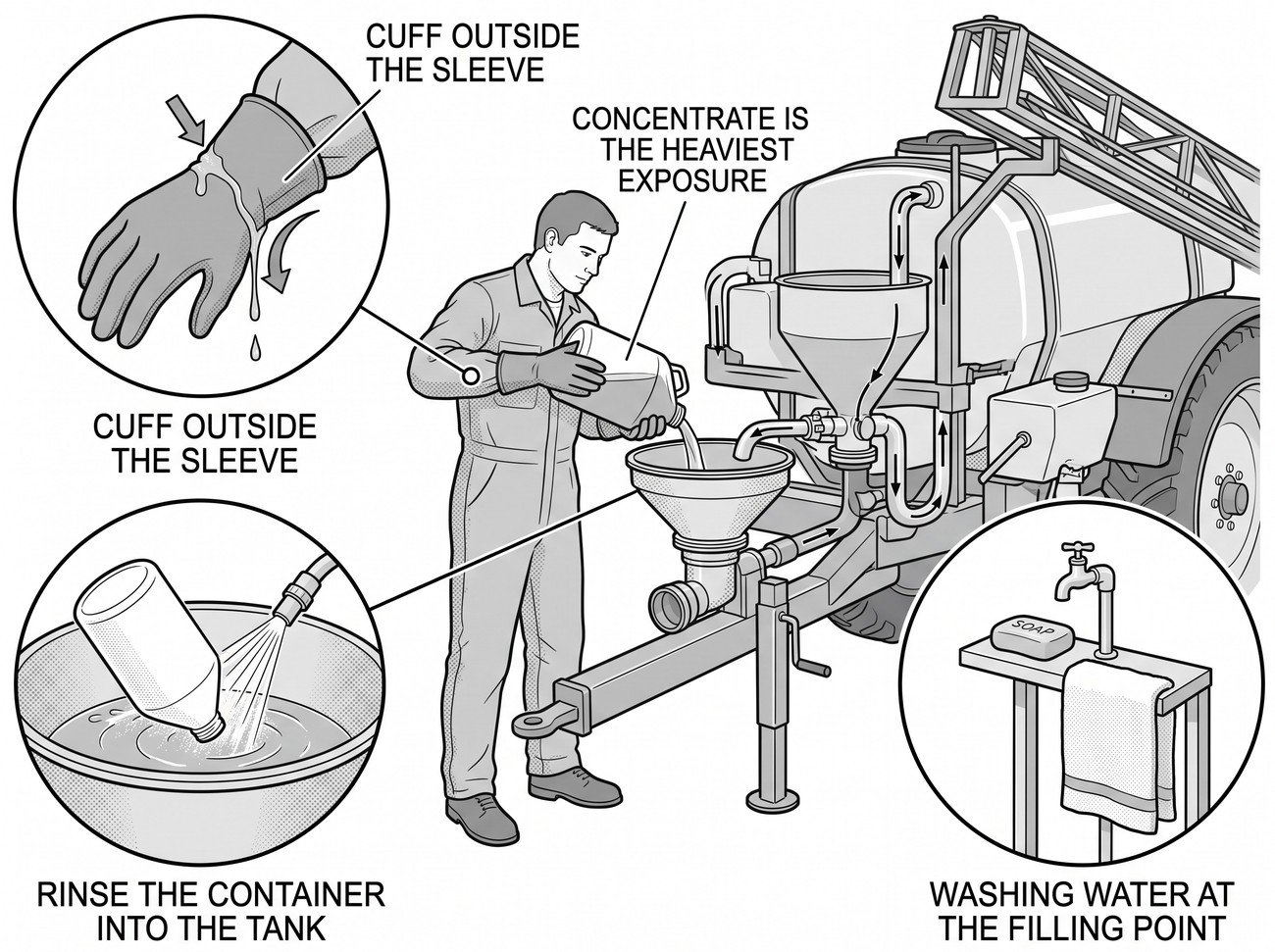
Product in the container is many times more concentrated than the diluted spray leaving the nozzle, so a splash while measuring or pouring delivers far more than the same volume of tank mix. That is why the protective equipment specified for mixing and loading is typically higher than for spraying, and why the operation deserves more care than the hours of application that follow it.
Hands first
Hands and forearms take most of the exposure, through splashes while pouring, contaminated container exteriors, and rinsing equipment. Chemical-resistant gloves of the type named on the product label are the control, and they are worn correctly: cuffs outside the sleeve when working with hands below shoulder height so runoff goes onto the glove rather than into it. Removing gloves without contaminating the hands is a technique rather than an instinct.
Read the label as the instruction it is
The label states the protective equipment required, the maximum dose, the conditions of use and the intervals before re-entry or harvest. It is a legal instruction rather than guidance, and it is specific to that product. Working from what was used last season, or from another product with the same active ingredient, is the common route to using the wrong equipment or the wrong rate.
Design the splash out
Induction bowls at a workable height, closed transfer systems, container rinsing built into the sprayer, and water-soluble packaging all reduce exposure by removing the pouring rather than by protecting against it. On any holding where spraying is frequent, these are worth more than any amount of protective equipment because they work regardless of what anyone is wearing that day.
Washing arrangements and contaminated clothing
Clean water, soap and a towel at the filling point — not back at the house — are what allow a splash to be dealt with immediately rather than carried for an hour. Eye irrigation should be available at the same place. Contaminated overalls are removed before getting into a vehicle cab, washed separately from other clothing, and never taken into the house, because that is how exposure reaches people who never went near the sprayer.
For what happens after application, see spray drift and re-entry. For glove selection, see selecting chemical-resistant gloves.
Related standards
The standards below set the safety requirements, classification and test methods behind the machinery and equipment referenced in this note.
- EN ISO 27065 — Protective Clothing for Pesticide Operators
- EN 374 — Protective Gloves Against Chemicals
- EN 13034 — Light Chemical Protective Clothing
- EN 149 — Filtering Half Masks (FFP1/FFP2/FFP3)
Common errors
1Wearing spraying protection for mixing and loading, where exposure is far higher.
2Wearing glove cuffs inside the sleeve, so runoff enters the glove.
3Working from last season's practice rather than reading this product's label.
4Having no washing water at the filling point.
5Taking contaminated overalls into the vehicle or the house.
Frequently asked questions
When is pesticide exposure highest?
While mixing and loading, not while spraying. The concentrate is many times stronger than the diluted tank mix, so a splash while pouring delivers far more than the same volume of spray.
Which part of the body takes most exposure?
Hands and forearms, through splashes while pouring, contaminated container exteriors and rinsing equipment. Chemical-resistant gloves of the type named on the label are the control.
How should glove cuffs be worn?
Outside the sleeve when working with hands below shoulder height, so runoff goes onto the glove rather than into it. Removing gloves without contaminating the hands is a technique, not an instinct.
Why read the label every time?
It is a legal instruction specific to that product, stating the protective equipment, maximum dose, conditions of use and re-entry intervals. Working from last season's practice is how the wrong equipment gets used.
What washing facilities are needed at the filling point?
Clean water, soap, a towel and eye irrigation, at the filling point rather than back at the house, so a splash is dealt with immediately rather than carried for an hour.
Need this as a document you can issue? The template library gives you the risk assessments, permits and inspection logs in editable form — and employer plans cover a whole team with completion records.