Safety / Tips and Tricks / Agriculture and livestock
Activity 13 · Agriculture
Tractor Overturn: ROPS and Seat Belts
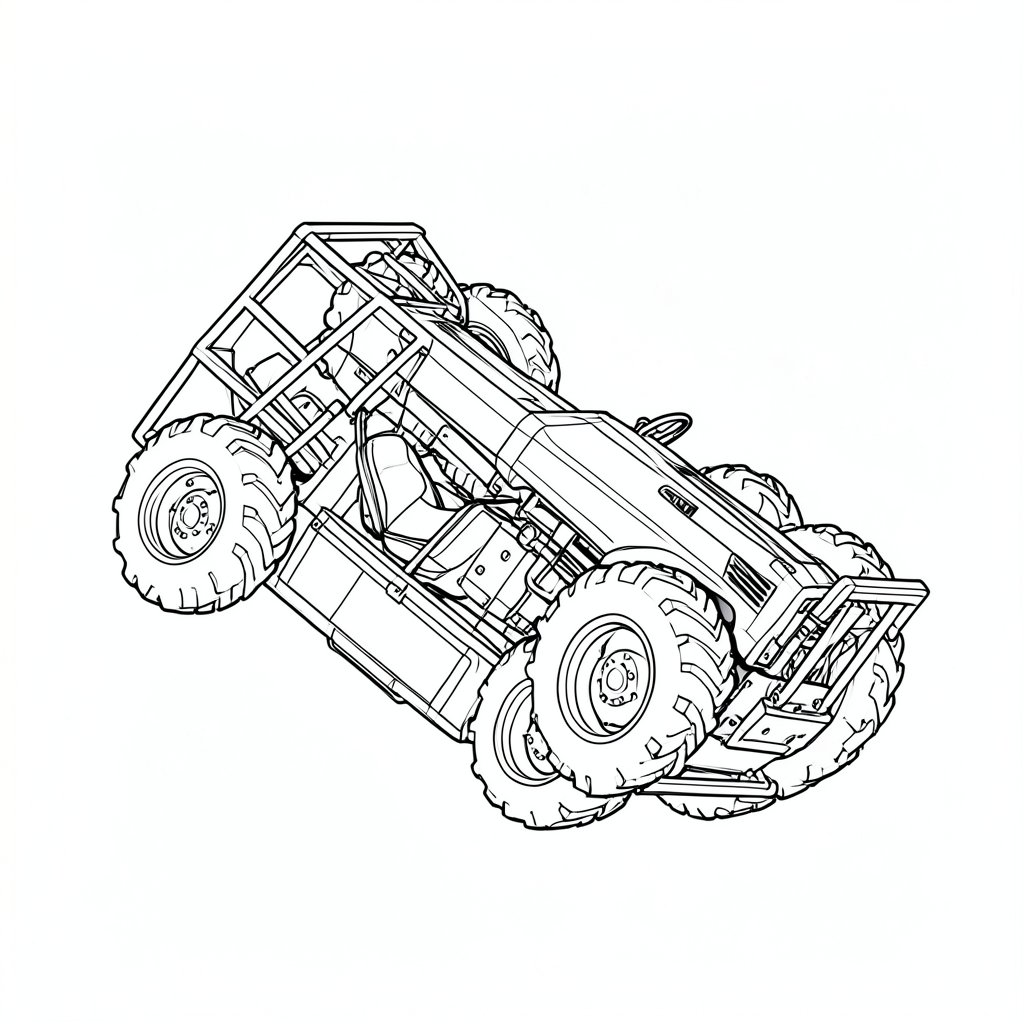
A tractor overturn is survivable in a machine with a roll-over protective structure and a belt worn, and very often fatal without them. The two only work as a pair.
What the structure does
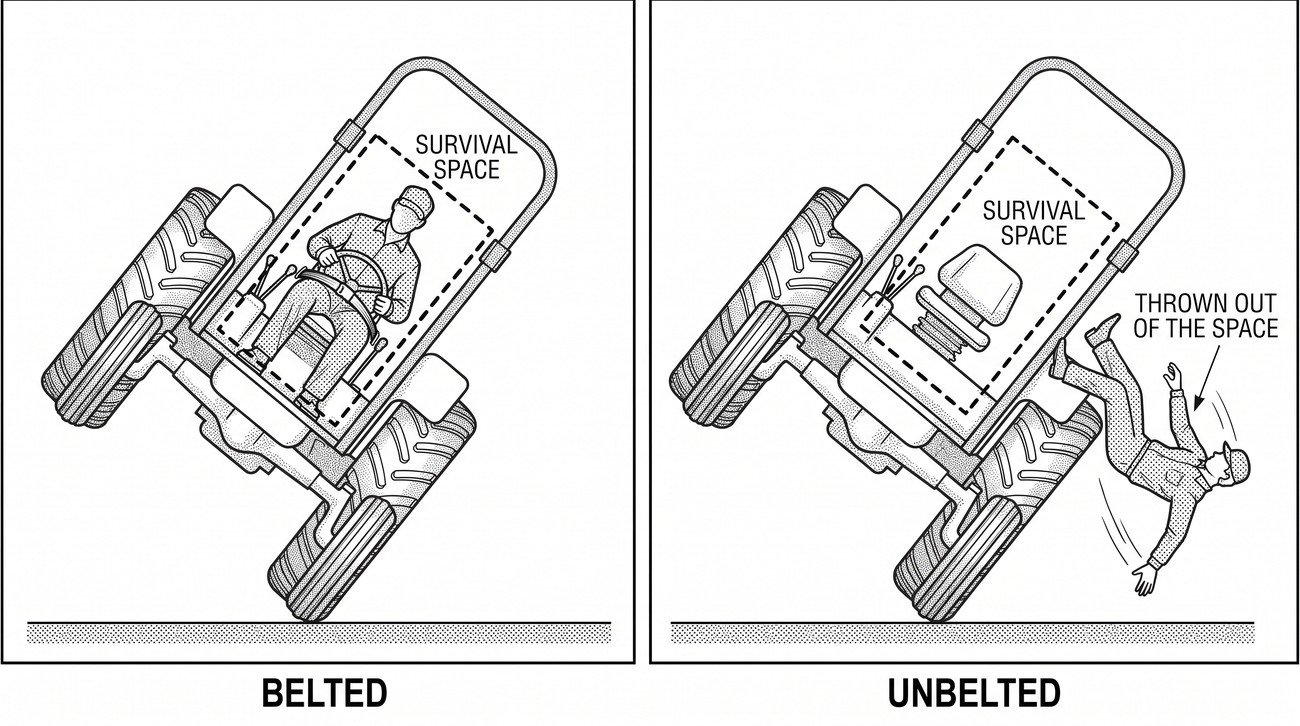
A roll-over protective structure is designed to deform in a controlled way and preserve a survival space around the operator during an overturn. It is tested by applying defined loads to the frame and confirming that nothing intrudes into that space. It is a structural component with a rating, not a frame that looks strong, and its performance belongs to the specific machine it was designed and tested for.
The belt is what keeps you in the space
The structure preserves a volume; the belt is what keeps the operator inside it. An unbelted operator is thrown around the cab during the roll and is very often thrown out and crushed by the machine or the structure itself. This is why a protective structure without a belt worn is close to no protection at all, and why the two are always specified together. The instinct to jump clear during an overturn is both natural and the thing that kills people.
Folding structures folded down
Two-post structures that fold are folded to get under a low doorway or a branch, and then left down because folding them back is a job. A folded structure provides nothing. Where the machine spends most of its life in the open, the answer is to keep it up and deal with the specific low clearance; where the low clearance is constant, the machine may be the wrong one for that yard.
What causes the overturn
Most overturns are sideways rather than backwards, and most involve the same handful of situations: crossing a slope rather than working up and down it, dropping a wheel into a ditch or a rut at the field edge, turning at speed on a slope, a heavy or high load raising the centre of gravity, and a rear-mounted implement lifted high while travelling. Backward overturns come from pulling from too high a point rather than from the drawbar, and they happen very fast.
Modifications and repairs
A protective structure is not something to drill, weld, cut or straighten. Holes drilled for a light bracket, a repair welded after a knock, or a bent post pulled back into shape all change the way the structure deforms, which is precisely the property it was tested for. A damaged structure is replaced, not repaired, and a structure that has been through an overturn is finished regardless of how it looks.
For the routine when you stop, see safe stop. For the structure requirements, see ISO 3471.
Related standards
The standards below set the safety requirements, classification and test methods behind the machinery and equipment referenced in this note.
Common errors
1Relying on a protective structure without wearing the belt.
2Leaving a folding structure folded down after passing a low clearance.
3Crossing a slope rather than working up and down it.
4Travelling with a rear implement raised high, lifting the centre of gravity.
5Drilling, welding or straightening a protective structure.
Frequently asked questions
What does a roll-over protective structure actually do?
It deforms in a controlled way and preserves a survival space around the operator during an overturn. It is tested by applying defined loads and confirming nothing intrudes into that space.
Why is the seat belt essential?
The structure preserves a volume and the belt is what keeps the operator inside it. An unbelted operator is thrown around the cab and often out of it, then crushed by the machine or the structure.
Is a folded roll-over structure any use?
No. A folded structure provides nothing. If low clearance is a constant problem, the machine may be the wrong one for that yard rather than the structure being the problem.
What causes most tractor overturns?
Sideways rolls from crossing a slope, dropping a wheel into a ditch or rut, turning at speed on a slope, a high load raising the centre of gravity, or a rear implement carried high.
Can a protective structure be repaired?
No. Drilling, welding or straightening changes how it deforms, which is the property it was tested for. A damaged structure is replaced, and one that has been through an overturn is finished.
Need this as a document you can issue? The template library gives you the risk assessments, permits and inspection logs in editable form — and employer plans cover a whole team with completion records.