Safety / Tips and Tricks / Agriculture and livestock
Activity 13 · Agriculture
Working Around Cattle: Flight Zone and Handling Systems
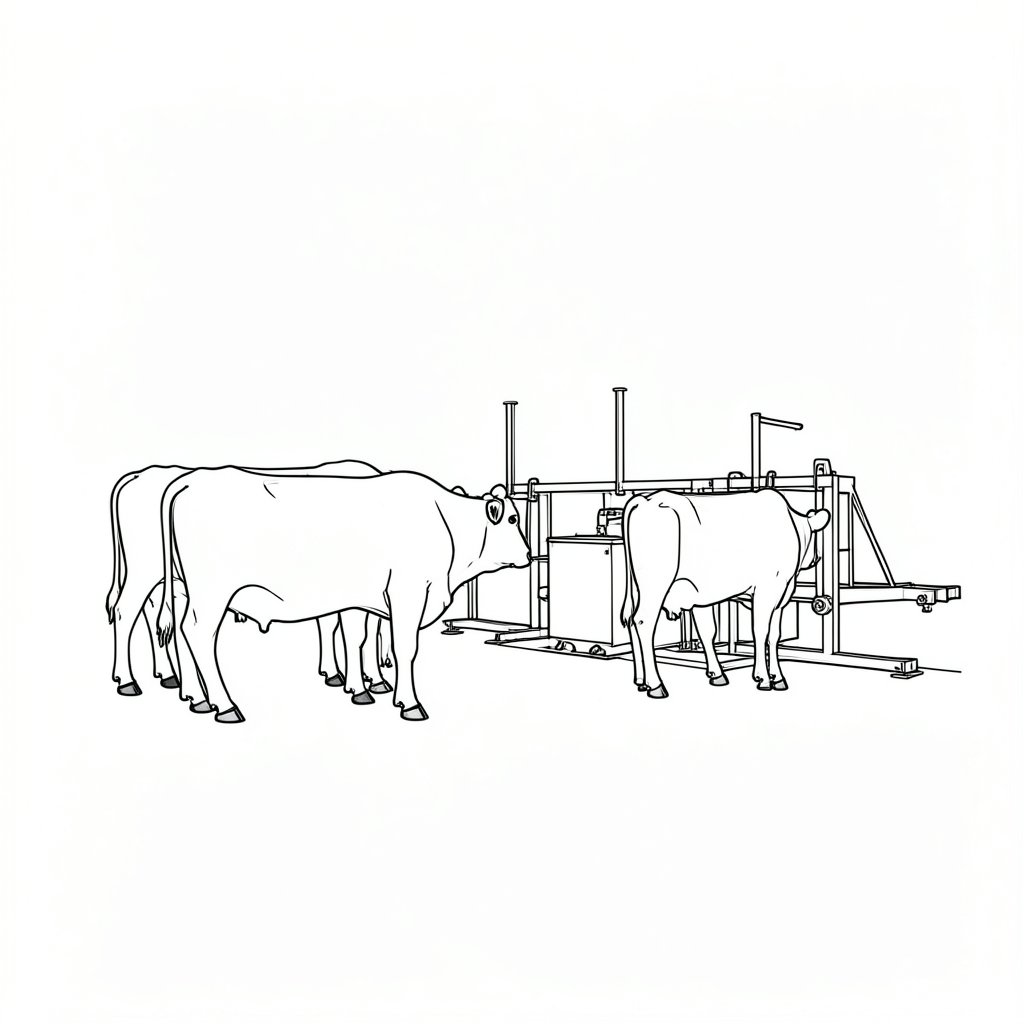
Cattle injure people who are behaving normally around animals that are behaving normally. Almost all of it comes down to where you stand relative to an animal that wants to get away from you.
The flight zone
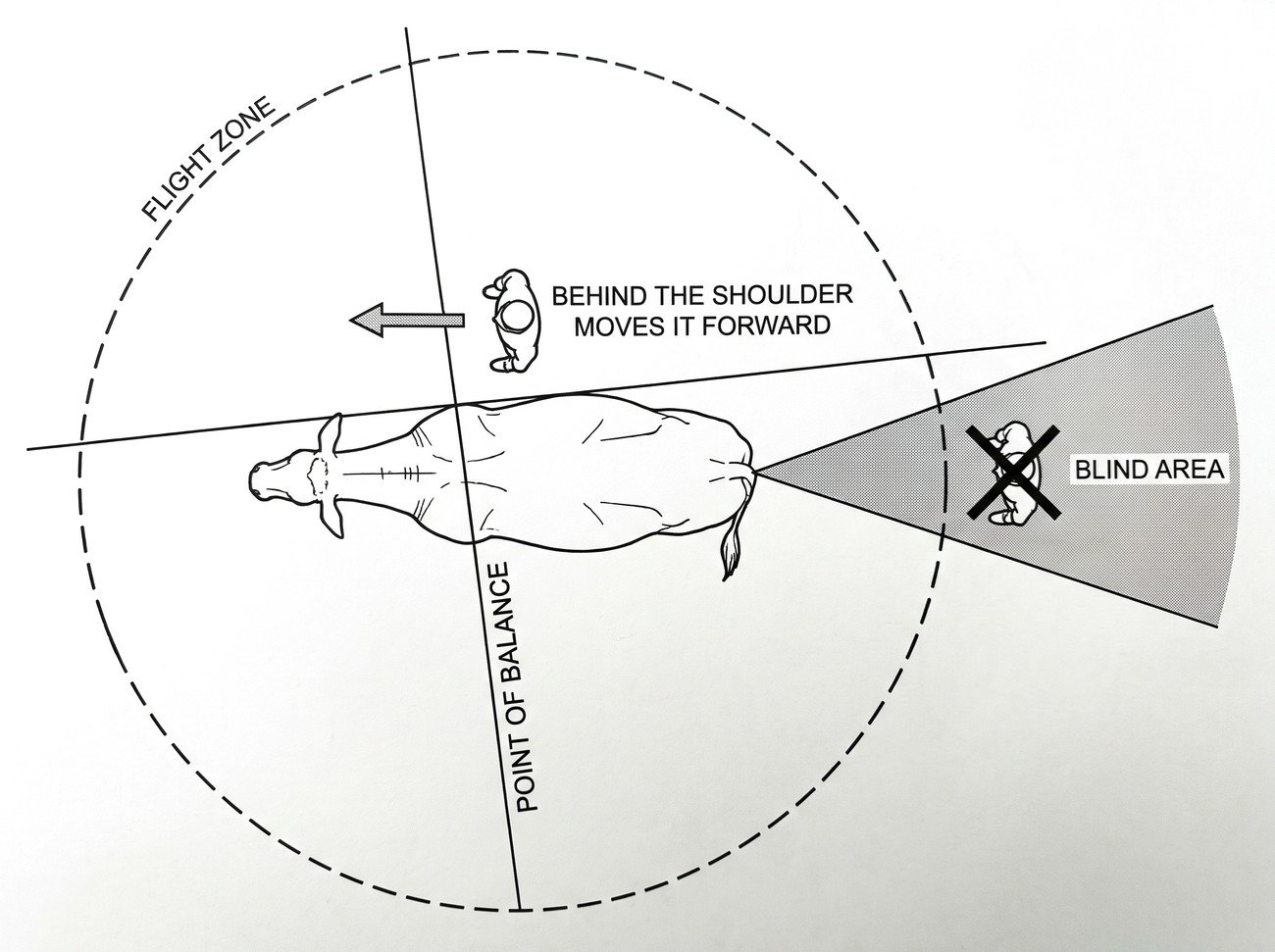
Every animal has a distance within which your presence makes it move. Step into that zone and the animal moves away; step out and it stops. The zone is larger for animals handled rarely, larger again when the animal is frightened or in an unfamiliar place, and smaller for animals used to close contact. Working with the flight zone rather than against it is what makes cattle move without being driven, and misjudging it is what turns handling into a struggle.
The point of balance
An animal moves forward if you are behind its shoulder and backward if you are in front of it. That line at the shoulder is the point of balance, and it is the single most useful thing to know when moving cattle. Standing in the wrong place relative to it and then pushing harder produces an animal that turns, doubles back and goes past you — which is when people are knocked down and trampled.
Directly behind is the worst place to be
Cattle see over a very wide angle but have a blind area directly behind them. A handler standing there is invisible to the animal, is in the path it will take if startled, and is in kicking range. Approaching from the side where the animal can see you, and speaking so it knows you are there, prevents the startle that produces the kick.
The handling system does most of the work
Good races and crushes move animals with their own instincts: solid sides so they cannot see distraction, curves so they cannot see the end, even lighting without sharp shadows, non-slip flooring, and no dead ends. A poor system needs people in with the animals doing by force what the design should do by layout, and that is where the injuries occur. Escape gaps at intervals along a race are what let a handler get out when an animal turns.
Unfamiliar animals and unfamiliar people
Animals that are not handled often are more dangerous than those that are, and a person the animals do not know is treated differently from the stockperson they see daily. Contractors, vets, family members and visitors all need to be told which animals are in which field, which are not to be approached, and where the escape routes are — because the animal will not make an exception for someone who did not know.
For the animals that do not simply move away, see bulls and cows with calves. For who else is on the holding, see children and visitors.
Related standards
The standards below set the safety requirements, classification and test methods behind the machinery and equipment referenced in this note.
Common errors
1Pushing harder into the flight zone rather than repositioning relative to the point of balance.
2Standing directly behind an animal, where it cannot see you and can kick.
3Approaching quietly and startling an animal that did not know you were there.
4Working in a race with no escape gaps.
5Letting unfamiliar people move animals without telling them which are which.
Frequently asked questions
What is the flight zone?
The distance within which your presence makes an animal move away. It is larger for animals handled rarely or in unfamiliar surroundings, and smaller for animals used to close contact.
What is the point of balance?
An imaginary line at the animal's shoulder. Standing behind it moves the animal forward; standing in front of it moves the animal back. It is the most useful single thing to know when moving cattle.
Why is standing directly behind an animal dangerous?
It is the animal's blind area, so you are invisible, in the path it takes if startled, and within kicking range. Approaching from where it can see you, and speaking, prevents the startle.
What makes a good handling system?
Solid sides so animals cannot see distractions, curves so they cannot see the end, even lighting without sharp shadows, non-slip flooring, no dead ends, and escape gaps along the race.
Are unfamiliar animals more dangerous?
Yes, and so is being an unfamiliar person. Contractors, vets and visitors need to be told which animals are where and which are not to be approached, because the animal makes no allowance for not knowing.
Need this as a document you can issue? The template library gives you the risk assessments, permits and inspection logs in editable form — and employer plans cover a whole team with completion records.