Safety / Tips and Tricks / Agriculture and livestock
Activity 13 · Agriculture
Lone Working on a Farm
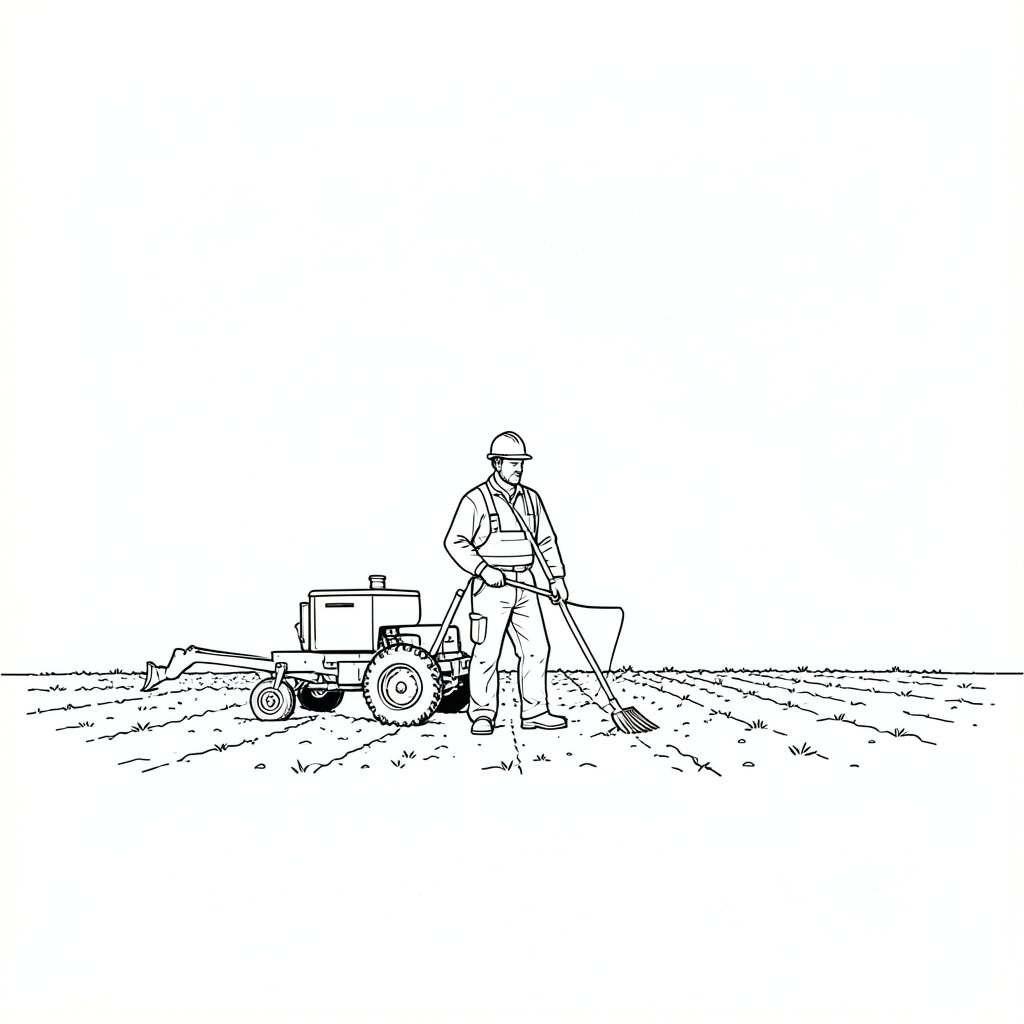
Most farm work is done alone, most of it out of sight of anyone, and often out of mobile signal. That combination turns a survivable injury into a fatal one more often than any single hazard does.
What being alone actually changes
It does not make the work more hazardous; it removes the response. An injury that would be manageable with someone present — a crush, a fall, a bleed, being pinned by an animal or a machine — becomes life-threatening when nobody knows where you are or that anything has happened. The controls therefore focus on discovery: making sure someone knows where you went, what you were doing and when you were expected back.
Some jobs are not lone-workable
Working with a bull, agitating slurry, entering any confined space, working at height, handling stock in a race, and jobs requiring a second pair of hands to do safely are all two-person tasks regardless of how quick they are or how experienced the person is. Deciding that in advance and writing it down prevents the judgement being made alone at the moment it matters.
Telling someone is the whole system
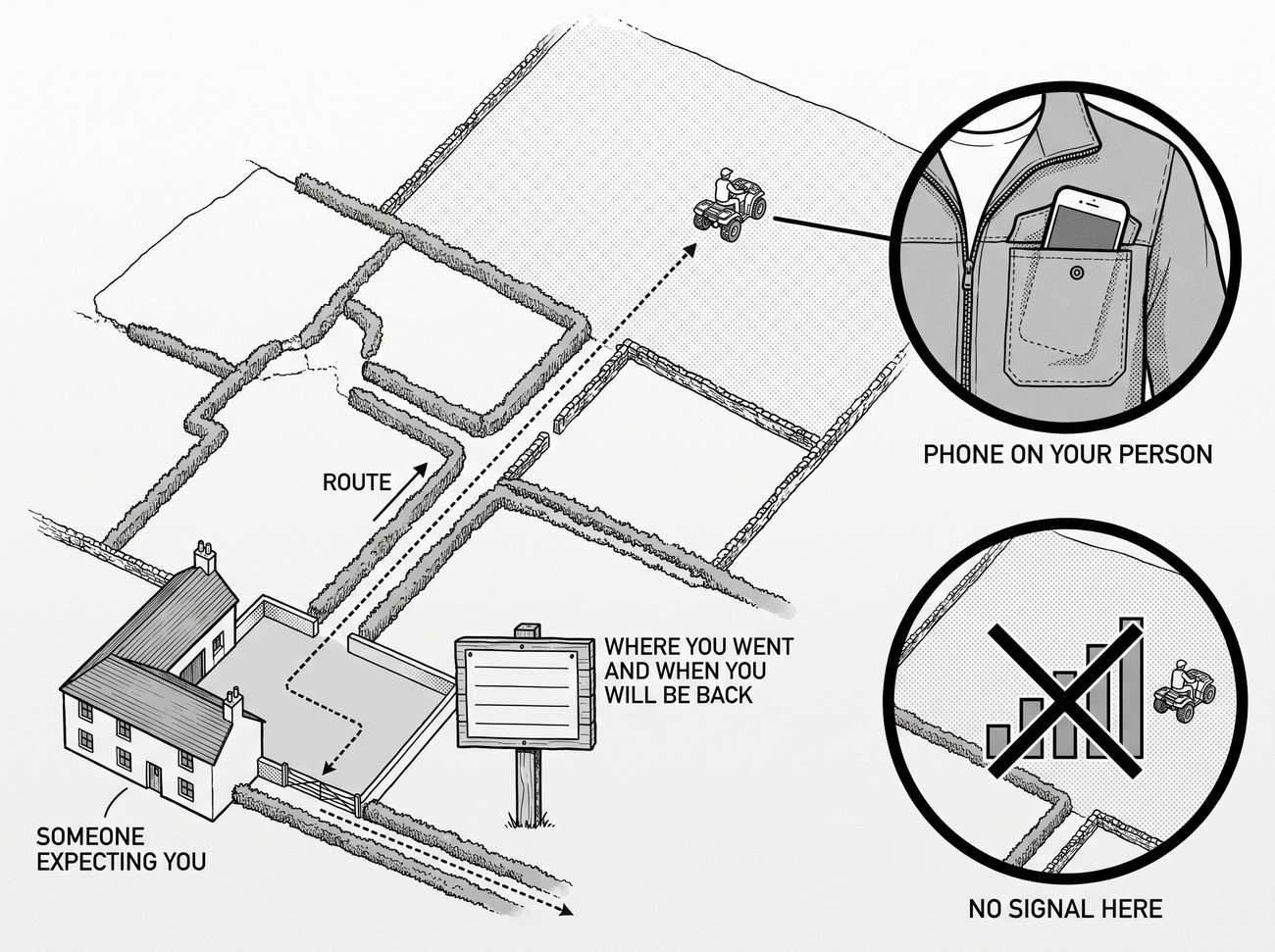
A note on a board in the kitchen or the yard saying where you have gone and when you will be back is a more reliable system than a phone, because it works when the phone does not. The essential parts are that it says a specific location rather than a general direction, that it says a time, and that someone is expected to notice when the time passes. A system where nobody is looking is not a system.
Signal is not a plan
A phone in the bottom of a field with no signal is a phone that does not work, and a phone in the tractor is no use to someone lying under it. Carrying it on your person rather than in the vehicle, knowing where on the holding signal exists, and having a second means of raising an alarm for the places it does not are all worth more than assuming the phone will do. Some incidents leave a person conscious and unable to move, and reaching a phone becomes the whole of survival.
Ageing, working alone and doing it anyway
Farming has an older workforce than almost any other sector, and older workers are both more likely to be working alone and more likely to be seriously injured by the same event. Reduced strength, slower recovery and existing conditions all change the arithmetic. This is not a reason to stop; it is a reason for the check-in arrangements to be firmer rather than looser as the years go on.
For the tasks that are never lone-workable, see slurry gases and confined spaces. For what happens once the alarm is raised, see emergency response when remote.
Related standards
The standards below set the safety requirements, classification and test methods behind the machinery and equipment referenced in this note.
- EN ISO 20471 — High-Visibility Clothing
- EN 397 — Industrial Safety Helmets
- EN ISO 20345 — Safety Footwear
Common errors
1Deciding on the spot that a two-person job is quick enough to do alone.
2Leaving no record of where you went or when you were expected back.
3Leaving a note nobody is expected to check.
4Carrying the phone in the vehicle rather than on your person.
5Assuming signal exists across the whole holding.
Frequently asked questions
What does working alone actually change?
Not the hazard but the response. An injury that would be manageable with someone present becomes life-threatening when nobody knows where you are or that anything has happened.
Which farm jobs should never be done alone?
Working with a bull, agitating slurry, entering a confined space, working at height, handling stock in a race, and anything needing a second pair of hands, regardless of how quick it is.
What makes a check-in system work?
A specific location rather than a direction, a stated return time, and somebody who is expected to notice when that time passes. A system nobody is looking at is not a system.
Is a mobile phone enough?
No. A phone with no signal does not work, and a phone in the tractor is no use to someone lying under it. Carry it on your person and know where signal exists on the holding.
Why does age change the calculation?
Farming has an older workforce, and older workers are both more likely to work alone and more likely to be seriously injured by the same event. Check-in arrangements should get firmer, not looser.
Need this as a document you can issue? The template library gives you the risk assessments, permits and inspection logs in editable form — and employer plans cover a whole team with completion records.