Safety / Tips and Tricks / Machinery and manufacturing
Activity 12 · Machinery
The Hierarchy of Machine Safeguarding: What Comes Before the Guard
A guard is the third answer to a machine hazard, not the first. Reaching for it before the two answers above it is how machines end up covered in guards that people work around.
Design it out first
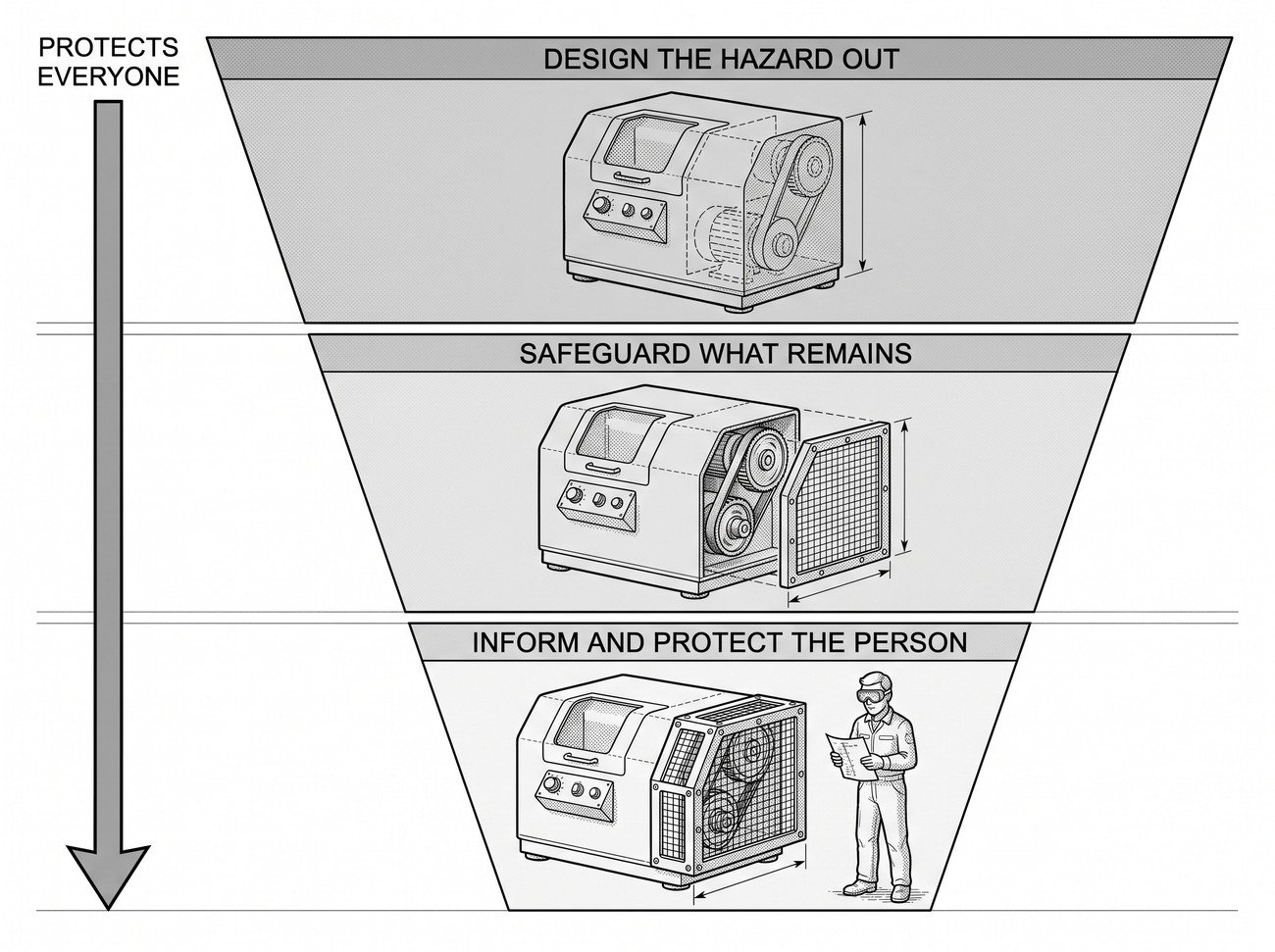
The first question is whether the hazard has to exist at all. A drive enclosed within the machine casing, a feed that is automatic rather than by hand, a nip point moved out of reach by the geometry, a lighter component that removes the manual handling — each of these removes the hazard rather than protecting people from it. These decisions are made by whoever designs or specifies the machine, which is why the buying stage is worth more than any amount of later effort.
Then safeguard what is left
What cannot be designed out gets guarded, interlocked or sensed. This is where the standards spend most of their attention, and it is where most of the practical work happens on an existing machine. The choice between a fixed guard, an interlocked one and a presence-sensing device is not a matter of preference: it follows from how often people need access and from how quickly the machine can be brought to a safe state.
Information and training come last
Warnings, instructions, training and protective equipment sit at the bottom because they all depend on a person doing the right thing every time. That is not an argument for skipping them; it is an argument against using them to substitute for something higher up. A sign telling people not to reach into a machine is doing a job that a guard would do better and more reliably.
Why the order matters in practice
The measures at the top protect everyone who comes near the machine, including the person who was not trained, the agency worker on their first shift, and the maintainer who arrives at night. The measures at the bottom protect only those who know about them and choose to follow them. When a control fails, the question worth asking is which level it sat at — because a failure at the bottom is usually a sign that something was missing further up.
The residual risk has to be stated
No machine is left with zero risk, and what remains after the safeguards is meant to be identified and communicated rather than quietly accepted. That is what the instructions, the markings and the training are for. A machine handed over without that information leaves the operator to discover the residual hazards by encountering them.
Background is in the machinery safety lecture, and the framework itself is ISO 12100. For the guards this leads to, see fixed guards.
Related standards
The standards below set the design requirements, classification and test methods behind the safeguards and equipment referenced in this note.
- ISO 12100 — Safety of Machinery: General Principles
- EN ISO 14120 — Guards: Design and Construction
- EN ISO 14119 — Interlocking Devices Associated With Guards
Common errors
1Adding a guard to a hazard that could have been designed out at the specification stage.
2Using a warning sign in place of a safeguard that would work without compliance.
3Choosing between guard types by preference rather than by access frequency and stopping time.
4Treating training as a control that removes the need for something higher in the hierarchy.
5Handing over a machine without stating the risk that remains after safeguarding.
Frequently asked questions
What comes before guarding a machine?
Designing the hazard out: enclosing a drive within the casing, automating a feed, moving a nip point out of reach by geometry, or lightening a component. These remove the hazard rather than protecting people from it.
Why are training and signs at the bottom of the hierarchy?
Because they depend on a person doing the right thing every time. Measures higher up protect everyone who comes near the machine, including people who were never trained on it.
How is the type of safeguard chosen?
By how often people need access and how quickly the machine can be brought to a safe state, not by preference. Frequent access and long stopping times point to different answers.
Why does the level of a failed control matter?
Because a failure at the bottom of the hierarchy usually indicates something was missing further up. A defeated warning sign often means a guard should have been there instead.
What is residual risk?
The risk that remains after safeguarding. It is meant to be identified and communicated through instructions, markings and training rather than left for the operator to discover by encountering it.
Need this as a document you can issue? The template library gives you the risk assessments, permits and inspection logs in editable form — and employer plans cover a whole team with completion records.