Safety / Tips and Tricks / Machinery and manufacturing
Activity 12 · Machinery
Fixed Guards and When They Are the Right Answer
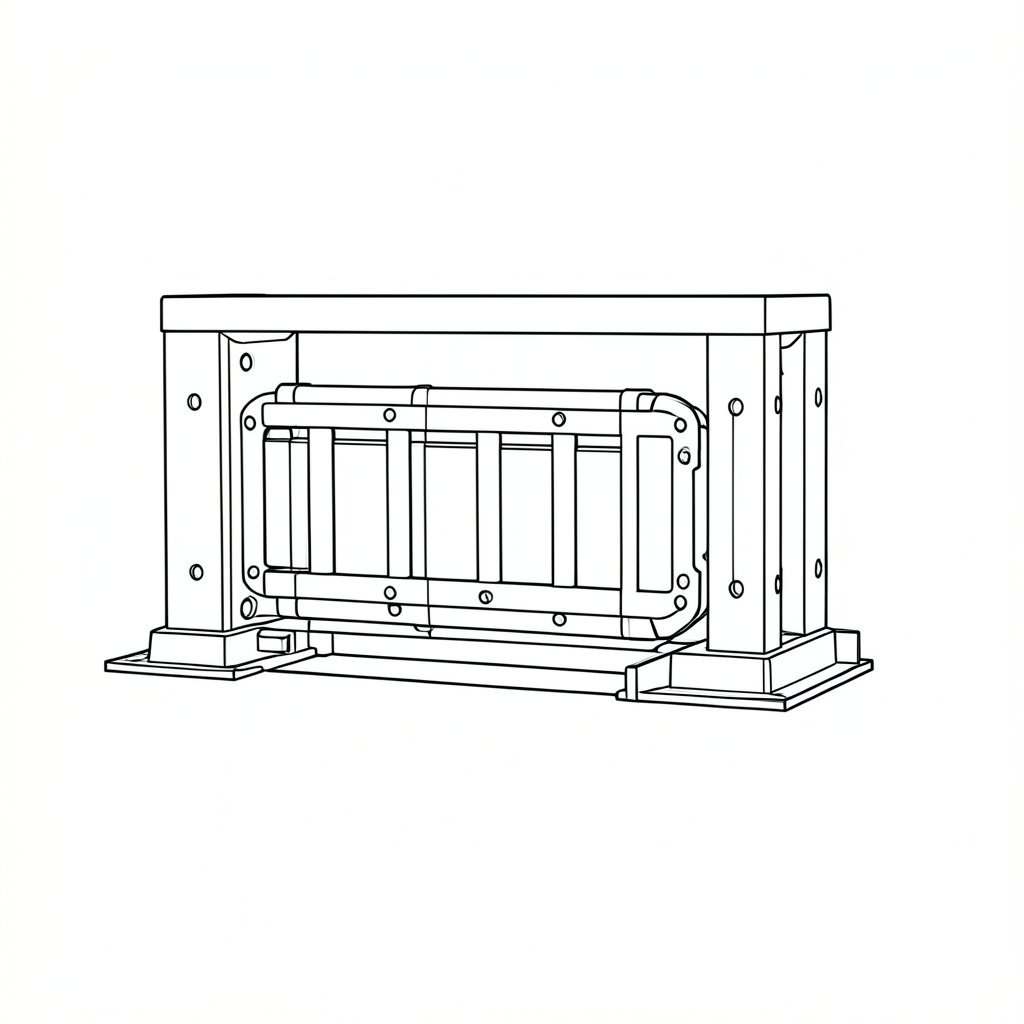
A fixed guard is the simplest safeguard there is: a physical barrier held in place by fasteners that need a tool to remove. Its simplicity is exactly why it is the most reliable option available — and why it is the wrong answer whenever people need regular access.
Why simple is strong
A fixed guard has nothing to fail. There is no switch to bypass, no circuit to fault, no sensor to blind, no timing to get wrong. It works when the power is off, when the control system has failed, and when nobody is paying attention. That makes it the default choice wherever access is not needed during normal operation, and it is why the standards steer towards a fixed guard first and something cleverer only when access forces it.
The fasteners are part of the design
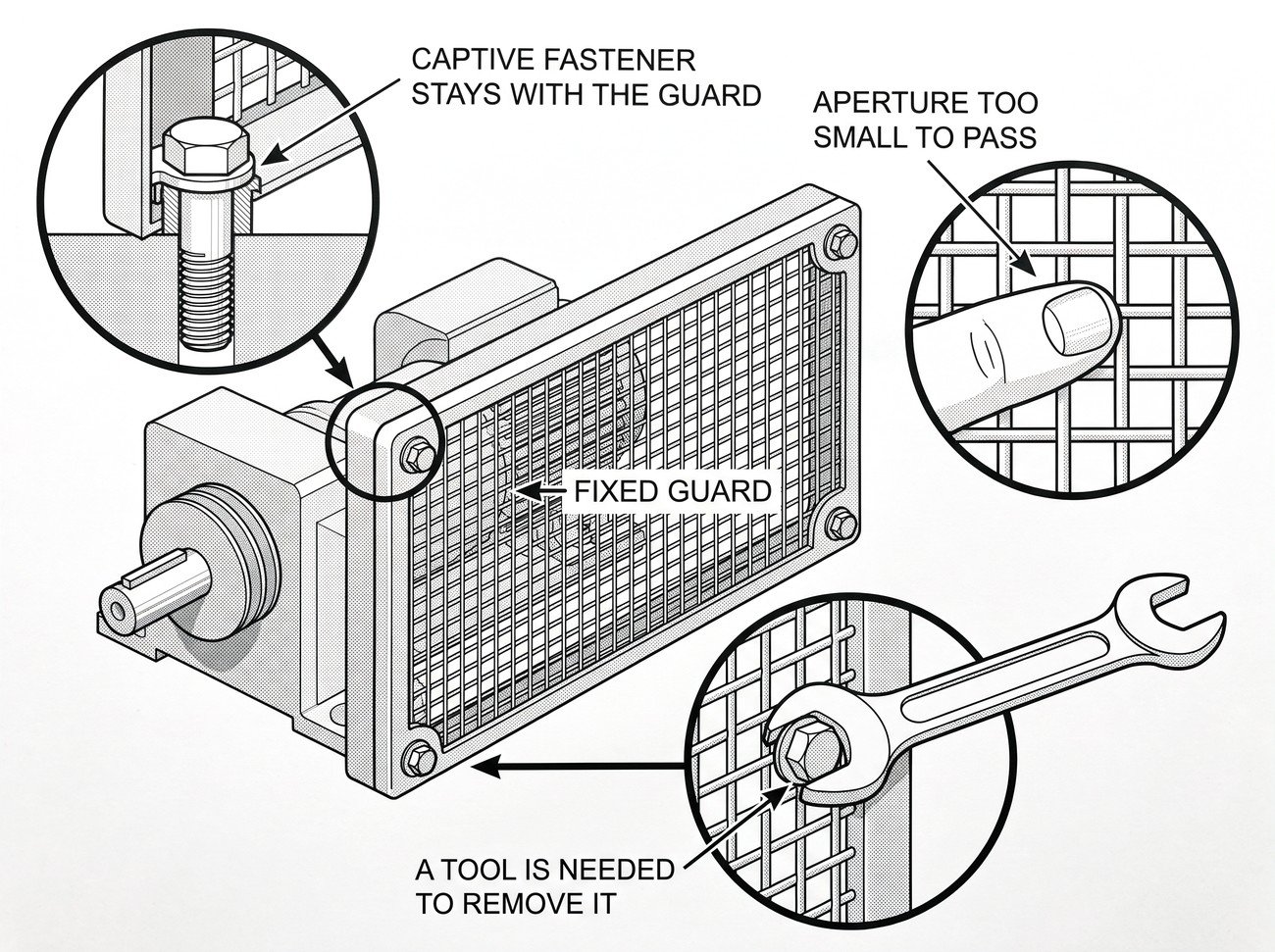
A fixed guard is defined by needing a tool to remove it, which is what stops it being lifted for a quick look. Where a guard has to come off for cleaning or setting, captive fasteners keep the bolts with the guard so it can actually be put back, and a guard that stays attached when opened cannot be left off and lost. Wing nuts and hand-removable fixings convert a fixed guard into an unfixed one whatever the drawing says.
Openings and what can pass through them
Mesh, perforated sheet and bar guards all have openings, and the size of the opening has to be considered together with the distance from the opening to the hazard. A small opening close to the danger and a larger one further away can offer the same protection, which is the whole basis of the safety distance tables. A guard with generous mesh fitted tight against a moving part is providing visibility rather than protection.
What a guard has to withstand
A guard is a structural component. It has to stay in place under the loads it will actually meet: someone leaning on it, a component ejected from the machine, an impact from a truck or a pallet, and vibration over years of service. A guard that deflects into the hazard when leaned on has failed even though it is still bolted in place, and a guard designed only to stop a hand does nothing about a broken tool leaving the machine at speed.
Visibility, access and the reasons guards get removed
Most fixed guards are removed because something behind them needs regular attention: a grease point, a sight glass, an adjustment, a build-up that needs clearing. Routing those out through the guard — an extended grease line, a window, a hatch, an access port too small to reach through — removes the reason to take the guard off. A guard that has to come off weekly will eventually stay off.
For the guard requirements themselves, see EN ISO 14120, and for the opening and distance relationship see safety distances and reach.
Related standards
The standards below set the design requirements, classification and test methods behind the safeguards and equipment referenced in this note.
- EN ISO 14120 — Guards: Design and Construction
- EN ISO 13857 — Safety Distances and Reach
- ISO 12100 — Safety of Machinery: General Principles
Common errors
1Fitting a fixed guard where access is needed during normal operation, so it gets removed.
2Using hand-removable fixings, which makes the guard fixed in name only.
3Judging mesh size without considering the distance from the opening to the hazard.
4Specifying a guard that stops a hand but not an ejected component.
5Leaving routine service points behind the guard rather than routing them out through it.
Frequently asked questions
Why is a fixed guard considered the most reliable?
It has nothing to fail: no switch to bypass, no circuit to fault, no sensor to blind. It works with the power off, with the control system failed, and when nobody is paying attention.
What makes a guard fixed rather than movable?
Needing a tool to remove it. Wing nuts and hand-removable fixings convert a fixed guard into an unfixed one regardless of what the drawing calls it.
Why are captive fasteners used?
So the bolts stay with the guard and it can actually be refitted. Loose fasteners get lost, and a guard that cannot be refitted stays off.
How is mesh size decided?
Together with the distance from the opening to the hazard. A small opening close to the danger and a larger one further away can give equivalent protection, which is what the safety distance tables express.
Why do fixed guards get removed?
Because something behind them needs regular attention: a grease point, a sight glass, an adjustment or a build-up. Routing those out through the guard removes the reason to take it off.
Need this as a document you can issue? The template library gives you the risk assessments, permits and inspection logs in editable form — and employer plans cover a whole team with completion records.