Safety / Tips and Tricks / Explosive Atmosphere
Activity 08 · Explosive Atmosphere
Selecting ATEX-Rated Electrical Equipment
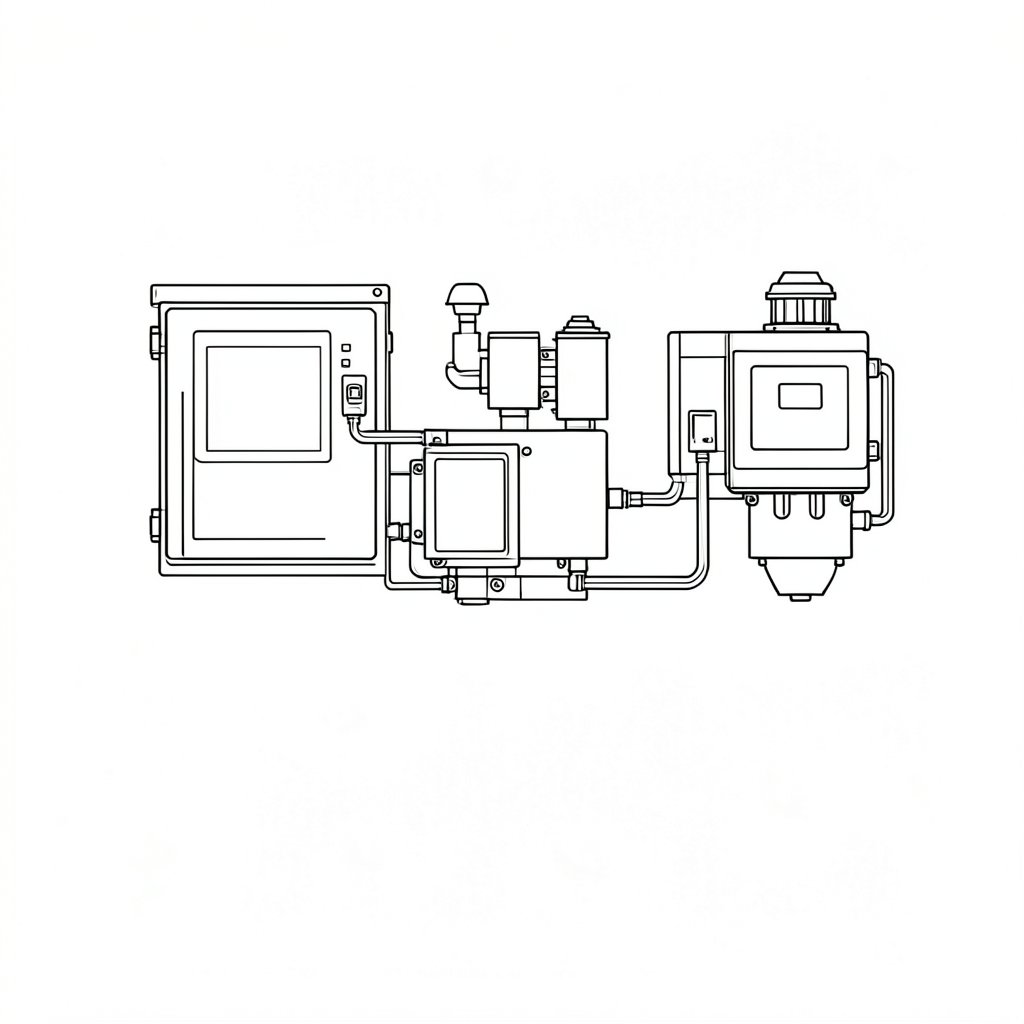
Standard electrical equipment is built around the assumption that a spark or hot surface inside its enclosure stays inside that enclosure, an assumption that simply does not hold in an explosive atmosphere, where the equipment itself has to be specifically engineered to prevent that internal ignition source ever reaching the surrounding atmosphere.
Why standard equipment is unsuitable in classified zones
Ordinary electrical equipment can generate sparks at switch contacts, arcs during normal operation, or surface temperatures capable of igniting a flammable atmosphere, and none of these characteristics are a problem in a normal environment specifically because there is no explosive atmosphere present to ignite. In a classified zone, following the same equipment-design and risk-assessment principles set out in ISO 12100, equipment needs to be specifically designed and certified to either contain any potential ignition source or prevent it from occurring at all.
Matching equipment category to zone
ATEX-rated equipment is categorized by the level of protection it provides, and this category needs to match the zone it will actually be installed and operated in — equipment rated for the less demanding requirements of a Zone 2 area is not automatically suitable for installation in a Zone 0 or Zone 1 area, where an explosive atmosphere is present far more often. Installing equipment rated for a less severe zone than the one it is actually placed in is a genuine and sometimes overlooked gap, particularly when equipment is relocated after an initial, correct installation.
Protection concepts
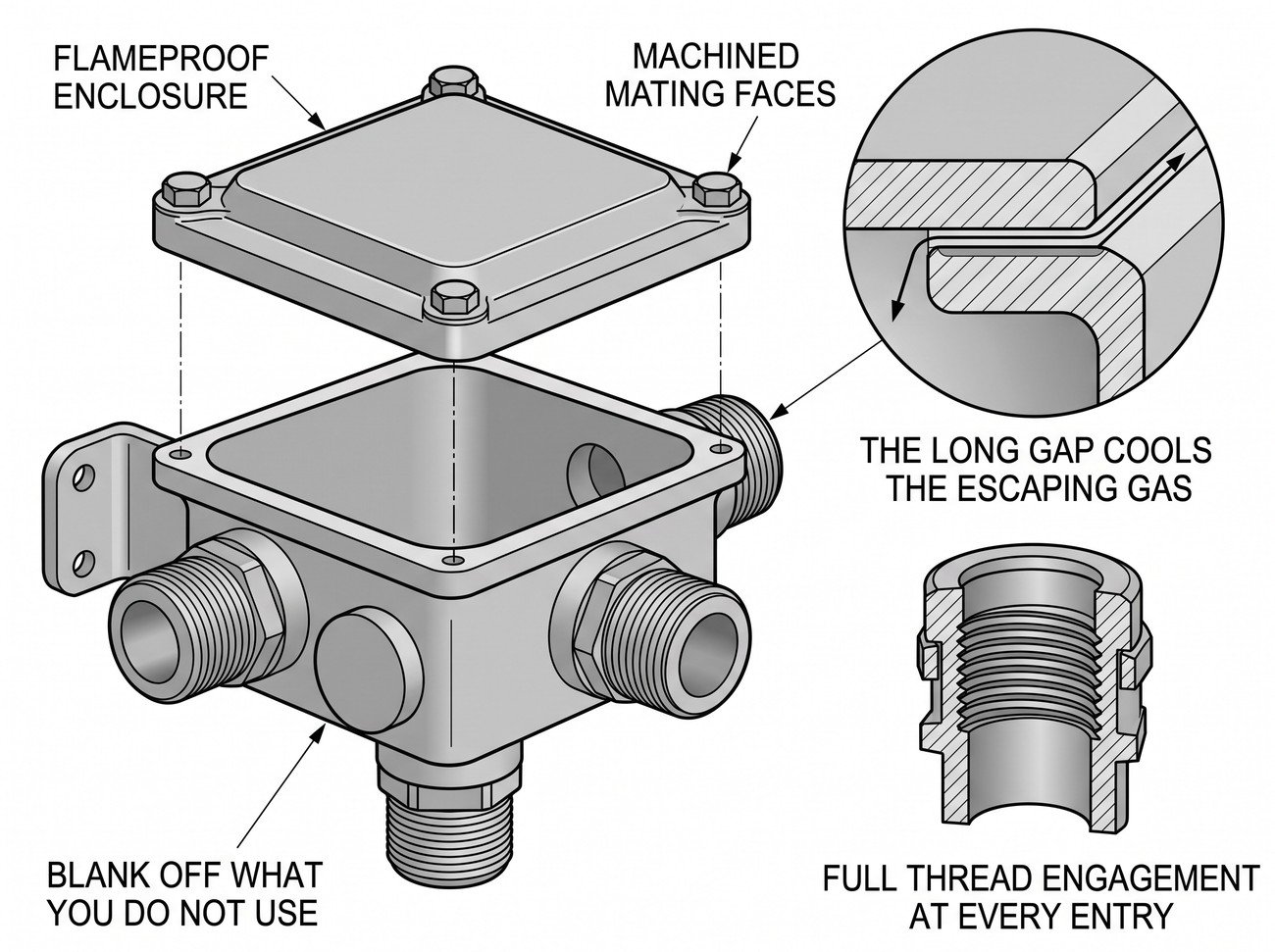
Different equipment achieves its rating through different protection concepts — flameproof enclosures that contain an internal explosion and cool escaping gases before they exit, intrinsic safety that limits electrical energy below the level needed to ignite the atmosphere, and increased safety designs that eliminate arcing and sparking contacts entirely, among others. Understanding which protection concept a given piece of equipment uses matters for maintenance and modification decisions, since altering equipment in a way that compromises its specific protection concept — drilling into a flameproof enclosure, for instance — can invalidate its certification even if the equipment still appears to function normally.
Installation and cable entry integrity
The certification of ATEX-rated equipment depends on correct installation, including properly sealed cable entries and glands maintaining the enclosure’s rated integrity, and an otherwise correctly rated piece of equipment installed with an incorrect or poorly sealed cable gland loses the protection its certification was based on, in a way that is not obvious from the equipment’s visible rating label.
Modification and repair by qualified personnel only
Repairs or modifications to ATEX-rated equipment need to be carried out by personnel qualified specifically for hazardous area equipment, following the manufacturer’s certified repair procedures, since a well-intentioned but improperly executed repair can compromise the equipment’s protection concept in ways that are not visually apparent afterward. Equipment that has been repaired outside these procedures should not be assumed to retain its original certification without specific verification.
For the emergency shutdown systems that often interface with this equipment, see emergency isolation and shutdown systems.
Related standards
The standards below set the test methods and performance levels behind the equipment referenced in this note.
- ISO 12100 — Safety of machinery
- ISO 13849 — Safety-related parts of control systems
- EN 1149 — Electrostatic properties of protective clothing
Common errors
1Installing equipment rated for a less demanding zone than the one it is actually placed in, particularly after relocation.
2Modifying certified equipment, such as drilling into an enclosure, without recognizing this can invalidate its protection concept.
3Installing correctly rated equipment with an incorrect or poorly sealed cable gland, undermining the enclosure's rated integrity.
4Assuming equipment repaired outside manufacturer-certified procedures retains its original certification.
Frequently asked questions
Why can't standard electrical equipment be used in a classified explosive atmosphere zone?
It can generate sparks, arcs, or hot surfaces during normal operation that are not a problem where no explosive atmosphere exists, but become an ignition risk in a classified zone.
Does equipment rated for Zone 2 automatically suit installation in Zone 0 or Zone 1?
No, equipment category needs to match the specific zone it is installed in, and equipment rated for a less demanding zone is not automatically suitable for a more frequently hazardous one.
What is a flameproof enclosure protection concept?
It contains an internal explosion and cools escaping gases before they exit the enclosure, one of several distinct protection concepts used to certify equipment for hazardous areas.
Can modifying certified ATEX equipment invalidate its rating even if it still works normally?
Yes, altering equipment in a way that compromises its specific protection concept, such as drilling into a flameproof enclosure, can invalidate its certification even though it appears to function normally afterward.
Why does cable gland installation matter for ATEX-rated equipment?
The equipment's certification depends on correct installation including properly sealed cable entries, and a poorly sealed gland undermines the enclosure's rated integrity even though the equipment itself carries a valid rating label.
Need this as a document you can issue? The template library gives you the risk assessments, permits and inspection logs in editable form — and employer plans cover a whole team with completion records.