Safety / Tips and Tricks / Explosive Atmosphere
Activity 08 · Explosive Atmosphere
Hot Work Permits in Explosive Atmospheres
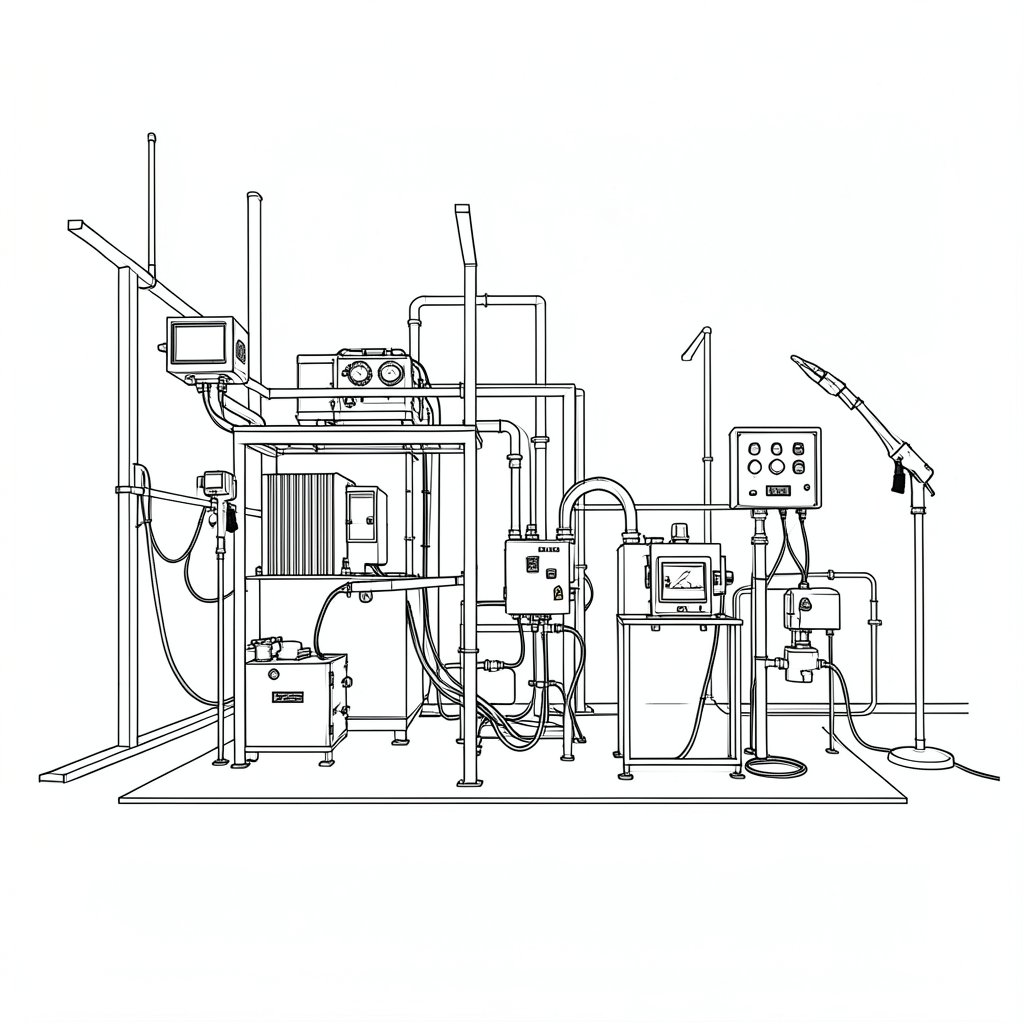
Hot work is the deliberate introduction of an ignition source, and an explosive atmosphere is an environment where an ignition source is the one thing that must never be present, which makes hot work in or near a classified zone a fundamentally higher-stakes proposition than the same task performed anywhere else.
Elimination before permitting
The first question for any hot work request in a classified area is whether the work can be relocated outside the zone entirely, or whether the process creating the hazardous atmosphere can be shut down and the area made genuinely gas-free for the duration of the work. Permitting hot work inside a live classified zone should be the option of last resort, considered only after relocation and shutdown have both been genuinely assessed and ruled out, rather than the default response to a hot work request.
Gas testing before and throughout
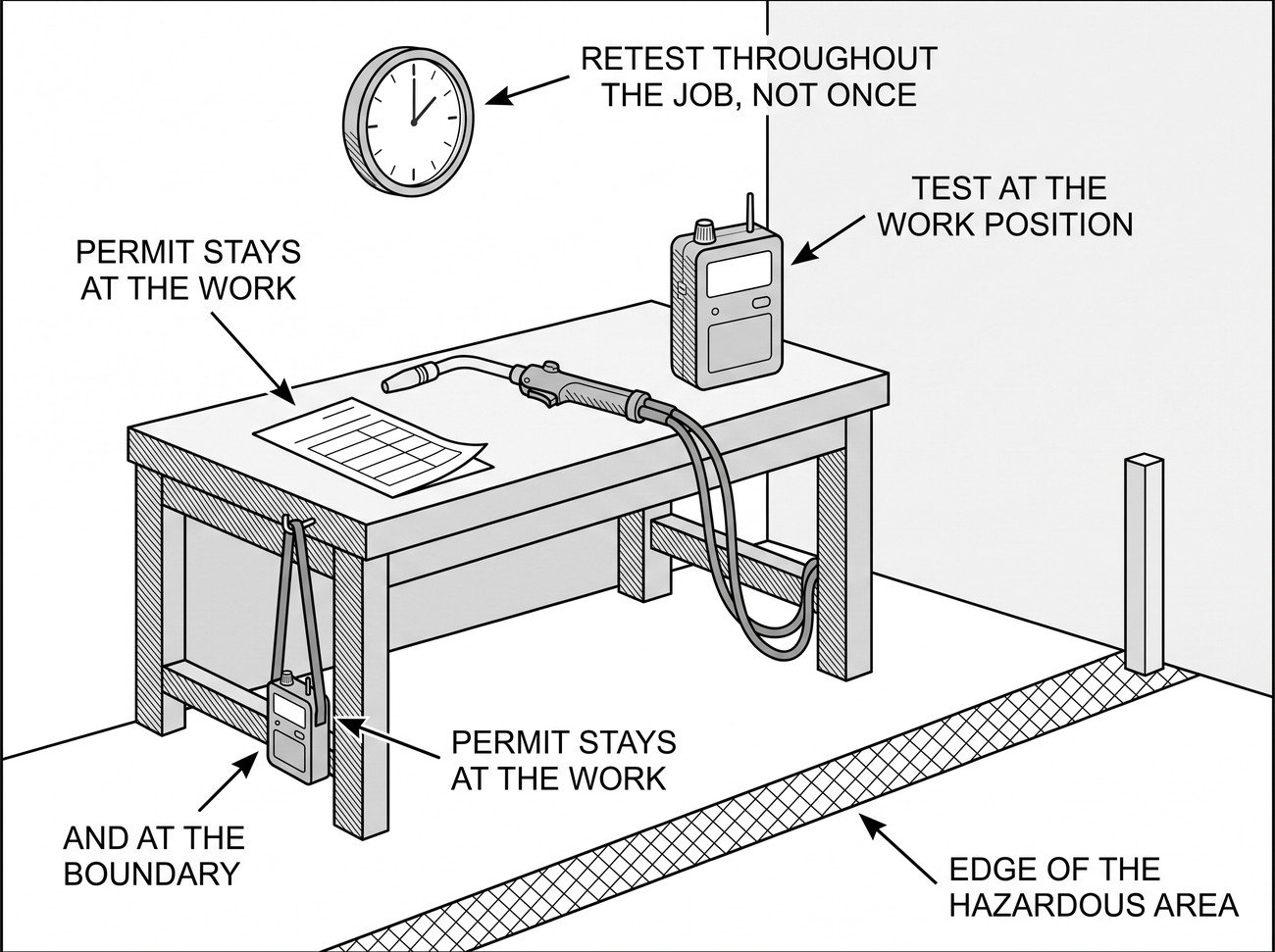
Atmospheric testing before hot work begins confirms the area is genuinely below the lower explosive limit at the time of the test, but conditions can change during the work, and continuous monitoring throughout the task — not a single clearance test at the start — is what actually catches a developing hazardous atmosphere while there is still time to stop. Testing needs to cover the full work area including low points and enclosed spaces where heavier-than-air gas could accumulate unnoticed at a single sampling point.
Isolation and purging of nearby equipment
Pipework, vessels, and equipment near the hot work location may contain residual flammable material even when the immediate atmosphere tests clear, and isolating, draining and where necessary purging this equipment before hot work begins removes a source that atmospheric testing of the surrounding air would not necessarily detect. This is a distinct step from testing the atmosphere itself, and one that testing alone cannot substitute for.
Combined permit requirements
Hot work in a classified area typically requires both a hot work permit and whatever additional authorization the site’s hazardous area procedures demand, and where the work also involves a confined space, that adds a third set of requirements that must be satisfied together rather than treated as alternatives. Each permit addresses a different hazard set, and satisfying one does not discharge the requirements of the others.
Fire watch and post-work monitoring
A dedicated fire watch, with appropriate fire-fighting equipment and the means to raise an alarm, needs to be present throughout the work and for a defined period afterward, since residual heat in metalwork can remain an ignition source well after the visible hot work has stopped, and a hazardous atmosphere re-establishing itself during that cooling period would encounter a still-hot surface capable of igniting it.
For the general hot work permit process this builds on, see hot work permits and fire watch. For the wider welding activity, see Welding and Hot Work.
Related standards
The standards below set the test methods and performance levels behind the equipment referenced in this note.
- EN 1149 — Electrostatic properties of protective clothing
- EN ISO 11612 — Heat and flame protective clothing
- EN 175 — Eye and face protection for welding
Common errors
1Permitting hot work inside a live classified zone without first genuinely assessing relocation or process shutdown.
2Relying on a single pre-work gas clearance test rather than continuous monitoring throughout the task.
3Testing the surrounding atmosphere without isolating and purging nearby equipment that may hold residual flammable material.
4Ending fire watch when the visible hot work stops, before residual heat in the metalwork has dissipated.
Frequently asked questions
What should be considered before permitting hot work in a classified zone?
Whether the work can be relocated outside the zone entirely, or the process shut down and the area made genuinely gas-free, with permitting inside a live zone treated as a last resort.
Is a single gas clearance test before hot work sufficient?
No, conditions can change during the work, so continuous monitoring throughout the task is what actually catches a developing hazardous atmosphere while there is still time to stop.
Why does nearby equipment need isolating even if the atmosphere tests clear?
Pipework and vessels may contain residual flammable material that atmospheric testing of surrounding air would not detect, so isolation, draining and purging are a distinct step testing cannot substitute for.
Do hot work and hazardous area permits substitute for each other?
No, each addresses a different hazard set and they must be satisfied together, along with confined space requirements where those also apply.
Why must fire watch continue after visible hot work stops?
Residual heat in metalwork can remain an ignition source after the work ends, and a hazardous atmosphere re-establishing during that cooling period would encounter a still-hot surface capable of igniting it.
Need this as a document you can issue? The template library gives you the risk assessments, permits and inspection logs in editable form — and employer plans cover a whole team with completion records.