Safety / Tips and Tricks / Explosive Atmosphere
Activity 08 · Explosive Atmosphere
Antistatic and ESD-Safe Footwear for Hazardous Areas
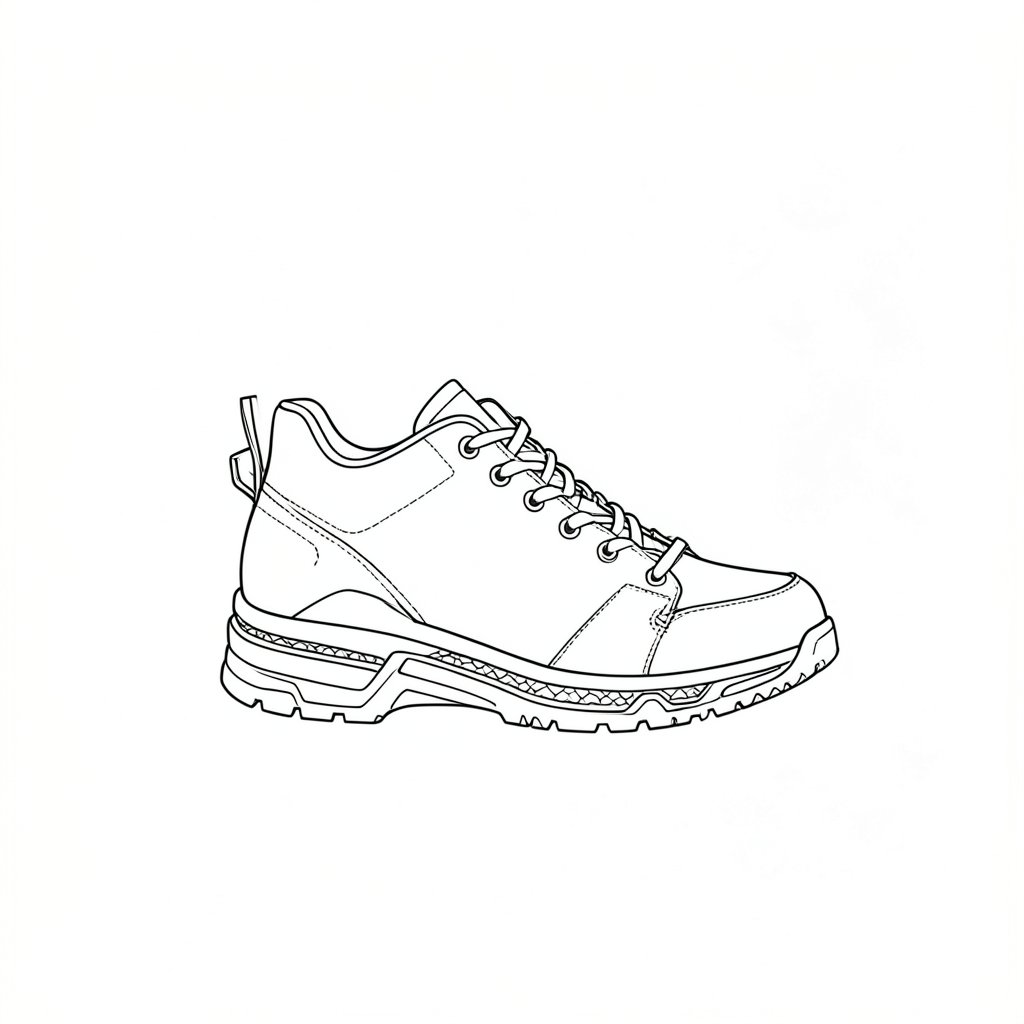
Footwear is the final link in the chain that carries static charge safely away from the body to earth, and if that link fails — the wrong sole material, a worn conductive path, the wrong floor underneath — every other antistatic precaution taken further up the body becomes ineffective.
Why footwear completes the grounding path
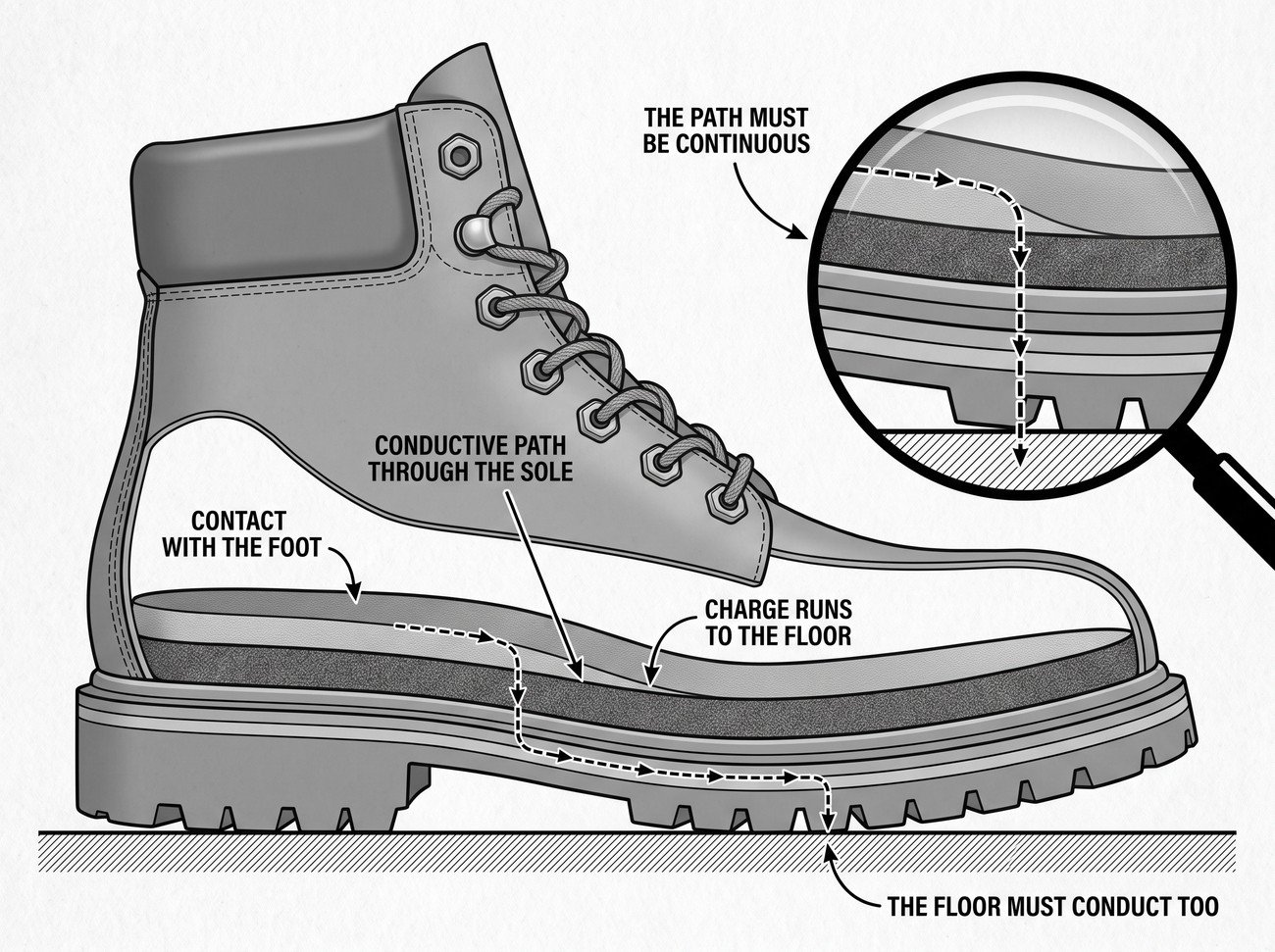
Antistatic clothing dissipates charge from the garment to the body, but the body itself still needs a path to earth, and footwear provides that final connection through a conductive or antistatic sole in contact with a suitably conductive floor. A person wearing correctly rated antistatic clothing but standing on insulating footwear, or on an insulating floor surface, can still accumulate a dangerous static charge despite every other precaution being correctly followed.
Conductive versus antistatic footwear ratings
Footwear rated to EN ISO 20345 can carry additional markings for conductive or antistatic electrical resistance properties, and these are two distinct ratings with different appropriate uses: fully conductive footwear provides the fastest possible charge dissipation but offers minimal protection against electric shock from contact with a live conductor, while antistatic footwear provides a more moderate resistance range, balancing charge dissipation against some protection from shock hazard. The correct choice depends on which risk — static ignition or electrical shock — is more significant in the specific area, and this decision should be made deliberately rather than assuming either rating is universally correct.
Floor conductivity
The floor surface itself needs to be sufficiently conductive for antistatic footwear to actually complete the grounding path, and a well-rated antistatic boot standing on a non-conductive floor coating, a dry, non-conductive floor surface, or an insulating mat placed underfoot for comfort still leaves the wearer effectively ungrounded despite wearing correctly rated footwear. Checking floor conductivity as part of the same assessment that specifies footwear, not assuming any warehouse or industrial floor is automatically conductive, closes this gap.
Sock and insole interference
Thick insulating socks or an aftermarket insole inserted between the foot and a conductive footbed can interrupt the conductive path from the foot to the sole, even though the boot itself is correctly rated, which is a subtle failure mode that has nothing to do with the footwear’s own certification. This is worth specific awareness since it is a common, well-intentioned modification made for comfort that unintentionally defeats the footwear’s protective function.
Testing and verification
Footwear electrical resistance should be periodically tested, since contamination, wear, and age can all increase resistance beyond the rated range over time even without visible damage to the footwear, and a testing schedule, rather than relying on the original certification indefinitely, confirms the footwear is still performing as intended throughout its service life.
For the clothing this footwear works together with as a grounding system, see selecting antistatic and flame-resistant clothing.
Related standards
The standards below set the test methods and performance levels behind the equipment referenced in this note.
- EN ISO 20345 — Safety footwear
- EN 1149 — Electrostatic properties of protective clothing
- EN ISO 20347 — Occupational footwear
Common errors
1Wearing correctly rated antistatic clothing while standing on insulating footwear or an insulating floor surface.
2Choosing between conductive and antistatic footwear ratings without considering which risk, static ignition or electric shock, is more significant in the specific area.
3Assuming any industrial floor surface is automatically conductive without checking it directly.
4Inserting an aftermarket insole or wearing thick insulating socks that interrupt the conductive path inside a correctly rated boot.
Frequently asked questions
Why is footwear described as completing the static grounding path?
Antistatic clothing dissipates charge to the body, but the body still needs a path to earth, and footwear provides that final connection through a conductive or antistatic sole in contact with a suitably conductive floor.
What is the difference between conductive and antistatic footwear ratings?
Conductive footwear gives the fastest charge dissipation but minimal protection from electric shock, while antistatic footwear balances charge dissipation with some shock protection, so the choice depends on which risk dominates in the specific area.
Can correctly rated antistatic footwear still fail to ground a wearer?
Yes, if the floor surface itself is not sufficiently conductive, a well-rated boot standing on a non-conductive floor or insulating mat still leaves the wearer effectively ungrounded.
Can something as simple as a sock defeat antistatic footwear?
Yes, thick insulating socks or an aftermarket insole can interrupt the conductive path from the foot to the sole even though the boot itself is correctly rated.
Why does antistatic footwear need periodic resistance testing?
Contamination, wear and age can increase resistance beyond the rated range over time even without visible damage, so testing confirms the footwear is still performing as intended.
Need this as a document you can issue? The template library gives you the risk assessments, permits and inspection logs in editable form — and employer plans cover a whole team with completion records.