Safety / Tips and Tricks / Explosive Atmosphere
Activity 08 · Explosive Atmosphere
Selecting Antistatic and Flame-Resistant Clothing: EN 1149
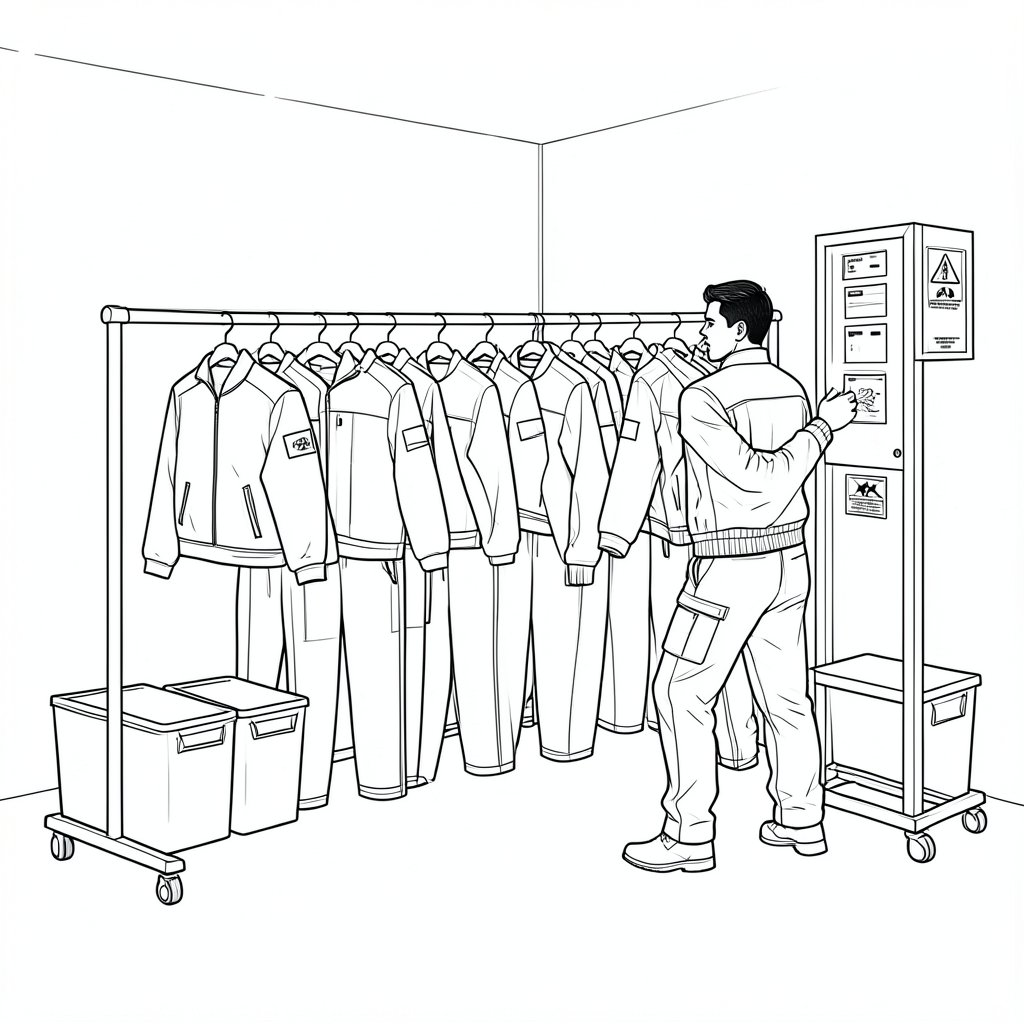
Ordinary workwear can become an ignition hazard in an explosive atmosphere without the wearer doing anything unusual at all — simply walking, removing a jacket, or brushing against equipment can generate a static discharge from untreated synthetic fabric that is more than enough to ignite a flammable gas or dust cloud.
Why ordinary clothing is a genuine ignition risk
Synthetic fabrics not specifically designed to dissipate static charge can accumulate a significant charge through everyday movement and friction against other surfaces, including the wearer’s own body, and this charge can discharge as a spark carrying more than enough energy to ignite many flammable gas and dust mixtures. This risk exists independent of anything else happening in the work area — it comes from the clothing itself, worn by a person simply moving normally through a classified zone.
What EN 1149 clothing actually does
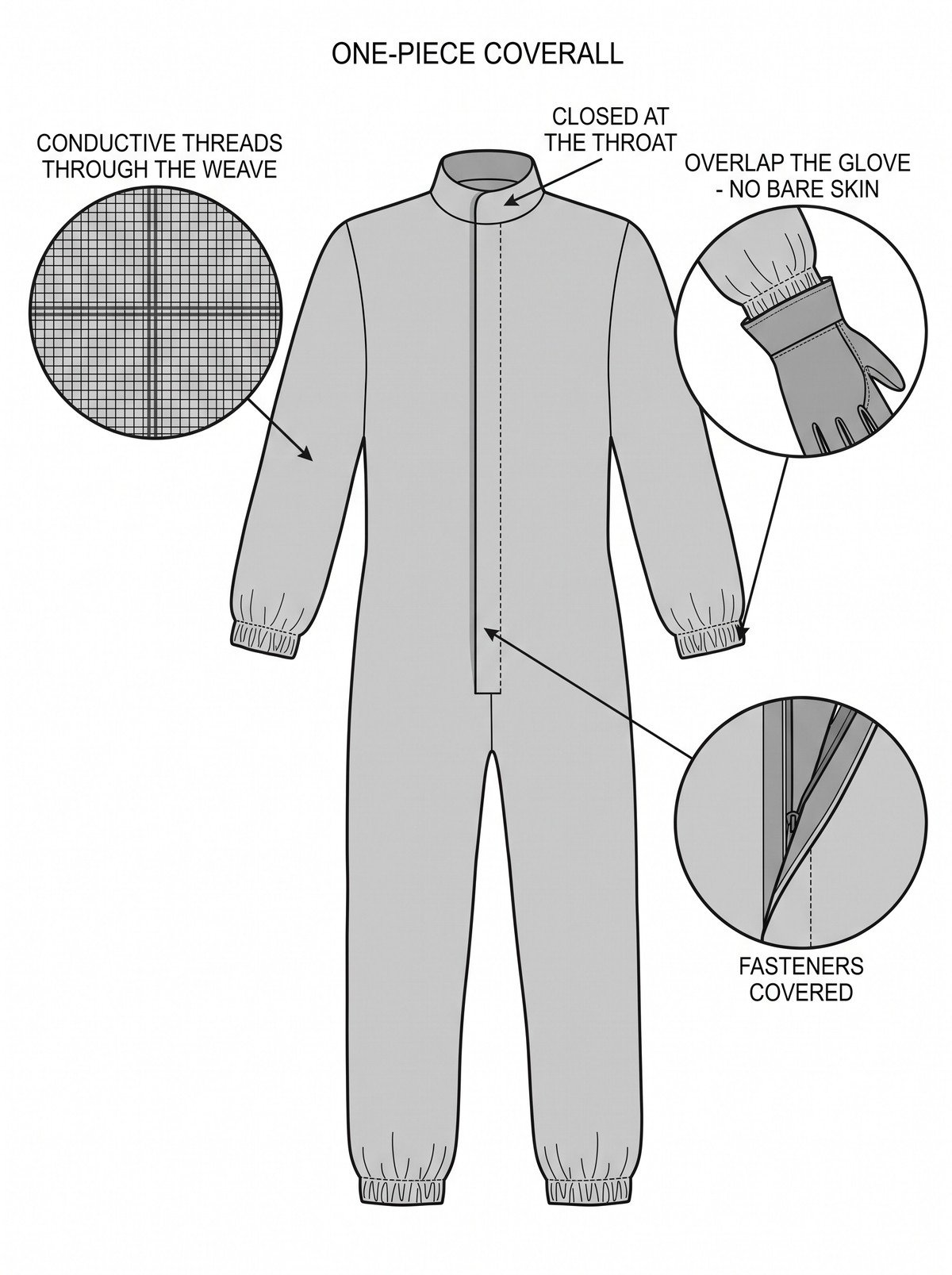
EN 1149 covers protective clothing with electrostatic properties, designed to dissipate accumulated static charge to earth through the wearer’s body and footwear rather than allowing it to build to a level capable of an incendiary discharge. This function depends on the whole chain working together — the garment dissipating charge is only effective if it is also earthed through conductive or antistatic footwear and, ultimately, a conductive floor or grounding point, which is why antistatic clothing and antistatic footwear need to be considered as a connected system, not independent choices.
General protective clothing requirements alongside EN 1149
EN ISO 13688 sets out general requirements for protective clothing — ergonomics, sizing, ageing resistance, and other baseline qualities — that apply alongside the specific electrostatic properties EN 1149 addresses, since an antistatic garment still needs to fit and perform adequately as a piece of protective clothing in its own right, not just satisfy the static dissipation requirement in isolation.
Layering and coverage
Antistatic protection needs to cover the whole body consistently, since a gap in coverage — an ungrounded undergarment showing at the wrist or neck, or an outer layer removed and left as the only static-dissipating garment while an underlying synthetic layer is exposed — can reintroduce the exact risk the outer garment was meant to eliminate. Removing an antistatic outer layer while remaining in a classified zone, even briefly, should be treated as a genuine change in risk exposure, not a minor comfort adjustment.
Condition and laundering
Antistatic properties can degrade with washing, wear, and contamination over the garment’s service life, and a garment that looks structurally intact can have lost enough of its dissipative performance to no longer provide reliable protection. Laundering according to the manufacturer’s specific instructions, and periodic testing or replacement on a defined schedule rather than only when damage becomes visible, keeps the garment performing as originally rated.
For the footwear that completes this grounding system, see antistatic and ESD-safe footwear for hazardous areas.
Related standards
The standards below set the test methods and performance levels behind the equipment referenced in this note.
- EN 1149 — Electrostatic properties of protective clothing
- EN ISO 13688 — General requirements for protective clothing
- EN ISO 11612 — Heat and flame protective clothing
Common errors
1Wearing untreated synthetic clothing, even briefly, in a classified zone.
2Treating antistatic clothing and antistatic footwear as independent choices rather than a connected grounding system.
3Removing an antistatic outer layer while remaining inside a classified zone.
4Continuing to use antistatic clothing past the point its dissipative performance has degraded from washing and wear.
Frequently asked questions
Why can ordinary clothing be an ignition hazard in an explosive atmosphere?
Synthetic fabrics not designed to dissipate static charge can accumulate charge through everyday movement and friction, and this can discharge as a spark carrying enough energy to ignite many flammable gas and dust mixtures.
What does EN 1149 clothing actually do?
It dissipates accumulated static charge to earth through the wearer's body and footwear, rather than allowing the charge to build to a level capable of an incendiary discharge.
Why do antistatic clothing and footwear need to be considered together?
The clothing's dissipation function only works if it is also earthed through conductive or antistatic footwear and ultimately a grounded floor, so the two form one connected system rather than independent choices.
Why does removing an antistatic outer layer inside a classified zone matter?
It can expose an underlying synthetic layer or leave a gap in coverage, reintroducing the exact static ignition risk the outer garment was meant to eliminate.
Can antistatic clothing lose its protective performance without looking damaged?
Yes, its dissipative properties can degrade with washing, wear and contamination even while the garment looks structurally intact, so periodic testing or scheduled replacement matters.
Need this as a document you can issue? The template library gives you the risk assessments, permits and inspection logs in editable form — and employer plans cover a whole team with completion records.