Safety / Tips and Tricks / Warehouse and Logistics
Activity 07 · Warehouse
Safety Footwear for Warehouse and Logistics Work
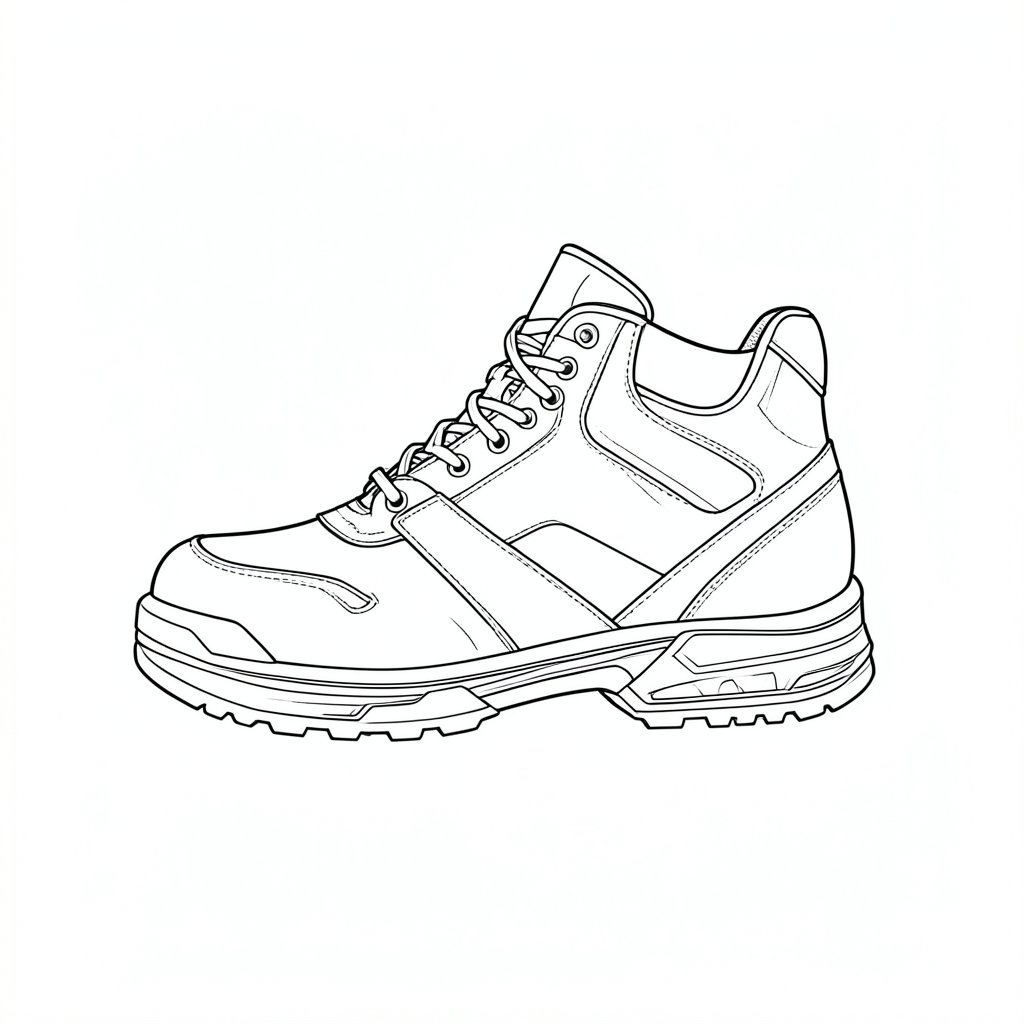
Not every warehouse role carries the same foot injury risk, and treating all footwear decisions as a single, uniform choice misses a genuine distinction the footwear standards themselves are built around: whether the task involves a real risk of a heavy object striking the foot, or not.
EN ISO 20345: safety footwear with toecap protection
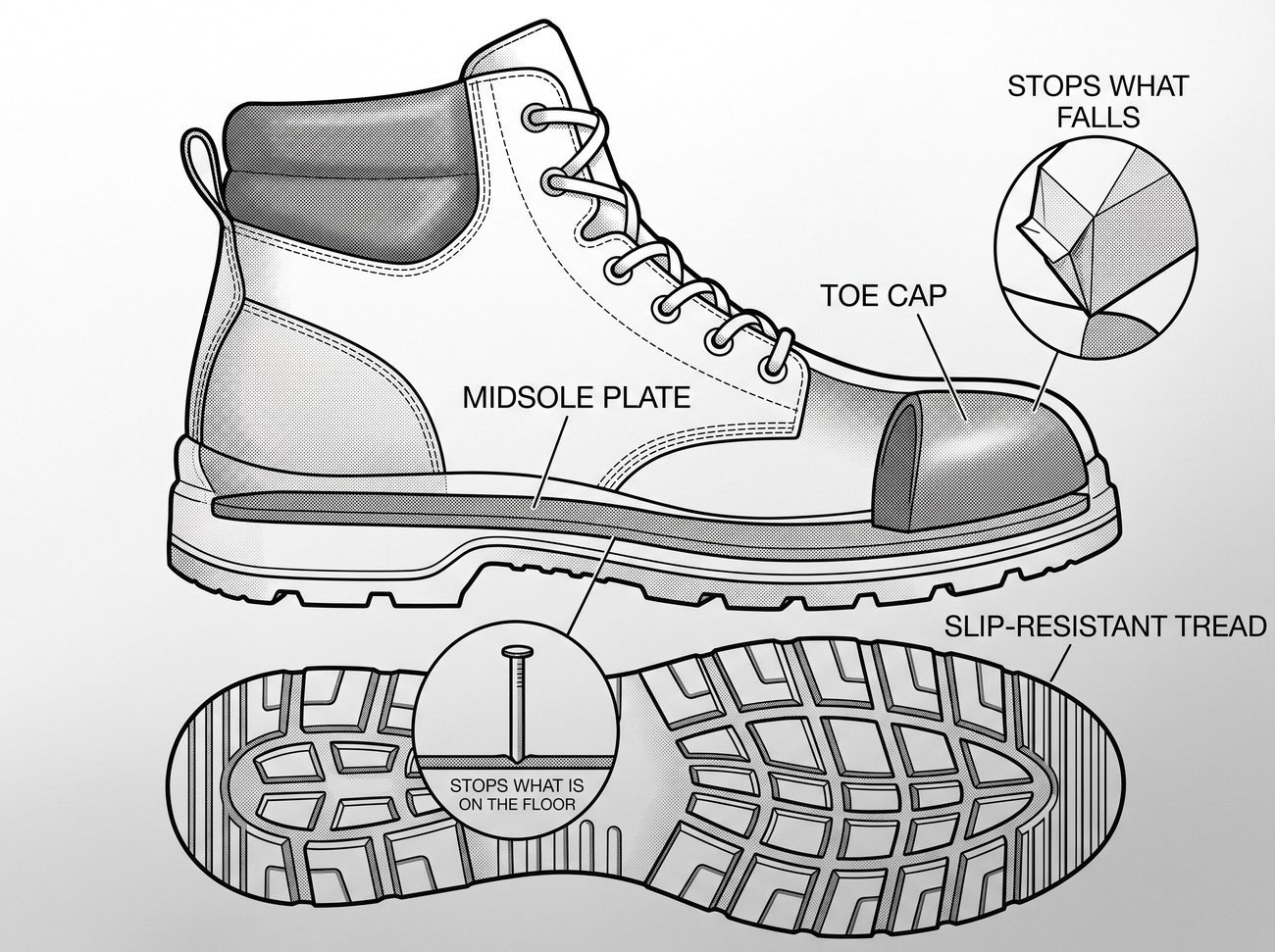
EN ISO 20345 covers safety footwear with a protective toecap tested to a defined impact and compression resistance, and this is the appropriate baseline for roles with genuine dropped-object risk — pallet handling, forklift-adjacent work, manual unloading of heavy items — where a falling or dropped load could realistically strike the foot.
EN ISO 20347: occupational footwear without mandatory toecap
EN ISO 20347 covers occupational footwear that does not include a mandatory protective toecap, appropriate for roles where the dominant foot hazard is slip, general wear, or comfort over a long shift rather than impact from a falling object — office-adjacent warehouse roles, light picking work away from heavy load handling, or administrative staff who spend limited time on the warehouse floor. Selecting EN ISO 20347 footwear for a role that actually carries a genuine impact risk under-protects the wearer, in the same way choosing the wrong PPE type for any other hazard would.
Slip resistance across both categories
Both footwear categories include slip resistance ratings, and warehouse floors — often polished concrete, occasionally wet from spills or weather tracked in through loading doors — carry a slip risk independent of whether toecap protection is also needed. Checking the specific slip resistance rating against the actual floor surfaces and conditions in the facility, rather than assuming any safety-rated footwear automatically provides adequate grip for the specific floor in use, is a distinct decision from the toecap question.
Metatarsal protection for heavier load handling
Standard toecap protection covers the toe area specifically, but roles handling larger, heavier loads that could strike further back across the foot benefit from metatarsal protection extending coverage across the top of the foot, beyond what a toecap alone provides. This additional coverage should be matched to the actual load sizes and handling methods in use, not applied uniformly regardless of task.
Fit and long-shift comfort
Warehouse and logistics roles frequently involve long periods of standing or walking on hard floors, and poorly fitted footwear, even when correctly rated for the hazard, contributes to fatigue and discomfort that can itself affect attention and safe movement over a full shift. Properly fitted footwear, replaced before support and cushioning have genuinely broken down, is a safety consideration in its own right on long-shift roles, not simply a comfort preference.
For manual handling technique that reduces the load-related risks this footwear protects against, see back support and safe lifting technique.
Related standards
The standards below set the test methods and performance levels behind the equipment referenced in this note.
- EN ISO 20345 — Safety footwear
- EN ISO 20347 — Occupational footwear
- EN ISO 20346 — Protective footwear
Common errors
1Using EN ISO 20347 occupational footwear for roles with genuine dropped-object impact risk that require EN ISO 20345 toecap protection.
2Assuming any safety-rated footwear provides adequate slip resistance for the facility's actual floor conditions without checking the specific rating.
3Applying metatarsal protection uniformly, or not at all, without matching it to actual load sizes and handling methods.
4Continuing to use footwear whose support and cushioning has broken down because it is still technically within its rated protection.
Frequently asked questions
What is the main difference between EN ISO 20345 and EN ISO 20347 footwear?
EN ISO 20345 includes a mandatory protective toecap tested for impact and compression resistance, while EN ISO 20347 does not, making the two appropriate for different levels of dropped-object risk.
Which warehouse roles typically need EN ISO 20345 toecap protection?
Roles with genuine dropped-object risk, such as pallet handling, forklift-adjacent work, and manual unloading of heavy items.
Does slip resistance rating apply to both footwear categories?
Yes, both categories include slip resistance ratings, and this should be checked against the facility's actual floor surfaces and conditions independent of the toecap decision.
When is metatarsal protection worth adding beyond standard toecap protection?
For roles handling larger, heavier loads that could strike further back across the foot than a standard toecap alone covers.
Why does footwear fit matter as a safety consideration on long-shift roles?
Poorly fitted footwear contributes to fatigue and discomfort that can affect attention and safe movement over a full shift, even when the footwear is correctly rated for the hazard.
Need this as a document you can issue? The template library gives you the risk assessments, permits and inspection logs in editable form — and employer plans cover a whole team with completion records.