Safety / Tips and Tricks / Explosive Atmosphere
Activity 08 · Explosive Atmosphere
Personal Electronic Devices and Ignition Source Control
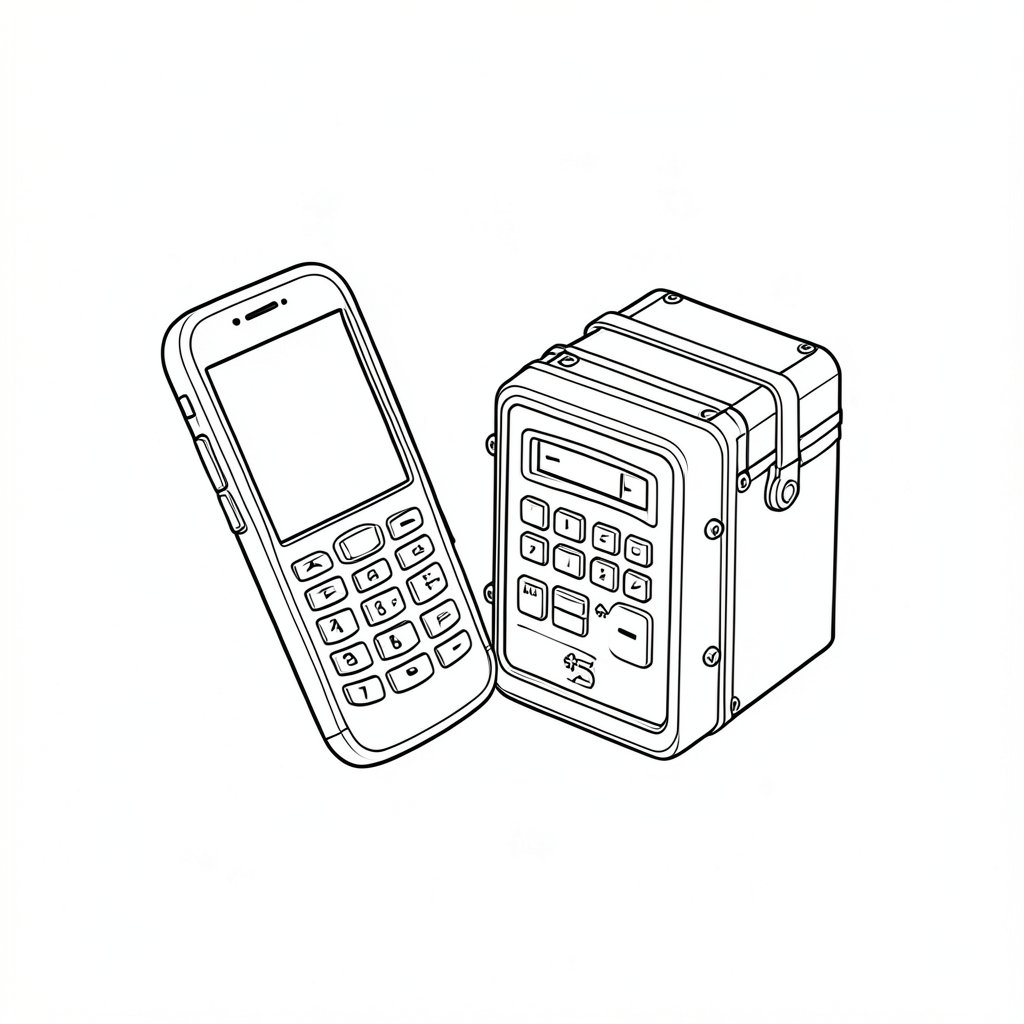
A mobile phone is an ignition source that people carry into hazardous areas without thinking about it, precisely because it does not resemble the industrial equipment that ignition source controls are obviously written about.
Why ordinary consumer devices are a genuine risk
Standard phones, tablets, cameras, torches and wearables contain batteries, circuitry capable of arcing, and surfaces that can heat during charging or heavy use, none of which are designed or certified with an explosive atmosphere in mind. The risk is not primarily the device operating normally in a sealed state but the fault conditions: a damaged battery, a cracked case exposing circuitry, a device dropped and impacted, or a battery in thermal runaway.
Switched off is not the same as safe
A device that is switched off still holds a charged battery and internal circuitry, and physical damage to it in a hazardous area can still produce a spark or thermal event regardless of its power state. Policies framed as switch devices off in hazardous areas therefore address only part of the risk, and a prohibition on carrying non-certified devices into classified zones is a materially different and more complete control than requiring they be powered down.
Certified alternatives
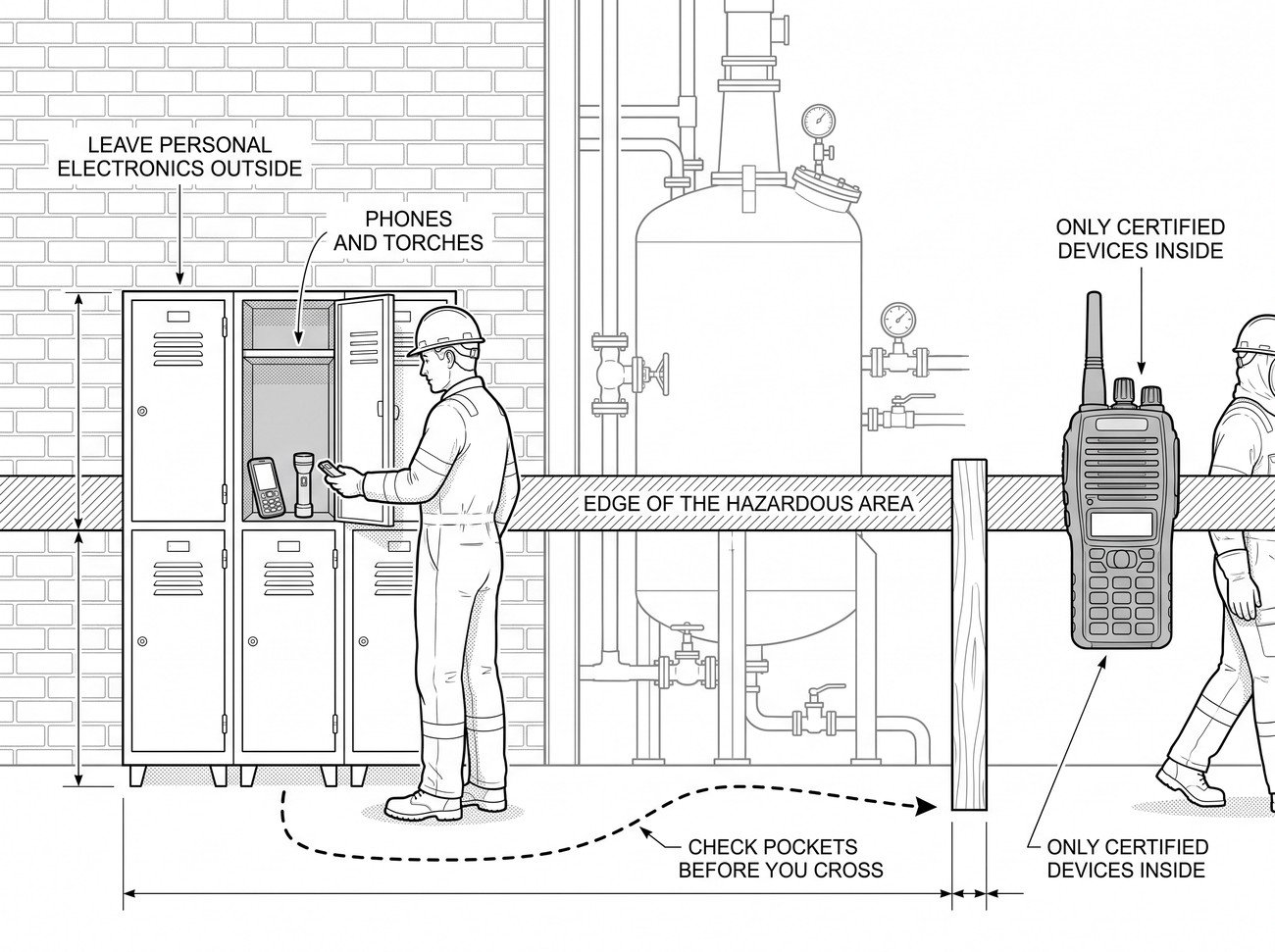
Intrinsically safe phones, radios, cameras and torches certified for the relevant zone exist and are the appropriate route where a device genuinely needs to be used inside a classified area, rather than making an informal exception for a standard device on the basis that the task is brief. As covered for intrinsically safe equipment generally, these devices remain certified only with their specified batteries and accessories, and substituting a standard battery or charging them inside the zone undermines the certification.
Why enforcement is genuinely difficult
Personal devices are personal, habitual and easy to carry unnoticed, which makes this one of the harder ignition source controls to enforce consistently compared to controls over site equipment. Practical arrangements — storage lockers at zone boundaries, clear boundary marking, and a culture where reminding a colleague is normal rather than confrontational — tend to work better than a policy that exists only as a written rule.
Contractors and visitors
Contractors and visitors are less familiar with the site’s boundaries and more likely to carry a personal device across one without realizing, which makes induction covering this specific point, and physical arrangements at the boundary, more effective than relying on general awareness for people who do not work in the area daily.
For the certified equipment alternatives, see non-sparking tools and intrinsically safe equipment.
Related standards
The standards below set the test methods and performance levels behind the equipment referenced in this note.
- EN 1149 — Electrostatic properties of protective clothing
- EN ISO 13688 — General requirements for protective clothing
Common errors
1Treating a switched-off device as safe, when a charged battery and internal circuitry remain a fault-condition ignition risk.
2Making informal exceptions for standard devices on the basis that a task inside the zone will be brief.
3Substituting a standard battery into certified equipment or charging it inside the classified area.
4Relying on written policy alone without boundary storage arrangements, clear marking and induction for contractors and visitors.
Frequently asked questions
Why are ordinary phones and torches an ignition risk in hazardous areas?
They contain batteries, circuitry capable of arcing and surfaces that heat during charging or use, none certified for explosive atmospheres, with fault conditions such as damage or thermal runaway being the primary concern.
Is switching a device off sufficient in a classified zone?
No, a powered-down device still holds a charged battery and circuitry that can spark or overheat if damaged, so a prohibition on carrying is a more complete control than a switch-off requirement.
What is the correct approach when a device genuinely must be used inside a zone?
Using equipment certified as intrinsically safe for the relevant zone, rather than making an informal exception for a standard device because the task is brief.
Why is this control harder to enforce than equipment controls?
Personal devices are habitual and easy to carry unnoticed, so practical arrangements like boundary storage lockers and clear marking work better than a written rule alone.
Why do contractors and visitors need specific attention on this point?
They are less familiar with zone boundaries and more likely to cross one carrying a personal device without realizing, so induction and physical boundary arrangements matter more than general awareness.
Need this as a document you can issue? The template library gives you the risk assessments, permits and inspection logs in editable form — and employer plans cover a whole team with completion records.