Safety / Tips and Tricks / Explosive Atmosphere
Activity 08 · Explosive Atmosphere
Mobile Equipment and Vehicles in Hazardous Areas
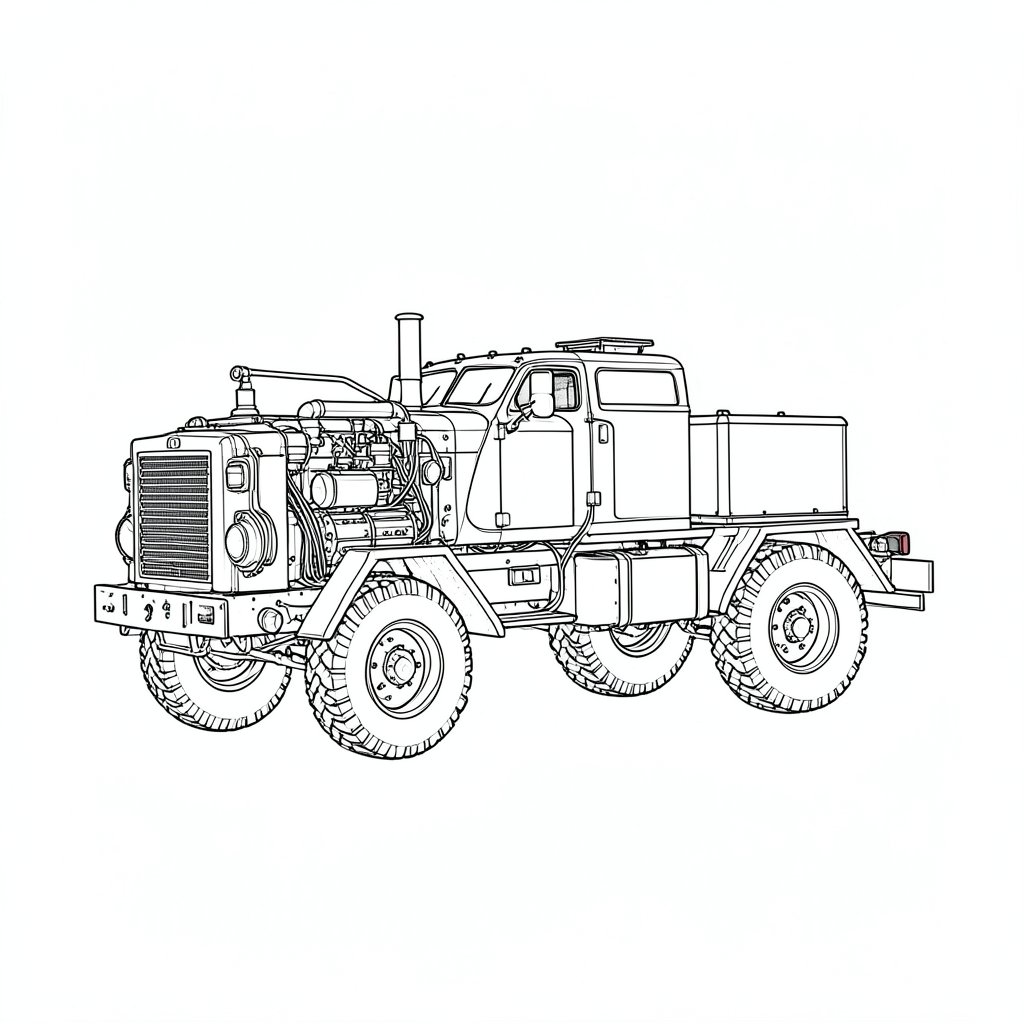
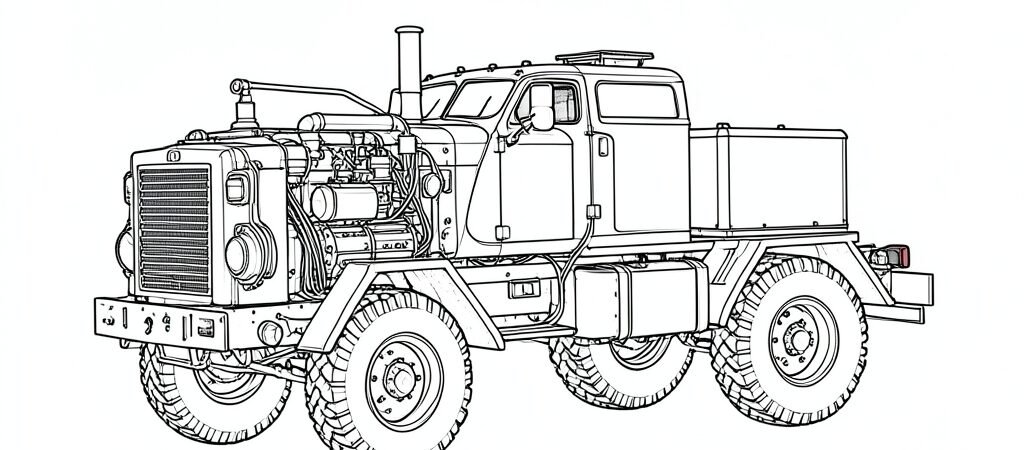
A vehicle is a collection of ignition sources on wheels — a hot exhaust, an electrical system, friction surfaces, a battery, and static-accumulating tyres — which is why bringing one into a classified zone is a decision that needs specific authorization rather than being treated as routine movement.
Ignition sources a standard vehicle carries
Standard vehicles present multiple simultaneous ignition risks in a hazardous area: exhaust system surfaces hot enough to ignite many flammable atmospheres, unprotected electrical systems capable of arcing, hot brake and clutch friction surfaces, battery terminals, and static charge accumulating on tyres and bodywork. Addressing one of these while overlooking others provides limited benefit, since any single unaddressed source is sufficient on its own.
Purpose-built versus modified equipment
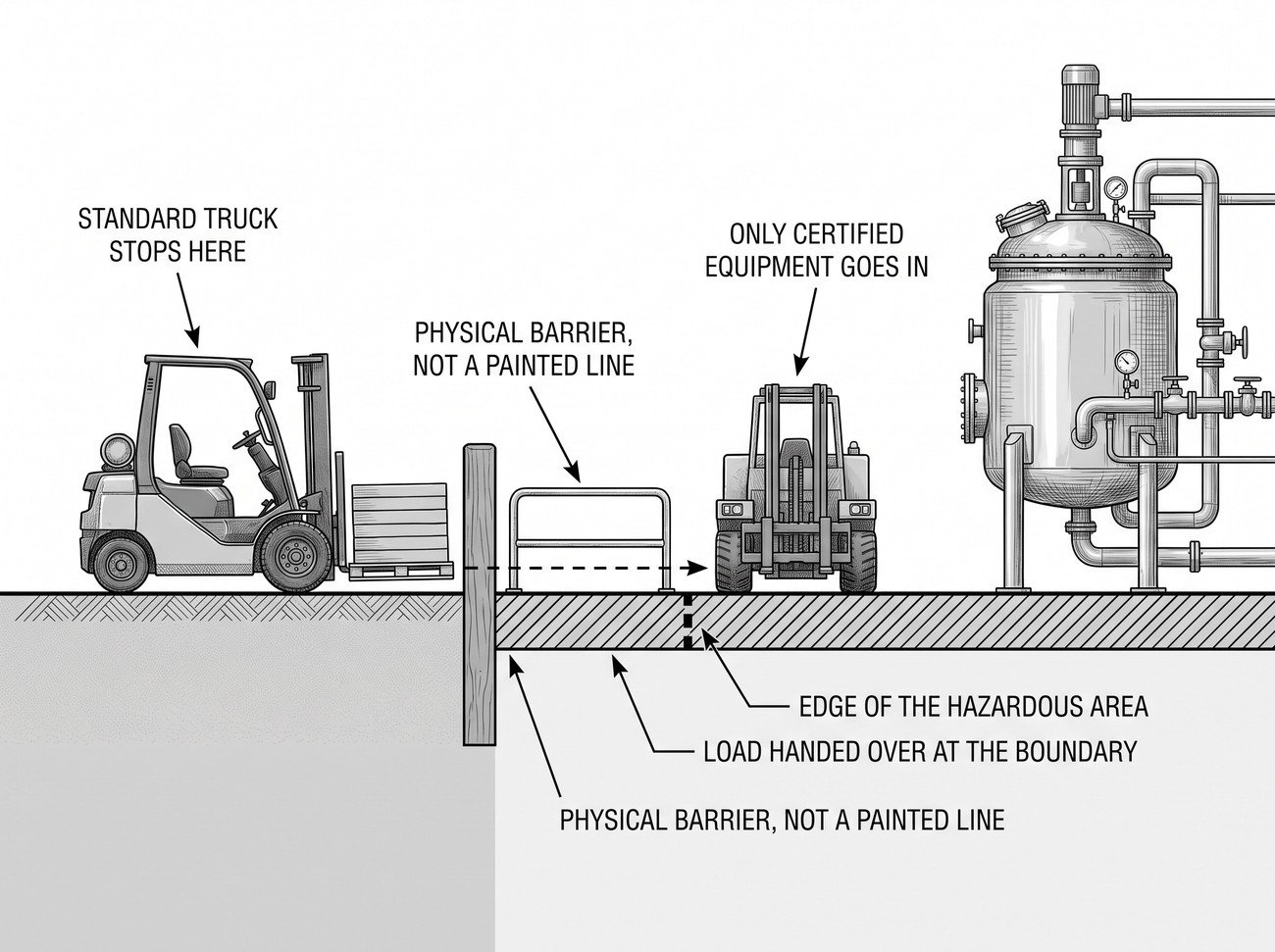
Equipment specifically designed and certified for hazardous area operation addresses these sources as an integrated design rather than as a series of retrofitted modifications, and this generally provides more reliable protection than adapting a standard vehicle. Where a standard vehicle must be modified for hazardous area use, that modification needs certification covering the vehicle as a whole, not just the individual components changed, since a partially addressed vehicle can present a false impression of being suitably protected.
Entry authorization and gas testing
Vehicle entry into a classified zone should require specific authorization confirming the atmosphere has been tested, the vehicle is appropriate for the zone classification, and the duration and route of the movement are defined, rather than being permitted on the basis of general site access. Where a vehicle must enter a zone that is not currently gas-free, this should follow the same escalated assessment applied to any other deliberate introduction of an ignition source into a live hazardous area.
Battery-powered equipment
Battery-powered vehicles remove the exhaust and engine heat sources but introduce their own considerations: battery charging must occur outside the classified zone, since charging can release hydrogen and generate arcing at connection points, and the battery compartment and electrical systems still require appropriate protection for the zone. Assuming an electric vehicle is inherently safer for hazardous area use, without addressing these specific factors, substitutes one set of ignition sources for another rather than eliminating them.
Tyres and static accumulation
Vehicle tyres can accumulate significant static charge during movement, and conductive or antistatic tyres, along with grounding arrangements where a vehicle will be stationary during loading or unloading operations, address a source that is easy to overlook when attention focuses on engine and electrical ignition sources.
For the equipment certification framework this applies within, see selecting ATEX-rated electrical equipment.
Related standards
The standards below set the test methods and performance levels behind the equipment referenced in this note.
- ISO 12100 — Safety of machinery
- EN 1149 — Electrostatic properties of protective clothing
- EN ISO 20345 — Safety footwear
Common errors
1Addressing one vehicle ignition source, such as the exhaust, while leaving electrical, friction or static sources unaddressed.
2Modifying a standard vehicle without certification covering the vehicle as a complete system.
3Permitting vehicle entry into a classified zone on general site access rather than specific, gas-tested authorization.
4Assuming battery-powered equipment is inherently suitable without addressing charging location and electrical system protection.
Frequently asked questions
What ignition sources does a standard vehicle bring into a hazardous area?
Hot exhaust surfaces, unprotected electrical systems capable of arcing, hot brake and clutch friction surfaces, battery terminals, and static charge accumulating on tyres and bodywork.
Is a modified standard vehicle equivalent to purpose-built hazardous area equipment?
Generally not; purpose-built equipment addresses ignition sources as an integrated design, while a modified vehicle needs certification covering the vehicle as a whole rather than just the components changed.
Should vehicle entry into a classified zone be treated as routine?
No, it should require specific authorization confirming the atmosphere has been tested, the vehicle suits the zone classification, and the duration and route are defined.
Are battery-powered vehicles inherently safe for hazardous areas?
No, they remove exhaust and engine heat but introduce charging hazards including hydrogen release and arcing, and their electrical systems still require zone-appropriate protection.
Why do vehicle tyres matter for static control?
Tyres can accumulate significant static charge during movement, so conductive or antistatic tyres and grounding arrangements during stationary operations address an easily overlooked source.
Need this as a document you can issue? The template library gives you the risk assessments, permits and inspection logs in editable form — and employer plans cover a whole team with completion records.