Safety / Tips and Tricks / Machinery and manufacturing
Activity 12 · Machinery
Isolating Machinery: Locking Off Every Energy Source
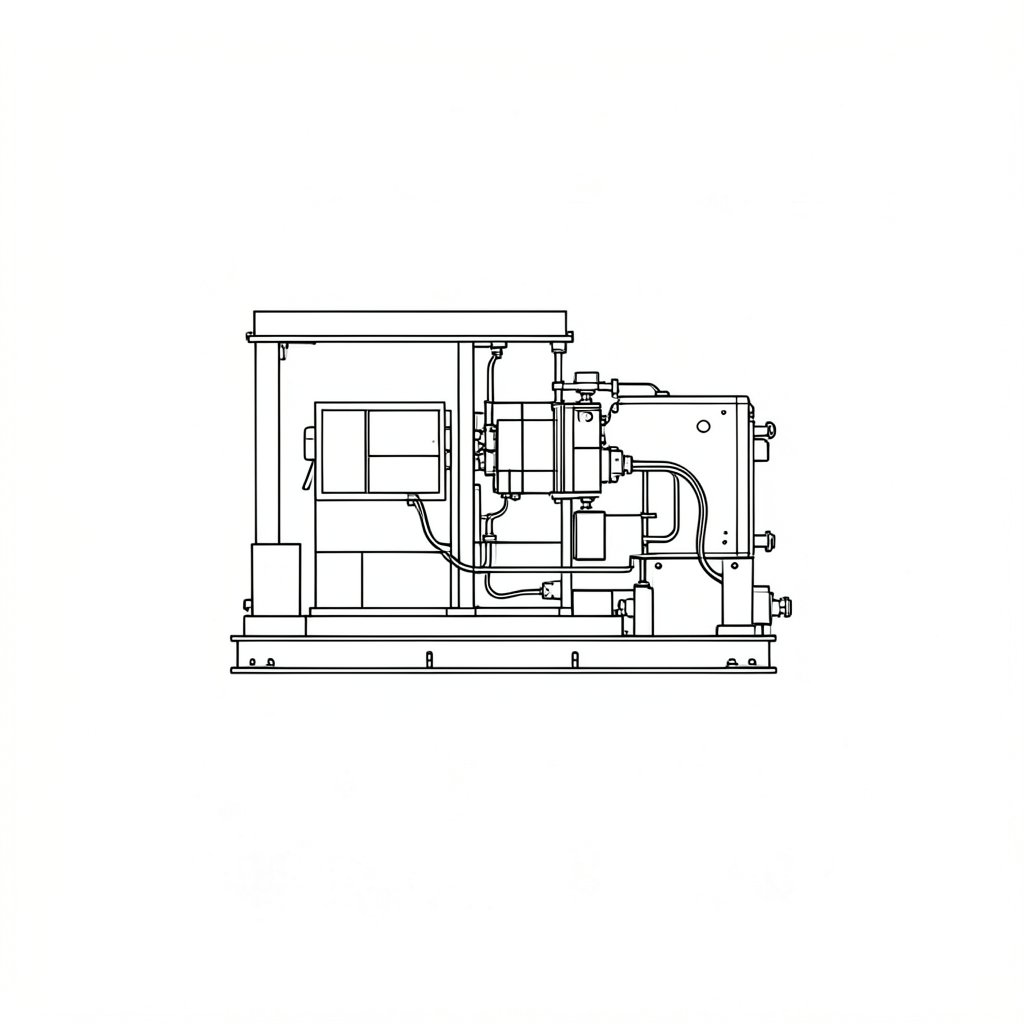
Isolation is not switching a machine off. It is removing every form of energy that could move something, and then proving that you have.
Machines have more than one supply
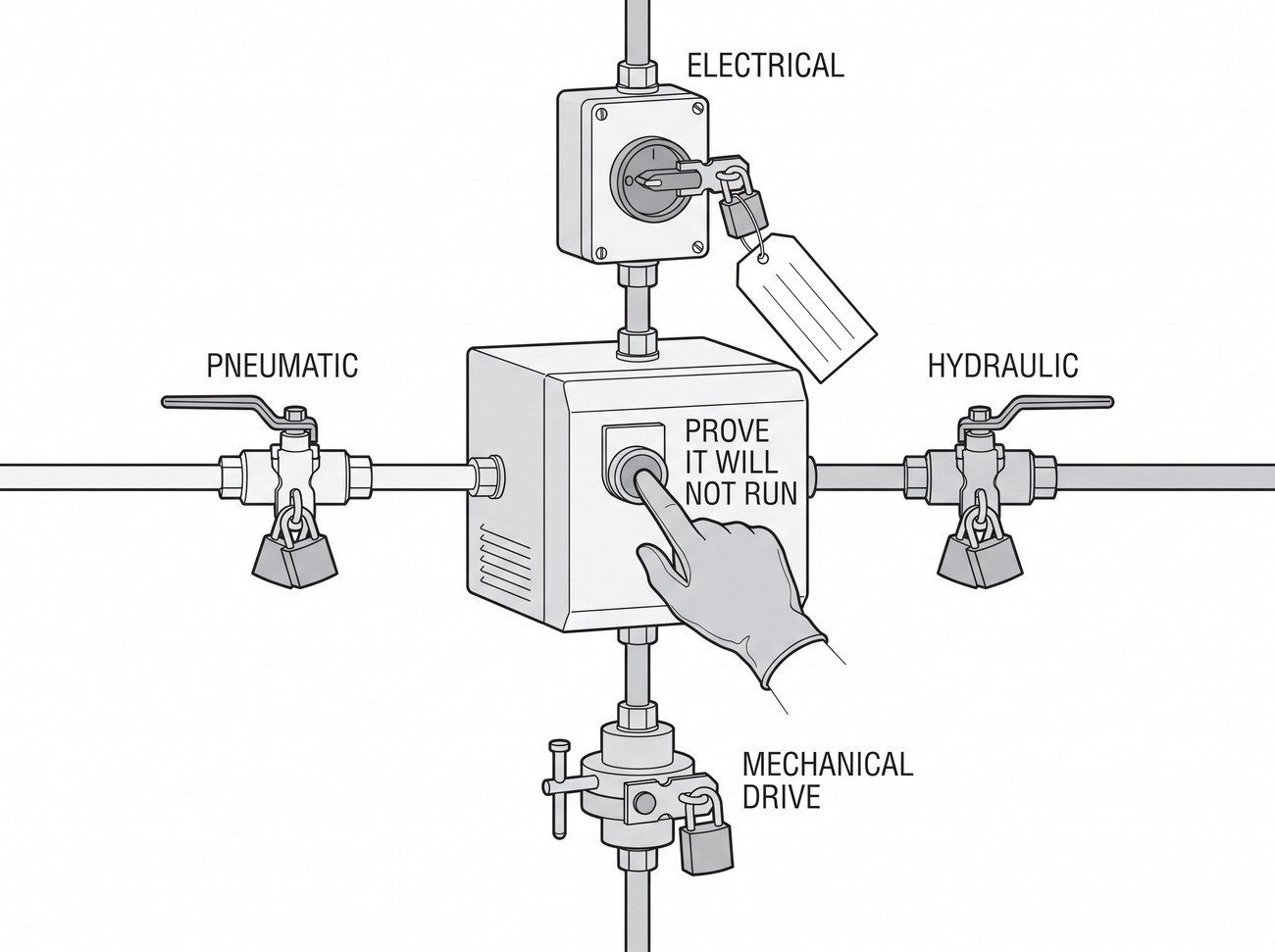
Electrical isolation is the one everybody does. A machine can also hold compressed air, hydraulic pressure, gas, steam, water, and a mechanical feed from an upstream machine that keeps turning. Isolating the electrical supply on a machine with a charged pneumatic circuit leaves it capable of moving under air alone. The starting point is an inventory of what actually feeds the machine, and on older equipment that is rarely all shown on one drawing.
Isolate, secure, prove
The three steps are separable and all three are required. Isolation is operating the device that cuts the supply. Securing is locking that device so it cannot be reinstated, with a lock belonging to each person working on the machine rather than one lock for the crew. Proving is testing that the machine will not run — attempting to start it, checking gauges have fallen to zero, confirming with a tester rather than assuming. Skipping the third step is the most common of the three.
One lock per person
A multi-hole hasp lets everyone working on the machine fit their own lock, so it cannot be restored until the last person has removed theirs. A single lock held by a supervisor breaks that: it means the machine can be re-energised by someone who cannot see whether the last pair of hands is clear. The point of a personal lock is that only the person exposed to the hazard can give up their protection.
The tag carries the information the lock cannot
A lock says do not operate. A tag says who applied it, when, and why, which is what allows a genuine query at three in the morning to be resolved without cutting a lock off. Blank tags, or tags that have been reused so long that the writing is illegible, remove that and leave a lock nobody can trace.
Restoring is a procedure too
Putting a machine back into service is where the second wave of injuries happens: guards not refitted, tools left inside, someone still working on the far side, a valve left in the wrong position. Restoration means checking the machine is clear, accounting for people, refitting guards, removing locks in a known order, and only then restoring energy — with a warning to anyone nearby before it moves.
For the energy that survives all of this, see stored energy. For the electrical case in detail, see lockout tagout for electrical isolation.
Related standards
The standards below set the design requirements, classification and test methods behind the safeguards and equipment referenced in this note.
Common errors
1Isolating the electrical supply and leaving pneumatic or hydraulic pressure in the system.
2Locking off without proving the machine will not run.
3Using one lock for a group instead of a personal lock for each person.
4Hanging blank or illegible tags, so a lock cannot be traced to anyone.
5Restoring energy without accounting for people, tools and guards.
Frequently asked questions
What counts as isolating a machine?
Removing every form of energy that could cause movement, not just switching it off. That includes electrical, pneumatic, hydraulic, gas, steam, water and any mechanical drive from an upstream machine.
What are the three steps of isolation?
Isolate by operating the device that cuts the supply, secure it with a lock so it cannot be reinstated, and prove the machine will not run. Proving is the step most often skipped.
Why does each person need their own lock?
So the machine cannot be restored until the last person has removed theirs. A single supervisor lock means someone who cannot see whether hands are clear can re-energise the machine.
What does the tag add that the lock does not?
Who applied it, when and why, so a genuine query can be resolved without cutting a lock off. A blank or illegible tag leaves a lock nobody can trace.
Why is restoring energy a procedure?
Because a second wave of injuries happens there: guards not refitted, tools left inside, someone still working on the far side. Restoration means accounting for people and guards before energy returns.
Need this as a document you can issue? The template library gives you the risk assessments, permits and inspection logs in editable form — and employer plans cover a whole team with completion records.