Safety / Tips and Tricks / Tree care and grounds
Activity 04 · Tree care
Eye and Face Protection for Tree Care Work
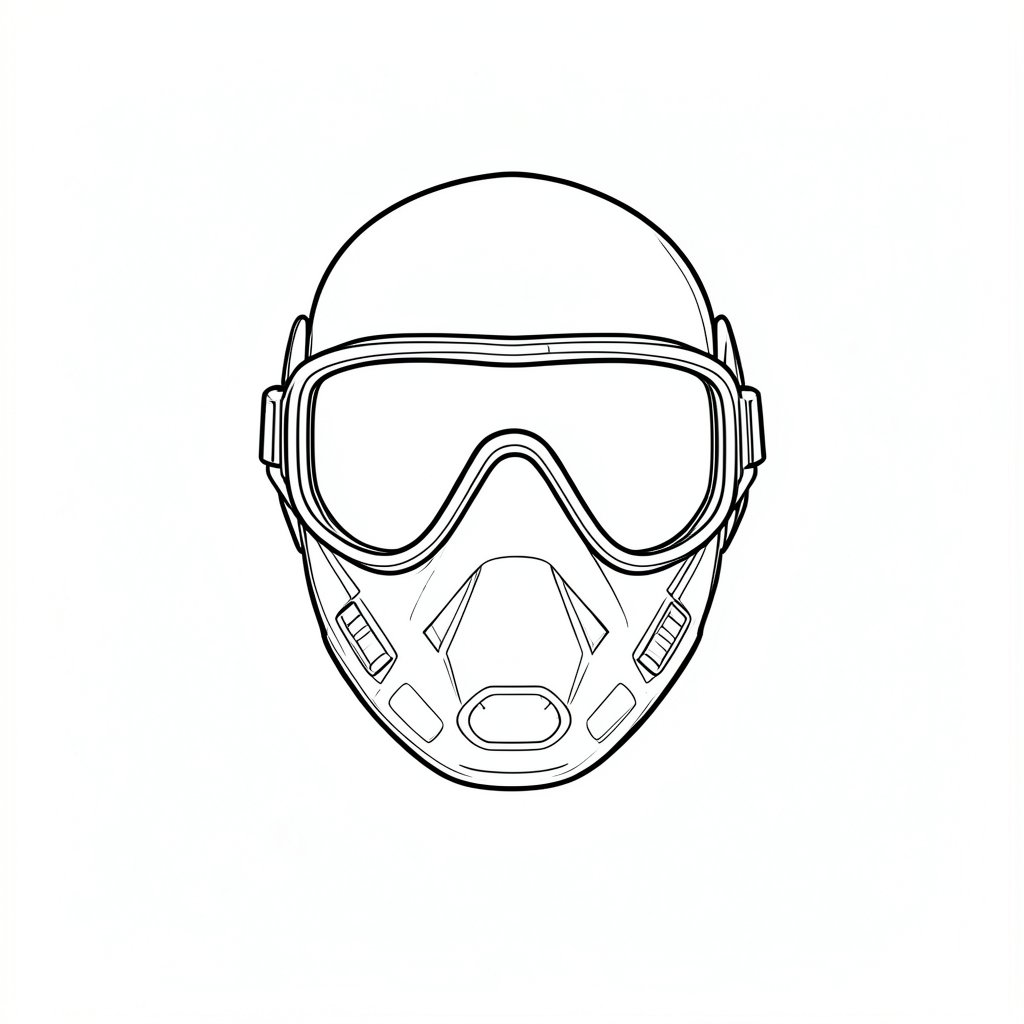
Tree care work throws debris in directions and at speeds that make eye injury a real and common risk, and the right eye protection depends on which specific task is being carried out, not a single default pair of glasses worn for everything.
What EN 166 covers and why the marking matters
Eye protection meeting EN 166 is marked with codes indicating its mechanical strength and field of use, and for tree care work the mechanical impact rating is the marking to check most carefully, since flying wood chips, twigs and bark fragments during cutting and chipping are the dominant hazard. A general fashion-style safety glasses marked only for basic risks may not carry the impact rating tree care work actually requires.
Chainsaw work: mesh versus solid protection
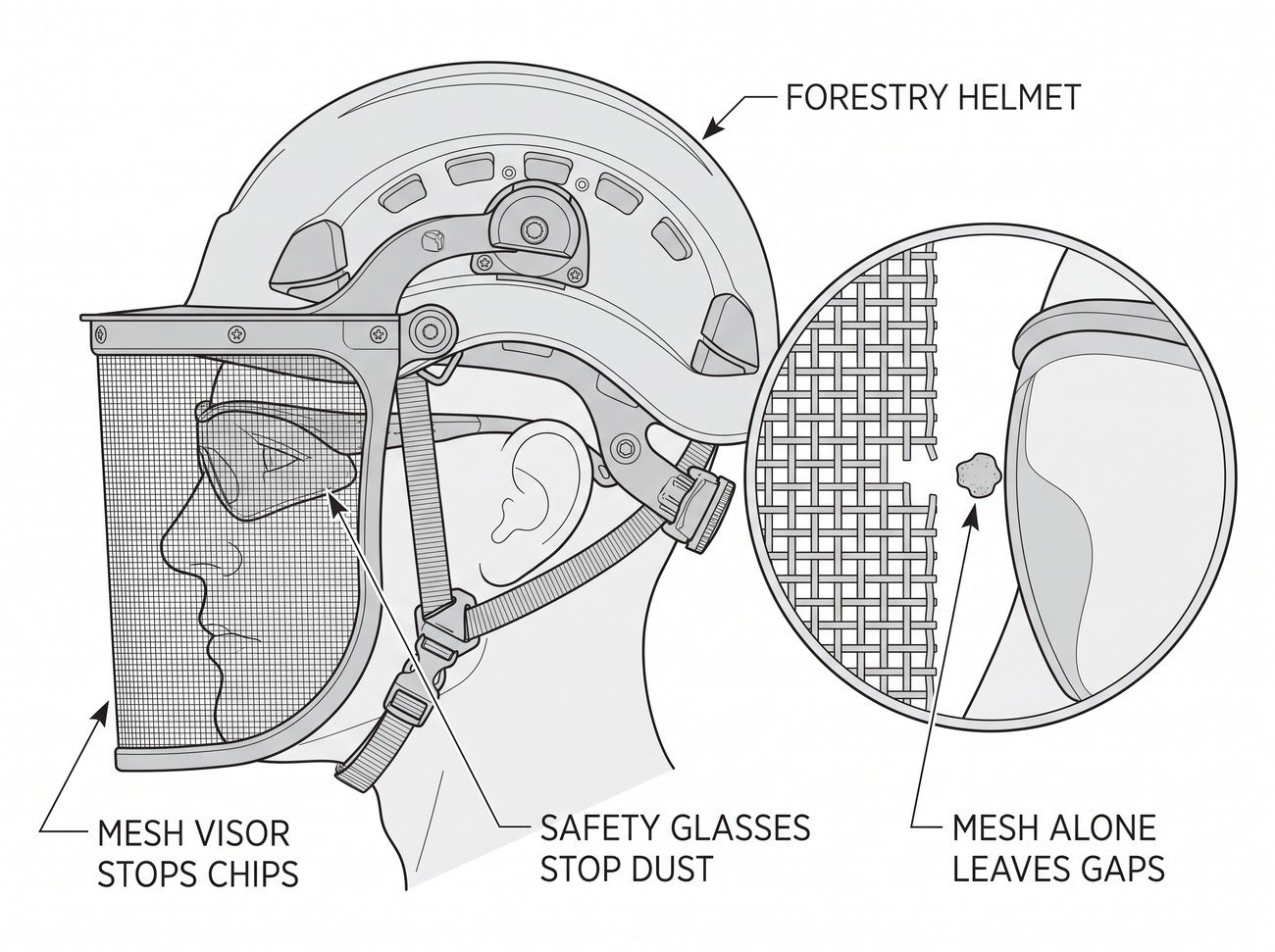
A mesh visor integrated with a chainsaw helmet offers good general debris protection while allowing airflow and reducing fogging, but mesh has gaps that can let fine particles through at certain angles, particularly during overhead or awkward-angle cuts. Solid eye protection meeting EN 166 worn underneath or instead of a mesh visor closes this gap for tasks where fine debris is a particular concern, and the two are not mutually exclusive — many operators wear both together.
Chipping and mulching operations
Chipper and mulcher operation throws material at higher velocity and in less predictable directions than a chainsaw cut, and eye protection for this task should be selected specifically for that higher-energy debris risk rather than assumed adequate because it was fine for cutting. A full face shield, rated for the specific impact energy the machine can produce, is often the more appropriate choice for anyone working near the feed or discharge zones.
Aerial work and sustained wear
Eye protection worn during extended aerial work needs to balance protection against comfort and fogging over a long period, since protection that gets pushed up or removed partway through a task because it became uncomfortable provides no protection at all for the remainder of the work. Anti-fog coatings and adequate ventilation in the frame design matter more for sustained aerial tasks than for brief ground-level cuts.
Prescription eyewear and compatibility
Ordinary prescription glasses do not provide impact protection to EN 166 regardless of how sturdy the frame looks, and operators who need corrective lenses should use certified prescription safety eyewear or an over-glasses design specifically rated for that purpose, checked for compatibility with any helmet or visor worn over it.
For the wider helmet system this protection is often integrated with, see choosing a helmet system for chainsaw and grounds work, and for chipper-specific hazards, see chipper safety.
Related standards
The standards below set the test methods and performance levels behind the equipment referenced in this note.
- EN 166 — Eye protection
- EN 397 — Industrial safety helmets
- EN 14052 — High-performance industrial helmets
Common errors
1Wearing general fashion-style glasses without a confirmed impact rating for tree care tasks.
2Relying on a mesh visor alone for tasks with a significant fine-debris risk.
3Using chainsaw-rated eye protection for chipper or mulcher work without checking it against the higher debris energy those machines produce.
4Removing or pushing up eye protection during long aerial tasks because it became uncomfortable.
Frequently asked questions
What marking on EN 166 eye protection matters most for tree care work?
The mechanical impact rating, since flying wood chips, twigs and bark fragments during cutting and chipping are the dominant hazard, and a general fashion-style safety glasses marked only for basic risks may not carry the rating this work needs.
Why might solid eye protection be worn underneath a mesh visor?
Mesh has gaps that can let fine particles through at certain angles, particularly during overhead or awkward-angle cuts, so solid protection worn underneath closes that gap.
Why does chipper and mulcher work need different eye protection consideration than chainsaw cutting?
These machines throw material at higher velocity and in less predictable directions, so eye protection should be selected specifically for that higher-energy debris risk rather than assumed adequate because it worked for cutting.
Why does comfort matter for eye protection during extended aerial work?
Protection that gets pushed up or removed partway through a task because it became uncomfortable provides no protection for the remainder of the work, so anti-fog and ventilation features matter more for sustained tasks.
Can ordinary prescription glasses be used as eye protection for tree care work?
No, they do not provide impact protection to EN 166 regardless of frame sturdiness – certified prescription safety eyewear or a rated over-glasses design should be used instead.
Need this as a document you can issue? The template library gives you the risk assessments, permits and inspection logs in editable form — and employer plans cover a whole team with completion records.