Safety / Tips and Tricks / Tree care and grounds
Activity 04 · Tree care
Chipper Safety: Feed Zone Hazards and Safe Operating Distance
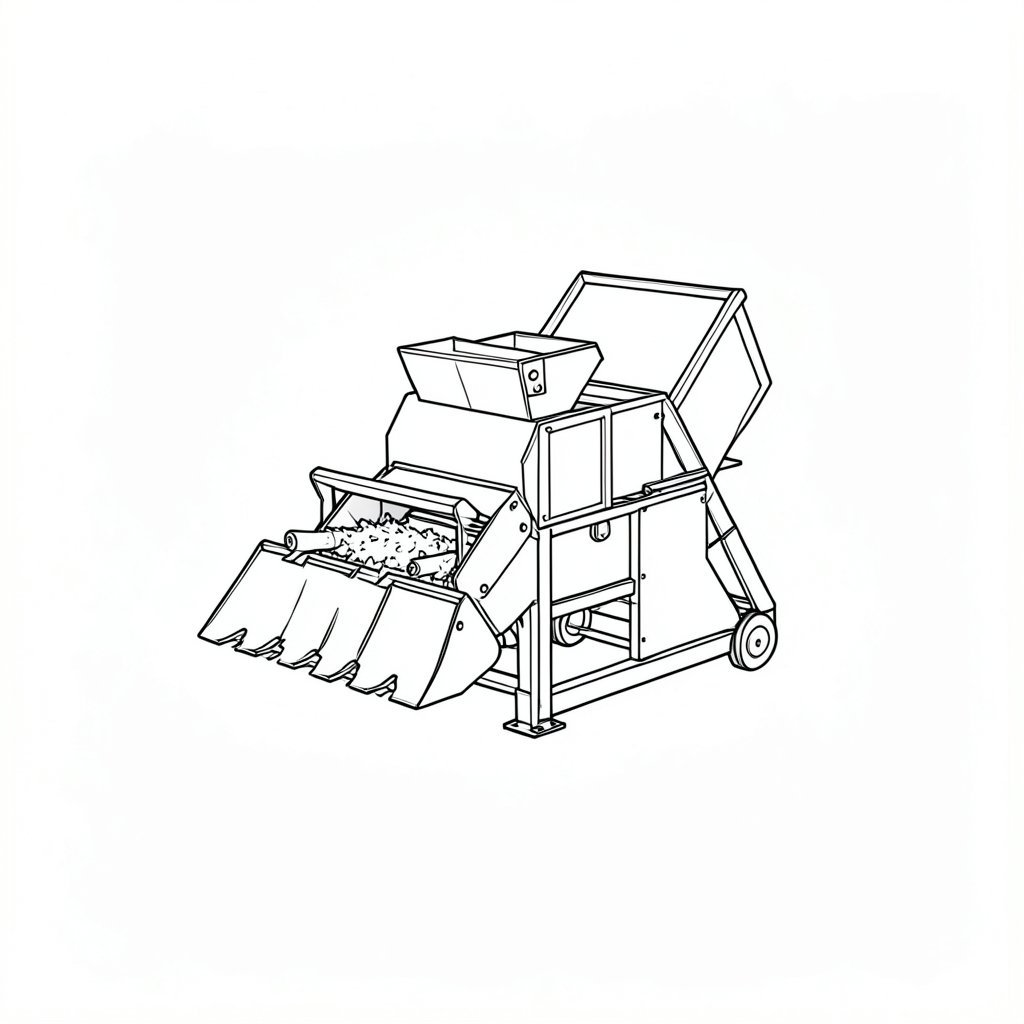
A wood chipper's feed mechanism is designed to pull material in with enough force to process branches quickly, and that same mechanism does not distinguish between a branch and any part of a person that comes within its reach — feed zone incidents are consistently among the most severe in grounds work precisely because of this.
Why the feed zone is uniquely dangerous
Once material is engaged by the feed rollers or mechanism, the pulling force is generally strong enough that a caught glove, sleeve, or loose clothing can draw the rest of the limb in before the operator can react, and this can happen in a fraction of a second once contact occurs. This is fundamentally different from most other machinery entanglement risks, where a slower or more gradual engagement gives a brief reaction window — a chipper’s feed mechanism typically does not.
Safe feeding technique
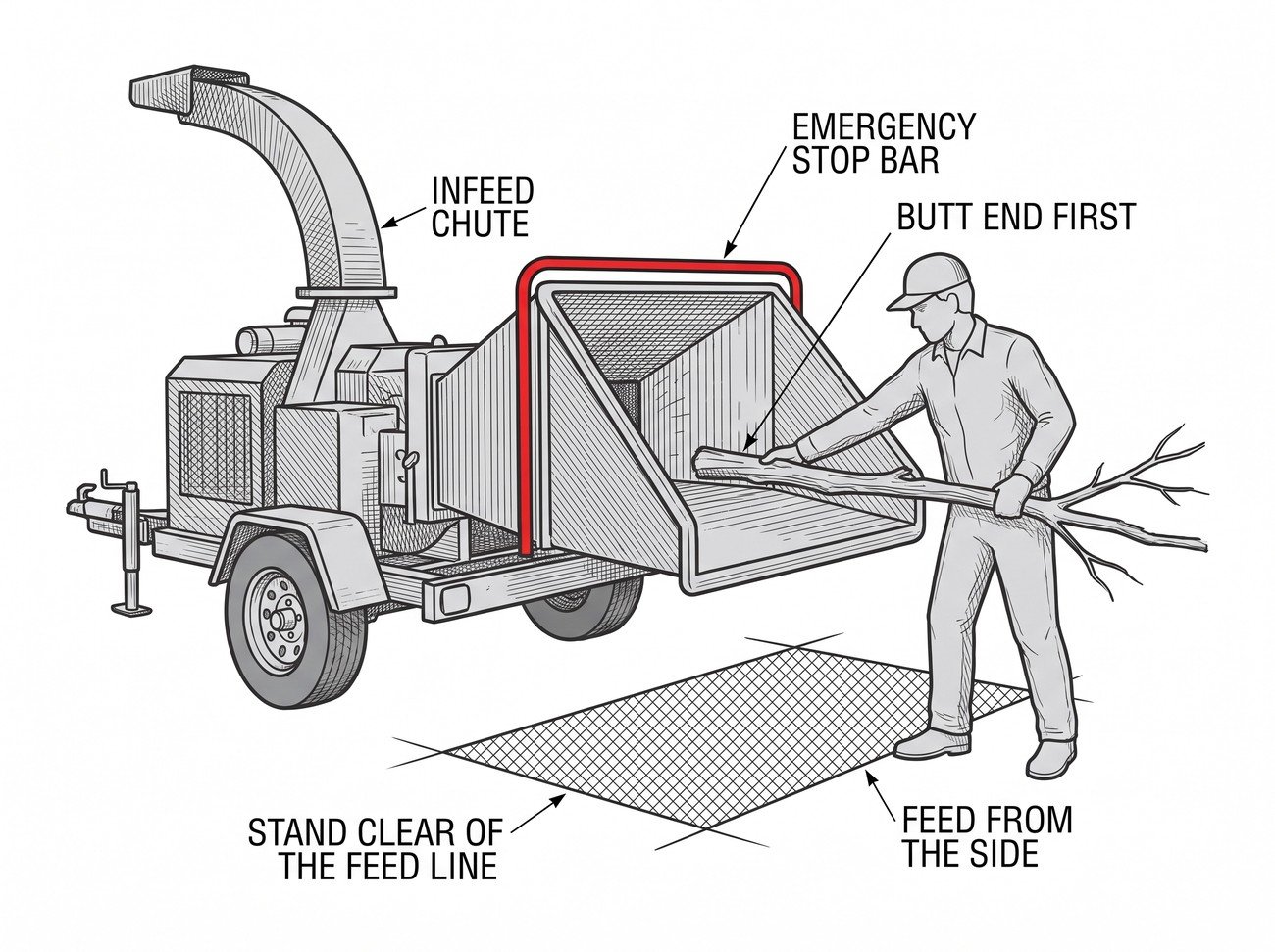
Material should be fed from the side rather than reaching directly over the feed opening, using the length of the branch itself to maintain distance between the operator’s hands and the feed mechanism, and releasing material before hands approach the feed opening rather than pushing it in by hand. A push stick or the next piece of material can clear a hesitating feed rather than a hand reaching in to assist it.
Clothing and loose items around the feed zone
Loose clothing, unfastened cuffs, dangling drawstrings, and jewellery all present a genuine entanglement risk near a chipper’s feed opening, since any of these can be caught by the mechanism before the wearer notices. Fitted clothing with no loose ends, and removing rings, watches or other snag-prone items before feeding operations, closes off this specific and easily overlooked hazard.
Emergency stops and their actual reach
Following the same machine-guarding and emergency-stop principles set out in ISO 12100, the chipper’s emergency stop needs to be reachable by the feeder without needing to lean toward the feed zone to activate it, and every operator should know its exact location and confirm it functions before starting work, not assume it will be there when needed. A stop control that is technically present but awkward to reach in the actual working position offers less real protection than its specification suggests.
Bystander and ground crew positioning
Anyone not actively feeding the machine should stay clear of the feed zone and the discharge chute, and a clear, agreed exclusion distance communicated to the whole crew prevents a bystander from being drawn toward the machine by curiosity or by helping to pass material closer than the feed operator’s own safe technique allows.
For the manual handling considerations around feeding material to a chipper, see brash and debris handling.
Related standards
The standards below set the test methods and performance levels behind the equipment referenced in this note.
- ISO 12100 — Safety of machinery
- EN 388 — Gloves against mechanical risks
- EN 166 — Eye protection
- EN 352 — Hearing protectors
Common errors
1Reaching directly over the feed opening rather than feeding from the side.
2Wearing loose clothing, drawstrings or jewellery while operating or standing near the feed zone.
3Pushing hesitating material into the feed mechanism by hand rather than using a push stick or the next piece.
4Not confirming the emergency stop is reachable and functional before starting the operation.
Frequently asked questions
Why is a chipper's feed zone particularly dangerous compared to other machinery entanglement risks?
Once material is engaged, the pulling force is generally strong enough to draw in a caught glove, sleeve, or limb before the operator can react, often within a fraction of a second, unlike slower entanglement risks that give a brief reaction window.
What is the correct technique for feeding material into a chipper?
Feeding from the side rather than reaching over the opening, using the branch's own length to maintain distance, and releasing material before hands approach the feed opening rather than pushing it in by hand.
Why do loose clothing and jewellery matter specifically around a chipper?
Unfastened cuffs, drawstrings and jewellery can be caught by the feed mechanism before the wearer notices, so fitted clothing with no loose ends and removing snag-prone items closes off this hazard.
What makes an emergency stop actually effective in practice?
Being reachable by the feeder without leaning toward the feed zone, and every operator confirming it functions and knowing its exact location before starting work, rather than assuming it will be there when needed.
Why does bystander positioning matter around a running chipper?
A clear, agreed exclusion distance communicated to the whole crew prevents someone from being drawn toward the machine by curiosity or by helping pass material closer than the feed operator's own safe technique allows.
Need this as a document you can issue? The template library gives you the risk assessments, permits and inspection logs in editable form — and employer plans cover a whole team with completion records.