Safety / Tips and Tricks / Tree care and grounds
Activity 04 · Tree care
Brash and Debris Handling: Manual Handling Risks in Grounds Work
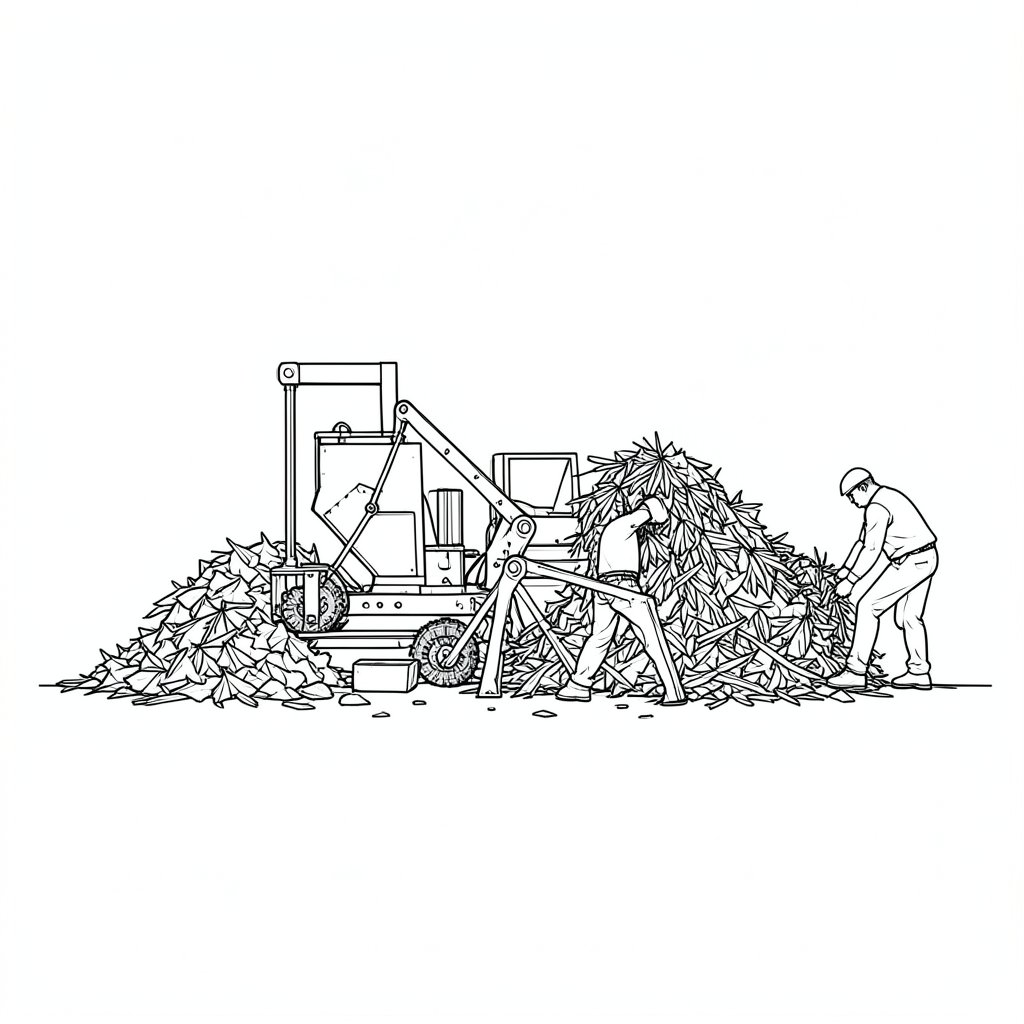
The cutting operation in tree and grounds work tends to get the safety attention, while the manual handling that follows — dragging, lifting and stacking brash and debris — quietly accounts for a large share of the injuries, mostly to backs and hands, that the cutting itself never caused.
Why brash handling is harder than it looks
Brash is irregular, often heavier than its size suggests once green wood and attached foliage are accounted for, and frequently needs to be moved across uneven ground, through undergrowth, or up an incline to a chipper or collection point. This combination of unpredictable weight, awkward shape, and difficult terrain makes brash handling a genuinely harder manual handling task than moving a uniform, predictable load of the same nominal weight.
Technique for dragging and carrying
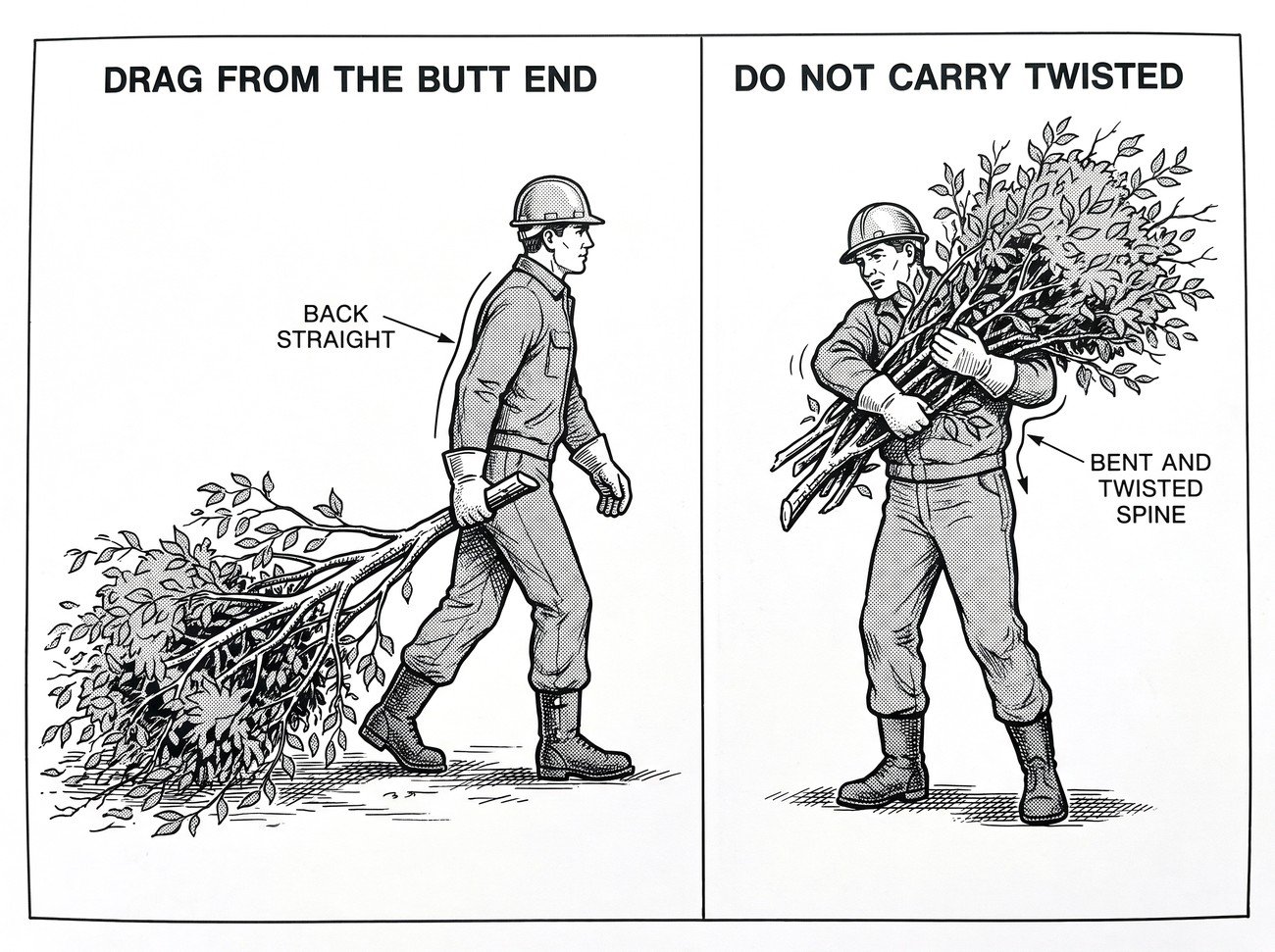
Dragging brash by pulling from the butt end, walking forward rather than backward where visibility allows, keeps the load trailing behind rather than requiring an awkward twisted-back carrying posture. Where lifting is genuinely necessary, keeping the load close to the body, avoiding twisting while lifting, and breaking a large or irregular piece into smaller sections before moving it are more reliable than attempting to muscle an awkward single load in one motion.
Team lifting and load sharing
Heavier sections or awkward loads should be moved by more than one person where the terrain and load genuinely call for it, with a clear, agreed lead on timing so that the load moves together rather than one person taking sudden unshared weight when the other shifts grip. Team lifting only reduces risk when it is actually coordinated — two people lifting independently on the same awkward load can be worse than one person lifting alone.
Hand protection during debris handling
Splinters, thorns on certain species, and rough bark all present a real hand injury risk during brash handling, and gloves selected for grip and puncture resistance — distinct from the cut-resistance priority of chainsaw work — suit this specific task better than a single glove chosen only with the saw in mind.
Pacing across a full working day
Manual handling injury risk in brash clearance often builds cumulatively across a shift rather than from a single dramatic lift, as fatigue erodes lifting technique over repeated cycles of the same movement. Rotating tasks, taking planned breaks, and being deliberate about technique later in a shift — when the temptation to cut corners on form is highest — matters as much as the technique used on the first lift of the day.
For the gloves this handling work specifically calls for, see selecting gloves for grounds and tree care work.
Related standards
The standards below set the test methods and performance levels behind the equipment referenced in this note.
Common errors
1Underestimating brash weight because of its irregular, foliage-heavy shape.
2Carrying a load on the back rather than dragging by the butt end where terrain allows dragging.
3Attempting a team lift without coordinating timing, resulting in one person taking sudden unshared weight.
4Allowing lifting technique to degrade later in a shift as fatigue builds.
Frequently asked questions
Why is brash handling a harder manual handling task than it might appear?
Brash is irregular, often heavier than its size suggests once green wood and foliage are accounted for, and frequently needs moving across uneven ground or inclines, combining unpredictable weight with difficult terrain.
What is the recommended technique for moving brash across the ground?
Dragging by pulling from the butt end while walking forward where visibility allows, which keeps the load trailing behind rather than requiring an awkward twisted-back carrying posture.
When does team lifting actually reduce risk for brash and debris?
Only when it is genuinely coordinated with a clear, agreed lead on timing – two people lifting independently on the same awkward load without coordination can be worse than one person lifting alone.
Why do gloves for brash handling differ from chainsaw gloves?
Brash handling calls for grip and puncture resistance against splinters, thorns and rough bark, distinct from the cut-resistance priority that drives chainsaw glove selection.
Why does manual handling risk build across a shift rather than just from one heavy lift?
Fatigue erodes lifting technique over repeated cycles of the same movement, so injury risk accumulates cumulatively, making technique later in a shift as important as technique on the first lift.
Need this as a document you can issue? The template library gives you the risk assessments, permits and inspection logs in editable form — and employer plans cover a whole team with completion records.