Safety / Tips and Tricks / Tree care and grounds
Activity 04 · Tree care
Aerial Tree Work: Rope and Harness Systems for Arborists
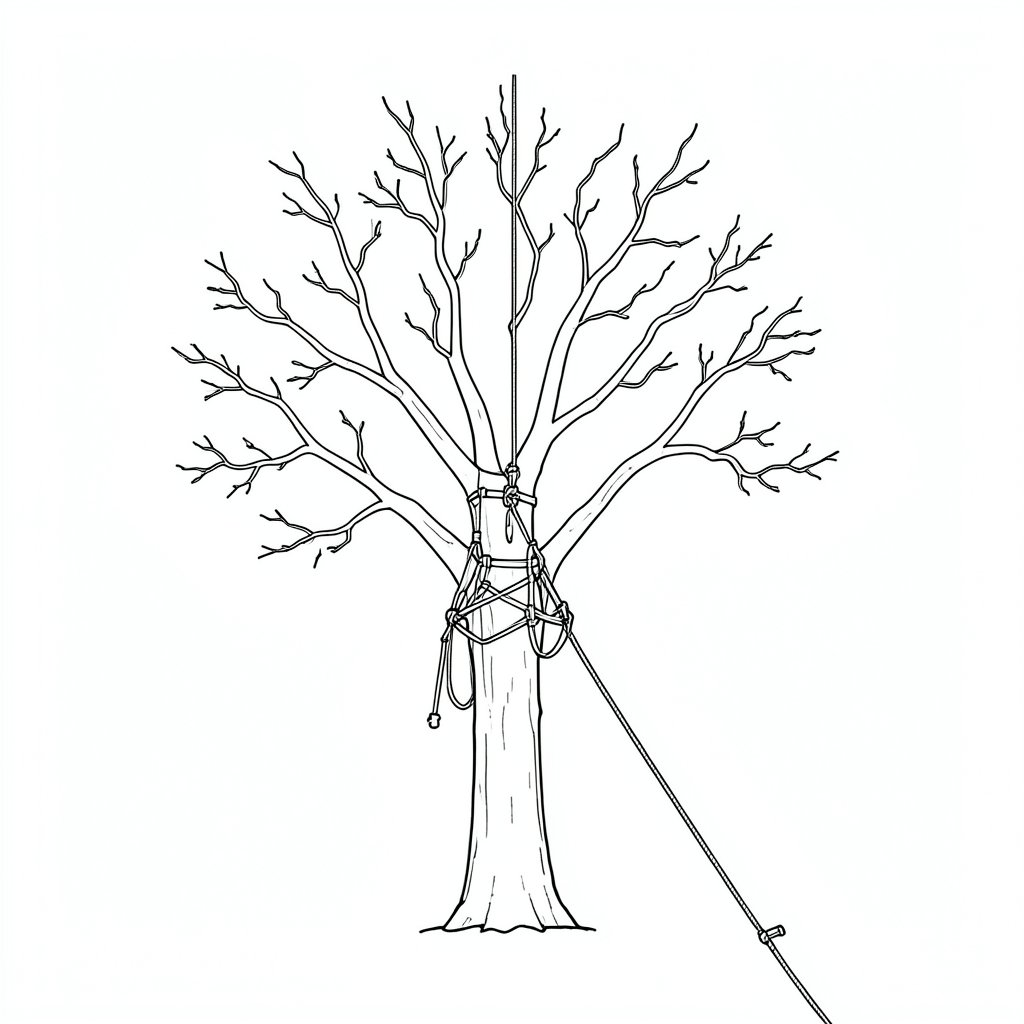
Aerial tree work asks more of a rope and harness system than most other work-at-height disciplines, since the anchor point itself — the tree — is alive, variable, and part of the task being carried out, not a fixed structural point installed for the purpose.
The harness as the base of the system
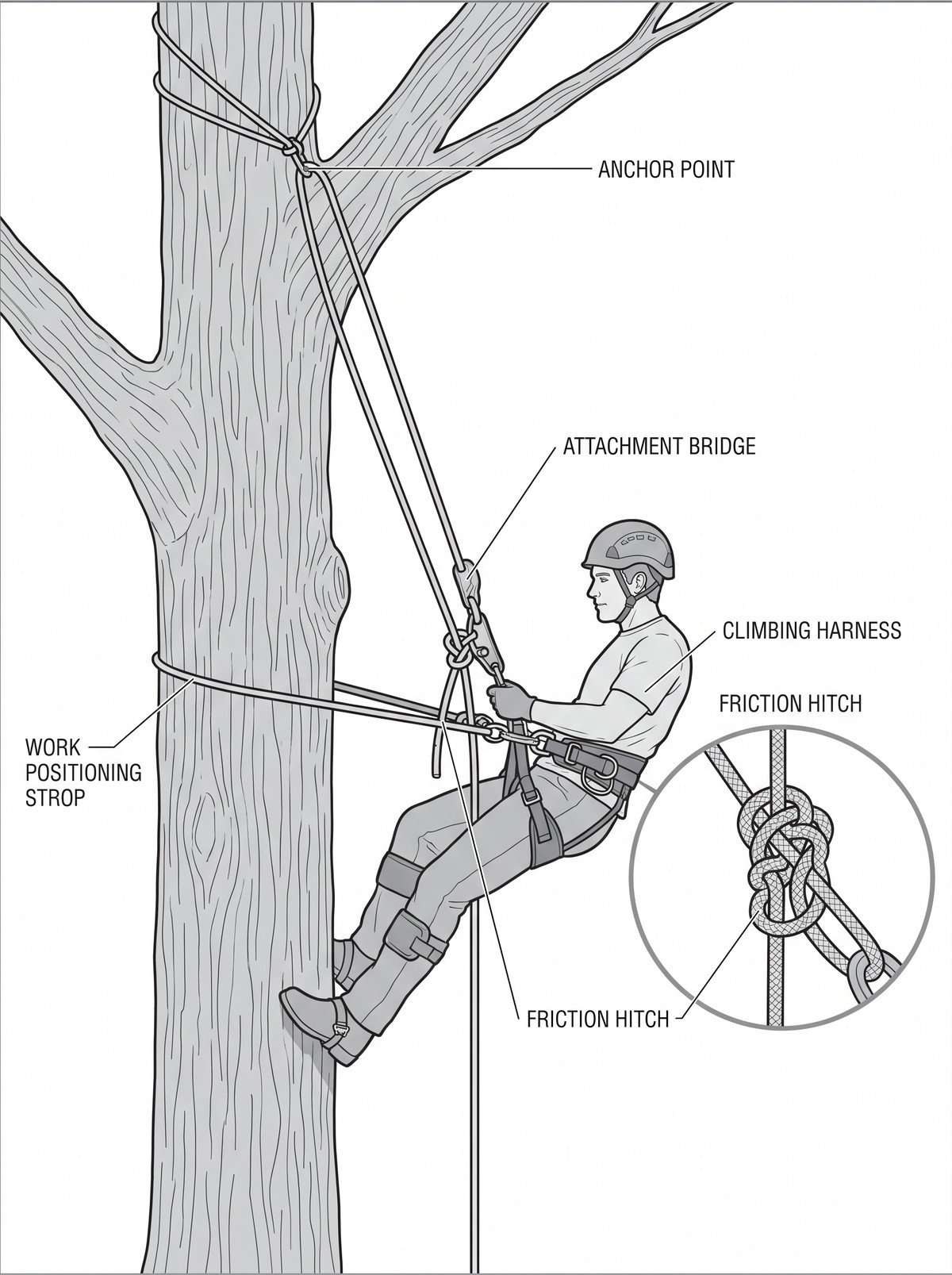
A climbing harness for aerial tree work needs to meet the same fundamental load-bearing requirements as any other work-at-height harness — full body harnesses to EN 361 provide fall-arrest attachment points, while work positioning elements meeting EN 358 support the sustained, hands-free working position arborists need while operating a saw aloft. Many arborist harnesses combine both functions in one purpose-built garment, and the specific attachment points used for climbing, work positioning and fall arrest should be used exactly as the harness manufacturer specifies for each function.
Connectors and rope systems
Connectors joining the harness to the climbing system should meet EN 362, sized and locked correctly for each connection, following the same loading-axis and gate-closure discipline that applies to any connector use. The climbing rope itself, along with the friction or mechanical devices used to ascend, descend and adjust position in the canopy, needs to be matched to the specific technique and rope diameter the equipment is designed for — substituting an unrated rope or an incompatible device changes the system’s actual performance in ways that are not always obvious until it is loaded.
The tree as an anchor
Unlike a certified structural anchor, a tree’s suitability as a climbing anchor is judged by the climber at the time, assessing the specific limb or stem for its size, species, condition and any visible defect before committing weight to it. A limb that looks adequate can still fail if it has internal decay, a recent crack, or was already stressed by wind or the day’s cutting operations — this judgement needs to be made fresh for each anchor point used, not assumed safe because a similar-looking limb held earlier in the same tree.
Redundancy and backup
Where the technique and task allow it, maintaining a secondary attachment or a backup device gives a margin against a single-point failure in either the anchor or the primary system, similar in principle to the two-line discipline used in other rope-access work. The specific redundancy approach depends on the climbing method in use, but the underlying principle — not depending on a single point of failure where it can reasonably be avoided — applies broadly.
Training and currency
Aerial tree climbing techniques are technically demanding and carry real consequence for error, and competence needs to be genuinely current, not assumed from past experience that may predate changes in equipment, technique, or the climber’s own fitness and judgement. Refresher training and practising techniques in a controlled setting before relying on them operationally keeps skill matched to what the task actually demands.
For rescue planning specific to this work, see rescue planning for aerial tree work.
Related standards
The standards below set the test methods and performance levels behind the equipment referenced in this note.
- EN 361 — Full body harnesses
- EN 358 — Work positioning and restraint belts
- EN 362 — Connectors for fall protection
- EN 397 — Industrial safety helmets
Common errors
1Assessing a limb's suitability as an anchor based on appearance alone without checking for internal decay or recent stress.
2Using rope or connectors not matched to the specific device or technique they are paired with.
3Relying on a single point of attachment where the technique and task would allow a backup.
4Relying on past training and experience without periodic refreshers as equipment or technique changes.
Frequently asked questions
What makes tree anchors different from a structural anchor used elsewhere in work at height?
A tree's suitability as a climbing anchor is judged by the climber at the time, assessing the specific limb or stem's size, species, condition and any defect, rather than relying on a certified, pre-rated structural point.
What role does EN 358 play in an arborist harness?
It covers the work positioning elements that support the sustained, hands-free working position an arborist needs while operating a saw aloft, often combined in the same harness as EN 361 fall-arrest attachment points.
Why can't a limb be assumed safe because a similar one held earlier in the same tree?
Each limb can carry its own internal decay, recent crack, or stress from wind or the day's cutting operations, so anchor suitability needs assessing fresh for each specific point used.
Why does redundancy matter in an aerial tree climbing system?
Maintaining a secondary attachment or backup device, where the technique allows it, gives a margin against a single-point failure in either the anchor or the primary system.
Why does aerial tree climbing competence need to stay current, not just be established once?
The techniques are technically demanding with real consequence for error, and past experience may predate changes in equipment, technique, or the climber's own fitness and judgement, so refresher training keeps skill matched to the task.
Need this as a document you can issue? The template library gives you the risk assessments, permits and inspection logs in editable form — and employer plans cover a whole team with completion records.