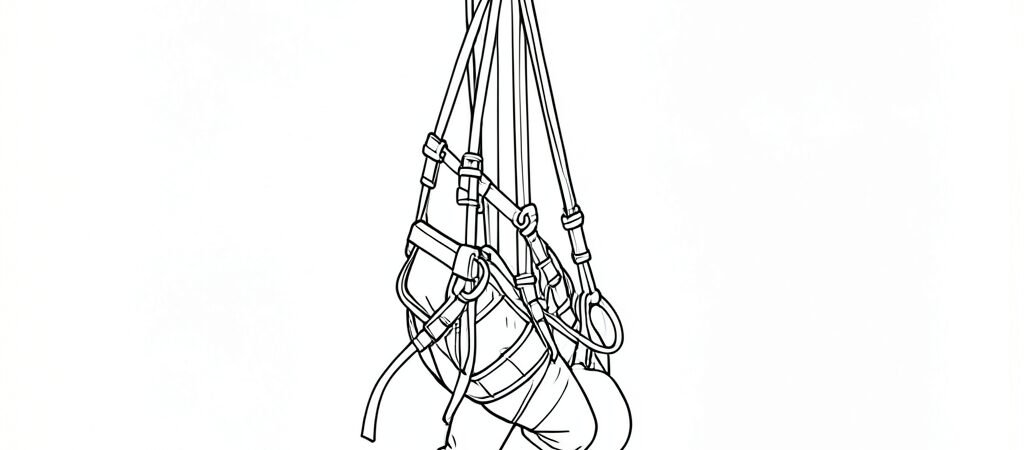
Safety / Tips and Tricks / Tree care and grounds
Activity 04 · Tree care
Rescue Planning for Aerial Tree Work
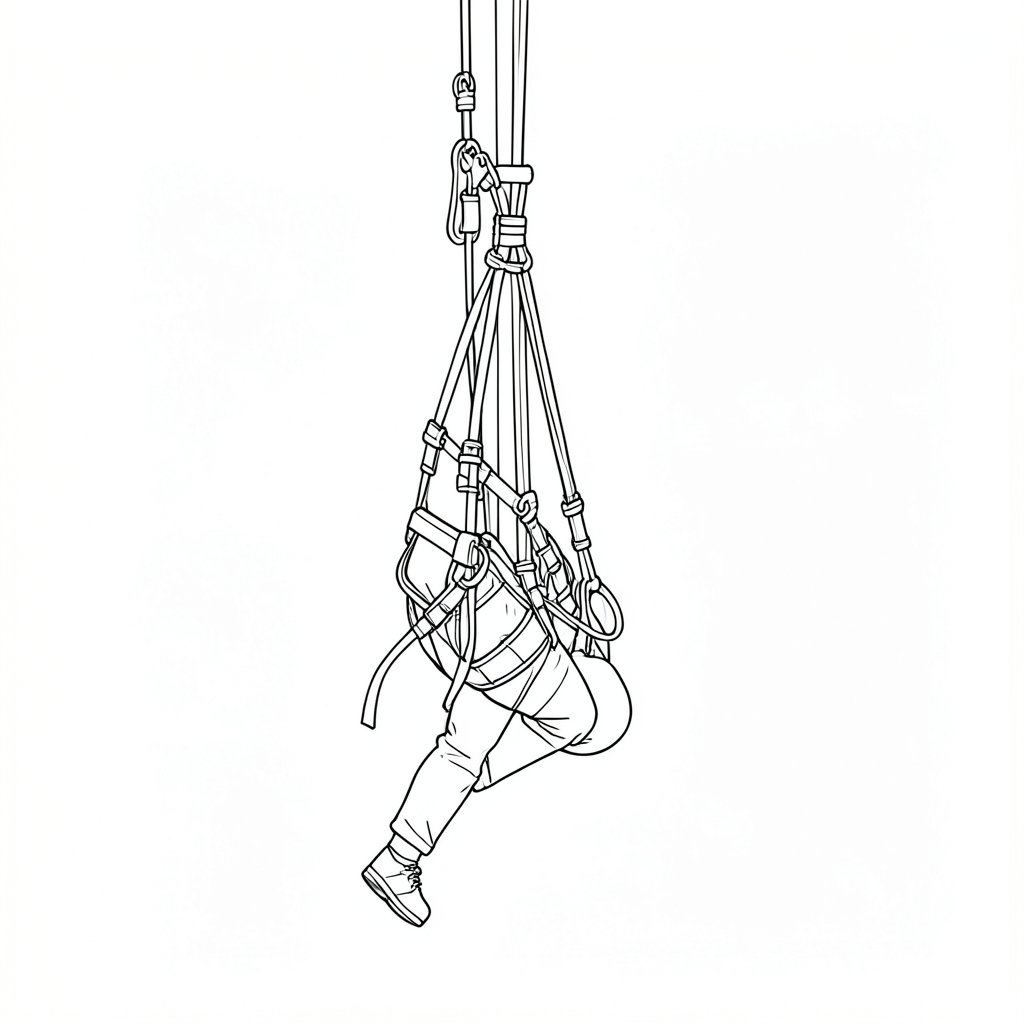
An incapacitated climber left suspended in a tree faces the same time-critical risk as anyone suspended in a harness anywhere else — and a rescue plan improvised after the fact, in a tree, without pre-arranged equipment or a rehearsed method, is far too slow for what suspension trauma actually allows.
Why the clock matters the same way it does in any suspension
Suspension trauma, a circulatory failure caused by prolonged, motionless upright suspension in a harness, can begin producing symptoms within minutes, and this risk applies to an incapacitated arborist in a canopy exactly as it does to anyone else left hanging in a harness. Waiting for an emergency service response, which was not designed to climb into a canopy and extract a suspended person quickly, is not an adequate rescue plan on its own for aerial tree work.
Ground-based rescue capability
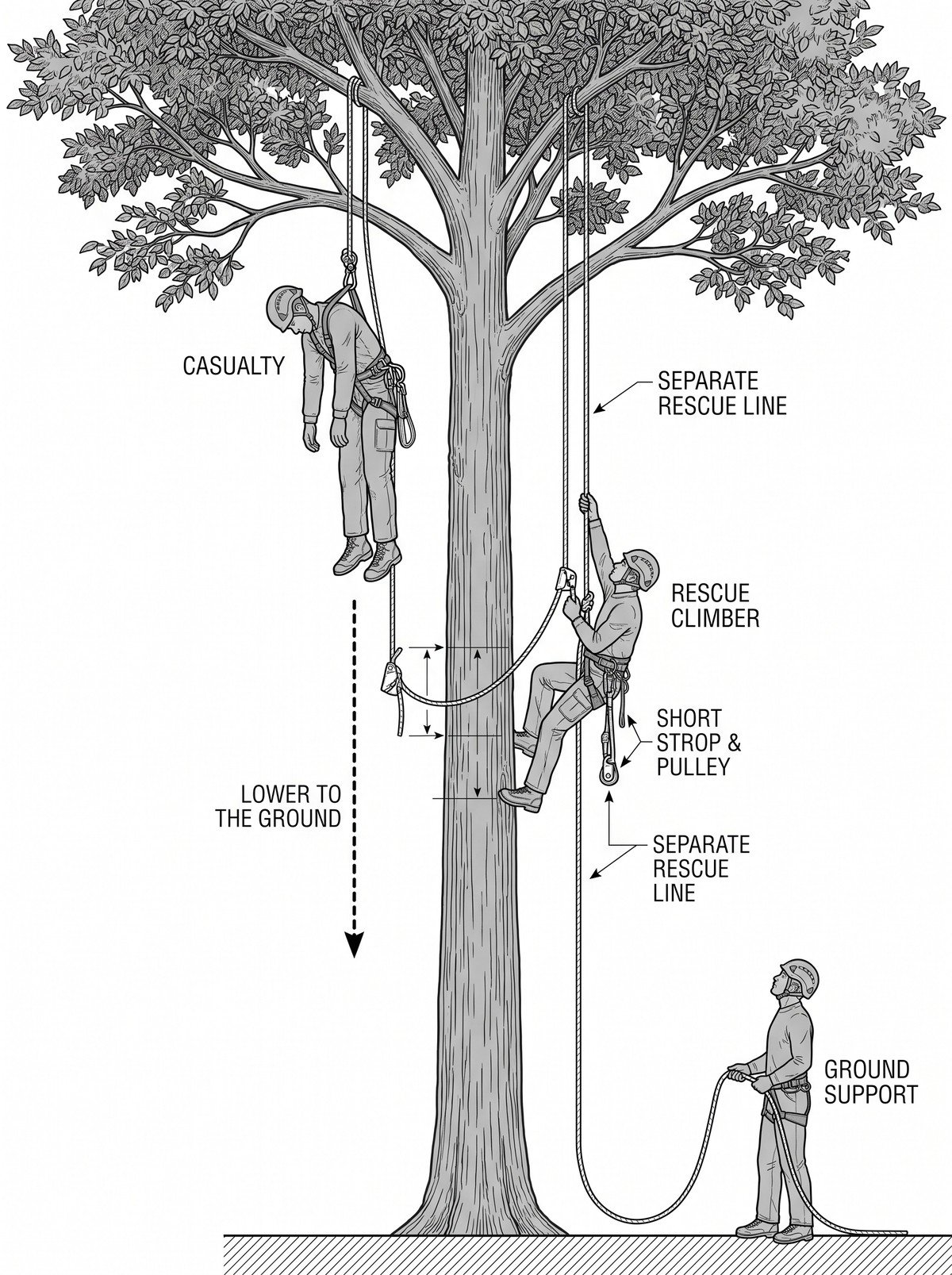
Every aerial tree work operation should have at least one person on the ground trained and equipped to perform an aerial rescue — ascending to the incapacitated climber, or lowering them if the rigging allows a controlled descent from where they are — before the climb begins, not identified as a gap after an incident occurs. This capability needs to be genuinely available on that specific job, not assumed present because someone on the wider team has the training in general.
Equipment positioned for rescue, not just for climbing
Rescue-specific equipment — an additional rope system, a descender device meeting EN 341 for lowering an incapacitated climber under control, and where a separate rescue harness is used rather than the casualty’s own climbing harness, one meeting EN 1497 — needs to be on site and immediately accessible, not stored elsewhere and requiring a delay to retrieve once an incident has occurred. The equipment used for the climb itself is not always sufficient on its own to also perform a rescue of the person using it.
Self-rescue and reachable backup options
Where a climber’s own condition allows it, being able to self-rescue by descending under their own control is faster than waiting for a ground-based rescue to reach them, and technique and equipment that support this — a working descent system usable one-handed if needed, for instance — should be part of the climber’s own setup where the climbing method allows it. Self-rescue capability does not replace the need for a ground-based plan, since it depends on the climber remaining conscious and capable, which cannot be assumed for every incident.
Communication during a rescue
The same communication discipline that applies to routine felling and rigging applies, with even more urgency, to a rescue in progress — the ground-based rescuer, anyone assisting, and emergency services being called need a clear, shared understanding of the climber’s position, condition and the access route being used, established as part of the pre-planning, not worked out during the emergency itself.
Practising the plan before it is needed
A rescue plan that has only ever existed on paper carries real uncertainty about whether it works under the actual conditions of a specific tree and rigging setup. Practising the ascent, the lowering method, and the communication sequence in a controlled setting reveals gaps — equipment not quite positioned as assumed, a route that takes longer than expected — that only become apparent when the plan is actually exercised.
For the climbing systems this rescue plan needs to work alongside, see aerial tree work rope and harness systems.
Related standards
The standards below set the test methods and performance levels behind the equipment referenced in this note.
- EN 341 — Descender devices for rescue
- EN 1497 — Rescue harnesses
- EN 361 — Full body harnesses
- EN 362 — Connectors for fall protection
Common errors
1Relying on emergency services alone as the rescue plan for an incapacitated aerial climber.
2Not confirming a trained, equipped ground-based rescuer is genuinely present on that specific job before the climb begins.
3Storing rescue-specific equipment away from the site rather than immediately accessible.
4Never rehearsing the rescue plan against the actual tree and rigging setup in use.
Frequently asked questions
Why does suspension trauma apply to an incapacitated arborist the same way it does elsewhere?
It is caused by prolonged, motionless upright suspension in a harness, which applies to an incapacitated climber in a canopy exactly as it does to anyone else left hanging, and symptoms can begin within minutes.
Why isn't waiting for emergency services an adequate rescue plan for aerial tree work?
Standard emergency services were not designed to climb into a canopy and extract a suspended person quickly, so the response time can far exceed what suspension trauma allows.
What should be confirmed before an aerial tree work climb begins?
That at least one person on the ground is genuinely trained and equipped to perform an aerial rescue on that specific job, not assumed present because someone on the wider team has the training in general.
Does self-rescue capability remove the need for a ground-based rescue plan?
No, self-rescue depends on the climber remaining conscious and capable, which cannot be assumed for every incident, so a ground-based rescue plan is still needed alongside it.
Why does a rescue plan need to be practised, not just documented?
A plan that has only existed on paper carries real uncertainty about whether it works under the actual conditions of a specific tree and rigging setup – practising it reveals gaps that only become apparent when exercised.
Need this as a document you can issue? The template library gives you the risk assessments, permits and inspection logs in editable form — and employer plans cover a whole team with completion records.