Safety / Tips and Tricks / Tree care and grounds
Activity 04 · Tree care
Weather Limits for Tree Work: Wind and Its Effect on Felling Decisions
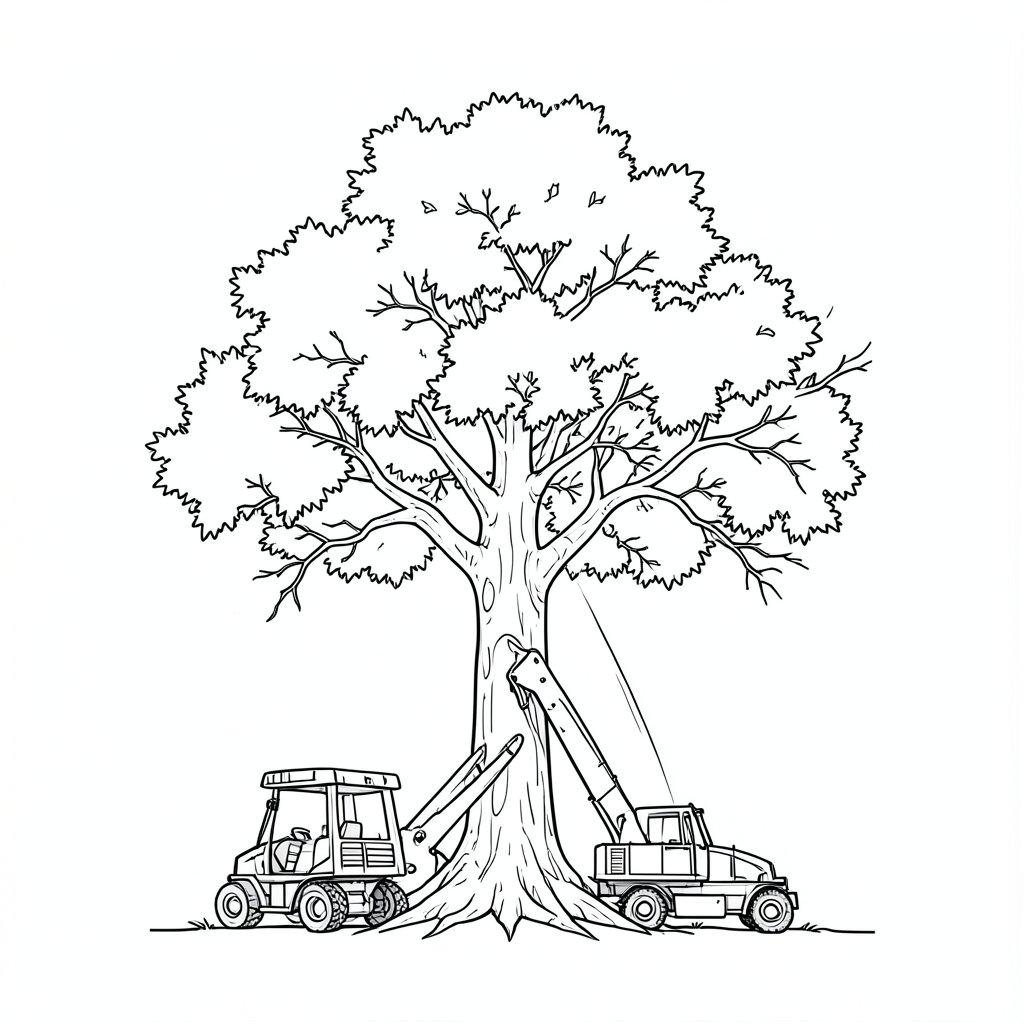
Wind changes tree work in ways that are easy to underestimate from the ground, since a gust that feels manageable at chest height can be moving branches and stems in the canopy far more than it appears, and a tree's response to wind is exactly what makes felling and aerial work unpredictable when conditions exceed safe limits.
Why wind matters more for tree work than most other outdoor tasks
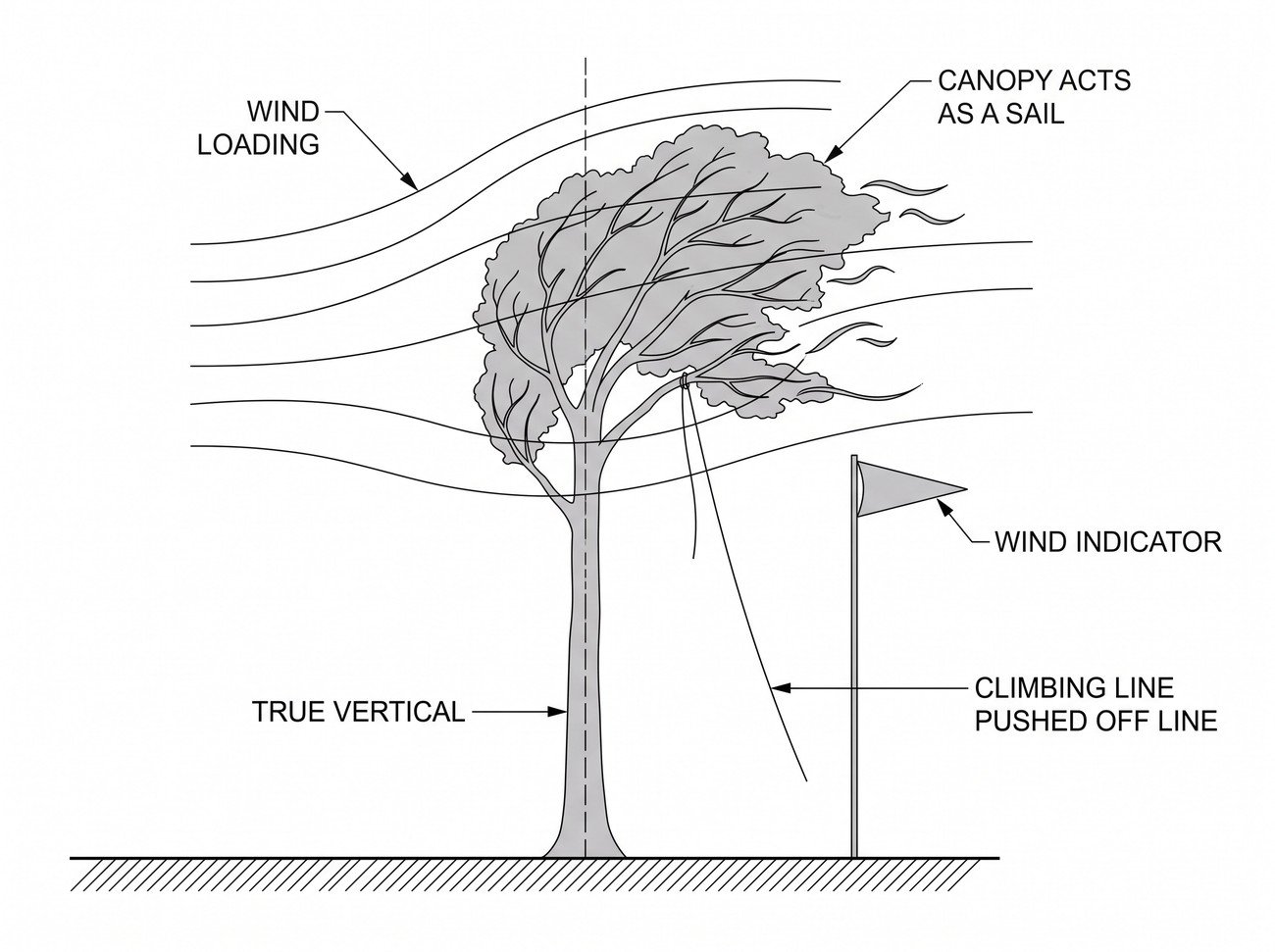
A standing tree, especially one with an already-compromised structure, dead wood in the canopy, or partial cuts already made, can move, shed material, or fail in ways a stationary structure would not under the same wind conditions that would be entirely manageable for other outdoor work. This is compounded during felling specifically, since wind can push a partially cut tree off its intended fall line, working against the directional control the hinge and escape route planning depend on.
Setting felling limits
Wind limits for felling should be set conservatively and specifically for the task — a tree with a large, dense canopy is affected differently than a bare stem, and a tree already identified as having hazard indicators during assessment warrants a lower wind threshold than a straightforward, healthy tree. Where wind is gusting rather than steady, the peak gust, not the average speed, should inform the decision, since a single strong gust at the wrong moment during a cut is what actually causes loss of control.
Deadwood and the specific hazard wind adds
Wind dramatically increases the chance of deadwood or hung material already in the canopy coming down without warning, a hazard sometimes called windthrow of loose material even when the tree itself remains standing. This is a hazard for ground crew and anyone working beneath the canopy as much as for the climber or feller, and wind conditions that would not stop cutting elsewhere in the operation may still warrant clearing ground crew from beneath a canopy known to contain deadwood.
Aerial work wind limits
Climbers working aloft experience amplified movement compared to ground level, since wind speed generally increases with height and the leverage of the climber’s own position in the canopy multiplies the tree’s movement they actually feel. Wind limits for aerial work should be set independently from ground-level felling limits, generally more conservative, since a climber’s ability to maintain secure positioning and control tools aloft degrades in wind well before ground-level tasks would be affected.
Who has the authority to stop for weather
The person actually assessing conditions on site — the feller, the climber, or the crew supervisor — needs the clear authority to stop work for wind without needing to justify the decision against a schedule, since the pressure to continue when conditions are marginal is exactly what a pre-agreed, conservative limit is meant to remove from the moment of decision.
For how hazard indicators identified in assessment should also lower the acceptable wind threshold, see assessing a tree before felling.
Related standards
The standards below set the test methods and performance levels behind the equipment referenced in this note.
- EN 397 — Industrial safety helmets
- EN 361 — Full body harnesses
- EN 381 — Chainsaw protective clothing
Common errors
1Judging wind conditions from ground level without accounting for amplified movement in the canopy.
2Using average wind speed rather than peak gust to set felling and cutting limits.
3Applying the same wind limit to a hazard tree with known deadwood as to a straightforward, healthy tree.
4Continuing aerial work at a wind speed that would only be a concern for ground-level tasks.
Frequently asked questions
Why does wind affect tree work more than most other outdoor tasks?
A standing tree, especially with compromised structure, dead wood in the canopy, or partial cuts already made, can move, shed material or fail in wind conditions that would be entirely manageable for other outdoor work.
Why should peak gust, not average wind speed, inform felling decisions?
A single strong gust at the wrong moment during a cut is what actually causes loss of directional control, so the peak, not the average, represents the real risk during the critical moment of the cut.
Why does wind increase risk for ground crew even if cutting itself continues elsewhere?
Wind dramatically increases the chance of deadwood or hung material already in the canopy coming down without warning, which is a hazard for anyone beneath the canopy regardless of whether cutting continues.
Why should aerial work have a more conservative wind limit than ground-level felling?
Wind speed generally increases with height, and a climber's position in the canopy amplifies the tree's movement they experience, degrading secure positioning and tool control before ground-level tasks would be affected.
Who should have the authority to stop tree work for weather?
The person actually assessing conditions on site – the feller, climber, or crew supervisor – needs clear authority to stop without needing to justify the decision against a schedule.
Need this as a document you can issue? The template library gives you the risk assessments, permits and inspection logs in editable form — and employer plans cover a whole team with completion records.