Safety / Tips and Tricks / Tree care and grounds
Activity 04 · Tree care
Assessing a Tree Before Felling: Lean, Hang-Ups and Hazard Trees
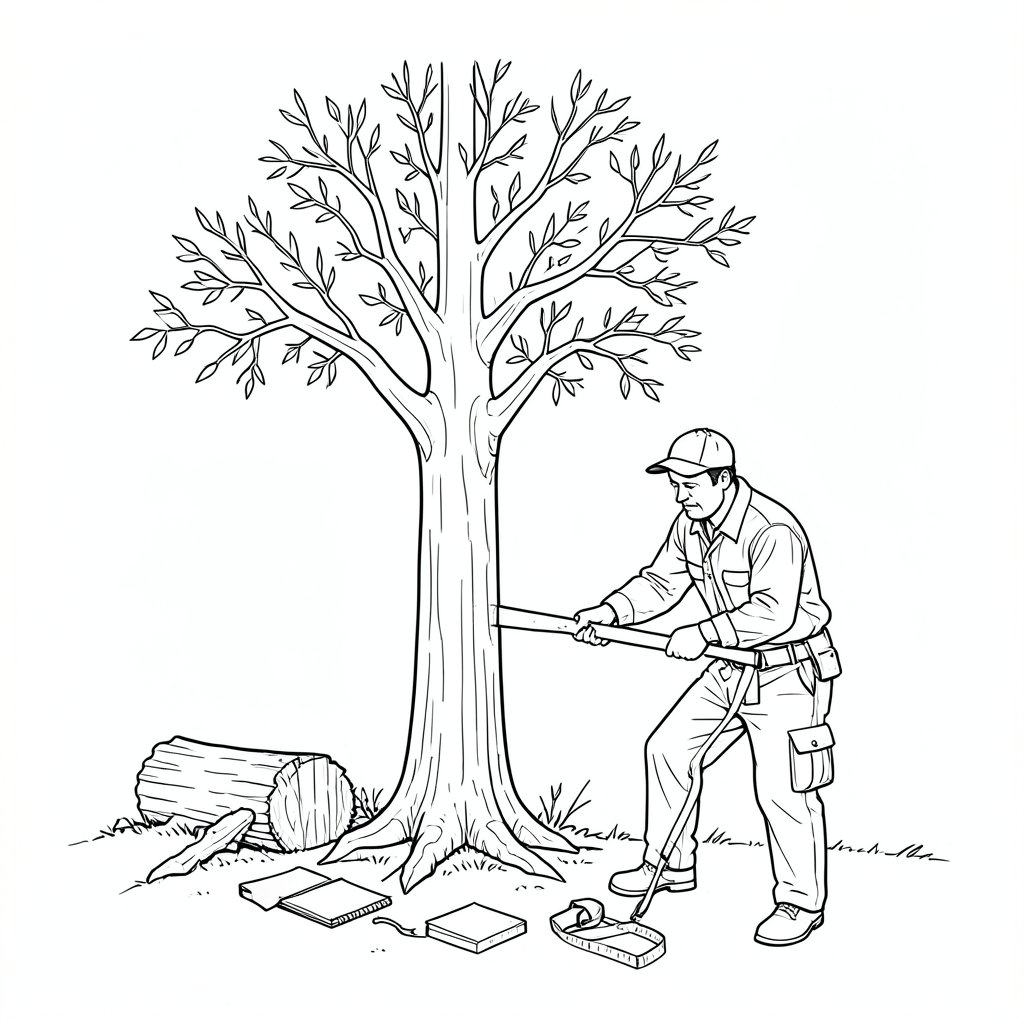
Every felling decision is made before the saw starts, not during the cut — a thorough tree assessment is what turns felling from a gamble into a controlled, predictable operation, and skipping or rushing it is where a disproportionate share of serious felling incidents begin.
Reading the tree’s actual lean
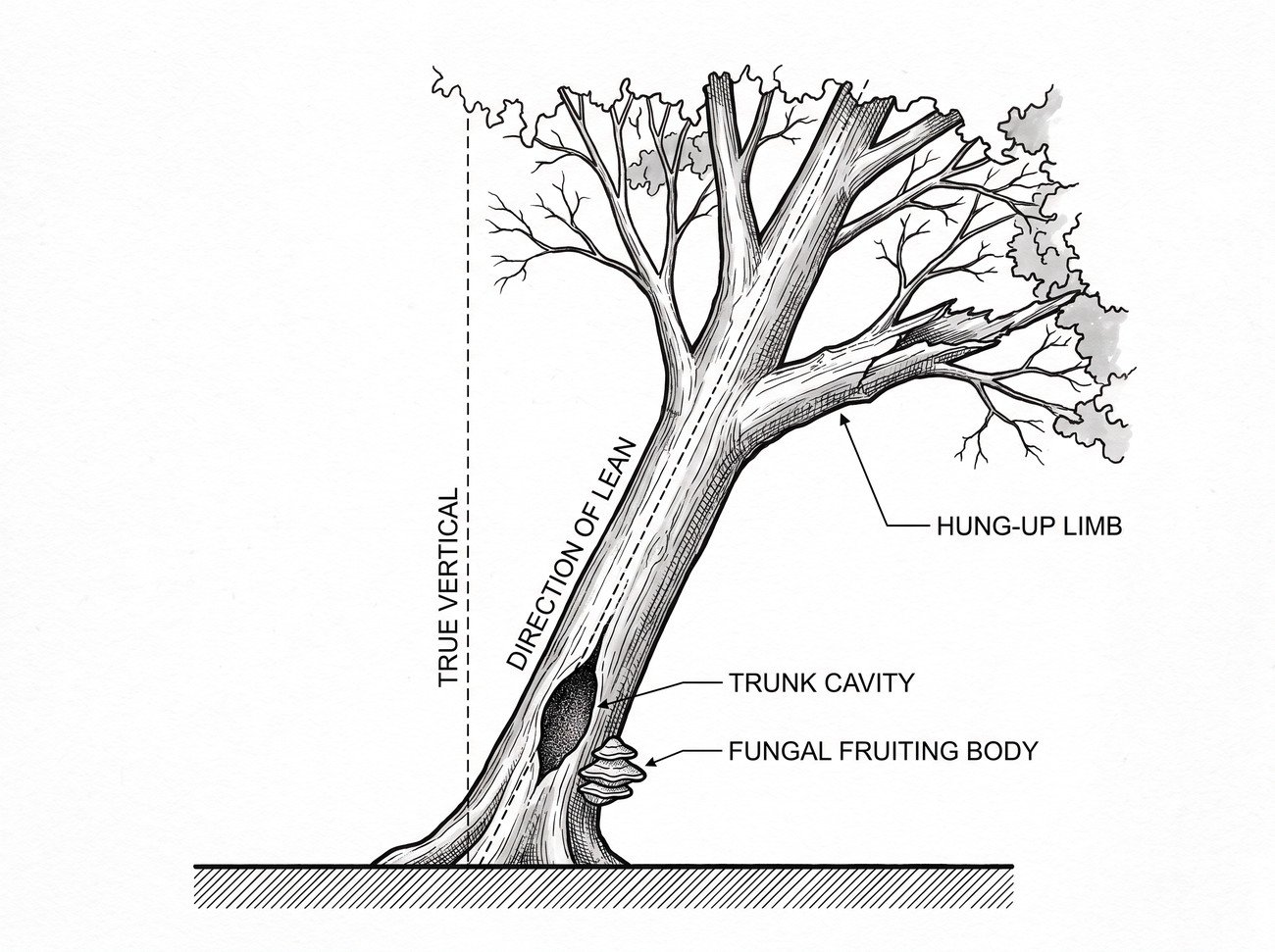
A tree’s visual lean is not always its true centre of gravity — asymmetric branch loading, a lean hidden by surrounding trees, or a trunk that curves partway up can all mean the tree’s actual fall tendency differs from what it looks like from the felling position. Assessing lean from more than one viewing angle, and accounting for crown weight distribution as well as trunk angle, gives a more reliable picture than a single glance.
Hazard indicators that change or cancel the plan
Dead or broken branches caught in the canopy, visible rot or cavities in the trunk, cracks, and root damage or lean into a slope all change the risk calculation and may mean the tree needs a different felling technique, specialist equipment, or should not be felled by the planned method at all. A hazard identified during assessment should change the plan, not be noted and proceeded past because the felling was already scheduled.
Surrounding conditions
The assessment extends beyond the tree itself to what surrounds it: other trees that could interfere with the intended fall path, structures, overhead lines, and the ground condition the feller and crew will be standing and moving on. A technically sound felling cut can still result in an incident if the escape route the assessment should have identified is obstructed or was never actually checked on the ground.
Species-specific behaviour
Different species fail differently under load — some tend to bar-hold and split predictably, others are more prone to sudden, less predictable failure, and species-specific knowledge should inform both the felling technique chosen and the level of caution applied. Assuming all trees behave the same regardless of species removes information that a competent assessment should actively use.
When to call in additional expertise
Where a tree’s condition, size, or surrounding hazards exceed what the assessing feller has the training or equipment to manage safely, escalating to a more experienced operator or bringing in specialist rigging or aerial removal equipment is the correct outcome of a thorough assessment, not a failure of it. Proceeding with a felling plan the assessor is not confident in because stopping feels like an admission of difficulty is exactly the pressure a genuine hazard assessment is meant to resist.
Once the assessment is complete, see felling cuts and escape route planning for the next step.
Related standards
The standards below set the test methods and performance levels behind the equipment referenced in this note.
Common errors
1Judging a tree's lean from a single viewing angle without accounting for crown weight distribution.
2Proceeding with a planned felling method after identifying a hazard indicator that should have changed the plan.
3Assessing the tree itself without checking the escape route and surrounding conditions on the ground.
4Continuing with a felling task that exceeds the assessor's training or available equipment rather than escalating it.
Frequently asked questions
Why can a tree's visual lean be misleading?
Asymmetric branch loading, a lean hidden by surrounding trees, or a trunk that curves partway up can all mean the tree's actual fall tendency differs from what it looks like from a single felling position.
What should happen when a hazard indicator like a cavity or hung branch is found during assessment?
It should change the felling plan – a different technique, specialist equipment, or deciding not to fell by the planned method – rather than being noted and proceeded past because the work was already scheduled.
Does tree assessment need to look beyond the tree itself?
Yes, it extends to surrounding trees that could interfere with the fall path, nearby structures and overhead lines, and the ground condition the crew will use for the escape route.
Why does species matter in a felling assessment?
Different species fail differently under load – some tend to bar-hold and split predictably, others fail more suddenly and less predictably – and this should inform the technique and caution applied.
Is deciding not to proceed with a felling plan a failure of the assessment?
No, escalating to a more experienced operator or specialist equipment when a tree's condition or hazards exceed what the assessor can safely manage is a correct outcome, not a failure, of a thorough assessment.
Need this as a document you can issue? The template library gives you the risk assessments, permits and inspection logs in editable form — and employer plans cover a whole team with completion records.