Safety / Tips and Tricks / Tree care and grounds
Activity 04 · Tree care
Felling Cuts: Planning the Escape Route Before the First Cut
The escape route is planned and cleared before the first cut is made, not identified in the moment the tree begins to fall — by the time a tree is committed to falling, there is no time left to work out where to go.
Why the route has to exist before cutting starts
Once a felling cut is made, the tree’s fall and the operator’s need to retreat happen on a timescale that leaves no room for deciding on a path, moving obstacles, or reconsidering the direction. The escape route needs to be chosen, physically cleared of tripping and obstruction hazards, and mentally rehearsed by the operator before the saw starts, so that retreating is an automatic action rather than a decision made under pressure.
Choosing the direction
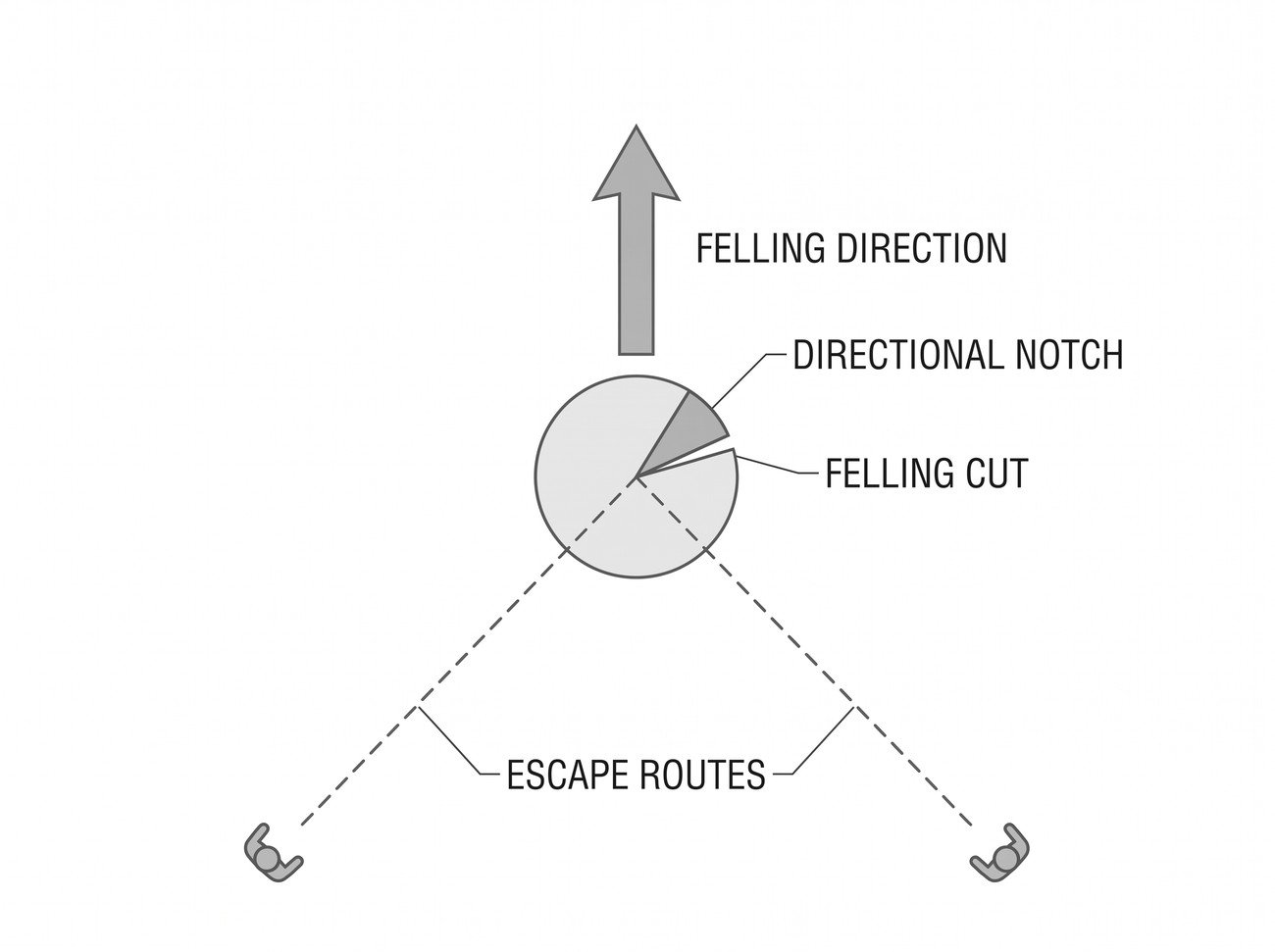
The standard escape route runs diagonally away from the anticipated felling direction, not directly behind the tree, since a direct backward retreat can still be within the path of the butt kicking back or the tree falling slightly off the intended line. Two escape routes, on either side of the anticipated fall line, give a fallback if one route becomes obstructed or if the tree’s actual fall deviates from the planned direction.
Clearing the route physically
Undergrowth, loose branches, tools left on the ground, and uneven footing along the escape route all slow down or trip a retreating operator at exactly the moment speed and surefootedness matter most. Walking the route before cutting, removing what can be removed, and noting what cannot, turns a theoretical path into one that actually works when needed.
The hinge and directional control
The felling cut itself, including the hinge left uncut to guide the tree’s fall direction, is what makes the escape route’s assumed direction reliable — a poorly executed hinge undermines directional control and can send the tree along a path the escape route was not planned around. Escape route planning and correct felling cut technique are not separate concerns; each depends on the other actually being done correctly.
Communicating the plan to the crew
Where ground crew or a second operator are present, the escape route and the retreat signal need to be communicated and understood before cutting begins, not assumed to be obvious. A crew member who does not know which way the operator is retreating cannot reliably stay clear of both the tree and the operator’s own path.
For the tree assessment that informs the felling direction, see assessing a tree before felling.
Related standards
The standards below set the test methods and performance levels behind the equipment referenced in this note.
- EN 381 — Chainsaw protective clothing
- EN 397 — Industrial safety helmets
- EN 352 — Hearing protectors
Common errors
1Planning to retreat directly behind the tree rather than diagonally away from the fall direction.
2Leaving the escape route uncleared of tripping hazards before starting the cut.
3Only planning a single escape route with no fallback if it becomes obstructed.
4Not communicating the escape route and retreat signal to ground crew before cutting begins.
Frequently asked questions
Why must the escape route be planned before the first cut, not during the fall?
Once a felling cut is made, the tree's fall and the operator's need to retreat happen on a timescale that leaves no room to decide on a path or move obstacles, so retreat needs to be an automatic, pre-rehearsed action.
Why isn't retreating directly behind the tree recommended?
A direct backward retreat can still be within the path of the butt kicking back or the tree falling slightly off the intended line, so routes run diagonally away from the anticipated felling direction instead.
Why plan two escape routes rather than one?
So there is a fallback if one route becomes obstructed or if the tree's actual fall deviates from the planned direction.
How does the felling hinge relate to escape route planning?
The hinge left uncut guides the tree's fall direction, and a poorly executed hinge can send the tree along a path the escape route was not planned around, so correct cut technique and route planning depend on each other.
Why does the escape route need to be communicated to ground crew?
A crew member who does not know which way the operator plans to retreat cannot reliably stay clear of both the falling tree and the operator's own escape path.
Need this as a document you can issue? The template library gives you the risk assessments, permits and inspection logs in editable form — and employer plans cover a whole team with completion records.