Safety / Tips and Tricks / Tree care and grounds
Activity 04 · Tree care
Chainsaw Kickback: What Causes It and How PPE and Technique Reduce It
Kickback happens fast enough that reacting to it in the moment is not a reliable control — the real protection against kickback comes from understanding what causes it and eliminating those conditions before the cut, backed up by PPE that limits the consequence if it happens anyway.
What actually causes kickback
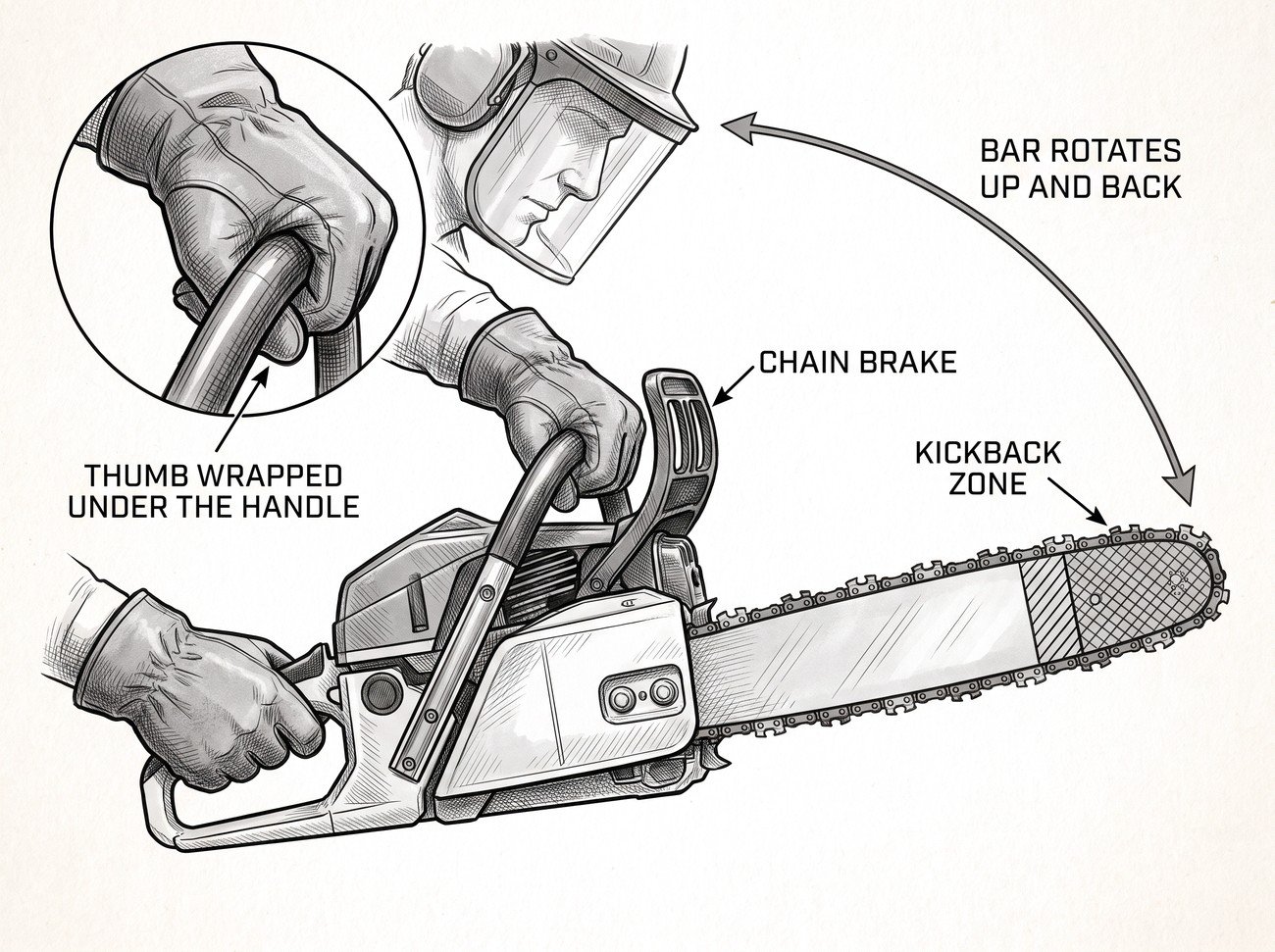
Kickback occurs when the upper portion of the bar tip — the kickback zone — contacts material while the chain is moving, driving the bar rapidly up and back toward the operator. This most commonly happens when the tip inadvertently touches a branch, the ground, or another piece of wood during a cut, or when the chain becomes pinched partway through a cut, but it can occur any time the bar tip’s upper area meets resistance while running.
Reducing the chance it happens
Awareness of exactly where the bar tip is at all times during a cut, avoiding operating with the tip in a position where it could contact unseen material, and maintaining a firm two-handed grip that gives maximum control if the bar does move unexpectedly, are the primary behavioural controls. A saw fitted with a low-kickback chain, which is designed to reduce the aggressiveness of a kickback event, and a properly functioning chain brake add mechanical controls on top of technique.
Why PPE matters even with good technique
Good technique reduces the likelihood of kickback but does not eliminate it entirely — unseen material, an unexpected pinch, or simple momentary lapse in bar-tip awareness can still produce a kickback event even from an experienced operator. This is why protective clothing meeting EN 381 and a properly fitted helmet system remain necessary even for operators confident in their technique; PPE is the backup for the moment technique alone was not enough.
Body positioning
Standing with feet apart and body positioned slightly to the side of the cutting line, rather than directly in the bar’s potential kickback path, reduces the chance that a kickback event actually reaches the operator’s body even when it does occur. This positioning should be habitual for every cut, not reserved for cuts judged to carry an obvious kickback risk, since the moments that carry unrecognised risk are exactly the ones this positioning protects against.
Chain condition and its effect on kickback
A poorly maintained or incorrectly sharpened chain can behave less predictably during a cut, and depth gauge settings that are too aggressive for the chain type can increase kickback tendency. Following the manufacturer’s specified chain type, sharpening angles and depth gauge settings, rather than modifying them for perceived faster cutting, keeps the saw’s kickback behaviour within its designed and tested parameters.
For the protective clothing that backs up kickback technique, see chainsaw protective clothing.
Related standards
The standards below set the test methods and performance levels behind the equipment referenced in this note.
Common errors
1Losing awareness of the bar tip's position during a cut, particularly in confined or overhead work.
2Standing directly in the bar's potential kickback path rather than positioned to the side.
3Modifying chain depth gauge settings beyond the manufacturer's specification for faster cutting.
4Treating protective clothing as unnecessary because the operator is experienced and confident in their technique.
Frequently asked questions
What actually causes chainsaw kickback?
The upper portion of the bar tip contacting material while the chain is moving, most commonly when the tip inadvertently touches a branch, the ground, or another piece of wood, or when the chain becomes pinched partway through a cut.
What is the primary behavioural control against kickback?
Constant awareness of exactly where the bar tip is during a cut, avoiding positions where the tip could contact unseen material, combined with a firm two-handed grip for maximum control.
Does good technique eliminate the need for protective clothing?
No, unseen material or a momentary lapse in bar-tip awareness can still produce kickback even from an experienced operator, so EN 381 clothing and a helmet system remain necessary as a backup.
How does body positioning reduce kickback risk?
Standing with feet apart and the body slightly to the side of the cutting line, rather than directly in the bar's potential kickback path, reduces the chance that a kickback event actually reaches the operator.
How does chain condition affect kickback tendency?
A poorly maintained or incorrectly sharpened chain, or depth gauge settings that are too aggressive, can increase kickback tendency, so following the manufacturer's specified settings keeps behaviour within tested parameters.
Need this as a document you can issue? The template library gives you the risk assessments, permits and inspection logs in editable form — and employer plans cover a whole team with completion records.