Safety / Tips and Tricks / Tree care and grounds
Activity 04 · Tree care
Choosing a Helmet System for Chainsaw and Grounds Work
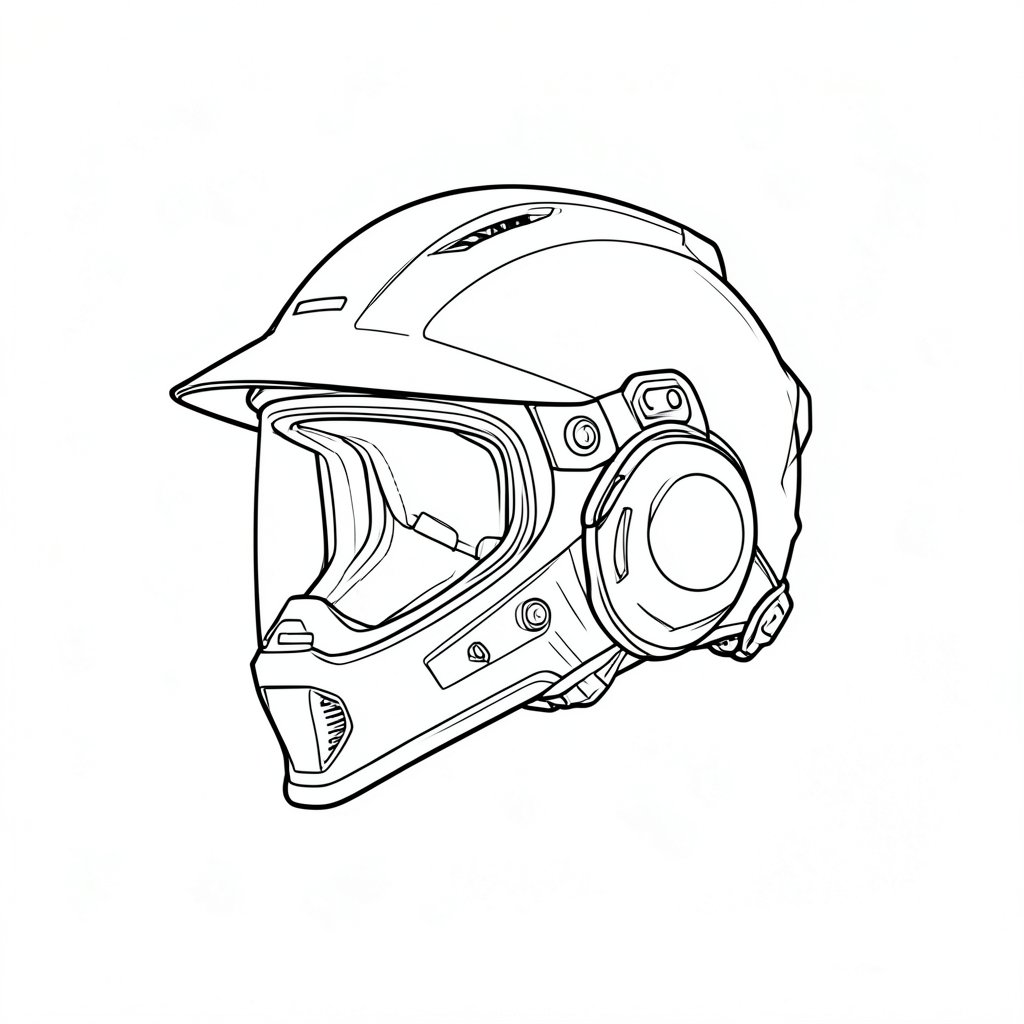
Chainsaw and grounds work rarely calls for a helmet on its own — the combination of overhead falling-object risk, chain noise, and flying debris means head protection for this work is usually a complete system, not a single item.
The base helmet
A helmet meeting EN 397 provides the impact protection baseline for falling branches and other overhead hazards typical of tree and grounds work. Where the task involves working beneath larger overhead loads or aerial rigging operations, a helmet meeting the higher-performance requirements of EN 14052 offers protection against greater impact energies than the standard EN 397 baseline, and should be considered where the specific risk assessment identifies that higher exposure.
Integrated hearing protection
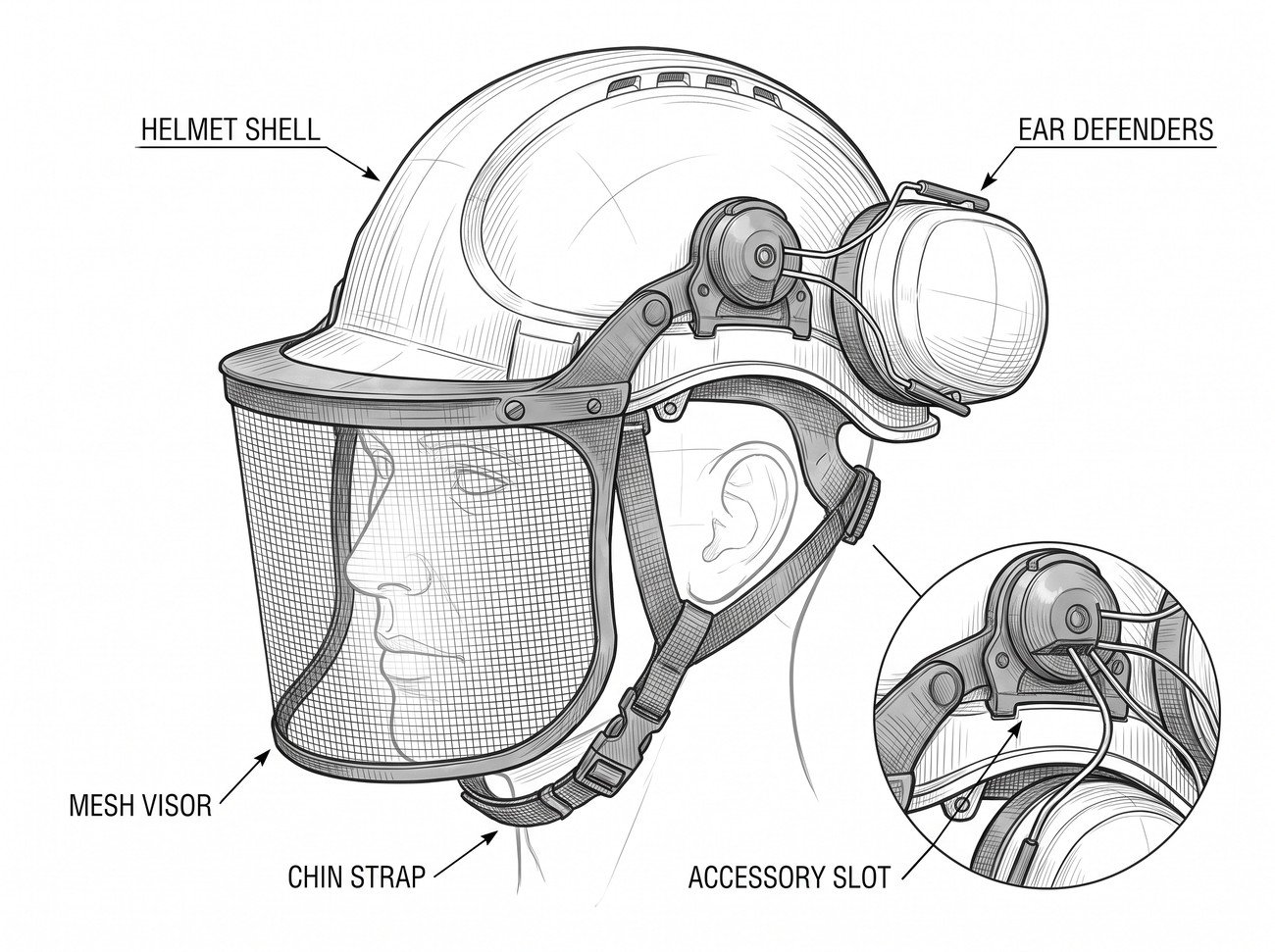
Most chainsaw helmet systems integrate ear defenders directly onto the helmet shell, keeping hearing protection meeting EN 352 consistently in place during the task rather than relying on the operator to separately don and correctly position standalone earmuffs each time. This integration also reduces the chance of hearing protection being skipped for a quick cut, which is a common and consequential shortcut given how quickly chainsaw noise can exceed safe exposure limits.
Face and eye protection
A mesh visor or solid face shield integrated with the helmet protects against flying wood chips and debris, and should be used alongside, not instead of, separate eye protection meeting EN 166 where the visor design leaves any gap around the eyes — mesh visors in particular can let fine debris through at certain angles that dedicated eye protection would stop. Checking the specific visor’s actual coverage against the task’s debris risk, rather than assuming any face shield is fully protective, is worth the extra minute.
Compatibility across the whole system
The helmet, ear defenders and visor need to be confirmed compatible as a set — mixing components from different manufacturers can leave gaps in fit or coverage that none of the individual pieces would have on their own. Where a system is sold and certified as a complete unit, substituting an individual component for a different brand’s part should only be done where the manufacturer has confirmed that specific combination is still validly rated.
Fit and adjustment
A helmet that sits loosely or an ear defender that does not seal properly against the head undermines the whole system regardless of the individual components’ ratings. Checking fit at the start of each work period, and re-adjusting after removing the helmet for any reason, keeps the system performing as tested rather than as it happens to sit after being handled.
For the leg, boot and glove protection this system is worn alongside, see chainsaw protective clothing.
Related standards
The standards below set the test methods and performance levels behind the equipment referenced in this note.
- EN 397 — Industrial safety helmets
- EN 14052 — High-performance industrial helmets
- EN 352 — Hearing protectors
- EN 166 — Eye protection
Common errors
1Selecting a standard EN 397 helmet for tasks that a risk assessment identifies as needing the higher impact protection of EN 14052.
2Removing integrated ear defenders for a quick cut rather than keeping the full system in place.
3Assuming a mesh visor alone provides equivalent protection to dedicated eye protection in every debris scenario.
4Mixing components from different manufacturers without confirming the specific combination is still validly rated.
Frequently asked questions
What does a standard EN 397 helmet provide for chainsaw and grounds work?
The impact protection baseline for falling branches and other overhead hazards typical of tree and grounds work.
When might EN 14052 be more appropriate than EN 397?
Where the task involves working beneath larger overhead loads or aerial rigging operations, since EN 14052 offers protection against greater impact energies than the standard EN 397 baseline.
Why are ear defenders usually integrated directly onto chainsaw helmets?
It keeps hearing protection meeting EN 352 consistently in place during the task and reduces the chance of it being skipped for a quick cut, a common shortcut given how fast chainsaw noise can exceed safe limits.
Does a mesh visor provide the same protection as dedicated eye protection?
Not always – mesh visors can let fine debris through at certain angles, so dedicated eye protection meeting EN 166 may still be needed alongside the visor depending on the task's debris risk.
Why does component compatibility matter across a chainsaw helmet system?
Mixing components from different manufacturers can leave gaps in fit or coverage that none of the individual pieces would have alone, so substitutions should only be made where the manufacturer confirms that combination is still validly rated.
Need this as a document you can issue? The template library gives you the risk assessments, permits and inspection logs in editable form — and employer plans cover a whole team with completion records.