Safety / Tips and Tricks / Roofing and work at height
Activity 02 · Roofing
Calculating Fall Clearance for Roof-Mounted Anchors
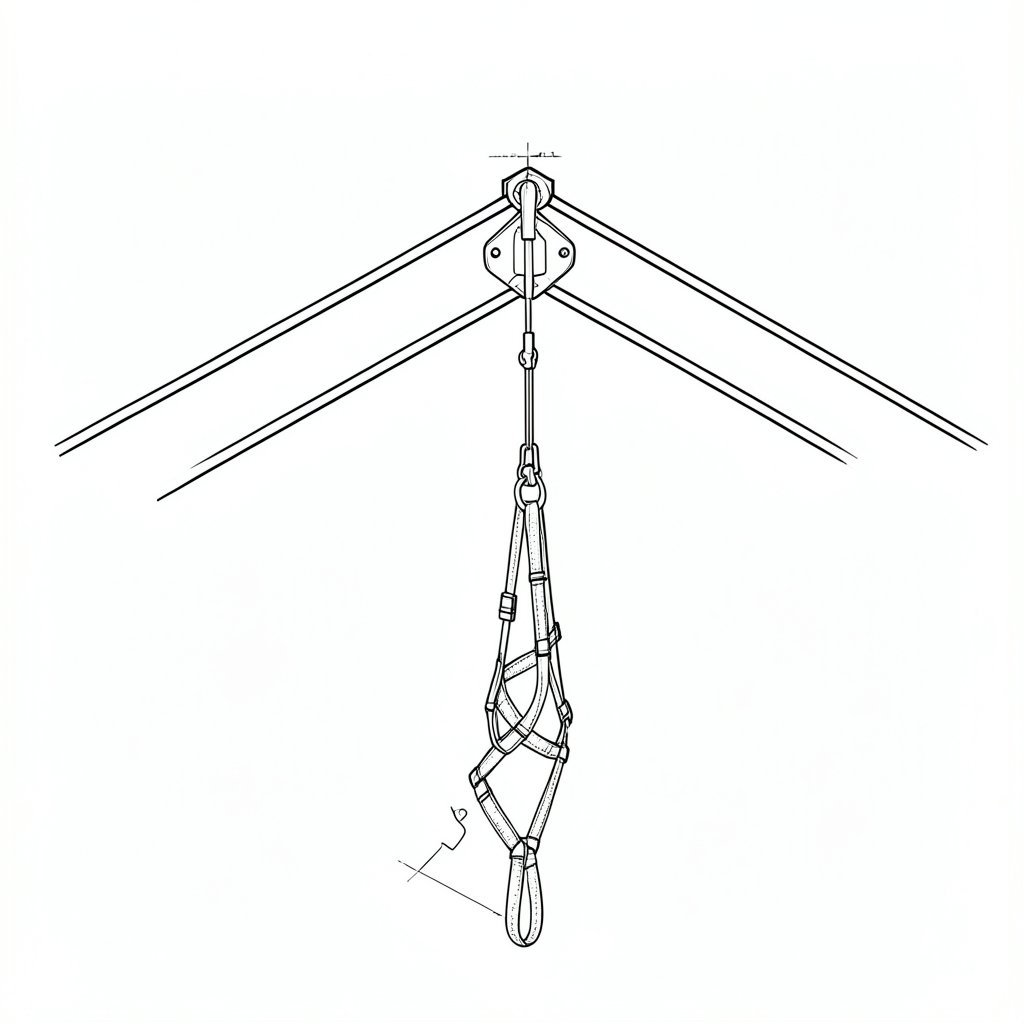
An anchor rated to EN 795 and positioned in the right place still leaves one question unanswered: is there enough clear space below it for a fall-arrest system to actually work before the falling worker hits something? Fall clearance is a calculation, not an assumption, and getting it wrong produces exactly the outcome the system was meant to prevent.
What fall clearance actually measures
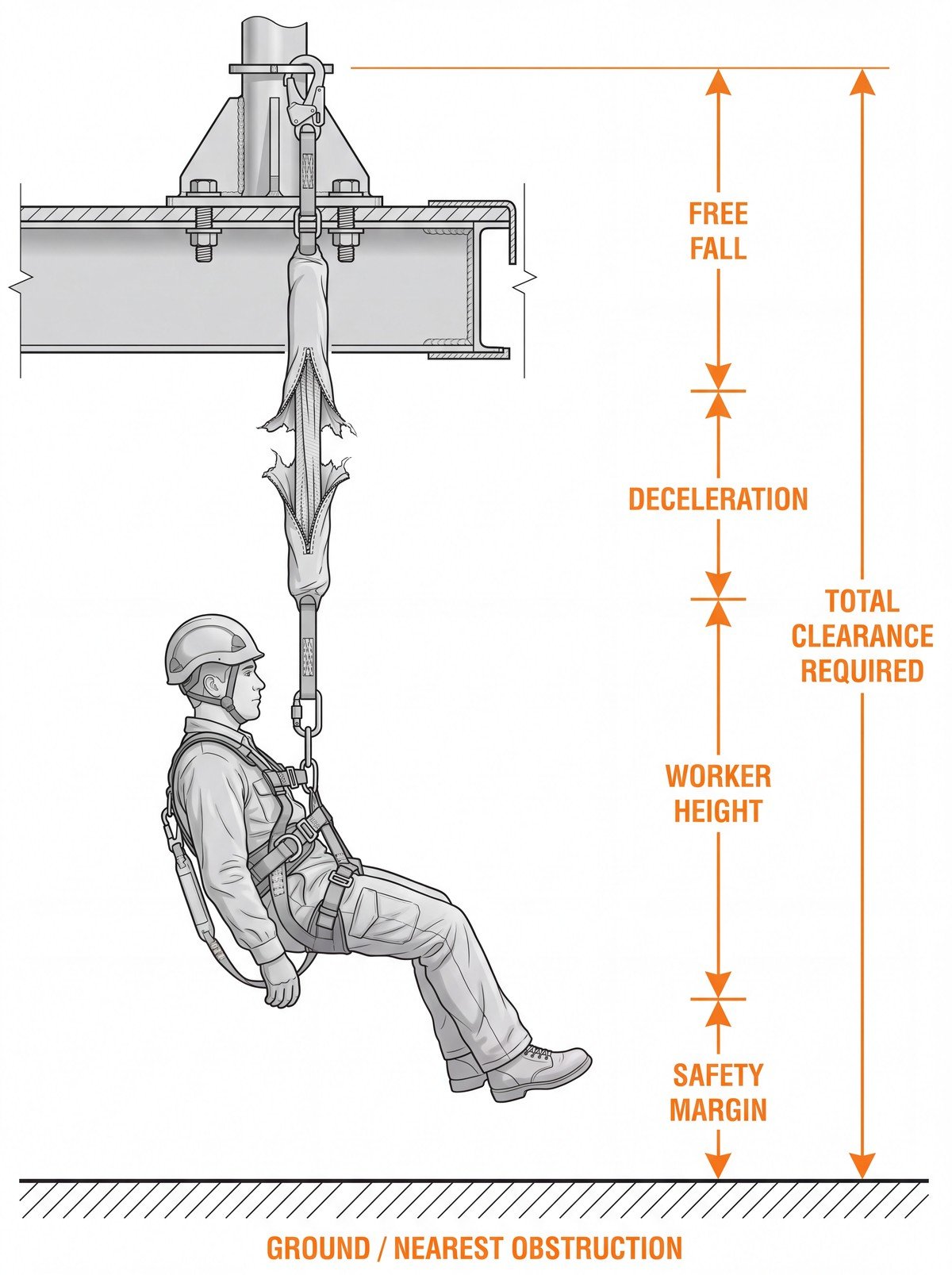
Fall clearance is the total vertical distance needed below the anchor point for a fall-arrest system to deploy fully and bring the worker to a safe, stationary stop above the nearest obstruction — the ground, a lower roof section, ductwork, or any other surface the worker could strike. It is not simply the height from the anchor to the ground; it is a sum of several distinct components that each need their own figure, not an estimate.
The components that make up the total
Free fall distance is how far the worker drops before the energy absorber begins to deploy, and depends on whether the system uses a fixed lanyard and absorber or a self-retracting device to EN 360, which typically limits free fall much further, determined by lanyard length and how far below the anchor the worker was positioned when the fall started. Deceleration distance is how far the energy absorber extends while bringing the fall to a stop, a figure the manufacturer specifies for that specific absorber model. A safety margin is added on top, and the worker’s own height needs adding since clearance is measured to the worker’s feet, not to the harness attachment point. On a roof specifically, the anchor height above the working surface itself is also part of the calculation, since a roof-mounted anchor is rarely at the same level as the worker’s feet.
Why roof-specific geometry changes the numbers
An anchor positioned at the roof ridge for a worker near the eave changes the free-fall distance compared with an anchor directly overhead, because the lanyard is no longer hanging vertically at the moment of the fall — this is the same lateral-offset effect that applies to any oblique anchor position. Roofs with lower sections, extensions or adjacent structures below the main working level need the clearance measured to the nearest surface the worker could actually reach, which is sometimes much closer than the ground.
When the numbers do not work
Where the available clearance is less than the calculated requirement, the system needs to change, not the acceptance of the shortfall. Options include a shorter lanyard, a different absorber with a shorter deployment length, repositioning the anchor to reduce free fall distance, or moving from fall arrest to fall restraint if the geometry allows it — restraint has no deployment distance to account for because no fall occurs. Reducing the safety margin to make the numbers work on paper is not a legitimate option; the margin exists specifically to cover real-world variation from the calculated figures.
For the anchor positioning decisions that feed into this calculation, see selecting a roof anchor system, and for when restraint removes the need for this calculation entirely, see fall restraint vs fall arrest for roof work.
Common errors
1Calculating clearance to the ground when a lower roof section or structure sits closer and is the real obstruction.
2Using a generic clearance figure rather than the specific absorber model's deployment distance.
3Ignoring the lateral offset effect of an anchor that is not directly overhead the working position.
4Treating the safety margin as negotiable when the numbers are tight.
Frequently asked questions
What is fall clearance actually calculating?
The total vertical distance needed below an anchor for a fall-arrest system to fully deploy and bring the worker to a safe, stationary stop above the nearest obstruction, not simply the height from the anchor to the ground.
What components make up a fall clearance calculation?
Free fall distance, the energy absorber's deceleration distance, the worker's own height, and an added safety margin – each is a specific figure, not an estimate, and the anchor's height above the working surface on a roof adds another factor.
Why does an anchor position that is not directly overhead change the calculation?
It introduces a lateral offset effect, similar to any oblique anchor, which changes the free-fall distance and geometry of the fall compared with an anchor positioned directly above the working point.
What should happen if the available clearance is less than the calculated requirement?
The system itself needs to change – a shorter lanyard, a different absorber, repositioning the anchor, or switching to restraint where the geometry allows – rather than accepting the shortfall or reducing the safety margin.
Why might the nearest obstruction not be the ground?
Roofs with lower sections, extensions or adjacent structures can present a closer surface the worker could reach during a fall, so clearance needs measuring to the actual nearest obstruction, not assumed to be ground level.
Need this as a document you can issue? The template library gives you the risk assessments, permits and inspection logs in editable form — and employer plans cover a whole team with completion records.