Safety / Tips and Tricks / Roofing and work at height
Activity 02 · Roofing
Footwear for Roof Work: Slip Resistance and EN ISO 20345
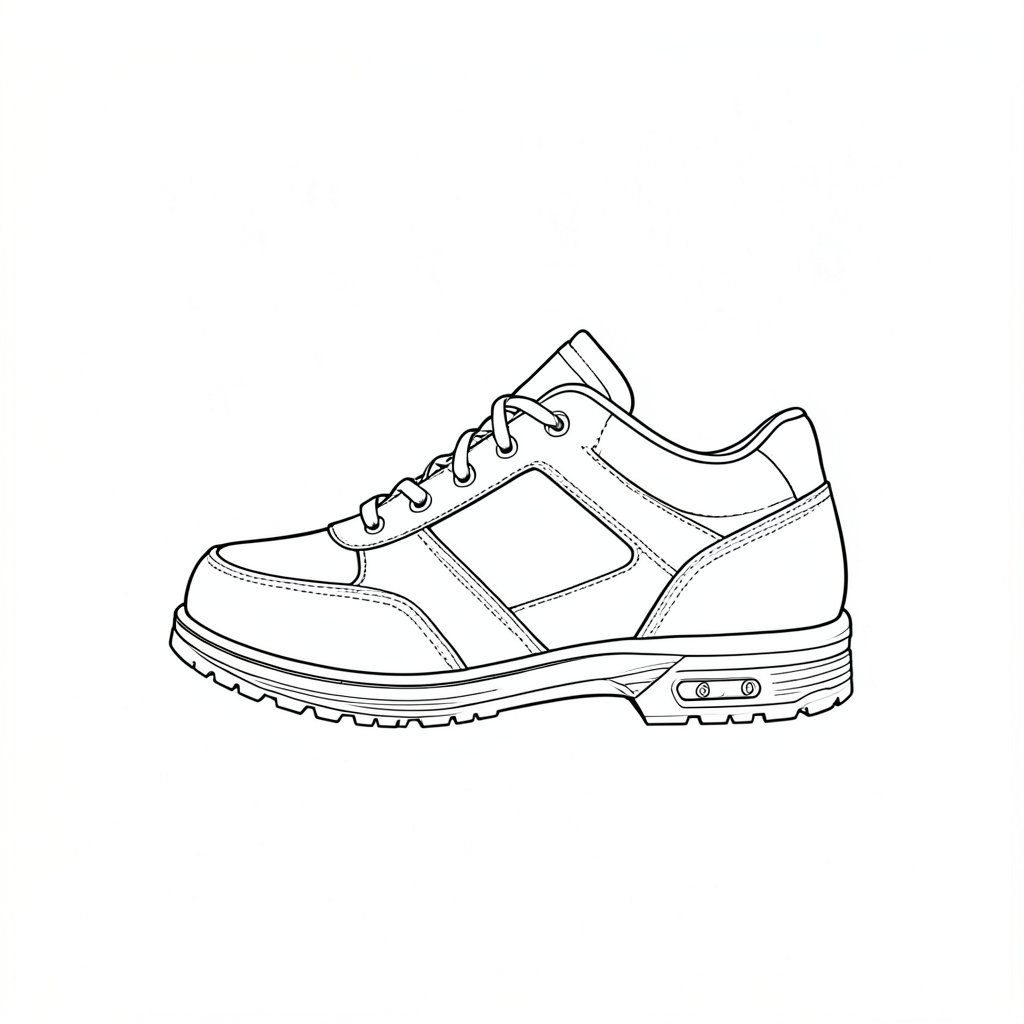
Footwear is easy to treat as a formality on a roof-work PPE list, yet it is the single point of contact between the worker and every surface condition the roof presents — wet membrane, loose gravel, sloped metal, frost. The wrong footwear undermines every other control in the fall-protection plan.
What EN ISO 20345 covers
EN ISO 20345 is the European standard for safety footwear, specifying requirements for the protective toecap and a range of additional performance markings covering slip resistance, penetration resistance, energy absorption at the heel and other properties. For roof work specifically, the slip-resistance markings and the sole’s actual grip characteristics on the materials the roof presents matter more than most of the other ratings, since footing is the primary hazard being managed.
Slip resistance markings
Slip-resistance performance is tested and marked separately from the general safety footwear certification, typically covering grip on ceramic tile with a soap solution and on steel with glycerol, representing wet and oily surface conditions respectively. A boot’s marked slip performance is a laboratory result on those specific test surfaces, and while it is a genuinely useful indicator, it does not guarantee equivalent grip on every roofing material — a wet standing-seam metal roof, a mossy tile surface or a membrane with a specific texture can all behave differently from the standard test conditions.
Tread condition and wear
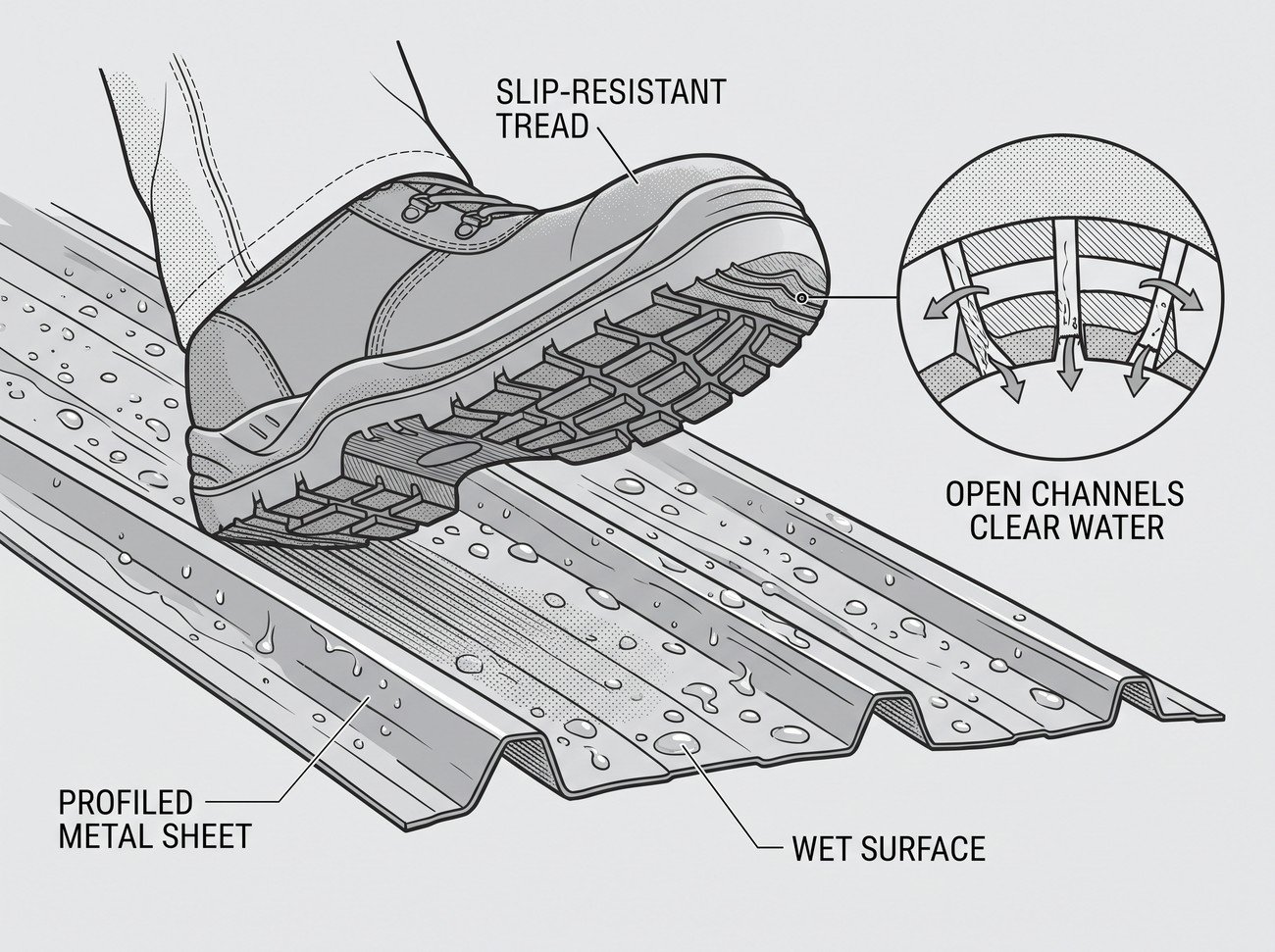
A slip-resistant sole loses its rated performance as the tread wears down, and this happens gradually enough that it is easy to miss without a deliberate inspection. Footwear used regularly on abrasive roof surfaces — gravel ballast, rough tile, concrete — wears faster than footwear used on smoother surfaces, so the inspection interval should reflect actual use, not a generic replacement schedule set without reference to how the boots are actually being used.
Matching footwear to the specific roof
A boot chosen for general site use is not automatically the right choice for a specific roof material. Metal roofing, particularly when wet, calls for soles specifically rated and tread-designed for smooth, non-porous surfaces. Gravel ballast roofs favour a more rugged sole that will not be quickly damaged by the aggregate. Steep-pitch tile work benefits from a softer, more flexible sole that conforms to the tile profile rather than a stiff sole designed primarily for impact protection on flat ground. Where a full safety toecap is not required for the task, EN ISO 20346 and EN ISO 20347 cover protective and occupational footwear rated to lower impact energies, provided the reduced toe protection is appropriate for the actual hazard.
For how pitch changes footing demands more broadly, see roof pitch and choosing the right fall protection system.
Common errors
1Selecting footwear based on general site suitability without considering the specific roof material and its wet-condition grip.
2Continuing to use boots with visibly worn tread because the certification marking has not technically expired.
3Assuming a laboratory slip-resistance rating guarantees equivalent grip on an untested roofing material.
4Choosing a stiff, impact-focused sole for steep tile work where a more flexible, conforming sole would grip better.
Frequently asked questions
What does EN ISO 20345 cover for roof work specifically?
It certifies general safety footwear requirements including the protective toecap, but for roof work the slip-resistance markings and the sole's actual grip on the roof's materials matter most, since footing is the primary hazard.
What do slip-resistance markings on safety footwear actually test?
Typically grip on ceramic tile with a soap solution and on steel with glycerol, representing wet and oily surface conditions – a useful indicator, but not a guarantee of equivalent grip on every specific roofing material.
Why does tread wear matter even if the boot's certification has not expired?
A slip-resistant sole loses its rated performance as the tread wears down, which happens gradually and can go unnoticed without a deliberate inspection, especially on abrasive surfaces like gravel or rough tile.
Why might a boot suitable for general site work be wrong for a specific roof?
Different roof materials favour different sole characteristics – smooth wet metal needs soles designed for non-porous surfaces, gravel ballast favours ruggedness, and steep tile benefits from a flexible, conforming sole.
How should footwear inspection intervals be set for roof work?
Based on actual use and the abrasiveness of the surfaces the footwear is used on, rather than a generic replacement schedule that does not account for how quickly a specific roof material wears the tread.
Need this as a document you can issue? The template library gives you the risk assessments, permits and inspection logs in editable form — and employer plans cover a whole team with completion records.