
Latest posts
-
Helmet Standards: EN 397 and EN 12492
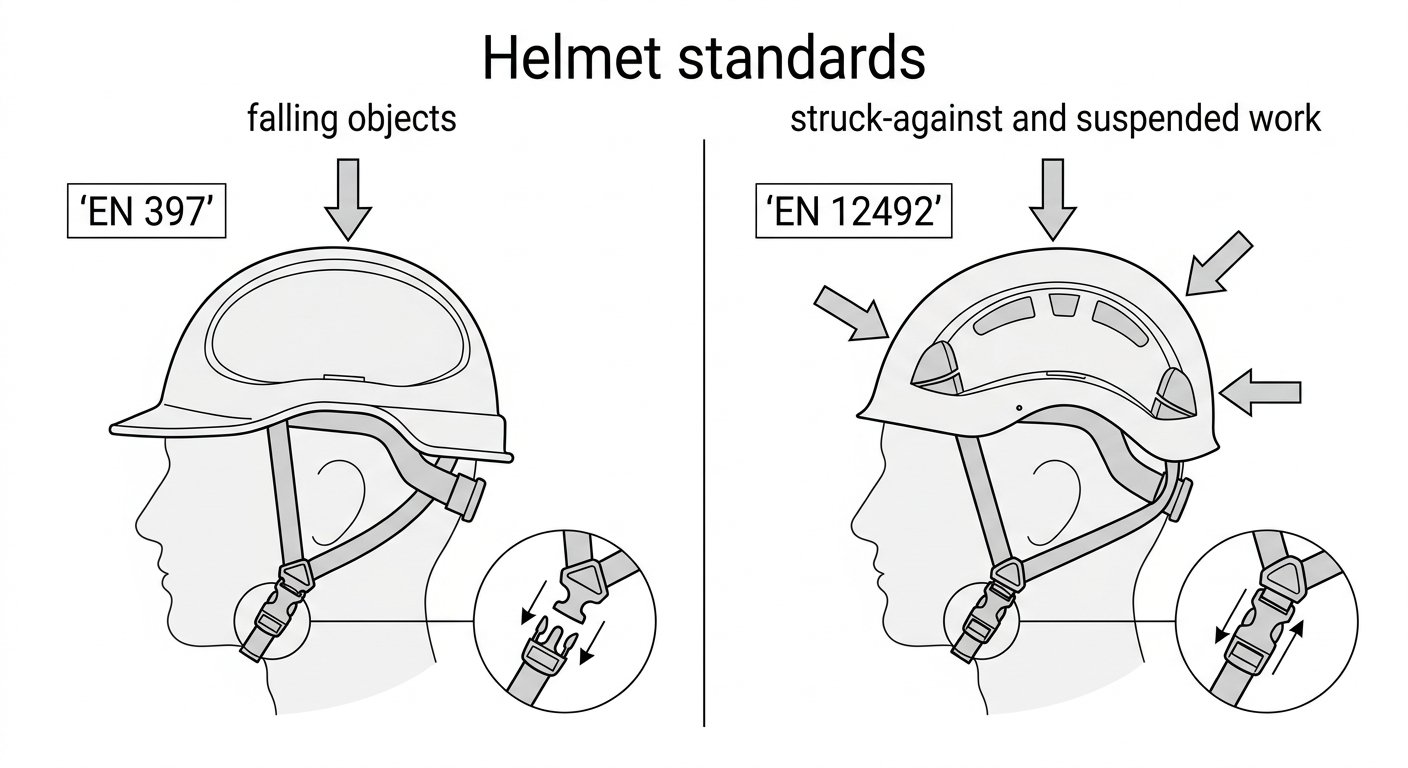
Two helmet standards dominate rope access and confined space work in Europe, and they were written for different accidents. EN 397 is an industrial safety helmet standard built around objects falling onto the head of someone standing below. EN 12492 is a mountaineering helmet standard built around a person who is moving, suspended, or falling…
-
Choosing an Absorber for the Clearance Available
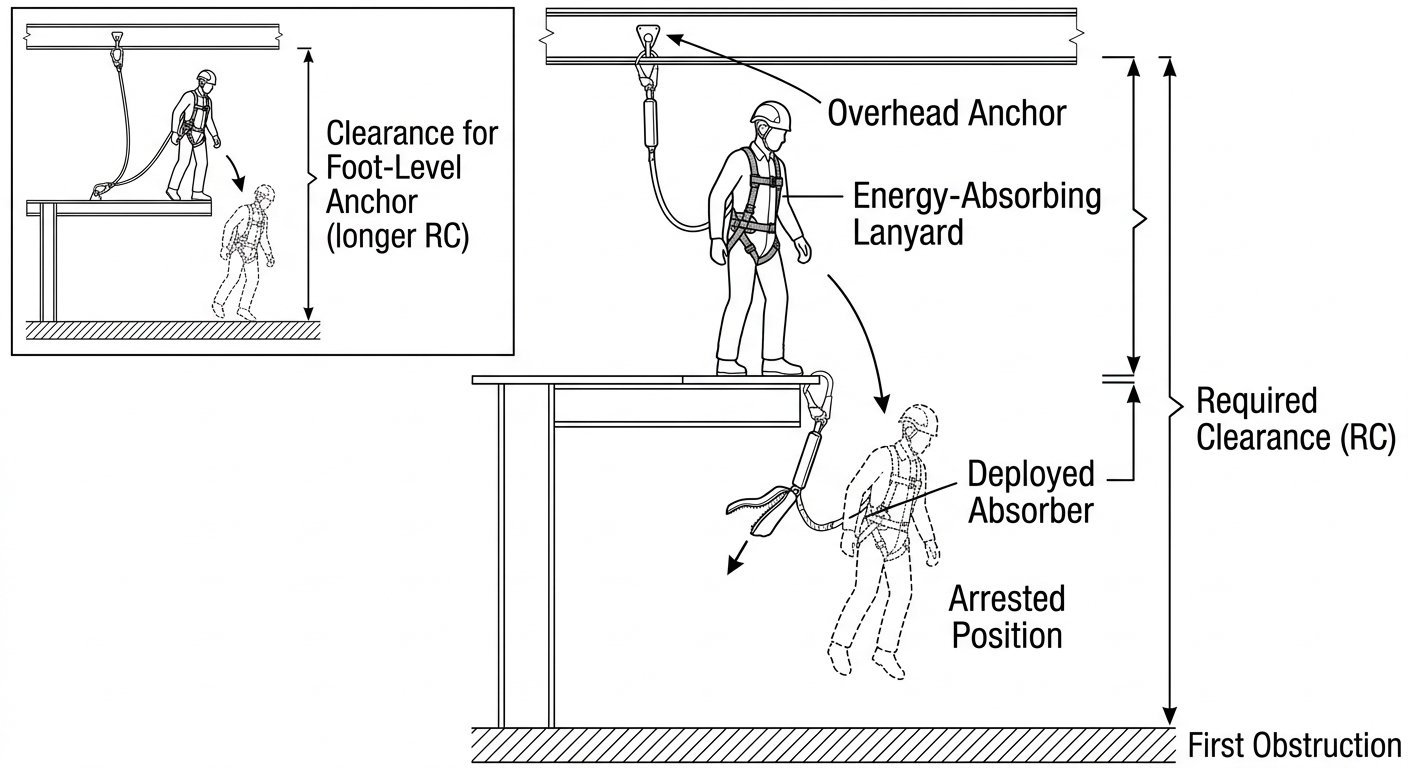
An energy absorber is only as good as the empty space underneath it. The absorber limits the force on the body during a fall arrest, but it does that by lengthening the fall — and if the structure, the plant floor or a pipe rack sits inside that lengthened distance, the worker stops against the…
-
Selecting a Rescue Kit for the Task
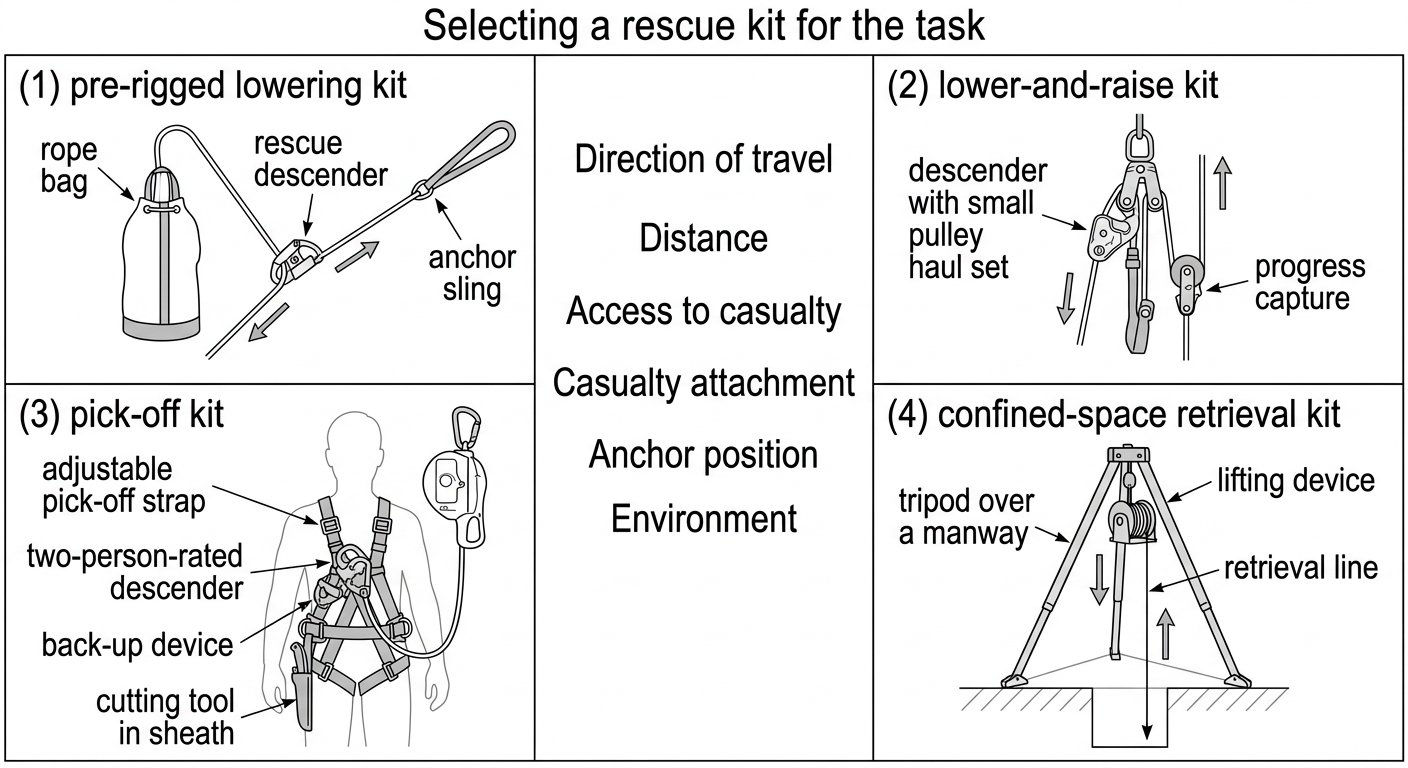
A rescue kit is only useful if it matches the rescue you have actually planned for. The most common failure is not equipment failure – it is a kit that can lower but not raise, a rope that is shorter than the drop, or a retrieval winch bolted to a tripod over a shaft that…
-
Choosing a Low-Stretch Rope Diameter: Matching Rope to Devices, Loads and Wear
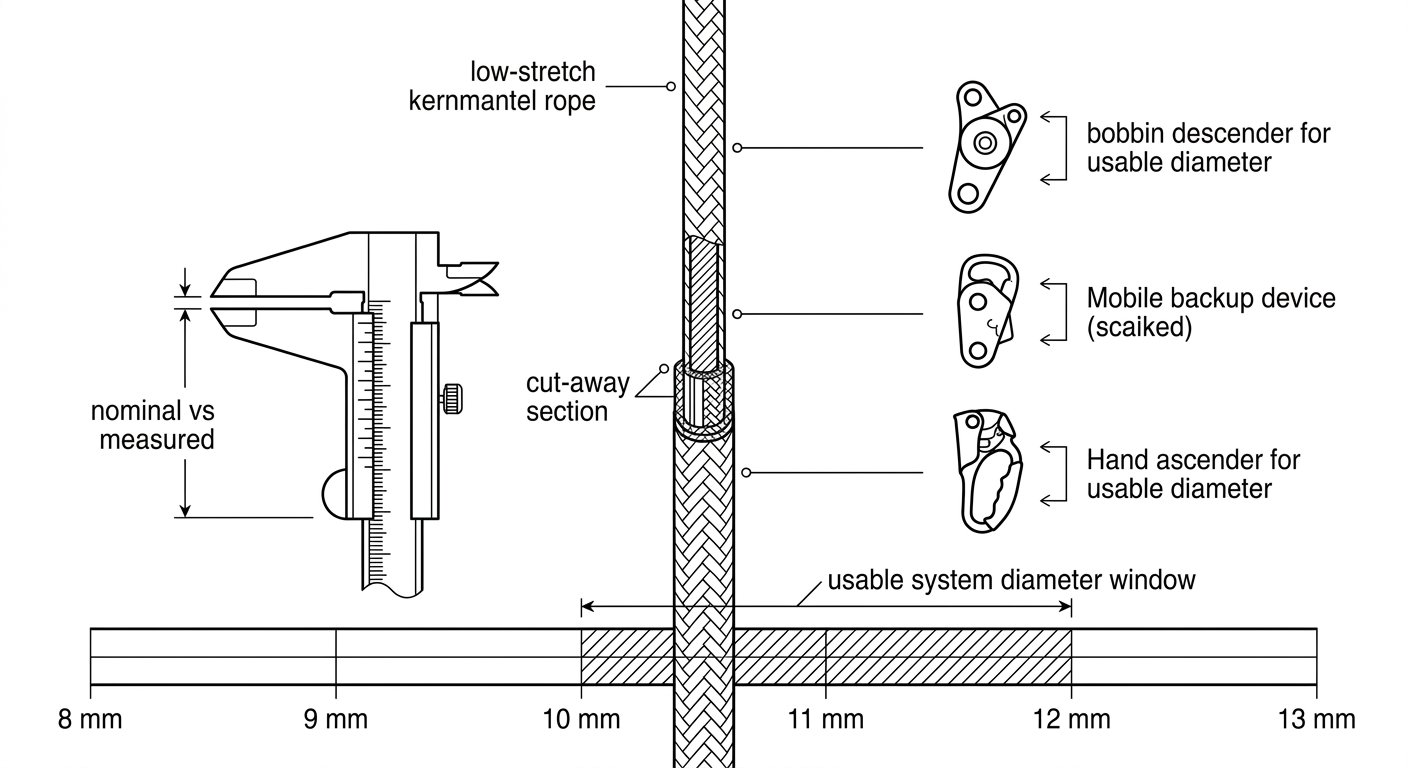
Rope diameter is a system compatibility decision before it is a strength decision. A low-stretch kernmantel rope that is half a millimetre outside the marked range of the descender or the backup device on the harness is the wrong rope for that system, regardless of how strong it is. Diameter also decides how the rope…
-
Which Attachment Points to Use for Restraint
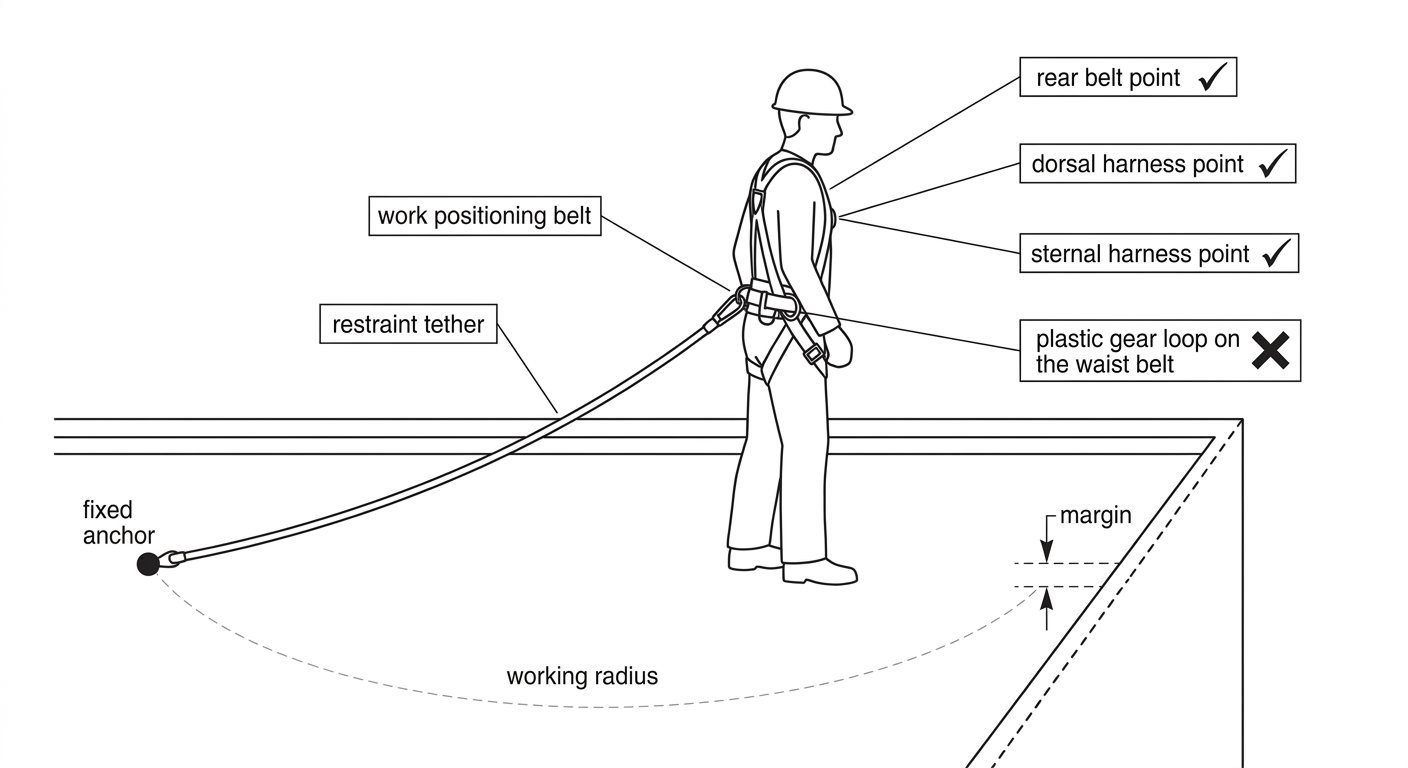
Restraint work looks simple on paper: connect to an anchor with a tether short enough that the worker cannot physically reach the fall hazard. Because a fall is designed out of the system rather than arrested, the attachment point on the body does not have to absorb a fall load — which is exactly why…
-
Which Harness for Which Use? A Selection Note for Fall Arrest, Positioning, Rope Access and Confined Space
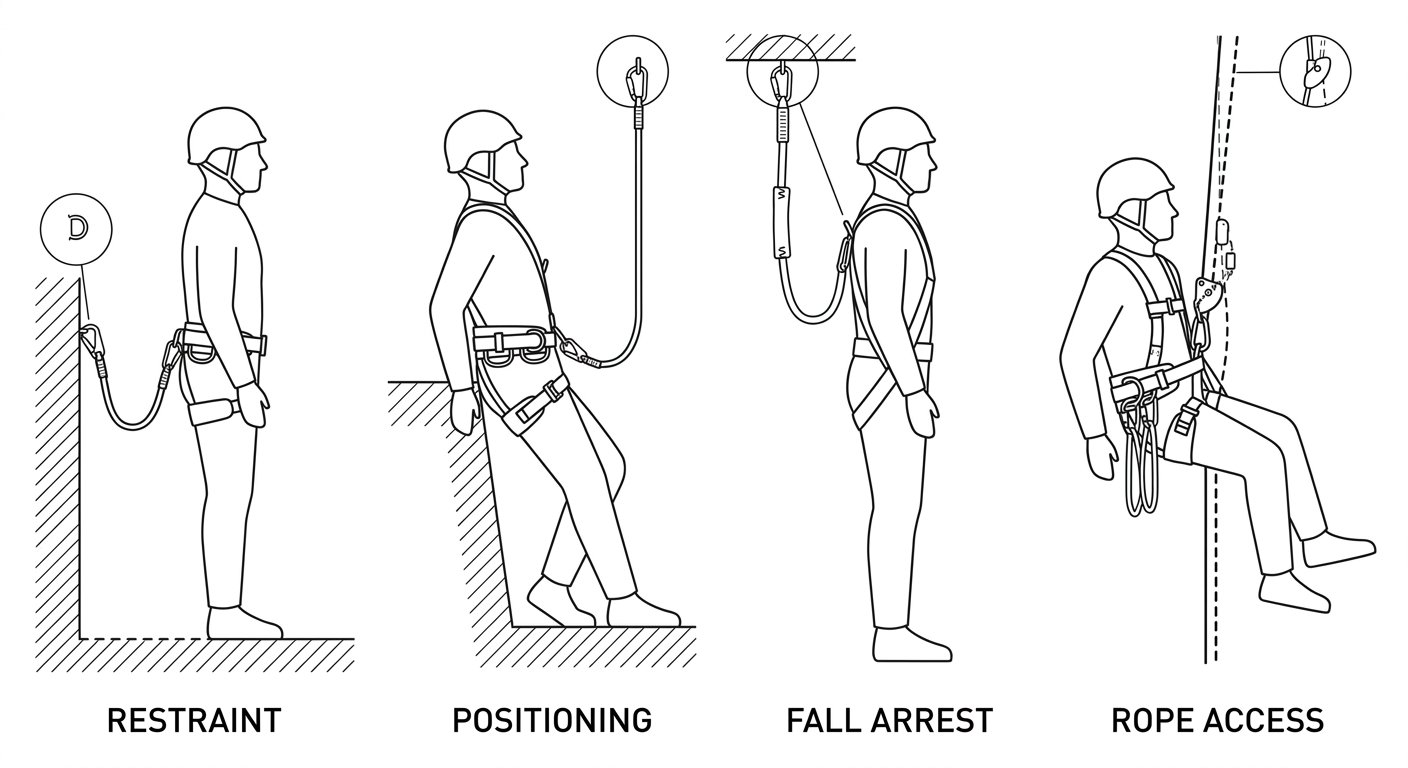
Picking a harness is not a comfort decision made in the stores cupboard — it decides what work the wearer can legally and safely do once they are on site. A harness that is correct for restraint at a roof edge may be useless for a tripod extraction from a manhole; a rope access sit…
-
Choosing Connectors for Anchor Rigging: Shape, Closure and Correct Loading
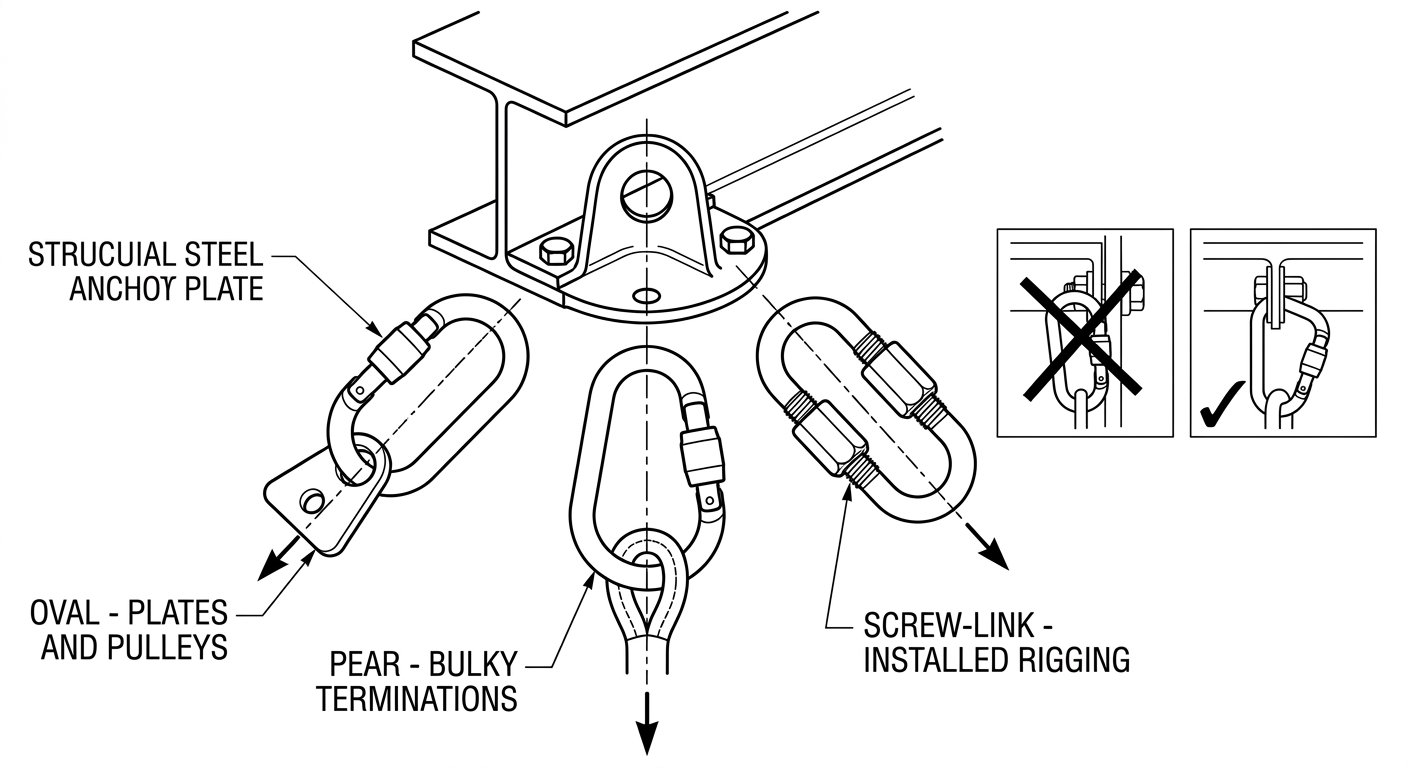
The connector at the anchor end of a system is the one most often chosen by whatever is left on the harness rack, and the one most exposed to being loaded in a way it was never designed for. Anchors are rarely as tidy as the pictures: a connector may end up on a wide…
-
Lanyard-End Connector for Fall Arrest: Gate Opening, Roll-Out and Correct Loading
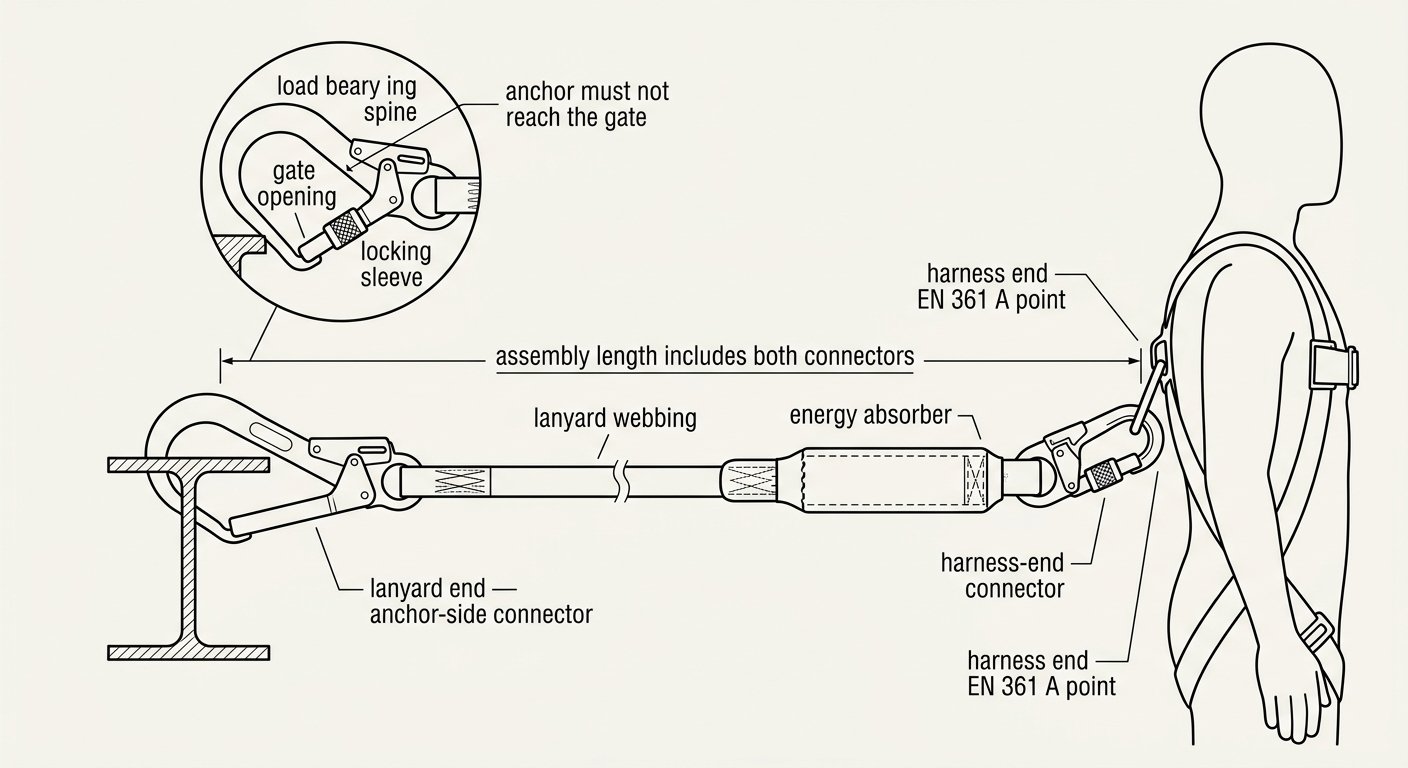
On a fall-arrest lanyard, the connector at the anchor end does more work than any other component in the assembly. It is the part that gets clipped and unclipped dozens of times a shift, the part that has to fit whatever structural member is actually available on site, and the part most likely to be…
-
Lanyard-End Connector for Work Positioning: Choosing and Loading the Anchor-Side Hook
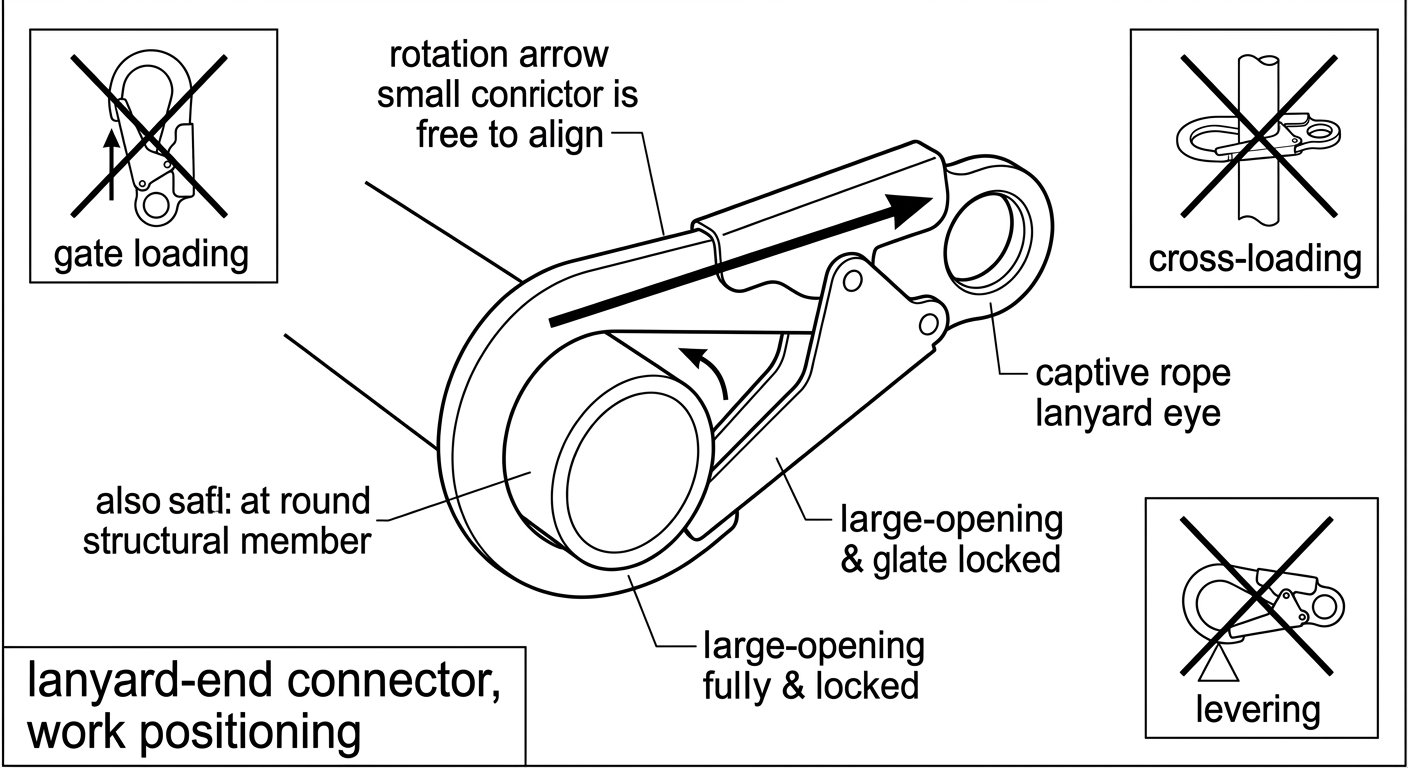
On an adjustable work positioning lanyard, the connector at the far end — the one that goes around the column, rung, pipe or scaffold tube — is the part of the system handled most and inspected least. It is opened and closed dozens of times a shift, frequently one-handed, frequently at arm’s length and out…
-
Connector Shapes and Where Each Belongs
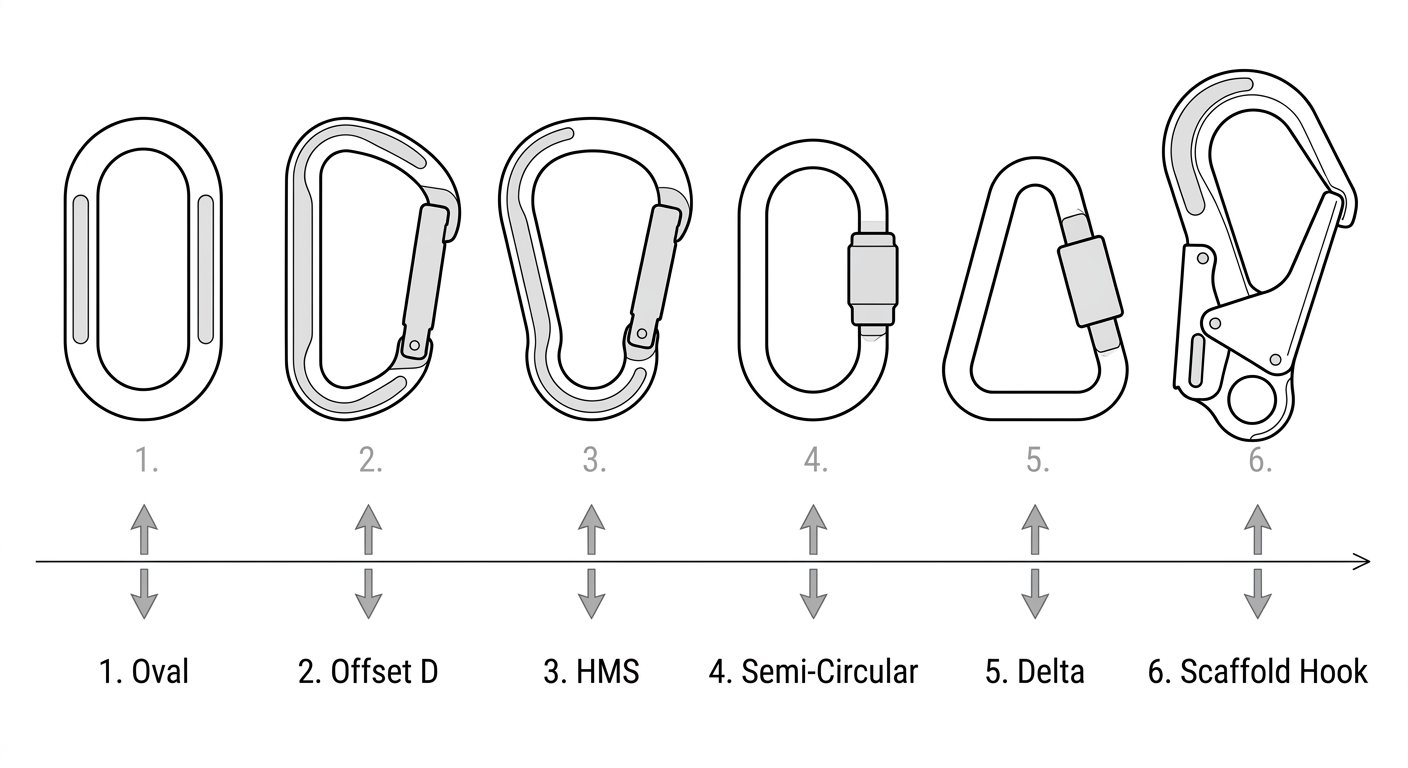
A connector’s shape is not cosmetic. It decides where the load sits inside the frame, whether an attached device stays aligned under load, how much room there is at the basket for a hitch or a second connection, and how easily the gate can be pressed against something it should never touch. Two connectors with…