Safety / Tips and Tricks / Energy and networks
Activity 03 · Energy
Selecting Footwear and Clothing for General Electrical Work
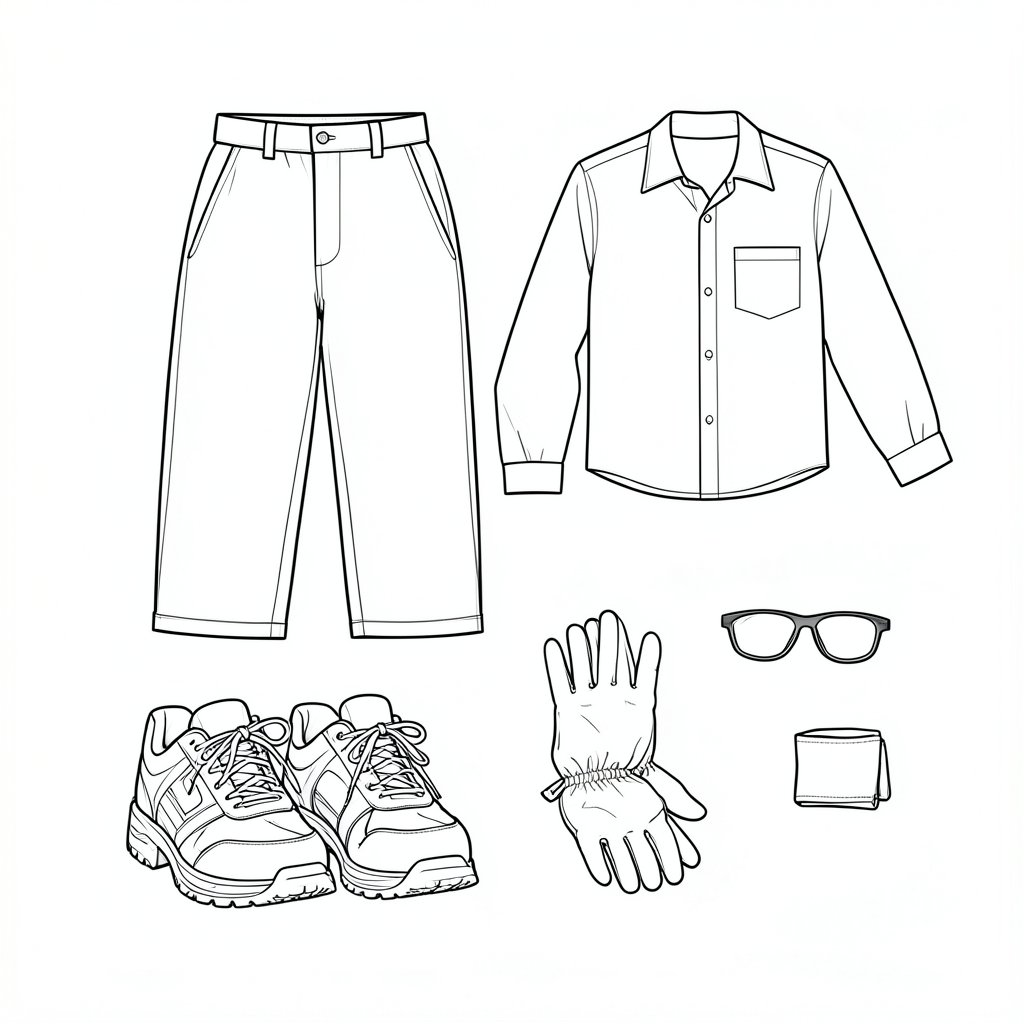
Beyond the task-specific arc-rated and insulating PPE used for high-risk operations, general electrical work still calls for footwear and clothing decisions that are easy to get wrong by defaulting to whatever general site PPE is already on hand.
Footwear: conductive risk versus static risk
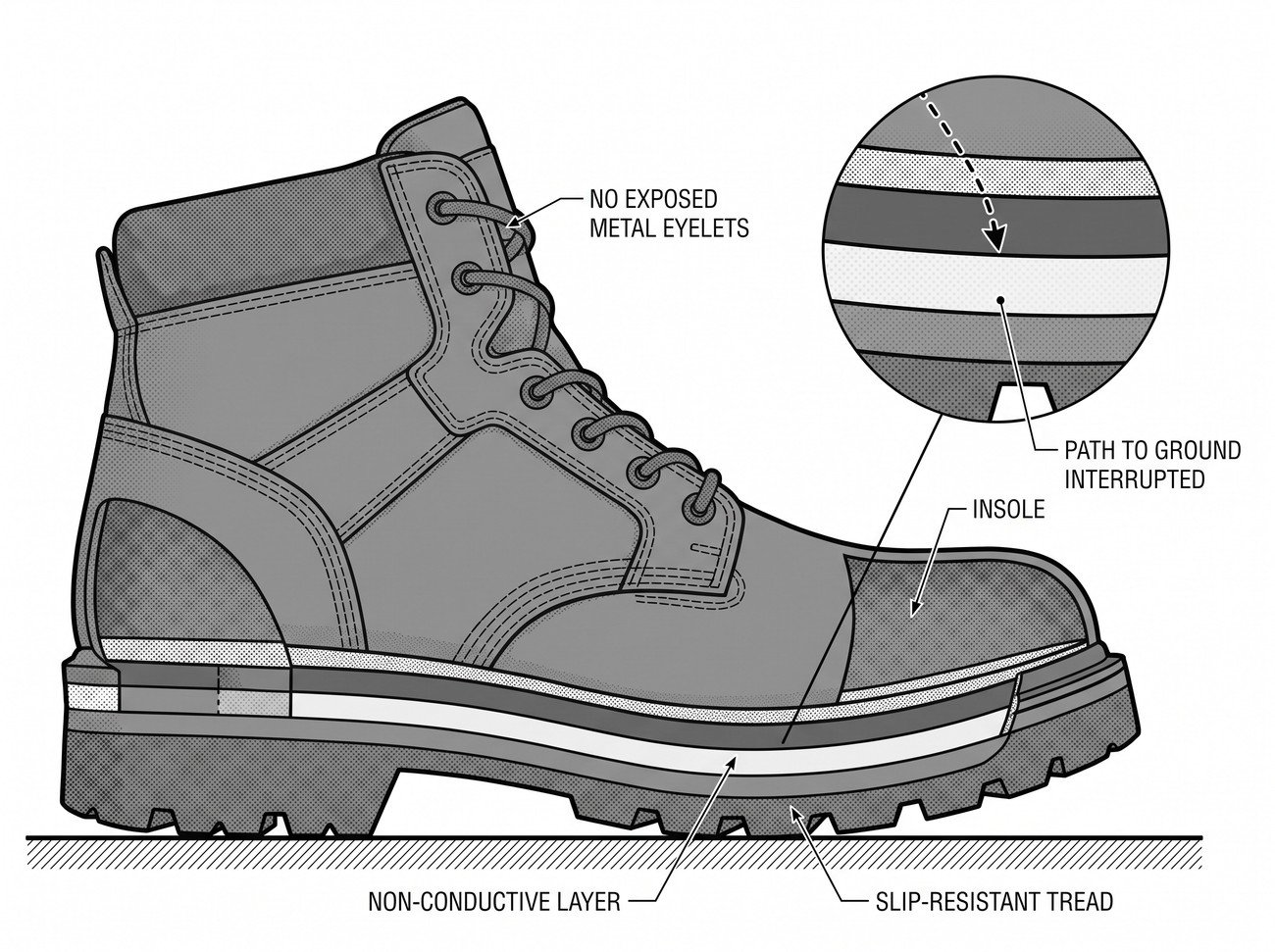
For work around exposed live conductors, footwear needs to avoid providing a conductive path to earth, which is a different requirement from the anti-static footwear used in environments where static discharge itself is the hazard, such as around flammable atmospheres or sensitive electronics. Using anti-static footwear — designed specifically to dissipate static charge to earth — on a task where the actual requirement is electrical insulation from earth is a genuine and understandable point of confusion, since the two purposes are functionally opposite.
General safety footwear as the baseline
Where the task does not specifically require electrically insulating footwear, general safety footwear meeting EN ISO 20345 still applies for the impact, penetration and slip-resistance hazards common to any industrial site, including electrical work areas with their own trip, drop and puncture risks separate from the electrical hazard itself.
Clothing: natural fibres and melting synthetics
Where arc flash is not the primary identified hazard but general electrical work is still taking place, clothing made from natural fibres or treated fabrics that will not melt onto the skin under heat is preferable to untreated synthetic fabrics, which can melt and adhere to skin during a thermal event, worsening a burn injury beyond what the initial exposure alone would cause. This general precaution sits alongside, not instead of, the specific arc-rated clothing required once a task’s incident energy assessment calls for it.
Jewellery, watches and other metal items
Rings, watches, metal-framed glasses and other conductive items worn on the body are a persistent, easily overlooked hazard around electrical work, since they can provide an unintended contact point or a path for current across the body. Removing these items before electrical work, not just for high-voltage tasks but as a general practice, closes a gap that PPE selection alone does not address.
Matching clothing and footwear to the actual task
As with every other PPE decision covered in this activity, the specific requirement should follow from the task’s actual hazards — arc flash, shock, static, or general industrial hazards — rather than a single default kit applied to every electrical task regardless of what it actually involves.
For the task-specific PPE this general baseline sits alongside, see arc flash risk assessment and insulating gloves for electrical work.
Common errors
1Using anti-static footwear on a task that actually requires electrical insulation from earth, or vice versa.
2Wearing untreated synthetic clothing on tasks with any thermal exposure risk.
3Leaving rings, watches or other conductive items on the body during electrical work.
4Defaulting to general site PPE without checking whether the specific task requires insulating or arc-rated equipment instead.
Frequently asked questions
What is the difference between electrically insulating footwear and anti-static footwear?
Insulating footwear avoids providing a conductive path to earth for work around exposed live conductors, while anti-static footwear is designed to dissipate static charge to earth – the two purposes are functionally opposite and should not be substituted.
Does general safety footwear still matter on electrical work sites?
Yes, where a task does not specifically require electrically insulating footwear, general safety footwear meeting EN ISO 20345 still applies for impact, penetration and slip-resistance hazards common to any industrial site.
Why avoid untreated synthetic clothing around electrical work?
It can melt and adhere to skin during a thermal event, worsening a burn injury beyond what the initial exposure alone would cause, unlike natural fibres or treated fabrics.
Why should jewellery and watches be removed before electrical work?
Rings, watches and metal-framed glasses can provide an unintended contact point or a path for current across the body, a hazard that PPE selection alone does not address.
Should the same PPE kit be used for every electrical task regardless of the specific hazard?
No, footwear and clothing requirements should follow from the task's actual hazards – arc flash, shock, static or general industrial risk – rather than a single default kit applied regardless of what the task actually involves.
Need this as a document you can issue? The template library gives you the risk assessments, permits and inspection logs in editable form — and employer plans cover a whole team with completion records.