Safety / Tips and Tricks / Chemical Handling
Activity 06 · Chemical Handling
Respiratory Protection for Chemical Vapours and Gases
A particulate filter that stops dust and fume does essentially nothing against a chemical vapour or gas, since the two hazards pass through respiratory protection by entirely different mechanisms, and confusing the two is one of the more consequential equipment selection errors in chemical handling.
Particulates versus vapours and gases
Particulate filters work by physically trapping solid or liquid particles as air passes through a filter medium, which does nothing to stop a substance that is already in gas or vapour form at the molecular level. Vapours and gases require a sorbent cartridge, typically activated carbon or a similar media chosen for the specific chemical class involved, that captures the gas molecules chemically or by adsorption rather than by physical filtration. Using a particulate-rated mask for a vapour or gas hazard provides essentially no protection against that specific hazard regardless of how well-fitted the mask otherwise is.
Mask platforms
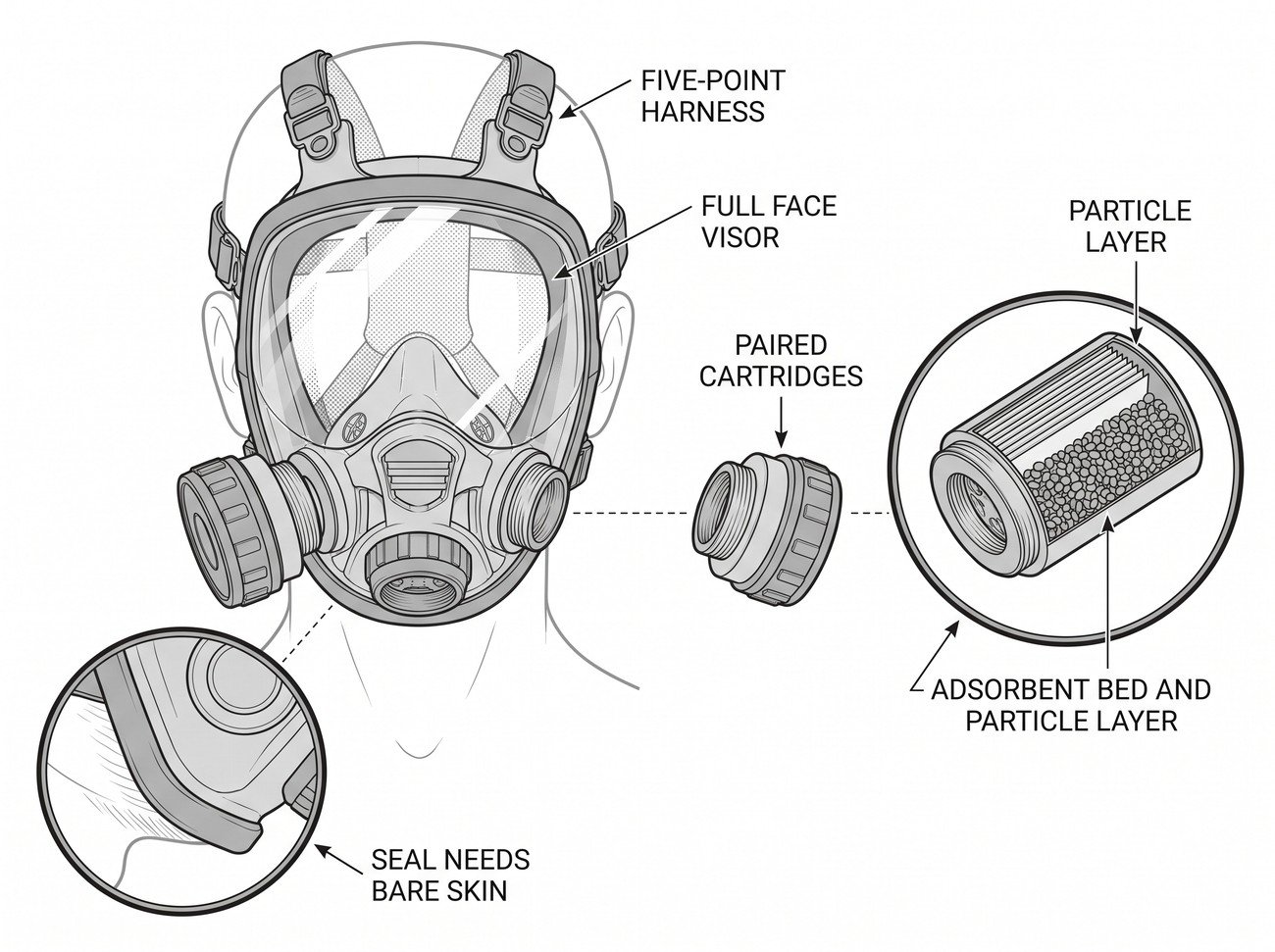
EN 140 covers half masks fitted with replaceable filters or cartridges, suitable where the specific gas or vapour concentration is within the mask’s design limits and eye protection is provided separately. EN 136 covers full face masks, which add eye and face protection to the same respiratory function and are the more appropriate platform where the chemical in use is also an eye irritant or where a half mask alone would leave the eyes exposed to the same atmosphere the respirator is filtering.
Cartridge selection and service life
Sorbent cartridges are selected for the specific chemical class they are rated against, and a cartridge chosen for one class of vapour does not provide reliable protection against a different class even if both happen to be organic solvents in a loose sense. Cartridges also have a finite service life that depends on concentration, humidity and the specific chemical involved, and continuing to use a cartridge past the point where breakthrough occurs — often only detectable by smell, taste, or irritation, which is itself an unreliable warning for some chemicals — leaves the wearer exposed without any obvious sign the protection has failed.
When filtering respirators are not sufficient
Oxygen-deficient atmospheres, unknown or unquantified chemical concentrations, and concentrations above what a specific cartridge is rated for all exceed what any filtering respirator, however well selected, can safely manage, and supplied-air respiratory protection is the correct escalation in these conditions rather than selecting a nominally higher-rated cartridge. Recognizing this threshold before entering the task, based on atmospheric monitoring and knowledge of the actual chemical concentration, is a judgment that needs to be made in advance, not discovered by symptoms during the task.
Fit testing and facial seal
As with particulate respirators, a chemical cartridge mask only performs to its rated protection factor if it forms a proper seal against the face, and facial hair, an incorrectly sized mask, or a damaged sealing edge all compromise that seal regardless of how appropriate the cartridge selection otherwise is. Fit testing specific to the mask model in use, not just checking that the mask is generally comfortable, confirms the seal is actually adequate for the individual wearer.
For the eye protection this respiratory equipment is worn alongside where a half mask is used, see eye and face protection for chemical splash.
Related standards
The standards below set the test methods and performance levels behind the equipment referenced in this note.
- EN 136 — Full face masks
- EN 140 — Half masks and quarter masks
- EN 143 — Particle filters
- EN 149 — Filtering half masks (FFP1/FFP2/FFP3)
Common errors
1Using a particulate-rated mask or filter for a chemical vapour or gas hazard.
2Selecting a sorbent cartridge for the wrong chemical class relative to what is actually in use.
3Relying on smell or irritation as a reliable indicator of cartridge breakthrough for every chemical.
4Continuing to use a filtering respirator in an oxygen-deficient or unquantified-concentration atmosphere that calls for supplied air instead.
Frequently asked questions
Does a particulate filter protect against chemical vapours and gases?
No, particulate filters physically trap solid or liquid particles and do nothing against a substance already in gas or vapour form at the molecular level, which requires a sorbent cartridge instead.
When is a full face mask more appropriate than a half mask for chemical handling?
Where the chemical in use is also an eye irritant or where a half mask alone would leave the eyes exposed to the same atmosphere the respirator is filtering.
Can one sorbent cartridge type protect against any chemical vapour?
No, cartridges are selected for a specific chemical class, and a cartridge chosen for one class does not provide reliable protection against a different class even within a loosely similar chemical group.
Is smell a reliable way to detect cartridge breakthrough?
Not for every chemical; it is an unreliable warning for some substances, so relying on smell or irritation alone can leave a wearer exposed without any obvious sign the protection has failed.
When should supplied-air respiratory protection be used instead of a filtering respirator?
In oxygen-deficient atmospheres, with unknown or unquantified chemical concentrations, or concentrations above what a specific cartridge is rated for, since these exceed what any filtering respirator can safely manage.
Need this as a document you can issue? The template library gives you the risk assessments, permits and inspection logs in editable form — and employer plans cover a whole team with completion records.