Safety / Tips and Tricks / Chemical Handling
Activity 06 · Chemical Handling
Safety Data Sheets and Hazard Communication
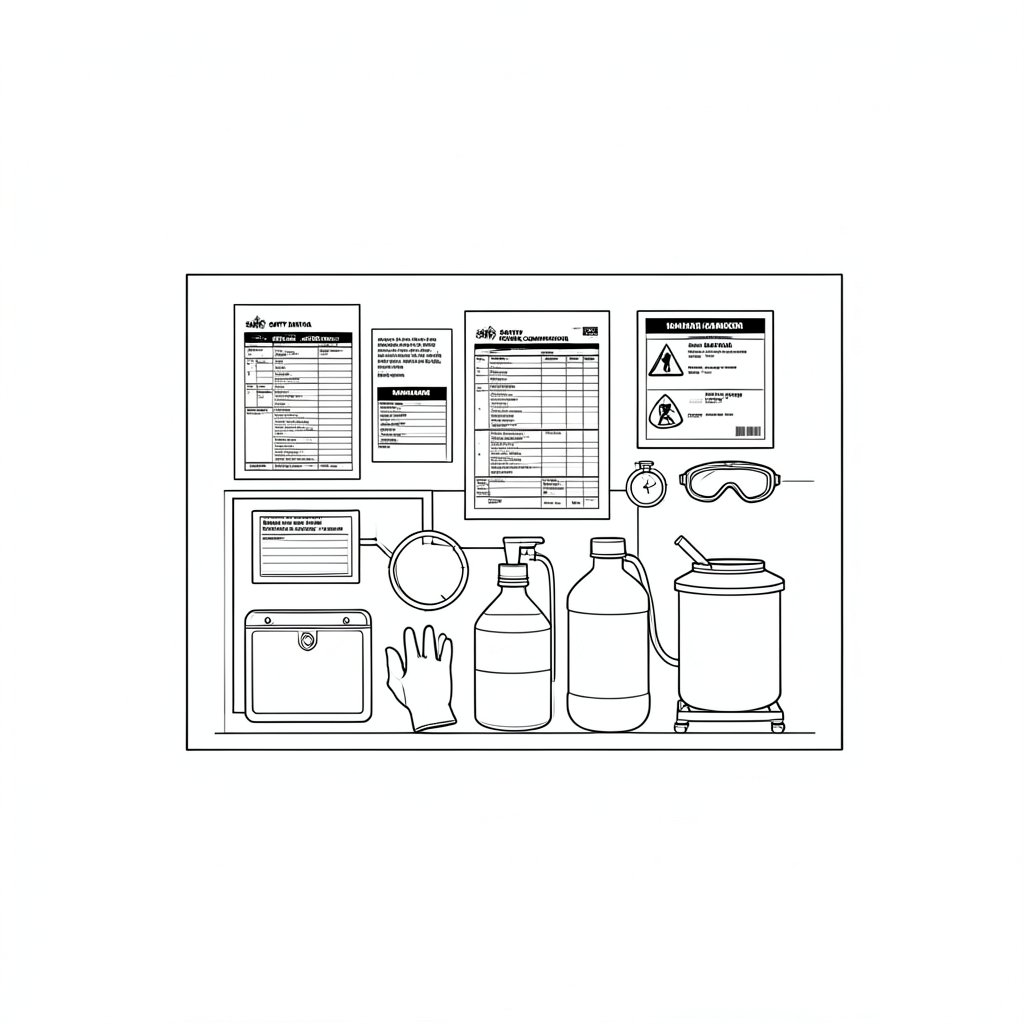
A safety data sheet exists to answer one question before a chemical is ever opened: what actually happens if this substance contacts skin, is inhaled, is mixed with something incompatible, or is released — and treating it as paperwork to file rather than information to actually read before the task starts defeats the entire purpose of having it.
What the sections actually tell you
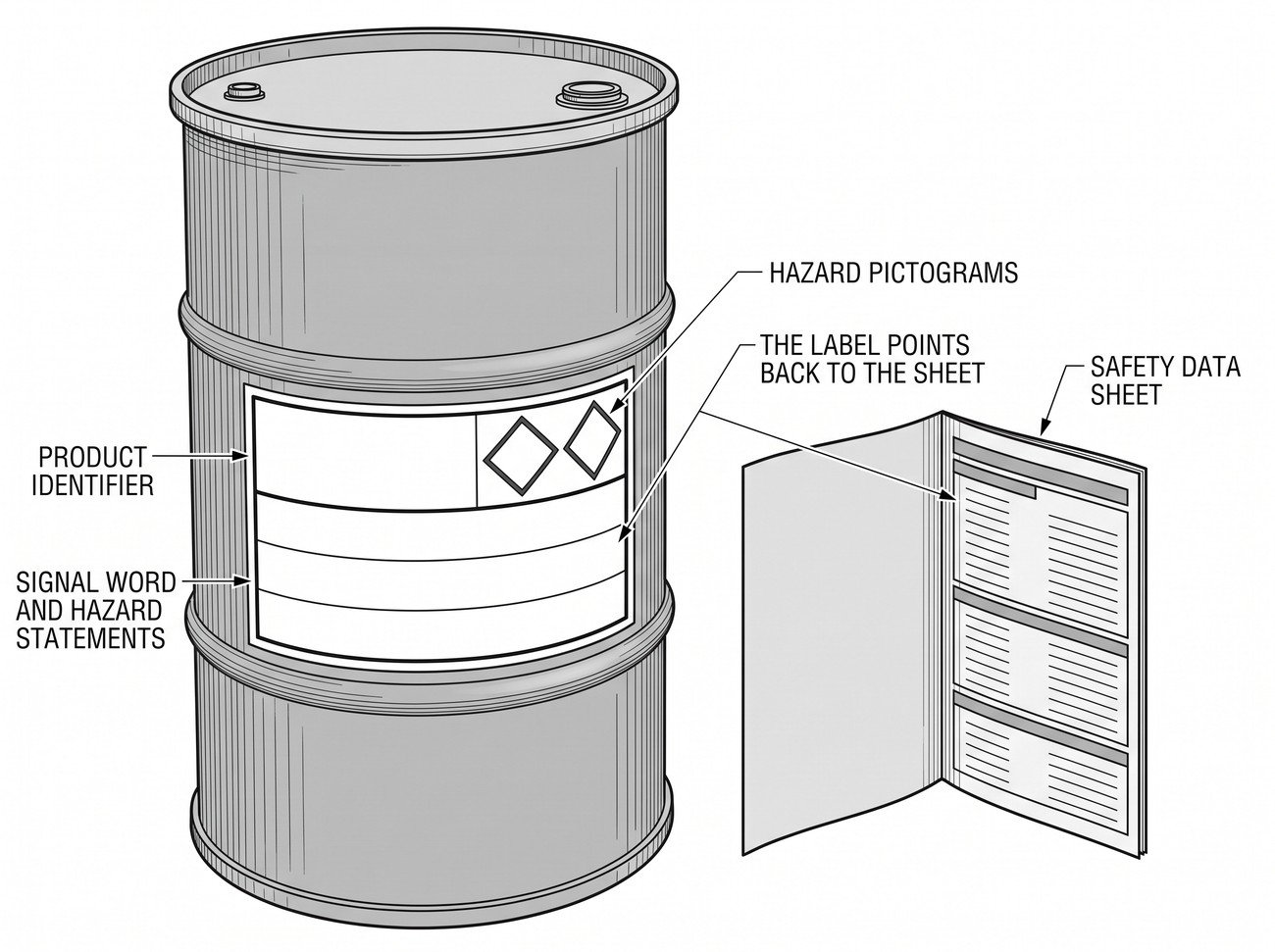
A safety data sheet follows a standard sixteen-section structure, and several sections matter directly for day-to-day handling decisions: hazard identification for what the substance can actually do, first aid measures for what to do if exposure happens, handling and storage for how to keep it safely, exposure controls and personal protection for what PPE is actually appropriate, and stability and reactivity for what it should never be mixed or stored with. Reading these specific sections before first handling a new chemical, rather than treating the whole document as background reference material to consult only after something goes wrong, is what actually changes behavior on the task.
Hazard pictograms and signal words
Standardized hazard pictograms and signal words on both the safety data sheet and the product label give an immediate visual summary of the hazard class before anyone needs to read the full document, and recognizing what each pictogram represents — corrosive, toxic, flammable, oxidizing, and others — should be a baseline competency for anyone regularly handling chemicals, not something looked up only when uncertain.
Access and currency
Safety data sheets need to be genuinely accessible at the point of use, not archived in a location that takes real effort to reach during a task, and they need to be current versions, since a manufacturer reformulation can change hazard classification, PPE requirements, or incompatibilities in ways an outdated sheet would not reflect. Checking that the sheet in use matches the specific product and batch actually on site, rather than an older version kept because it is convenient, matters more than it might seem for products that have been reformulated.
Communicating hazard information beyond the document itself
Safety data sheets are written in a standard technical format that is not always the clearest way to communicate the specific, task-relevant hazard information to someone about to do the work, and translating the relevant sections into a short, task-specific briefing before work starts — what this is, what it does to you, what PPE you need, what not to mix it with — is a genuinely different and complementary step to having the document available for reference.
New and unfamiliar chemicals
Any chemical new to a site or a task should have its safety data sheet reviewed and the relevant hazard information communicated to anyone who will handle it before the first use, not retroactively after an incident reveals a gap in that communication. This applies even to substances that seem similar to something already familiar, since apparently similar products can have meaningfully different hazard profiles.
For applying this information to safe storage decisions, see chemical storage: segregation and incompatibilities.
Related standards
The standards below set the test methods and performance levels behind the equipment referenced in this note.
- EN 374 — Chemical resistant gloves
- EN 14605 — Chemical protective clothing (liquid-tight)
- EN 13034 — Chemical protective clothing (limited protection)
- EN 166 — Eye protection
Common errors
1Filing safety data sheets without reading the sections relevant to handling and PPE before first use of a new chemical.
2Keeping an outdated safety data sheet in use after a product has been reformulated.
3Storing safety data sheets somewhere that takes real effort to access during an actual task.
4Assuming a chemical similar to a familiar one shares the same hazard profile without checking its own data sheet.
Frequently asked questions
Which sections of a safety data sheet matter most for day-to-day handling?
Hazard identification, first aid measures, handling and storage, exposure controls and personal protection, and stability and reactivity are the sections that directly inform day-to-day handling decisions.
Why do hazard pictograms matter alongside the full safety data sheet?
They give an immediate visual summary of the hazard class before anyone needs to read the full document, and recognizing them should be a baseline competency for anyone regularly handling chemicals.
Why does the currency of a safety data sheet matter?
A manufacturer reformulation can change hazard classification, PPE requirements or incompatibilities in ways an outdated sheet would not reflect, so the sheet needs to match the current product and batch.
Is having the safety data sheet on file enough for hazard communication?
Not on its own; translating the relevant sections into a short, task-specific briefing before work starts is a genuinely different and complementary step to having the document available for reference.
Should a chemical that seems similar to a familiar one be treated the same way?
No, apparently similar products can have meaningfully different hazard profiles, so any new chemical needs its own safety data sheet reviewed before first use.
Need this as a document you can issue? The template library gives you the risk assessments, permits and inspection logs in editable form — and employer plans cover a whole team with completion records.