Safety / Tips and Tricks / Chemical Handling
Activity 06 · Chemical Handling
Chemical Storage: Segregation and Incompatibilities
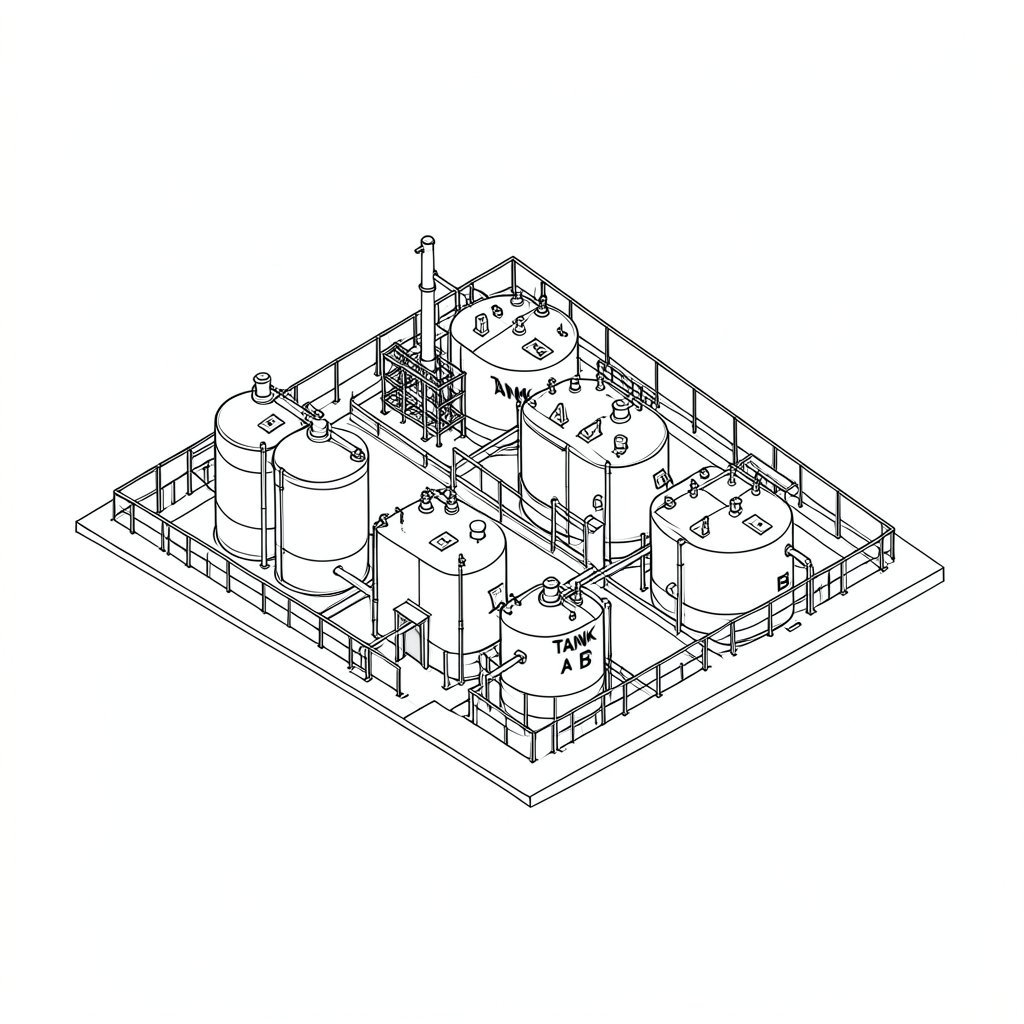
Two chemicals that are each perfectly manageable on their own can react violently, generate toxic gas, or ignite when they come into contact with each other, which means chemical storage safety is fundamentally about what sits next to what, not just how each individual substance is contained.
Why incompatibility is a distinct hazard from the chemicals themselves
A chemical’s own hazard classification describes what it does on its own, but incompatibility describes what happens when it contacts a different substance, and these reactions can produce outcomes — heat, toxic gas, fire, explosion — that neither chemical alone would suggest. Common incompatible pairs include oxidizers with flammables or combustibles, acids with bases, and acids with materials that release toxic gas on contact such as certain cyanide or sulfide compounds, but the specific incompatibilities for any given chemical should be checked against its own safety data sheet rather than assumed from general categories alone.
Segregation by hazard class
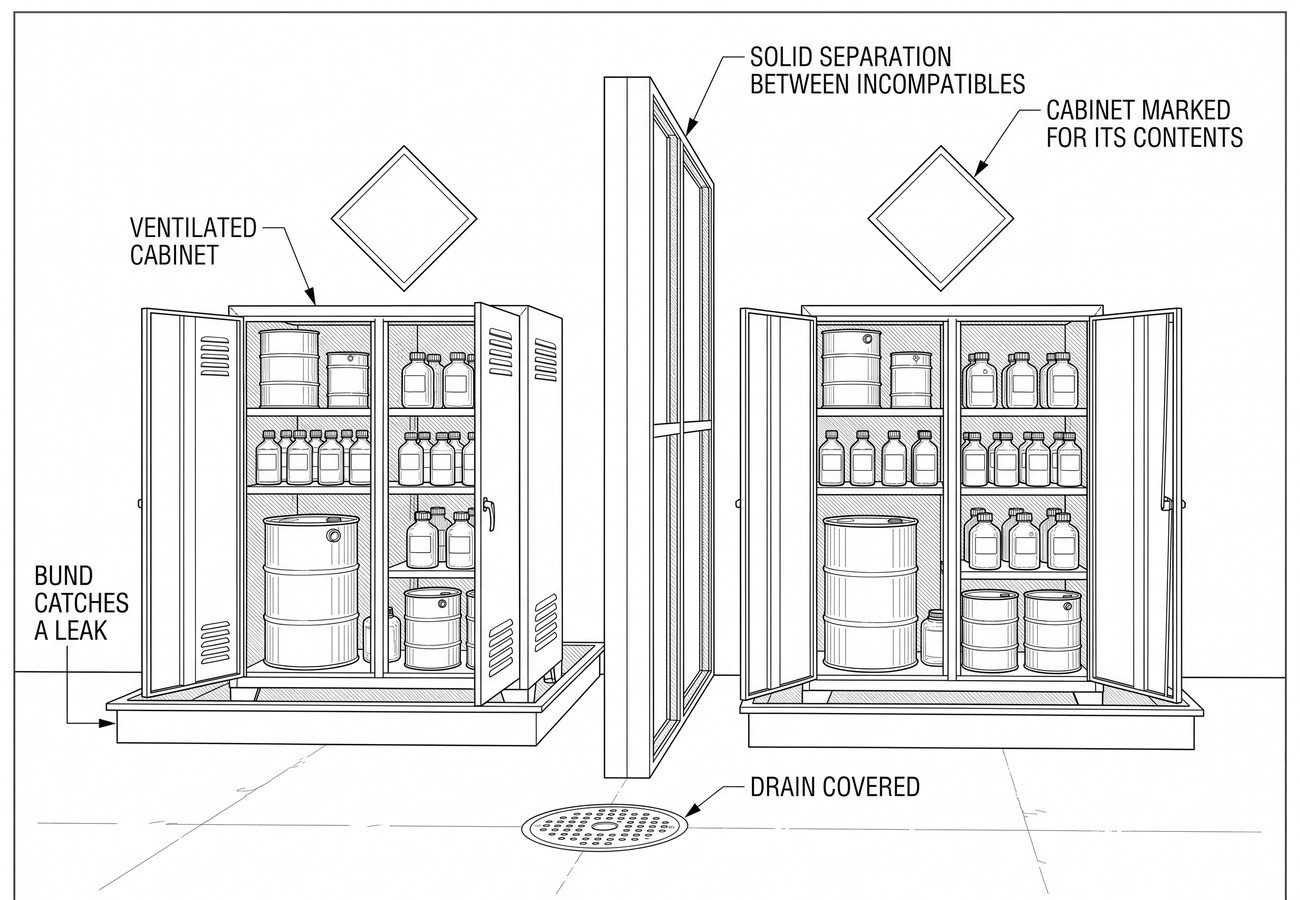
Storing chemicals grouped by hazard class — flammables together, oxidizers together, corrosives together, and so on — with physical separation or dedicated storage between incompatible classes, is the practical control that prevents an incompatibility from ever having the opportunity to occur. Segregation needs to account for what would happen not just in normal storage but in a foreseeable failure such as a spill or a container breach, since two segregated chemicals stored too close together can still combine if a container fails and the resulting liquid or vapour reaches the adjacent storage area.
Secondary containment
Secondary containment — a bund, spill tray, or containment cabinet sized to hold the contents of the largest container stored within it — limits how far a leak or spill can spread before it is addressed, and this containment needs to be considered per segregated group, not as one shared containment area that would defeat the purpose of segregation if a spill from one group reached containment shared with an incompatible group.
Storage conditions beyond chemical compatibility
Temperature, humidity, and exposure to direct sunlight can all affect chemical stability independent of what else is stored nearby, and some chemicals have specific temperature ranges outside which they become unstable, more volatile, or more reactive. Storage area conditions should be checked against the safety data sheet’s storage guidance for every chemical present, not just assessed for general suitability as a storage space.
Quantity limits and stock rotation
Storing more of a chemical than is actually needed increases both the consequence of any failure and the time a given quantity sits in storage, during which conditions or container integrity can change, and keeping storage quantities close to genuine operational need, with older stock used before newer stock, reduces both risks without requiring any additional physical control.
For responding when a spill does occur despite these controls, see spill response and containment.
Related standards
The standards below set the test methods and performance levels behind the equipment referenced in this note.
- EN 374 — Chemical resistant gloves
- EN 14605 — Chemical protective clothing (liquid-tight)
- EN 166 — Eye protection
Common errors
1Storing chemicals together based on convenience rather than checking their compatibility against safety data sheet guidance.
2Segregating chemical classes without accounting for what a spill or container failure could still bring into contact.
3Using shared secondary containment across incompatible hazard groups.
4Holding chemical stock well beyond genuine operational need, increasing both consequence and time-in-storage risk.
Frequently asked questions
Why is chemical incompatibility a separate hazard from each chemical's own classification?
Because contact between two otherwise manageable chemicals can produce heat, toxic gas, fire or explosion that neither chemical's own hazard classification alone would suggest.
What is the practical control for preventing chemical incompatibility incidents?
Segregating chemicals by hazard class, with physical separation or dedicated storage between incompatible classes, so an incompatibility never has the opportunity to occur.
Should segregation only account for normal storage conditions?
No, it needs to account for foreseeable failures like a spill or container breach, since chemicals stored too close together can still combine if a container fails and the resulting liquid or vapour reaches an adjacent area.
Why should secondary containment be considered per segregated group rather than shared?
Shared containment across incompatible hazard groups would defeat the purpose of segregation if a spill from one group reached containment shared with an incompatible group.
Why does keeping chemical stock close to operational need matter?
It reduces both the consequence of any failure and the time a given quantity sits in storage, during which conditions or container integrity can change.
Need this as a document you can issue? The template library gives you the risk assessments, permits and inspection logs in editable form — and employer plans cover a whole team with completion records.